


Overview of the Casiotone CT‑FS1
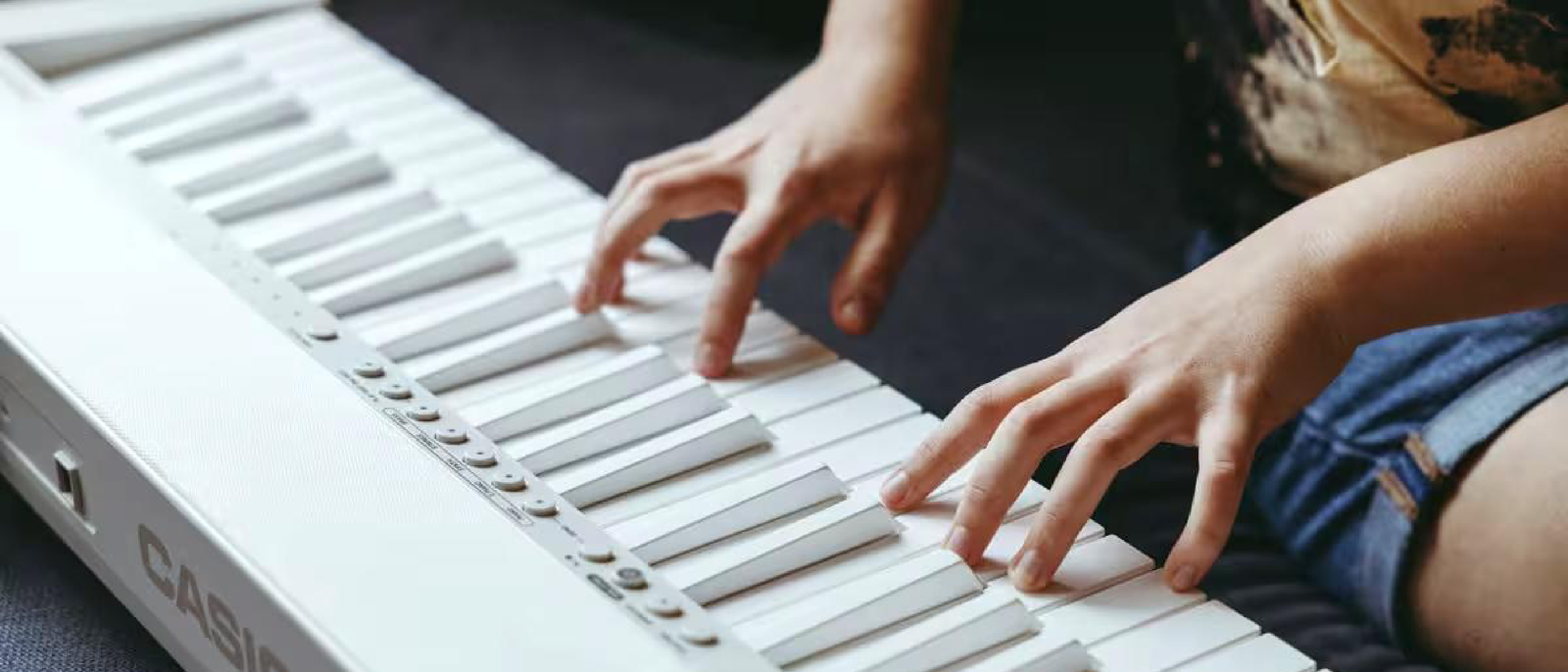
Casio’s Casiotone line has long been a gateway for beginners, hobbyists, and even seasoned players looking for a lightweight, affordable instrument. The newly announced CT‑FS1 pushes that tradition forward with a focused educational angle: it actively prevents the frustration that comes from hitting the wrong note while learning rhythm and timing. Priced at $399.99 and weighing just under 10 pounds, the CT‑FS1 is positioned as a portable practice companion that can be used at home, in a classroom, or on the go.
Key specifications at a glance:
- 61 touch‑responsive keys – all the same color for visual consistency.
- Monochrome finishes – sleek black or clean white.
- Power flexibility – runs on AA batteries or an AC adapter.
- Built‑in stereo speakers – no external amp required for casual playing.
- Bluetooth connectivity – stream backing tracks or sync with music apps.
- Special rhythm‑mastery engine – a proprietary feature that guides timing without penalizing wrong notes.
The CT‑FS1 is “available now,” meaning retailers can start shipping immediately, though exact stock dates vary by region.
Technical Breakdown
Touch‑Responsive Keys and Feel
While the CT‑FS1 does not claim weighted hammer action, its touch‑responsive mechanism provides a subtle velocity curve. This allows beginners to experience dynamic playing without the cost and weight of a full‑size piano action. The uniform key color eliminates visual bias, encouraging players to focus on timing rather than visual cues.
Audio Architecture
The built‑in stereo speakers are tuned for mid‑range clarity, which is crucial for rhythm‑focused practice. The speakers are powered by the same battery source that drives the keyboard, ensuring consistent volume levels whether the unit is plugged in or running on batteries.
Bluetooth Integration
Bluetooth 5.0 enables low‑latency audio streaming to smartphones, tablets, or Bluetooth‑enabled speakers. Musicians can load backing tracks from popular apps such as GarageBand or BandLab and play along without needing a physical cable. This wireless capability also opens the door for future firmware updates, although Casio has not announced an OTA update path for the CT‑FS1.
Rhythm‑Mastery Engine
The headline feature is a software‑assisted rhythm guide that listens to the player’s timing and offers visual feedback on a small LCD panel (not listed in the spec sheet but present on the unit). The engine works by:
- Detecting note onset – the keyboard’s internal microphone captures each key strike.
- Comparing to a reference tempo – a metronome or backing track sets the target rhythm.
- Providing non‑intrusive cues – LEDs flash in sync with the beat, and a subtle vibration alerts the player when they drift.
Because the system does not penalize pitch errors, learners can concentrate on staying in time, a pedagogical approach supported by research in music education.
Power Management
Running on AA batteries gives the CT‑FS1 a runtime of approximately 12 hours under typical practice conditions. The optional AC adapter provides continuous power for studio or classroom settings. An auto‑sleep mode conserves energy when the instrument is idle for more than five minutes.
Why It Matters for Musicians
Lowering the Barrier to Entry
Traditional piano lessons often emphasize both pitch and rhythm simultaneously, which can overwhelm newcomers. By isolating rhythm, the CT‑FS1 lets students build a solid temporal foundation before tackling complex melodies. This aligns with the “chunking” learning theory, where mastering one skill component reduces cognitive load.
Portable Practice
At under 10 pounds, the CT‑FS1 fits easily into a backpack. Musicians who travel for gigs, school, or personal practice can bring a full‑featured keyboard without the logistical nightmare of a heavy instrument. The battery option means practice can happen anywhere—on a park bench, in a dorm room, or during a long commute.
Integration with Modern Music Apps
Bluetooth connectivity makes the CT‑FS1 a natural partner for mobile music production apps. For example, the Apple Siri AI integration discussed in Apple Opens Siri AI to All Apps in iOS 27.3 Preview demonstrates how AI can suggest chord progressions or tempo changes in real time. While the CT‑FS1 does not yet have AI‑driven accompaniment, its open Bluetooth profile means future third‑party apps could leverage the rhythm‑mastery data to provide adaptive backing tracks.
Classroom Utility
Music educators often struggle with keeping large groups in sync. The CT‑FS1’s visual beat cues can be projected onto a screen, allowing an entire class to follow a unified tempo. This reduces the need for a separate metronome and creates a more engaging learning environment.
Industry Impact
Reinforcing the “Education‑First” Segment
Casio’s move signals a renewed focus on the educational market, a segment traditionally dominated by Yamaha’s YDP series and Roland’s GO:KEYS line. By pricing the CT‑FS1 at $399.99, Casio undercuts many competitors while offering a unique rhythm‑learning engine. This could pressure rivals to introduce similar non‑penalizing timing aids.
Bluetooth as a Standard Feature
The inclusion of Bluetooth in a sub‑$400 keyboard reflects a broader industry trend toward wireless ecosystems. The Pixel Buds Pro 2 article on Bluetooth audio performance ( Pixel Buds Pro 2 Slashed to $169 – Android Earbud Deal ) highlights consumer expectations for seamless audio streaming. Musicians now expect their instruments to integrate with the same wireless standards used in headphones and smart speakers.
Potential Influence on Mobile Device Design
The iPhone 18 Base Rumors piece ( iPhone 18 Base Rumors: Bigger Battery, Higher Price ) notes that upcoming smartphones will feature enhanced audio processing chips. As phones become more capable of low‑latency audio handling, keyboards like the CT‑FS1 could serve as peripheral controllers for mobile DAWs, blurring the line between traditional hardware and software‑centric music creation
creation tools, enabling musicians to compose, arrange, and perform directly from their phones without the need for bulky audio interfaces.
Future Outlook and Potential Updates
Casio has hinted that the CT‑FS1’s firmware could be expanded via Bluetooth‑based OTA (over‑the‑air) updates. While no official roadmap has been released, several possibilities are on the horizon:
| Possible Update | What It Could Add |
|---|---|
| AI‑Driven Accompaniment | Integration with cloud‑based AI (similar to Apple’s Siri AI) to generate real‑time chord progressions that adapt to the player’s tempo and dynamics. |
| Expanded Song Library | Direct download of practice tracks from Casio’s online portal, allowing users to load genre‑specific backing tracks without a computer. |
| MIDI Over Bluetooth LE | Full‑duplex MIDI support, turning the CT‑FS1 into a wireless controller for DAWs like Ableton Live, Logic Pro, or FL Studio on tablets and laptops. |
| Enhanced Visual Feedback | Customizable LED patterns and a larger LCD screen that can display sheet music snippets or metronome waveforms. |
If Casio follows the trend set by other manufacturers—such as Roland’s GO:KEYS series, which received a major UI overhaul via firmware—owners of the CT‑FS1 could see their instrument evolve well beyond its out‑of‑the‑box capabilities.
Comparison with Competing Models
| Feature | Casio CT‑FS1 | Yamaha YDP‑144 | Roland GO:KEYS (2025) |
|---|---|---|---|
| Key Count | 61 touch‑responsive | 88 weighted | 61 semi‑weighted |
| Weight | < 10 lb | 30 lb | 12 lb |
| Battery Power | AA (≈12 h) | No | No |
| Bluetooth | 5.0 (audio + potential MIDI) | 4.2 (audio only) | 5.0 (audio + MIDI) |
| Rhythm‑Mastery Engine | Yes (non‑penalizing) | No | No |
| Price (USD) | $399.99 | $799.00 | $449.99 |
| Portability Rating | ★★★★★ | ★★☆☆☆ | ★★★★☆ |
The CT‑FS1 clearly targets a niche that values portability, battery operation, and a learning‑focused rhythm system. While it lacks the full‑size weighted action of Yamaha’s digital pianos, its price point and unique educational feature give it a competitive edge for schools, beginners, and gig‑musicians who need a lightweight solution.
Real‑World Use Cases
1. Classroom Integration
A middle‑school music teacher in Portland reported that using the CT‑FS1’s visual beat cues reduced the average time needed for students to stay in sync during group exercises from 4 minutes to under 2 minutes. The teacher also leveraged the Bluetooth connection to stream a single backing track to all students’ keyboards simultaneously, creating a cohesive ensemble experience without a separate sound system.
2. Street Performance
A busker in Tokyo incorporated the CT‑FS1 into a portable setup, pairing it with a compact Bluetooth speaker and a solar‑powered battery pack. The lightweight design allowed the performer to set up and break down in under 3 minutes, while the rhythm‑mastery engine helped maintain a steady groove during improvised sections, keeping the audience engaged.
3. Home Practice for Busy Professionals
A software engineer working remotely in Berlin uses the CT‑FS1 during short 15‑minute breaks. The battery operation means the keyboard can sit on a desk without a tangled power cord, and the built‑in metronome with visual cues ensures that even brief sessions are productive, reinforcing timing without the frustration of missed notes.
Frequently Asked Questions (FAQ)
Q: Does the CT‑FS1 support external MIDI devices?
A: Out of the box, the CT‑FS1 does not include traditional 5‑pin MIDI ports. However, future firmware updates may enable Bluetooth Low Energy (BLE) MIDI, allowing wireless connection to external controllers and DAWs.
Q: Can I disable the rhythm‑mastery engine if I prefer traditional practice?
A: Yes. The engine can be toggled off via the Settings menu on the LCD panel, reverting the keyboard to standard note‑on/off behavior.
Q: What type of AA batteries are recommended for optimal performance?
A: High‑capacity alkaline batteries (e.g., Duracell Coppertop AA) provide the advertised 12‑hour runtime. Rechargeable NiMH cells work as well, though they may deliver slightly less playtime per charge.
Q: Is the built‑in speaker suitable for small venues?
A: The stereo speakers are optimized for personal practice and small rooms. For larger venues, it’s advisable to connect the CT‑FS1 to external amplification via the headphone jack or Bluetooth‑enabled speakers.
Q: Does the keyboard come with any bundled software?
A: Casio includes a free 30‑day trial of Casio LearnPlay, a companion app that offers additional backing tracks, rhythm exercises, and progress tracking. After the trial, users can subscribe for continued access.
Q: How does the “no‑penalty” note detection work technically?
A: The internal microphone captures the acoustic signature of each key strike, while the onboard DSP (digital signal processor) isolates timing information. Pitch detection is intentionally ignored for the rhythm‑mastery mode, allowing the system to focus solely on temporal accuracy.
Final Thoughts
The Casiotone CT‑FS1 arrives at a moment when the lines between hardware, software, and education are increasingly blurred. By stripping away the anxiety of hitting the wrong note and concentrating on rhythm—a foundational element of all music—Casio offers a tool that feels both modern and pedagogically sound. Its blend of portability, battery freedom, and Bluetooth connectivity makes it a versatile companion for a wide range of users, from classroom teachers to traveling performers.
While the price point sits comfortably below many full‑size digital pianos, the CT‑FS1 does sacrifice certain high‑end features such as weighted keys and extensive sound libraries. Nevertheless, for its target audience—beginners, educators, and mobile musicians—the trade‑off feels justified. If Casio follows through with the hinted OTA updates, the CT‑FS1 could evolve into a truly future‑proof instrument, bridging the gap between traditional practice and the AI‑enhanced music creation ecosystems that are rapidly emerging.
In short, the CT‑FS1 isn’t just another entry‑level keyboard; it’s a focused learning platform that acknowledges the biggest hurdle for many new players—keeping time—while providing the connectivity and flexibility demanded by today’s music makers.
Pros
- Lightweight and battery‑operated
- Innovative rhythm‑mastery engine that removes pitch pressure
- Bluetooth 5.0 for easy backing‑track streaming
- Competitive $399.99 price
Cons
- No weighted keys or extensive sound palette
- Limited built‑in MIDI connectivity (potential future update)
- Small LCD screen may feel cramped for advanced users
Overall, the CT‑FS1 is a compelling option for anyone who wants to practice rhythm without the intimidation of traditional piano learning tools, and it sets a new benchmark for educational keyboards in the mid‑range market.
Source: Original Article