

Overview and Market Position
Xreal’s Aura headset enters a crowded XR market that now includes Apple Vision Pro, Meta Quest 3, and Samsung Galaxy XR. Priced at $1,279—$1,099 on sale through December—the Aura sits between the $600 Xreal One and the $1,800 Galaxy XR, offering a premium experience without the flagship price tag. However, its reliance on Google’s nascent Android XR platform limits its appeal to mainstream consumers. The device is best suited for developers and early adopters who can tolerate a fragile software ecosystem in exchange for cutting‑edge hardware.
Design and Display Technology
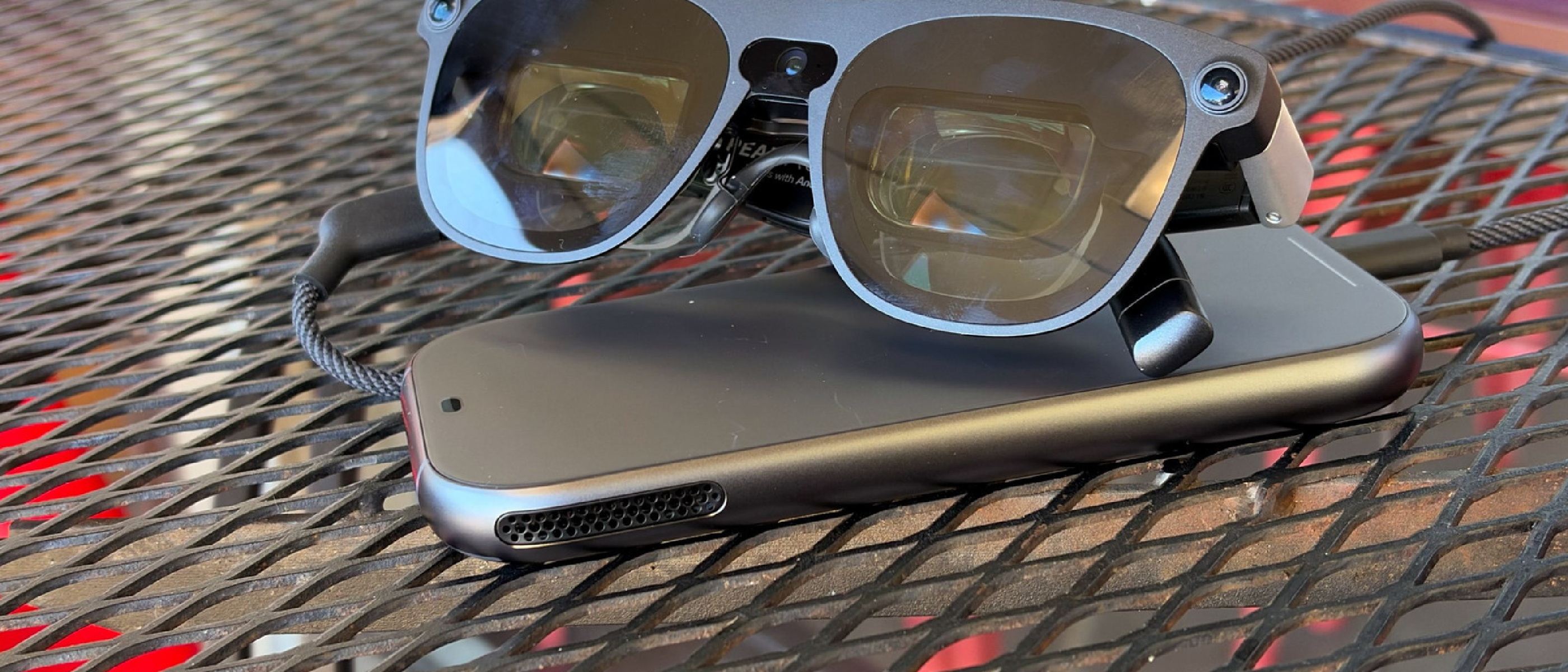
The Aura’s form factor resembles a pair of sunglasses, with lightweight frames weighing only 95 g. Its micro‑OLED panels deliver a combined resolution of 1,920 × 1,200 pixels per eye, a brightness of up to 1,058 nits, and a 120 Hz refresh rate. When running the Android XR interface, the refresh rate drops to 72 Hz, which can affect motion smoothness. The 70‑degree field of view (FOV) is modest compared to the 100‑degree Vision Pro and the 110‑degree Quest 3, but the high pixel density ensures sharp visuals for close‑up tasks such as virtual monitoring or detailed media consumption.
The headset’s cameras provide spatial sensing, finger tracking, and photo/video capture, allowing for mixed‑reality experiences. The lack of eye‑tracking and the reliance on hand gestures for navigation are notable shortcomings, especially when compared to the Vision Pro’s advanced input methods.
Performance and Processing Power
Under the hood, the Aura houses Qualcomm’s Snapdragon Reality Elite SoC paired with Xreal’s X1S spatial processor. It comes in two configurations: 12 GB RAM with 256 GB storage or 16 GB RAM with 512 GB storage. The external Compute Puck, a detachable processing unit with a trackpad, handles the heavy lifting but tends to heat up during extended use, which can be uncomfortable for users.
Battery life ranges from 90 minutes at 40 % drain to 185 minutes when fully depleted, depending on usage patterns. This performance is comparable to other mid‑range XR devices but falls short of the Vision Pro’s longer battery life and the Quest 3’s integrated power management.
Software Ecosystem and Android XR
Android XR remains the Aura’s biggest hurdle. The platform is still unstable, with a limited library of notable apps. Supported titles include Google Maps (immersive view), Google Photos (spatial versions), HBO Max, and Prime Video. Major streaming services such as Disney+ and Netflix are absent, and the hand‑recognition interface is often described as “frustrating.” The only XR game available is Cubism, a modest title that showcases the headset’s potential but does little to justify the price point.
The lack of a robust app ecosystem means that developers must build custom experiences to leverage the Aura’s hardware. This aligns with the recommendation that the headset is primarily a tool for VR developers rather than a consumer product. The situation mirrors the early days of other XR platforms, where hardware outpaced software support.
Use Cases and Target Audience
The Aura excels in scenarios that benefit from a lightweight, high‑resolution display. Watching movies, streaming content, and using the headset as a virtual monitor in tight spaces are its strongest use cases. Its ability to function as a pair of display glasses also makes it a versatile tool for professionals who need to view information without a full headset.
However, the limited third‑party support and the absence of eye‑tracking make it less suitable for immersive gaming or social VR experiences. The Compute Puck’s heat generation further restricts prolonged use, which can deter casual consumers.
Future Outlook and Industry Impact
Xreal’s strategy appears to focus on delivering high‑end hardware at a price point that undercuts competitors while waiting for Android XR to mature. The company’s investment in spatial sensing and micro‑OLED technology positions it well for future iterations, but the current software bottleneck may stall broader adoption.
The broader XR industry is witnessing a shift toward more integrated ecosystems. For instance, Microsoft’s Copilot is redefining how software can run inside a new OS, hinting at the potential for XR platforms to host more complex applications. Meanwhile, Yvonne Bajela’s $17 M fund is targeting EU AI startups, many of which are exploring XR as a delivery channel for AI services. Security concerns, exemplified by the Zoom Zero‑Day exploit that allowed remote takeover of iPhones and Macs, underscore the need for robust security frameworks in XR devices—an area where Xreal must invest to gain consumer trust.
If Android XR can evolve to support a richer app library and improve hand‑tracking stability, the Aura could become a compelling choice for developers and early adopters. Until then, it remains a niche product that showcases impressive hardware but falls short of mainstream viability.
FAQ
Q: Does the Aura support eye‑tracking? A: No, the headset lacks eye‑tracking, relying instead on hand gestures and a trackpad on the Compute Puck.
Q: What is the battery life under typical use? A: Battery life ranges from 90 minutes at 40 % drain to 185 minutes at full drain, depending on usage intensity.
Q: Can I stream Netflix on the Aura? A: Netflix is not currently supported on Android XR, so the Aura cannot stream Netflix.
Q: Is the Compute Puck necessary for all functions? A: The Compute Puck is required for processing-intensive tasks and navigation; it can be detached for use as a standalone controller.
Q: How does the Aura compare to the Meta Quest 3? A: The Aura offers higher pixel density and brightness but has a smaller FOV and a less mature software ecosystem compared to the Quest 3’s 110‑degree FOV and broader app support.
Q: Will the Aura be compatible with future Android XR updates? A: Compatibility depends on Google’s roadmap for Android XR; Xreal has not announced any specific plans beyond current support.
Source: Original Article