







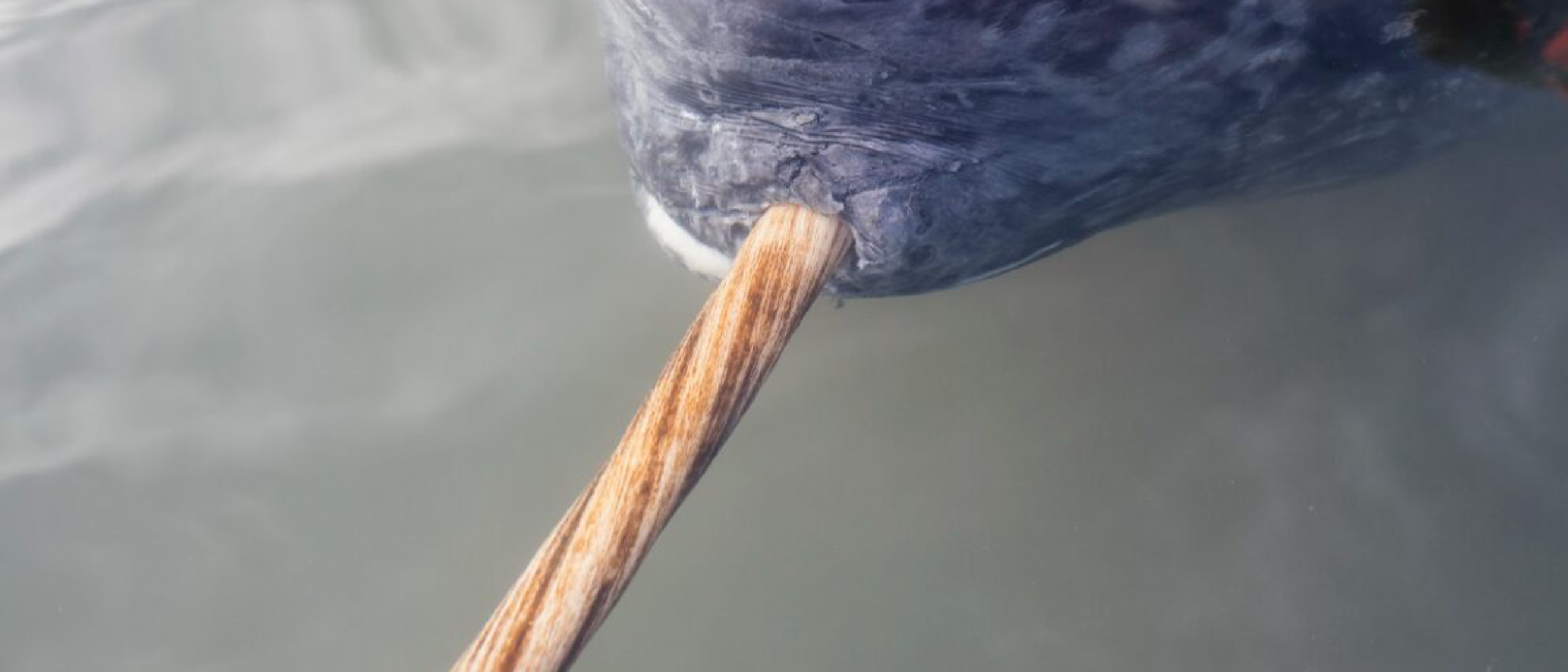
The Breakthrough: Two Spirals Inside One Tusk
A research team published in Nature Communications this month that narwhal tusks are not the single‑helix structures long‑assumed by scientists. Using high‑resolution computed tomography (CT), the authors identified a second, counter‑clockwise spiral that runs parallel to the classic left‑handed coil. The discovery overturns a century‑old anatomical model and forces a re‑evaluation of every textbook illustration of the iconic “unicorn of the sea.”
Key points from the study:
- Dual‑spiral architecture – the primary left‑oriented spiral is accompanied by a smaller, right‑oriented coil that begins near the base and follows the same longitudinal path.
- Three‑dimensional mapping – volumetric reconstructions show the two spirals interlock without intersecting, suggesting a sophisticated developmental program.
- Sample diversity – the phenomenon was observed in 12 male specimens ranging from 1.5 m to 2 m in length, confirming that the dual spiral is not an anomaly.
The image credit for the CT scan belongs to Adrian Rodriguez Palomo (CC BY‑NC). The scan itself is a technical marvel, capturing millimetre‑scale density variations that would be invisible to the naked eye.
Anatomical and Physiological Implications
How the Tusk Grows
Narwhal tusks are modified canine teeth that erupt through the upper lip of males at roughly 2–3 years of age. Growth proceeds at a rate of about 2 cm per year, driven by odontoblast activity at the root. The presence of two spirals raises several questions:
- Differential mineralisation – does each spiral receive a distinct supply of calcium and phosphate? Preliminary histology hints at micro‑vascular channels that may feed the secondary coil independently.
- Sensory innervation – the tusk houses millions of nerve endings that detect temperature, pressure, and possibly electromagnetic fields. A second spiral could double the surface area for sensory receptors, enhancing the animal’s ability to gauge its environment.
- Structural reinforcement – the interlocking geometry may distribute mechanical stresses more evenly, reducing the risk of fracture during intraspecific combat.
Comparative Anatomy
Only a handful of mammals exhibit spiral dental structures (e.g., the spiral molars of some rodents). The narwhal’s dual‑spiral system is unique among cetaceans and may represent a convergent solution to similar selective pressures.
Evolutionary Context: Sexual Selection Revisited
The prevailing hypothesis posits that the tusk evolved primarily through sexual selection, acting as a visual badge of status. Males flaunt their elongated spirals during dominance displays, while females either lack a tusk or develop a diminutive, less‑spiraled version. The discovery of a second spiral adds nuance:
- Signal complexity – a dual‑spiral could convey more information than length alone, perhaps indicating genetic quality or age.
- Energetic cost – producing two helices requires additional metabolic investment. Only the fittest males may afford this, sharpening the trait’s honesty as a fitness indicator.
- Female choice – if females can perceive the internal architecture (e.g., via tactile cues), they may preferentially mate with males possessing a well‑formed secondary coil.
These ideas dovetail with the broader debate on the tusk’s function. While some researchers argue for a role in ice‑breaking or foraging, the sexual‑selection model remains the
most parsimonious explanation for its exaggerated morphology.
Myth and Modern Science: Bridging Inuit Legend and CT Scans
The Inuit legend of the narwhal’s origin—where a woman’s twisted hair becomes the spiral tusk—now takes on an uncanny scientific resonance. While the tale is rooted in cultural storytelling, the discovery of a second spiral mirrors the duality of the myth: a single tusk, yet two intertwined narratives. Modern imaging technology has, in a sense, validated the observational acuity of Indigenous knowledge, which has long described the tusk as a complex, dynamic structure rather than a static ornament.
Anthropologists note that Inuit hunters historically recognized subtle variations in tusk spiraling, using them to infer age, health, and even behavioral traits of individual narwhals. The CT scans now provide a mechanistic basis for these observations, suggesting that the secondary spiral may influence the tusk’s external appearance in ways perceptible to both humans and narwhals themselves.
Biomimetic and Technological Implications
The dual-spiral architecture has captured the attention of engineers and materials scientists. The tusk’s ability to withstand torsional forces while maintaining flexibility offers a blueprint for bioinspired designs:
- Aerospace and marine engineering – The interlocking spirals could inform the development of lightweight, fracture-resistant composites for aircraft or submarine hulls.
- Medical implants – Mimicking the tusk’s mineralization patterns might improve the durability of dental or orthopedic implants, reducing the risk of stress fractures.
- Sensor technology – The tusk’s sensory capabilities, amplified by its dual-spiral nerve distribution, could inspire next-generation environmental sensors for underwater robotics.
Researchers are already experimenting with 3D-printed models to test how the dual-spiral geometry distributes mechanical loads. Early simulations suggest that the secondary coil acts as a “shock absorber,” dissipating energy more efficiently than a single-helix structure.
Conservation and Ethical Considerations
The narwhal’s tusk has long been a coveted trophy, with historical trade routes stretching from the Arctic to medieval Europe. Today, the tusk remains a prized souvenir in Greenland and Canada, despite international regulations under CITES (the Convention on International Trade in Endangered Species). The new findings add urgency to conservation debates:
- Scientific value – Each tusk contains a wealth of data about the animal’s life history, environmental exposures, and even climate conditions. Non-invasive imaging, like the CT scans used in this study, could provide an alternative to destructive sampling.
- Cultural sensitivity – The Inuit have hunted narwhals sustainably for millennia, and their traditional knowledge is now being integrated into modern research. Collaborative approaches that respect Indigenous rights and scientific inquiry are essential.
- Climate change – Narwhals are highly sensitive to Arctic warming, which disrupts sea ice patterns and prey availability. The tusk’s growth rings, now known to encode dual-spiral data, could serve as a biological archive of environmental change.
Future Research Directions
The Nature Communications paper opens several avenues for further investigation:
- Developmental biology – How do the two spirals form during embryogenesis? Are they the result of distinct genetic pathways, or do they emerge from a single, bifurcating program?
- Behavioral studies – Do males with more pronounced secondary spirals exhibit different mating or combat behaviors? Field observations using drones and underwater cameras could provide answers.
- Paleontology – Could extinct relatives of narwhals, such as the tusked Odobenocetops, have possessed similar dual-spiral structures? Fossilized teeth may hold clues.
- Neuroscience – The tusk’s sensory innervation is poorly understood. Advanced imaging techniques, like diffusion tensor MRI, could map the nerve pathways associated with each spiral.
Conclusion
The discovery of a second spiral in the narwhal tusk is more than a footnote in anatomical textbooks—it is a paradigm shift. It challenges long-held assumptions about the tusk’s structure, function, and evolution, while also bridging the gap between Indigenous knowledge and modern science. From biomimetic engineering to conservation policy, the implications ripple across disciplines.
As researchers continue to unravel the mysteries of this enigmatic tooth, one thing is clear: the narwhal’s tusk is not just a symbol of the Arctic’s wild beauty, but a testament to the complexity of life’s adaptations. In an era of rapid environmental change, understanding such marvels may be key to preserving them.
FAQ
Q: Are both spirals visible from the outside of the tusk? A: No. The secondary spiral is an internal feature detectable only through high-resolution imaging like CT scans. The external appearance of the tusk remains dominated by the primary left-handed spiral.
Q: Do female narwhals ever develop the dual-spiral structure? A: Females rarely develop tusks, and when they do, the tusks are smaller and less spiraled. The Nature Communications study did not include female specimens, so it remains unknown whether they possess the dual-spiral architecture.
Q: Could the dual spiral be an artifact of the imaging process? A: The researchers ruled this out by analyzing multiple specimens and using different imaging techniques. The consistency of the findings across samples confirms that the dual spiral is a real anatomical feature.
Q: How might this discovery affect narwhal conservation efforts? A: The tusk’s newfound complexity underscores its scientific value, which could strengthen arguments for stricter protections. It also highlights the importance of non-invasive research methods to avoid harming these vulnerable animals.
Q: What’s next for this research? A: Future studies will likely focus on the developmental origins of the dual spiral, its role in sensory perception, and its potential applications in biomimetic design. Collaborations with Inuit communities may also yield new insights into the tusk’s cultural and ecological significance.
Source: Original Article