




Why Ground Truth Matters
Justin Blinder’s Ground Truth is more than a novelty gadget; it is a social commentary encoded in mechanical form. Conceived in 2020, just before the COVID‑19 lockdown, the device emerged from Blinder’s observations while delivering food‑service orders and biking across New York City. He noted that neighborhoods adjacent to one another could feel “economically and psychologically very far apart,” a sentiment he captured in a quote that underscores the invisible cost of living: “I really started to kind of become a bit more aware of how different neighborhoods, often right next to each other, could feel very economically and psychologically very far apart, even though it’s just really within close proximity.”
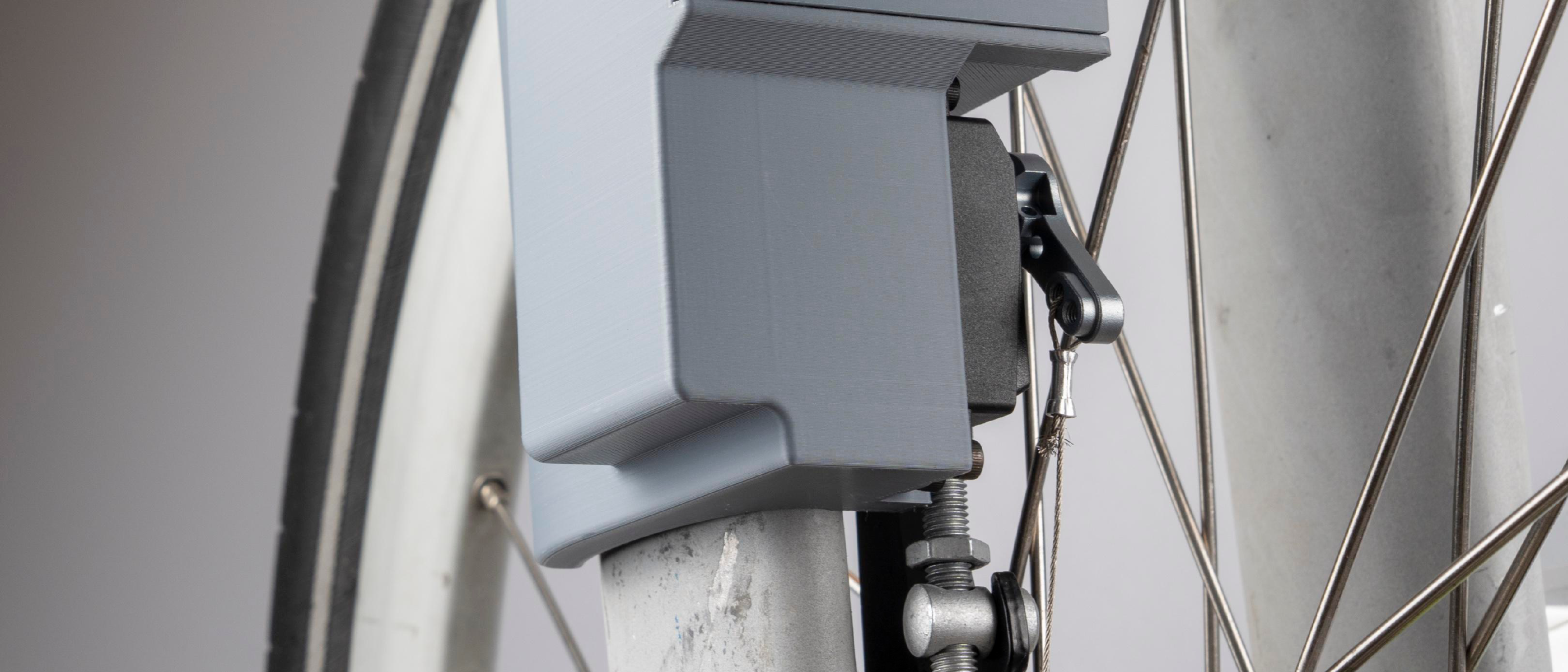
Ground Truth translates this awareness into a tangible experience: when a cyclist enters a district with unaffordable housing, the device increases pedaling resistance. The effect is immediate and visceral—pedals feel heavier, the effort rises, and the rider is confronted with a physical metaphor for the financial burden that residents endure daily. By making the invisible visible, the device forces commuters, city planners, and policymakers to confront the spatial inequities that shape urban life.
Technical Breakdown (What We Know)
While the Verge article does not disclose exhaustive specifications, the core concept of Ground Truth can be inferred from standard bike‑integration technologies:
- Microcontroller Unit (MCU) – A low‑power MCU (e.g., ARM Cortex‑M series) would manage sensor input, resistance control, and power management.
- Sensors – A combination of GPS for location tracking, a pressure sensor or accelerometer for cadence detection, and possibly a Wi‑Fi/Bluetooth module for data transmission.
- Actuation Mechanism – A variable‑resistance system could be implemented via a magnetic brake or a torque‑controlled motor that adjusts drag in real time.
- Power Supply – A rechargeable lithium‑ion battery integrated into the bike frame or a detachable pack, with a charging port for home or public charging stations.
- Software Layer – Firmware to process location data against a pre‑loaded map of housing affordability, trigger resistance changes, and log usage metrics for future analysis.
The device’s design must balance durability, safety, and user comfort. Any resistance system that alters pedaling effort must comply with bicycle safety standards and avoid compromising rider control. Moreover, the integration of a GPS module raises privacy considerations; the device would need to anonymize location data or store it locally to mitigate potential misuse.
Industry Impact
Ground Truth sits at the intersection of hardware innovation, urban analytics, and social activism. Its ripple effects can be seen across several sectors:
1. Bicycle Technology Ecosystem
- New Market Segment – The device introduces a niche for “social‑impact” cycling accessories, encouraging manufacturers to explore adaptive resistance systems that respond to external data.
- Competitive Differentiation – Companies that can embed real‑time data feeds (e.g., housing costs, pollution levels) into bike performance will appeal to socially conscious consumers.
2. Urban Planning and Policy
- Data‑Driven Advocacy – By providing a physical demonstration of economic disparity, Ground Truth can support advocacy groups in lobbying for affordable housing initiatives.
- Pilot Projects – City governments might partner with device makers to run pilot studies, measuring how changes in housing policy affect commuting patterns.
3. IoT Security Landscape
The integration of location‑based triggers and wireless communication places Ground Truth within the broader IoT security conversation. The device’s reliance on GPS and potentially cloud connectivity mirrors the vulnerabilities highlighted in the Zoom Zero‑Day Exploit article, where remote takeover of iPhone and Mac devices exposed the need for robust authentication and encryption. Ensuring that Ground Truth’s firmware is secure against unauthorized manipulation is paramount, especially when the device’s resistance can influence rider safety.
4. Creative Design and Social Media
Ground Truth’s concept aligns with the creative‑design ethos explored in the Installer No. 140: The Verge’s Ultimate Tech Guide. Designers who blend aesthetics with activism can draw inspiration from Blinder’s approach, creating products that challenge users to rethink societal structures.
Future Outlook
The trajectory of Ground Truth suggests several potential developments:
- Expanded Data Feeds – Incorporating additional socio‑economic indicators (e.g., median income, rent‑to‑income ratios) could refine the device’s resistance algorithm.
- Community‑Driven Mapping – Open‑source mapping of housing affordability could allow users to contribute data, fostering a collaborative platform for urban equity.
- Integration with Smart City Infrastructure – Partnerships with city agencies could enable real‑time updates to the device’s database, ensuring that resistance adjustments reflect current market conditions.
- Broader Mobility Applications – The core idea of context‑aware resistance could be adapted to electric scooters, e‑bikes, or even public transit, creating a suite of mobility tools that highlight economic disparities.
While the Verge story does not yet reveal pricing or release dates, the conceptual groundwork laid by Blinder opens the door for commercial iterations that could be priced competitively with existing bike accessories. A successful product launch would likely involve a Kickstarter or similar crowdfunding campaign, leveraging the device’s narrative appeal to attract early adopters.
Frequently Asked Questions
| Question | Answer |
|---|---|
| What is Ground Truth? | A bike accessory that increases pedaling resistance in neighborhoods with unaffordable housing, turning economic disparity into a physical experience. |
| How does it detect location? | It uses a GPS module to determine the rider’s current district and compares that to a pre‑loaded map of housing affordability. |
| Is the device safe? | While the Verge article does not detail safety testing, any resistance system must comply with bicycle safety standards and avoid compromising rider control. |
| Will it affect my bike’s performance? | The device is designed to adjust resistance dynamically; it should not interfere with normal cycling unless the rider enters a high‑cost area. |
| Can I customize the resistance levels? | The current iteration is set to a fixed increase; future versions may allow user‑defined thresholds. |
| Is my location data shared? | The device’s firmware is expected to store data locally; however, users should review the privacy policy for confirmation. |
| When will it be available? | No official release date has been announced; keep an eye on the Verge for updates. |
| Can it be used on electric bikes? | The concept could be adapted, but the current design is tailored for traditional pedal‑powered bicycles. |
| How does this relate to other tech trends? | It exemplifies the growing trend of socially conscious hardware, similar to devices that adapt to environmental data or user health metrics. |
| Where can I learn more about similar projects? | Check out the Installer No. 140: The Verge’s Ultimate Tech Guide for insights into building and integrating hardware like Ground Truth. |
Conclusion
Justin Blinder’s Ground Truth transforms the invisible economics of urban living into a palpable, physical challenge. By making pedaling harder in high‑cost neighborhoods, the device invites riders—and the broader public—to confront the hidden burdens that shape city life. Its blend of hardware ingenuity, data‑driven design, and social commentary positions it as a catalyst for change across the cycling industry, urban policy circles, and the evolving IoT security landscape. As the concept moves from prototype to product, it will likely inspire a new wave of devices that use technology to illuminate and address societal inequities.
Source: Original Article