


Overview of the macOS Tahoe 26.7 Leak
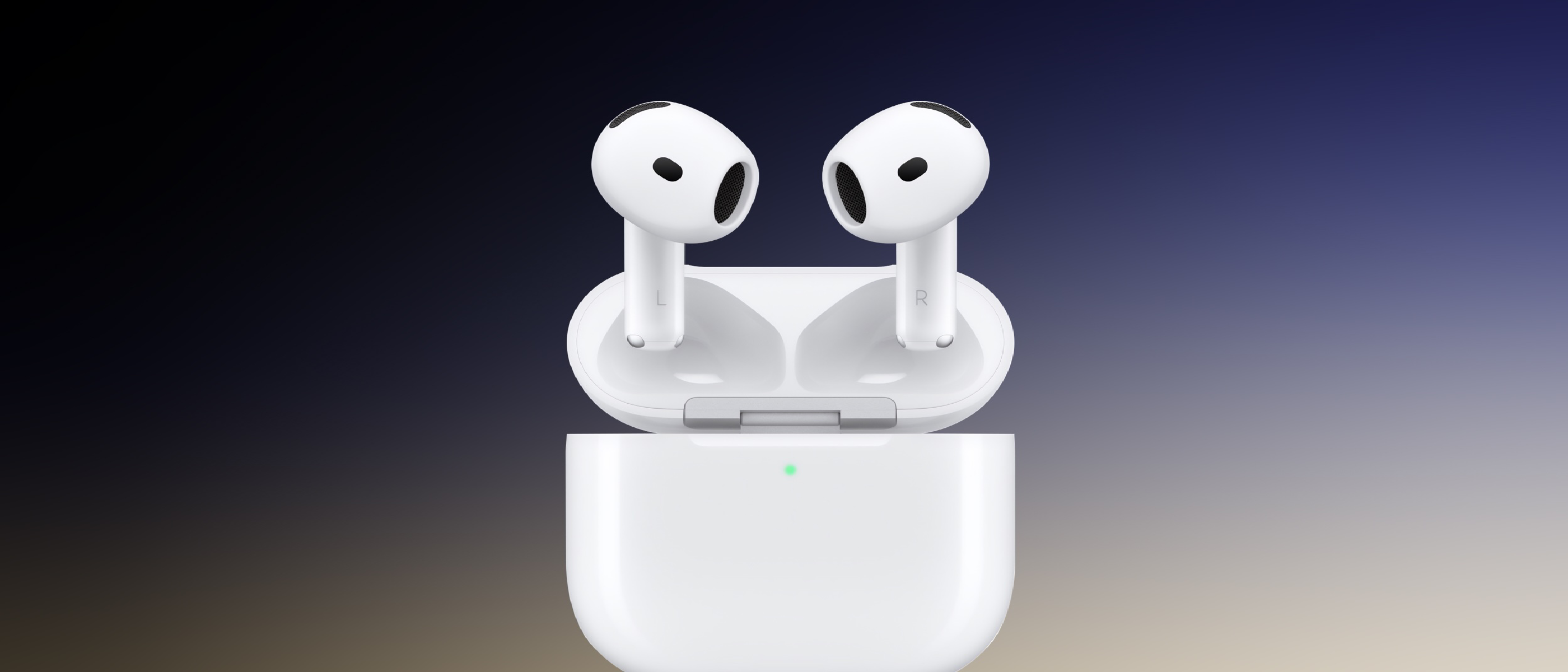
Apple’s macOS Tahoe 26.7 update, released to developers in early August, contains a handful of internal identifiers that have never been seen in public documentation. Among those identifiers are B868M and B868E, which correspond to the yet‑to‑launch AirPods 5 and AirPods 5 with Active Noise Cancellation (ANC) respectively. The same update also references the Beats Solo Buds – a model that has not appeared in any Beats roadmap.
The discovery was first reported by Mac Rumors and quickly spread across the Apple‑focused community. While Apple has not confirmed any details, the presence of these identifiers in a system‑level update suggests that the hardware is already in Apple’s internal testing pipeline and that macOS is being prepared to support new Bluetooth profiles, battery‑status APIs, and possibly spatial‑audio enhancements for the upcoming earbuds.
Technical Breakdown of the Referenced Models
Product Codename Mapping
| Internal Code | Public Name | Key Feature |
|---|---|---|
| B868M | AirPods 5 | Standard (no ANC) |
| B868E | AirPods 5 + ANC | Active Noise Cancellation |
| B768M | AirPods 4 | Launched Sep 2024, standard |
| B768E | AirPods 4 + ANC | ANC version of AirPods 4 |
| — | Beats Solo Buds | Unreleased Beats model |
The pattern of “M” for “standard” and “E” for “enhanced” (ANC) mirrors Apple’s naming convention from previous generations (e.g., B768M/E for AirPods 4). This consistency reinforces the likelihood that the B868 series will be the next logical step.
Anticipated Chip Architecture
Rumors have long suggested that Apple will move from the H2 chip (used in AirPods 3 and AirPods 4) to an updated H3 chip for the AirPods 5. The H3 is expected to bring:
- Higher‑efficiency audio DSP for richer bass response and clearer mids.
- Reduced latency for gaming and video‑conferencing, potentially bringing the round‑trip time under 30 ms.
- Improved power management, extending playback time by up to 15 % compared with the H2.
While the macOS update does not expose the chip name directly, the presence of new Bluetooth service UUIDs aligned with the B868 identifiers hints at a firmware layer that will communicate with a next‑generation SoC.
ANC and Spatial Audio Enhancements
The “E” suffix models (B868E) indicate an ANC variant. Apple’s ANC implementations have evolved from simple feed‑forward microphones to hybrid systems that combine feed‑forward and feedback arrays. For the AirPods 5, we can anticipate:
- Adaptive ANC that learns a user’s ear shape over time.
- Integration with Apple’s Spatial Audio engine, allowing dynamic head‑tracking even when ANC is active.
- Transparency mode refinements that preserve speech intelligibility while still blocking ambient noise.
Beats Solo Buds Connection
The reference to an unreleased Beats Solo Buds model suggests Apple may be aligning its Beats lineup with the same Bluetooth stack used for AirPods 5. This could enable cross‑device firmware updates and a unified “Find My” experience across both Apple and Beats earbuds.
Why It Matters for the Apple Ecosystem
Seamless macOS Integration
Apple’s ecosystem thrives on tight integration. By embedding support for the AirPods 5 in macOS Tahoe 26.7, Apple ensures that users will experience:
- Instant pairing with a single click when the earbuds are near a Mac.
- Automatic switching between iPhone, iPad, and Mac without user intervention.
- Optimized battery‑status reporting, allowing macOS to display precise charge levels in the menu bar.
These features are not merely conveniences; they reinforce the “lock‑in” effect that keeps users within the Apple hardware family.
Potential Impact on Competing Platforms
Competitors such as Samsung and Google have been pushing their own wireless earbud ecosystems, but Apple’s ability to roll out firmware updates via macOS gives it a unique advantage. The leak demonstrates that Apple is already preparing the software side of the equation, which could shorten the time‑to‑market for new features compared with rivals that rely on separate mobile‑only update paths.
Security Implications
The same macOS update that references the AirPods 5 also includes patches for Bluetooth‑related vulnerabilities. This mirrors Apple’s practice of bundling hardware‑related updates with security fixes, as seen in past releases. For developers and security researchers, the leak underscores the importance of monitoring Apple’s system‑level updates for early indicators of upcoming hardware.
For a deeper look at how Apple’s ecosystem handles security updates, see the analysis of the Zoom Zero‑Day Exploit: Remote Takeover of iPhone & Mac ( https://ltdeveloperblogs.github.io/posts/zoom-flaw-let-an-attacker-take-over-your-device-including-iphone-and-mac ) which discusses the interplay between OS patches and hardware exposure.
Industry Impact and Competitive Landscape
Market Timing and Consumer Expectations
Apple released the AirPods 4 in September 2024, a relatively short 12‑month cycle. The AirPods 5, however, have no announced launch window. If Apple follows its historical cadence, a launch could be slated for late 2026 or early 2027. The uncertainty fuels speculation among analysts and may affect stock performance for suppliers like TSMC and Broadcom, who are key partners in Apple’s audio‑chip supply chain.
Beats Brand Synergy
The mention of Beats Solo Buds suggests Apple may be consolidating its Beats roadmap with the AirPods line. This could lead to a single‑generation Beats earbud that shares the same H3 chip, reducing R&D costs and simplifying firmware maintenance. The move would also give Beats a premium audio platform without cannibalizing AirPods sales, as Beats traditionally targets a slightly different demographic.
Software‑First Differentiation
Apple’s strategy of delivering new audio features via software (e.g., Spatial Audio, Adaptive EQ) means that even without a hardware refresh, existing AirPods can receive performance boosts. The macOS Tahoe 26.7 update may already contain beta‑level audio‑processing algorithms that will later be rolled out to AirPods 5 owners, giving Apple a head start on feature differentiation.
A recent article on Zoom Annotation Flaw Patched After AI‑Prompt Exploit ( https://ltdeveloperblogs.github.io/posts/zoomsday-hack-uncovered-using-fewer-than-20-ai-prompts ) illustrates how rapid software patches can mitigate vulnerabilities that would otherwise affect hardware devices. Apple’s approach with the AirPods 5 appears to follow a similar philosophy: ship the hardware, then
enable incremental improvements that extend the product’s lifespan.
What’s Next for AirPods 5?
Development Timeline and Testing Phases
Given the references in macOS Tahoe 26.7, it’s reasonable to assume that the AirPods 5 are in the engineering validation test (EVT) or design validation test (DVT) phase. Apple typically follows a structured development pipeline:
- Prototype Phase (EVT) – Early hardware samples are tested for basic functionality and compatibility with existing software.
- DVT Phase – Refined prototypes undergo rigorous performance and durability testing, including stress tests for battery life, ANC efficacy, and Bluetooth stability.
- Production Validation Test (PVT) – Final hardware revisions are locked in, and mass production begins.
- Software Finalization – Firmware and macOS/iOS integration are polished, with beta testers providing feedback on real-world performance.
If the AirPods 5 are indeed in the DVT phase, a public release could still be 6–12 months away, aligning with Apple’s historical launch cycles. However, the inclusion of identifiers in a developer-facing macOS update suggests that Apple is already preparing for a controlled rollout, possibly alongside a future iPhone or Mac event.
Potential Launch Scenarios
Apple has several avenues for unveiling the AirPods 5:
- Standalone Event – Unlikely, given Apple’s preference for bundling hardware announcements. However, if the AirPods 5 introduce a paradigm-shifting feature (e.g., bone conduction, biometric sensors), Apple might opt for a dedicated event.
- iPhone 18 Launch – A more probable scenario, as Apple often pairs new iPhones with updated accessories. If the iPhone 18 debuts in September 2026, the AirPods 5 could be announced simultaneously.
- WWDC 2026 – While WWDC is primarily a software-focused event, Apple has occasionally used it to preview hardware (e.g., the M1 Macs in 2020). If the AirPods 5 rely heavily on new software features (e.g., AI-driven audio processing), WWDC could serve as a teaser platform.
Pricing Strategy and Market Positioning
The AirPods 4 launched in September 2024 with the following pricing:
- AirPods 4 (Standard): $129
- AirPods 4 with ANC: $179
For the AirPods 5, Apple may adopt one of two strategies:
- Premium Pricing – If the H3 chip and ANC improvements are significant, Apple could price the AirPods 5 at $149 (standard) and $199 (ANC), positioning them as a high-end alternative to competitors like the Sony WF-1000XM6 or Bose QuietComfort Ultra.
- Aggressive Pricing – To counter growing competition from Google Pixel Buds Pro 2 and Samsung Galaxy Buds 3 Pro, Apple might keep pricing unchanged ($129/$179) to maintain market dominance.
A third option could involve tiered pricing, where the standard AirPods 5 remain at $129, while the ANC variant sees a slight increase to $189–$199, reflecting the added value of the H3 chip and enhanced ANC.
Competitive Response
The leak of the AirPods 5 will likely prompt responses from key competitors:
- Samsung – Already rumored to be working on the Galaxy Buds 4 Pro, Samsung may accelerate development to match Apple’s ANC and latency improvements.
- Google – The Pixel Buds Pro 2 (expected late 2025) could see last-minute feature additions, such as lower latency for gaming or improved spatial audio.
- Sony – A potential WF-1000XM7 could focus on battery life and customizable ANC, areas where Sony has historically excelled.
- Beats – The Beats Solo Buds may be positioned as a budget-friendly alternative to the AirPods 5, targeting fitness enthusiasts and younger consumers.
Conclusion: What This Leak Means for Consumers
The appearance of AirPods 5 references in macOS Tahoe 26.7 is a clear signal that Apple is deep into the development of its next-generation wireless earbuds. While the exact release date remains uncertain, the leak provides several key takeaways for consumers:
- Expect a New Chip – The H3 chip is likely to bring better sound quality, lower latency, and improved battery efficiency, making the AirPods 5 a compelling upgrade for audiophiles and gamers.
- ANC Will Be a Major Focus – The B868E model suggests that Apple is doubling down on adaptive ANC and transparency mode, potentially surpassing competitors in noise cancellation.
- macOS Integration Will Be Seamless – Apple’s early inclusion of AirPods 5 support in macOS ensures that users will benefit from instant pairing, automatic switching, and optimized battery reporting from day one.
- Beats May Get a Boost – The Beats Solo Buds reference hints at a unified audio ecosystem, where Beats and AirPods share technology, firmware updates, and features.
- Pricing and Timing Are Still Wildcards – While the AirPods 5 could launch as early as late 2026, Apple’s pricing strategy remains unclear. Consumers should watch for potential discounts on AirPods 4 as the new model approaches.
For now, the best course of action for potential buyers is to monitor Apple’s software updates and watch for official announcements. If history is any indication, the AirPods 5 will set a new benchmark for wireless earbuds—just as their predecessors did.
FAQ
1. When will the AirPods 5 be released?
There is no official release date yet. Based on the macOS leak, the AirPods 5 are likely in the late stages of development, with a potential launch in late 2026 or early 2027. Apple may announce them alongside the iPhone 18 in September 2026.
2. Will the AirPods 5 have a new design?
The macOS leak does not provide details on the physical design of the AirPods 5. However, given that the AirPods 4 retained a similar form factor to the AirPods 3, it’s possible that the AirPods 5 will also maintain the current design with internal refinements (e.g., better drivers, improved ANC microphones).
3. How much will the AirPods 5 cost?
Pricing remains unconfirmed. The AirPods 4 launched at $129 (standard) and $179 (ANC), so the AirPods 5 could see a slight price increase (e.g., $149/$199) if Apple introduces significant new features. Alternatively, Apple may keep pricing unchanged to stay competitive.
4. What improvements can we expect from the H3 chip?
The H3 chip is rumored to bring:
- Enhanced sound quality (better bass, clearer mids/highs).
- Lower latency (potentially under 30ms for gaming/video).
- Improved power efficiency (up to 15% longer battery life).
- Better ANC performance (adaptive noise cancellation).
5. Will the AirPods 5 work with older devices?
Yes, the AirPods 5 will likely support all devices running the latest versions of iOS, iPadOS, and macOS. However, some new features (e.g., advanced spatial audio, adaptive ANC) may require recent hardware (e.g., iPhone 12 or later, M-series Macs).
6. Should I buy the AirPods 4 now or wait for the AirPods 5?
- Buy now if: You need immediate upgrades (e.g., better ANC, spatial audio) and don’t want to wait.
- Wait if: You can hold out for late 2026/early 2027 and want the latest chip, improved latency, and potential new features.
7. What about the Beats Solo Buds? Will they be similar to AirPods 5?
The Beats Solo Buds are likely a budget-friendly alternative to the AirPods 5, targeting fitness users and younger consumers. They may share some technology (e.g., Bluetooth stack, Find My integration) but will likely lack premium features like the H3 chip or advanced ANC.
8. How does this leak compare to previous AirPods leaks?
This leak is more concrete than most, as it comes from Apple’s own macOS update rather than supply chain rumors. Previous leaks (e.g., AirPods 4) were often based on component suppliers or case designs, whereas this one confirms internal codenames and software support, making it highly credible.
9. Will the AirPods 5 support lossless audio?
Apple has not announced lossless audio support for any AirPods model, and the macOS leak does not mention it. Given the bandwidth limitations of Bluetooth, lossless audio remains unlikely unless Apple introduces a new wireless standard (e.g., Ultra Wideband).
10. Where can I find official updates on the AirPods 5?
For the latest news, follow:
- Apple’s official website ( apple.com )
- Apple’s YouTube channel (for event announcements)
- MacRumors ( macrumors.com )
- Bloomberg’s Mark Gurman (for reliable Apple leaks)
Source: Original Article