
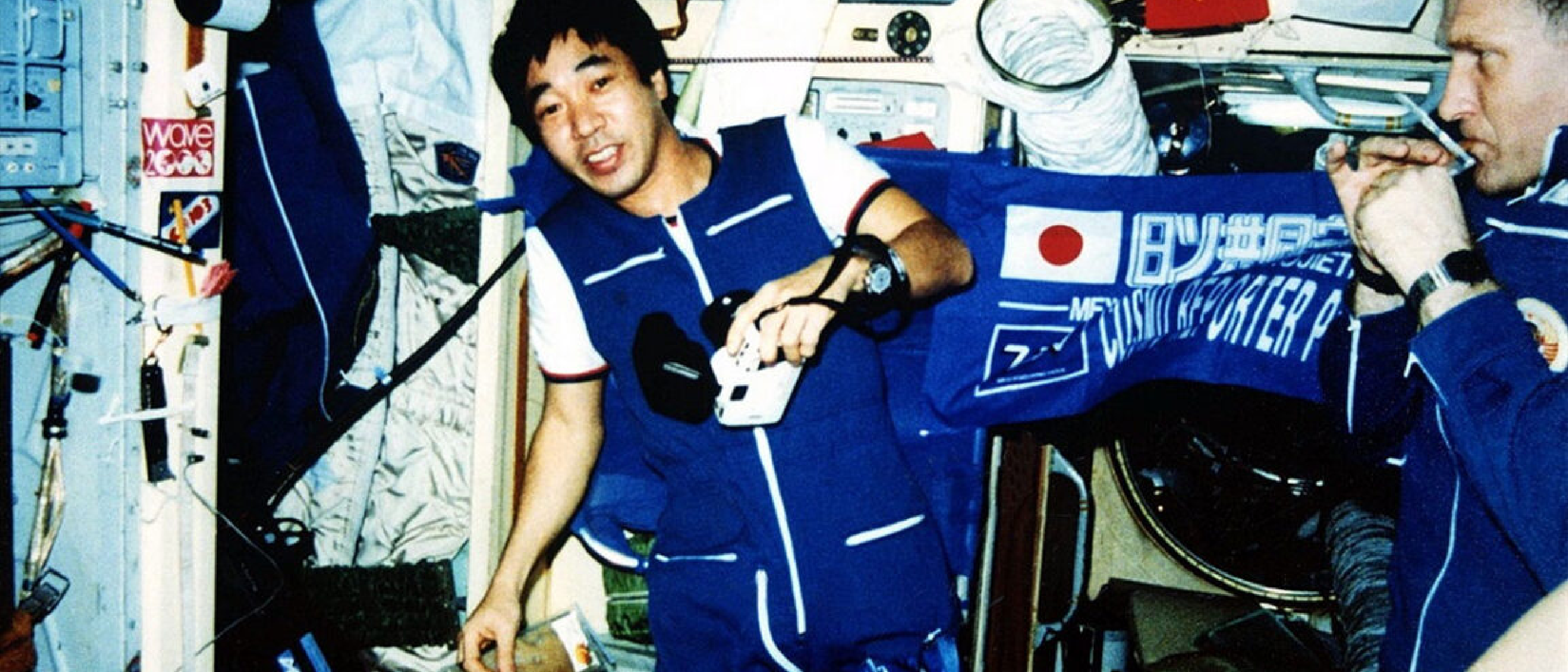
The passing of Toyohiro Akiyama at the age of 84 marks the end of a chapter for both the Japanese aerospace community and the global media landscape. Akiyama, who died on Wednesday, August 26, 2024, due to lower gastrointestinal bleeding, was not merely a passenger on a spacecraft; he was a trailblazer who redefined the intersection of commercial sponsorship, journalism, and orbital exploration. As the first Japanese citizen to launch into space and the first journalist to file reports while aboard a spacecraft, his legacy is etched into the history of the Soyuz program and the evolution of space-based communication.
The Genesis of a Commercial Space Pioneer
The journey of Toyohiro Akiyama began not in a cockpit, but in a newsroom. As a dedicated correspondent for the Tokyo Broadcasting System (TBS), Akiyama was part of a corporate culture that sought to push the boundaries of storytelling. To celebrate the network’s 40th anniversary, TBS launched an internal competition to find an employee who could represent the company in the ultimate reporting assignment: a trip to the stars.
The selection process was rigorous. Out of 162 TBS employees who applied, Akiyama was chosen. This selection marked a pivotal shift in how spaceflight was perceived. While the era of the “professional astronaut” was well-established, Akiyama represented the emergence of the commercially-sponsored cosmonaut. This precursor to today’s private space tourism industry demonstrated that with the right corporate backing and rigorous training, non-government personnel could contribute to the scientific and cultural value of orbital missions.
Technical Rigor: Training at Star City
One does not simply board a Soyuz capsule without an exhaustive technical foundation. Akiyama’s preparation took place at the Gagarin Cosmonaut Training Center in Star City, located on the outskirts of Moscow. This facility is renowned for its grueling regimen, designed to prepare crews for the psychological and physical tolls of microgravity and the high-G forces of launch and reentry.
Akiyama’s training involved:
- Centrifuge Training: Simulating the intense gravitational loads experienced during ascent and descent.
- Survival Training: Preparing for the possibility of landing in remote wilderness areas.
- Systems Management: Learning the intricate controls of the Soyuz TM-11 spacecraft to ensure safety and operational efficiency.
- Microgravity Adaptation: Understanding how to operate equipment and maintain health in a weightless environment.
His assignment to the Soyuz TM-11 crew was a testament to his discipline. By successfully navigating this training, Akiyama proved that the “journalist-astronaut” was a viable role, bridging the gap between technical operation and public communication.
The Impact of Space-Based Journalism
The most significant contribution of Akiyama’s mission was the act of reporting from orbit. Before Akiyama, space missions were largely narrated by ground control or through pre-recorded logs. Akiyama changed this by filing reports in real-time, providing a first-person perspective that humanized the experience of spaceflight for the general public.
This shift in communication is analogous to how we see the evolution of technology in other sectors. Just as we have seen the transition from simple connectivity to complex ecosystems—much like how USB‑C on Your Phone: More Than Just Charging and Data illustrates the expansion of hardware capabilities—Akiyama expanded the “bandwidth” of space exploration. He turned the spacecraft into a mobile news bureau, proving that the vacuum of space was not a barrier to the flow of information.
By documenting his experiences, Akiyama provided a blueprint for future “space journalists” and commercial payloads. He demonstrated that the value of a mission is not only found in the scientific data collected but also in the narrative shared with the world.
Legacy and the Future of Commercial Spaceflight
Toyohiro Akiyama’s mission occurred during a transitional period for global space agencies. His role as a commercially-sponsored cosmonaut paved the way for the current era of private spaceflight, where companies like SpaceX and Axiom Space regularly send private citizens and researchers to the International Space Station (ISS).
The “Akiyama Model”—corporate sponsorship paired with a specific professional objective (in his case, journalism)—is now the standard for many modern missions. Today, we see a similar drive for transparency and structured frameworks in high-stakes industries. For instance, the demand for clarity in how AI is governed, as seen in the Lawsuit Targets Secret Trump AI Safety Review Framework , mirrors the need for clear protocols that Akiyama had to follow during his tenure with the Russian space program.
Furthermore, Akiyama’s life and career remind us of the fragility and resilience of the human body. While he conquered the challenges of space, his passing at 84 due to gastrointestinal complications highlights the biological realities that all humans face, regardless of whether they have seen the Earth from 400 kilometers above. This intersection of extreme achievement and human vulnerability is a theme often explored in the legacies of cultural icons, similar to the narrative found in the story of Zyzz: The Rise, Tragedy, and Legacy of a Fitness Icon .
FAQ
Who was Toyohiro Akiyama?
Toyohiro Akiyama was a Japanese journalist and the first Japanese citizen to travel to space as a commercially-sponsored cosmonaut.
Which spacecraft did he fly on?
He was assigned to the Soyuz TM-11 crew.
Where did he train for his mission?
He trained at the Gagarin Cosmonaut Training Center in Star City, near Moscow.
What was his primary achievement during the mission?
He was the world’s first journalist to file reports while aboard a spacecraft, bridging the gap between orbital exploration and mass media.
When and how did he pass away?
He died on August 26, 2024, at the age of 84, due to lower gastrointestinal bleeding.
Conclusion
Toyohiro Akiyama was more than a correspondent; he was a pioneer who expanded the definition of what it means to be an astronaut. By blending the technical requirements of the Soyuz program with the communicative goals of TBS, he opened the doors for the commercialization of space and the democratization of orbital reporting. His life serves as a reminder that curiosity, when backed by rigorous training and corporate vision, can literally take a person to new heights. As the world moves toward a future of lunar bases and Martian colonies, the precedent set by Akiyama—that space is a place for storytelling and public engagement—remains more relevant than ever.
Source: Original Article