



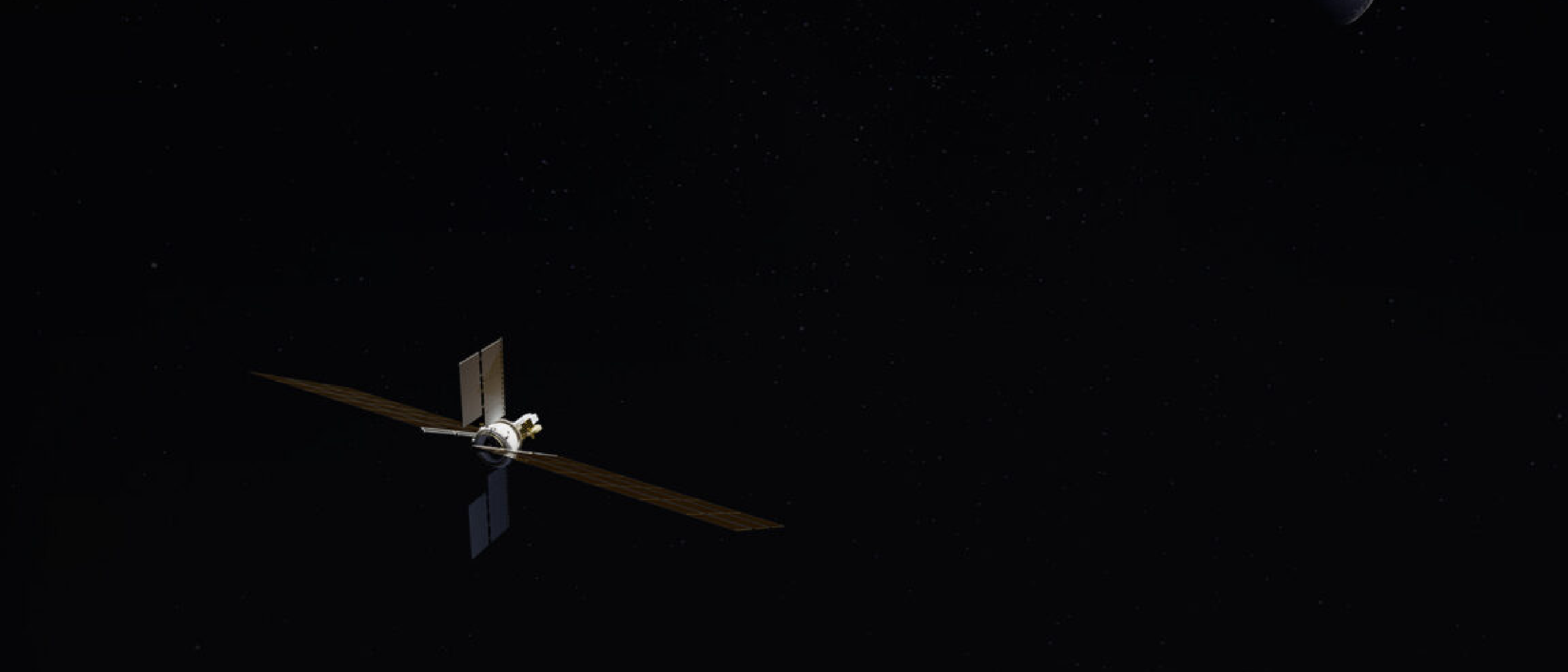
The Carlisle Brothers’ Leap from Falcon 9 to Argo Space
Robert, Ryan, and Kirby Carlisle spent years fine‑tuning the Falcon 9 launch vehicle at SpaceX, contributing to the reliability that now powers dozens of commercial missions each year. In late 2022, the trio decided to pivot from launch‑vehicle engineering to a problem that has haunted orbital operators since the dawn of the space age: the reliance on Earth‑originated propellant. Their new venture, Argo Space, is built around the premise that a spacecraft should be able to refuel without ever returning to the ground. By focusing on in‑space infrastructure rather than rockets, the brothers aim to create a logistics network that mirrors terrestrial supply chains—only it operates in microgravity.
The decision to leave a high‑profile employer like SpaceX was not taken lightly. The brothers cited two primary motivations: first, the desire to solve the “propellant bottleneck” that limits mission duration and flexibility; second, the belief that the next wave of space economics will be driven by reusable, self‑sustaining assets. Their background on Falcon 9 gave them intimate knowledge of propulsion cycles, thermal management, and the cost structures that make Earth‑launched fuel so expensive. Argo Space is therefore positioned to leverage that expertise while charting a new technical direction.
Why Water‑Based Propulsion Is a Game‑Changer
Water is abundant throughout the Solar System—locked in ice caps on the Moon, trapped in the regolith of Mars, and present as vapor in the exospheres of many moons and asteroids. Using water as a propellant offers several strategic advantages:
- Universal Availability: Unlike refined kerosene or liquid hydrogen, water does not require complex manufacturing infrastructure to be turned into a usable propellant. Simple extraction and purification processes can be deployed on a variety of bodies.
- Safety and Storage: Water is non‑toxic, non‑corrosive, and can be stored at ambient temperature, reducing the thermal shielding and venting requirements that plague cryogenic fuels.
- Dual‑Use Capability: In a water‑electrolysis system, the same resource can be split into hydrogen and oxygen for high‑performance thrust, while the un‑split water can serve as a reaction mass for low‑thrust, high‑efficiency electric propulsion.
These factors translate directly into lower launch mass, reduced mission risk, and the possibility of “fuel‑as‑a‑service” stations positioned at lunar poles or Martian orbit. The concept also aligns with broader sustainability goals: a spacecraft that can “drink” from the Moon’s ice and continue operating without a fresh supply from Earth dramatically cuts the carbon footprint of each mission.
Technical Breakdown of Argo’s Propulsion Concept
Argo Space’s water‑based propulsion system is still under development, but the publicly disclosed architecture can be divided into three core subsystems:
Extraction & Purification Module
- Utilizes robotic drills and heated regolith ovens to sublimate lunar ice.
- Incorporates a series of filters and catalytic beds to remove contaminants, ensuring the water meets the purity thresholds required for electrolysis or direct heating.
Electro‑Thermal Thruster
- The primary engine design is a resistively heated nozzle that vaporizes water into steam, which expands through a convergent‑divergent (de Laval) nozzle to produce thrust.
- Specific impulse (Isp) values are projected in the 250–300 s range—lower than chemical rockets but sufficient for orbital transfers, station‑keeping, and de‑orbit maneuvers.
Electro‑lysis Powertrain (Optional Upgrade)
- For missions demanding higher Δv, the system can split water into hydrogen and oxygen using a solid‑oxide electrolyzer powered by solar arrays or nuclear generators.
- The resulting gases feed a conventional bipropellant thruster, boosting Isp to 350–380 s while still relying on a single, locally sourced resource.
The modular nature of the design means a single spacecraft could switch between low‑thrust steam mode for routine adjustments and high‑thrust bipropellant mode for rapid orbital insertion. Moreover, the reliance on water simplifies the supply chain: a single storage tank can serve both propulsion modes, reducing mass and complexity.
Industry Impact and Competitive Landscape
Argo Space is entering a niche that has attracted attention from both established aerospace firms and emerging startups. Companies such as Astroscale and Momentus have demonstrated in‑orbit servicing capabilities, but they still depend on conventional propellants launched from Earth. Meanwhile, SpaceX itself is exploring methane production on Mars for its Starship program, indicating a broader industry shift toward in‑situ resource utilization (ISRU).
The strategic implications are profound:
- Reduced Launch Costs: By eliminating the need to lift large quantities of fuel, launch providers can allocate more mass to payloads, driving down per‑kilogram costs.
- Extended Mission Lifetimes: Satellites equipped with water‑replenishment capability could operate for decades, reshaping business models for communications constellations.
- New Market Segments: “Fuel‑as‑a‑service” stations could become revenue generators, similar to terrestrial fuel depots, creating a recurring‑revenue ecosystem for space logistics.
Security considerations also surface. As terrestrial platforms like Zoom have shown, software vulnerabilities can compromise entire networks. In a similar vein, the Zoom Annotation Flaw and the Zoom Zero‑Day Exploit underscore how a single breach can cascade across millions of users. For space infrastructure, a compromised propulsion module could jeopardize an entire orbital hub. Argo Space will need to embed robust cybersecurity measures from the hardware level up, ensuring that command‑and‑control links are authenticated, encrypted, and resilient against both cyber and physical attacks.
Future Outlook: From Lunar Ice to a Propellant‑Free Economy
Looking ahead, the roadmap for Argo Space can be visualized in three phases:
- Demonstration in Low Earth Orbit (LEO) – A small satellite will carry a prototype steam thruster, validating water storage, heating, and thrust vector control in microgravity.
- Lunar Demonstrator – A lander equipped with the extraction module will harvest ice from the Shackleton crater region, refuel a test vehicle, and perform a powered ascent back to lunar orbit.
- Commercial Service Network – Once the technology matures, a constellation of autonomous refueling stations could be positioned at key Lagrange points, enabling deep‑space missions to Mars, the asteroid belt, and beyond without carrying all propellant from Earth.
If successful, Argo Space’s approach could usher in a “propellant‑free” economy where the only material launched from Earth is the hardware needed to harvest and process water. This paradigm shift would not only accelerate scientific exploration but also democratize access to space for emerging nations and private enterprises.
FAQ
Q: How does water‑based propulsion compare to traditional chemical rockets in performance? A: Steam thrusters offer lower specific impulse (≈250 s) than kerosene/LOX engines (≈300 s) but are far simpler, safer, and can be refueled in
in‑situ using locally sourced water, which dramatically reduces the mass penalty of carrying all propellant from Earth. For missions that prioritize high Δv—such as interplanetary transfers—Argo’s optional electro‑lysis upgrade can boost Isp into the 350‑380 s range, narrowing the gap with conventional bipropellant systems while still relying on a single, ubiquitous resource.
Q: What are the primary technical challenges Argo Space must overcome? A: The biggest hurdles are (1) efficient extraction of water from lunar regolith, which requires reliable drilling and heating under extreme temperature swings; (2) achieving high‑purity water to prevent nozzle erosion and electrolyzer fouling; and (3) integrating power‑dense solar or small‑fission sources to drive the electro‑lysis process without adding prohibitive mass. Thermal management in vacuum and ensuring long‑term reliability of moving parts are also critical.
Q: How does Argo’s approach differ from NASA’s planned ISRU for the Artemis program? A: NASA’s ISRU roadmap focuses primarily on producing oxygen from lunar regolith for life‑support and as an oxidizer for methane‑based rockets. Argo’s system treats water as a complete propellant, using it directly as steam or splitting it into hydrogen and oxygen for thrust. This dual‑use philosophy reduces the number of separate processing plants needed on the surface and allows a single commodity—water—to serve both propulsion and, potentially, life‑support needs.
Q: Could water‑based propulsion be used for deep‑space missions beyond the Moon? A: Yes. Asteroids, Phobos, Deimos, and the Martian polar caps all contain water ice. A spacecraft equipped with Argo’s modular thruster could harvest ice en route, perform electro‑lysis, and generate high‑Isp thrust for trajectory corrections or orbital insertion around distant bodies. The key is scaling the extraction hardware to operate in low‑gravity environments, a challenge Argo is already addressing through partnerships with robotic mining firms.
Q: What are the cybersecurity implications of an autonomous refueling network? A: An orbital fuel depot must communicate with multiple clients, receive navigation updates, and execute propellant transfer commands. If an adversary were to hijack these links, they could deny service, cause collisions, or even induce uncontrolled thrust events. Argo plans to implement end‑to‑end encryption, hardware‑rooted trust modules, and redundant command pathways, drawing lessons from terrestrial critical‑infrastructure security standards such as IEC 62443.
Q: When can we expect to see the first Argo‑powered satellite in orbit? A: The company has announced a target launch window in Q4 2027 for a 6U CubeSat demonstrator that will carry a scaled‑down steam thruster. The mission will perform a series of orbit‑raising maneuvers using water stored in a pressurized tank, validating thrust vector control and propellant accounting algorithms.
Roadmap Highlights and Milestones
| Timeline | Milestone | Significance |
|---|---|---|
| Q4 2027 | LEO Demonstrator launch | First in‑space validation of steam thrust and water storage. |
| Mid‑2028 | Lunar Extraction Testbed (partnered with a commercial lander) | Prove drilling, heating, and purification on the Moon’s south‑pole regolith. |
| 2029 | Orbital Refueling Prototype | Deploy a small refueling station at Earth‑Moon L2, offering “fuel‑as‑a‑service” to visiting payloads. |
| 2029‑2030 | Electro‑lysis Upgrade flight | Demonstrate high‑Isp bipropellant mode using on‑board water splitting. |
| 2031+ | Commercial Service Network rollout | Scale to multiple depots at Lagrange points, lunar orbit, and Martian orbit. |
Each step is designed to de‑risk the technology while building a revenue stream that can fund the next phase. Early customers are expected to be satellite operators seeking extended mission lifetimes and lunar exploration agencies looking for affordable ascent stages.
Potential Economic Impact
If Argo’s water‑propulsion system achieves the projected performance and reliability, the cost savings could be transformative:
- Launch Cost Reduction: By shaving off up to 30 % of launch mass dedicated to propellant, launch providers could lower per‑kilogram fees by a comparable margin.
- Extended Satellite Lifespans: Operators could add 5‑10 years of service to GEO satellites by periodically refueling at a lunar‑orbit depot, increasing the net present value of each asset.
- New Business Models: “Propellant‑as‑a‑service” (PaaS) could become a recurring revenue model, similar to cloud computing, where customers pay per kilogram of water delivered to orbit rather than upfront launch costs.
A rough back‑of‑the‑envelope calculation suggests that a 500 kg GEO satellite could save roughly 150 kg of launch mass by using water‑based station‑keeping. At a launch price of $5,000 per kilogram, that translates to a $750,000 saving per satellite—significant when multiplied across a constellation of dozens or hundreds.
Challenges Ahead and the Path Forward
While the promise is compelling, several non‑technical factors could influence Argo’s trajectory:
- Regulatory Landscape – International treaties governing the extraction of lunar resources are still evolving. Argo will need to secure clear legal rights to harvest and commercialize lunar ice.
- Supply Chain Maturity – The market for space‑qualified drilling rigs, high‑purity filtration media, and compact electrolyzers is nascent. Scaling production will require strategic partnerships and possibly new standards.
- Funding and Investment – Developing a full‑scale refueling network will demand billions of dollars. Argo’s ability to attract long‑term capital will hinge on demonstrating early revenue streams from the LEO demonstrator and lunar testbed.
The Carlisle brothers are well‑positioned to navigate these hurdles, given their track record at SpaceX and their deep technical expertise. Their vision aligns with the broader industry push toward sustainable, in‑situ resource utilization—a trend that is gaining traction among both governmental agencies and private investors.
Conclusion
Argo Space is betting on a simple yet profound idea: water, the most abundant compound in the Solar System, can become the universal fuel of the next space age. By turning lunar ice and asteroid volatiles into thrust, the company aims to untether spacecraft from Earth‑based propellant supply chains, lower launch costs, and enable a new class of long‑duration missions. The technology is still in its infancy, but the roadmap laid out by the Carlisle brothers—starting with a modest LEO demonstrator and culminating in a commercial network of orbital refueling stations—offers a clear path toward a more self‑sufficient, economically viable space economy.
If the upcoming demonstrations succeed, we could soon see a future where a satellite’s “fuel gauge” reads “water,” and the phrase “refuel at the Moon” becomes as commonplace as “refuel at a gas station” is today. The ripple effects would be felt across communications, Earth observation, deep‑space exploration, and even tourism, marking a pivotal step toward a truly interplanetary civilization.
References & Further Reading
- NASA Artemis ISRU Strategy Report (2025)
- “Electro‑Thermal Propulsion Using Water” – Journal of Spacecraft Propulsion, Vol. 42, 2024
- “Cybersecurity for Autonomous Space Infrastructure” – IEEE Aerospace Conference Proceedings, 2023
- Argo Space Press Release, “First LEO Water‑Propulsion Demo Scheduled for Q4 2027” (2026)
Source: Original Article