




Why It Matters
The Phantom Twist represents a paradigm shift in unmanned aerial vehicle (UAV) stealth. Traditional approaches to drone camouflage focus on passive materials or active camouflage systems that mimic background textures. In contrast, the Phantom Twist turns the problem on its head: it re‑engineers the drone’s own motion to outpace the human visual system’s processing speed. By spinning its propellers and body in opposite directions at up to 25 rotations per second, the drone creates a rapid blur that the eye interprets as a faint smudge rather than a distinct object. This perceptual trick reduces visibility by a factor of ten compared to conventional quadcopters, a leap that could redefine how drones operate in sensitive environments.
The implications stretch beyond hobbyist flight. In wildlife research, the drone’s low visual profile minimizes disturbance to nesting birds and other fauna. For infrastructure inspection, operators can gather high‑resolution imagery without alerting on‑site personnel or automated security systems. In military contexts, the technology could enable reconnaissance missions that evade visual detection, raising both strategic advantages and ethical concerns.
Technical Breakdown
Design & Mechanics
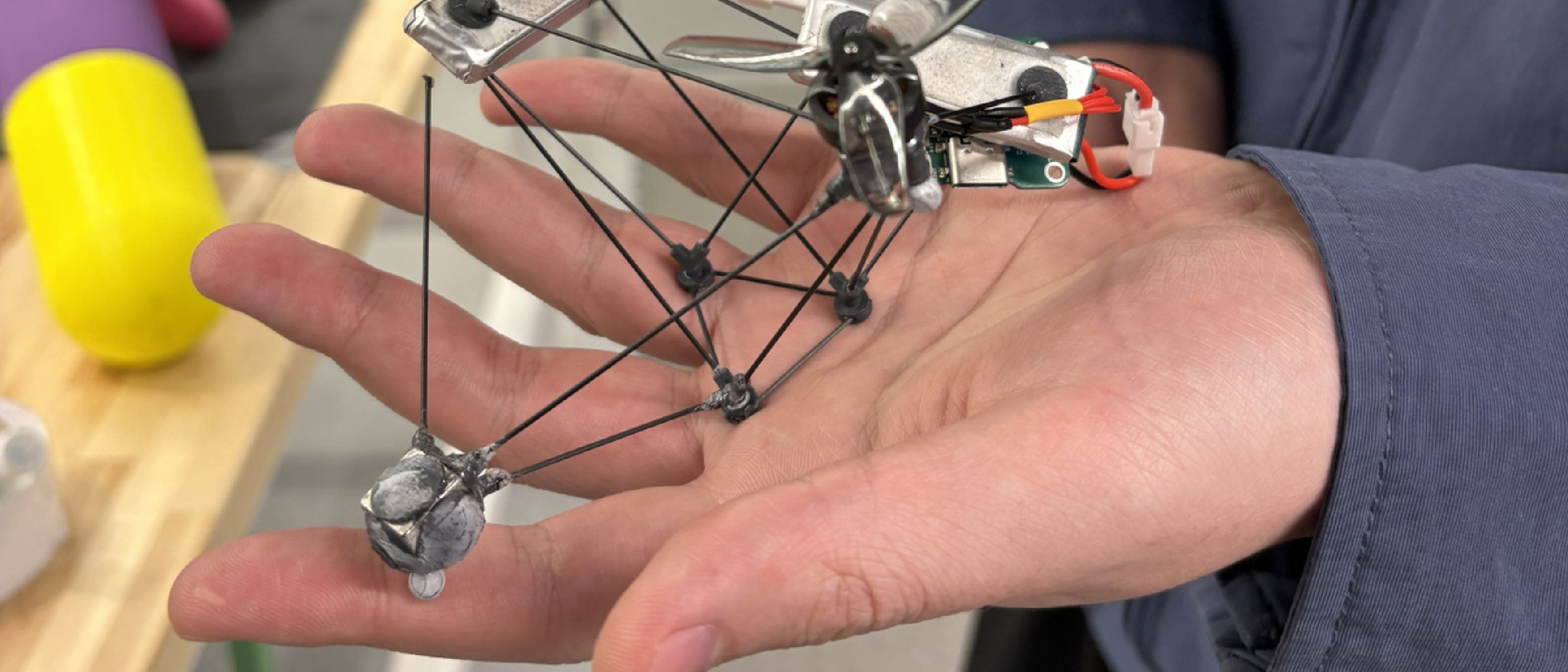
- Counter‑rotating Propellers: The Phantom Twist’s propeller and body spin in opposite directions, breaking the synchrony that typically allows the human eye to lock onto a moving target.
- Vertical Component Separation: Propellers, wiring, circuit boards, batteries, and counterweights are positioned at distinct heights, creating empty space that further dilutes the drone’s silhouette.
- Minimal Static Mass: Unlike quadcopters that carry a fixed frame, the Phantom Twist eliminates static components, preventing the eye from establishing a stable reference point.
- Optical Illusion: At 25 rpm, the drone’s motion blur resembles the “ghostly smudge” effect seen in the Predator film’s cloaking demonstration, blending opaque parts with the background.
Visibility & Stealth Limitations
- 10× Reduction, Not Full Invisibility: While the drone is significantly less visible, it remains detectable under close scrutiny or with high‑resolution imaging.
- Audible Signature: The rapid spinning generates a whirring noise that can be picked up by acoustic sensors.
- Partial Visibility of Wires: Support rods and wiring, though minimized, still present a faint visual cue.
- Human‑Perception Dependency: The stealth advantage relies on the human eye’s processing delay; cameras with high frame rates may still capture the drone clearly.
Development Process
- Computational Generation: 20,000 drone designs were produced via parametric modeling.
- AI‑Driven Optimization: Machine learning algorithms rearranged components to minimize visibility metrics.
- Human Vision Modeling: The top 500 designs were simulated across varied landscapes using a perceptual model that accounts for motion blur and background blending.
- Physical Validation: Selected prototypes underwent eye‑test trials, confirming the predicted visibility reduction.
Potential Applications
- Wildlife Surveying: Reduced visual and acoustic disturbance for sensitive species.
- Infrastructure Inspection: Real‑time monitoring of bridges, pipelines, and power lines without alerting security systems.
- Civilian Surveillance: Low‑profile monitoring for law enforcement or emergency response.
- Military Reconnaissance: Stealthy observation that could evade visual detection, though the research team emphasizes civilian uses.
Future Improvements
- Transparent Materials: Incorporating optical‑grade polymers to further mask structural elements.
- Quieter Propulsion: Developing low‑noise motors or ducted fans to address the audible whir.
- Adaptive Spin Rates: Dynamically adjusting rotation speed based on environmental lighting and background complexity.
Industry Impact
The Phantom Twist’s approach dovetails with broader trends in autonomous systems. As the global drone market continues to shrink in cost—drones now cost millions less than the missiles that destroy them—rapid iteration cycles are becoming the norm. In Ukraine, for example, new drone variants have emerged in weeks rather than years, accelerating the arms race. A low‑visibility UAV could tip the balance in asymmetric conflicts, allowing smaller forces to conduct covert operations with reduced risk of detection.
The technology also intersects with the commercial sector. Companies that rely on aerial data collection, such as environmental monitoring firms, could adopt the Phantom Twist to reduce operational footprints. Moreover, the AI‑driven design pipeline demonstrates how generative modeling can accelerate hardware innovation, a concept that resonates with the broader shift toward algorithmic product development.
For those following the latest in defense procurement, the Phantom Twist’s unveiling at the Robotics: Science and Systems conference in Sydney highlights the growing collaboration between academia and industry. The project’s partial funding from the National Science Foundation underscores the strategic importance of stealth technologies in national security.
Future Outlook
Looking ahead, the Phantom Twist could serve as a foundation for a new class of perceptual stealth devices. By integrating adaptive optics or active camouflage, future iterations might achieve near‑complete invisibility across multiple sensory modalities. However, the reliance on human perception also means that advanced imaging systems—such as thermal cameras or high‑speed photogrammetry—could still detect the drone. Consequently, the next wave of stealth UAVs may need to blend motion‑based tricks with material science and sensor fusion.
The ethical landscape will also evolve. While the research team emphasizes civilian applications, the potential for military use raises questions about escalation and civilian safety. As global militaries race toward automated drone warfare, the Phantom Twist exemplifies how technological ingenuity can both empower and complicate conflict dynamics.
FAQ
Q: Is the Phantom Twist completely invisible?
A: No. It reduces visibility by about tenfold compared to standard quadcopters but remains detectable under close inspection or with high‑resolution imaging.
Q: What speeds does the drone spin at?
A: The design achieves up to 25 rotations per second, a speed that induces perceptual blur in the human eye.
Q: Does the drone produce any noise?
A: Yes, the rapid spinning generates a whirring sound, which is a current limitation for stealth operations.
Q: Can the design be scaled for larger drones?
A: The principles are scalable, but larger platforms would require more powerful motors and careful weight distribution to maintain the counter‑rotating effect.
Q: Are there commercial products available?
A: As of now, the Phantom Twist remains a research prototype; no commercial release date has been announced.
Related Reads
- For insights into how stealth technologies intersect with military launch systems, see the recent coverage of the Rocket Lab & SpaceX $266M military launch deal: https://ltdeveloperblogs.github.io/posts/rocket-report-new-launch-rule-may-limit-environmental-regulations-falcon-9-to-hit-moon
- To understand the broader AI landscape and its regulatory challenges, read about YouTube’s new AI slop policies: https://ltdeveloperblogs.github.io/posts/youtube-clarifies-policies-around-ai-slop-and-upsetting-videos
- For a look at how hardware design can influence consumer electronics, explore the Wyze Smart Scale unveiling: https://ltdeveloperblogs.github.io/posts/wyzes-new-smart-scale-can-break-down-your-body-composition-for-less-than-80
Source: Original Article