




Unlocking the Secrets of Egypt’s Theban Necropolis
The Theban necropolis, a sprawling burial ground on the west bank of the Nile, has long captivated archaeologists with its labyrinth of tombs and rich historical tapestry. Home to over 400 tombs, this site offers an unparalleled glimpse into ancient Egyptian funerary practices, societal hierarchies, and environmental challenges. A groundbreaking study published in Frontiers in Environmental Archaeology now sheds light on how burial practices in this region evolved over centuries, revealing a shift from individual, elaborate coffin burials to the reuse of older tombs—a trend that increased burial density and sometimes led to the superposition of bodies.
This research is not just an academic exercise; it provides critical insights into the socio-economic and environmental pressures that shaped ancient Egyptian society. By analyzing Tomb 209, a site dating back to the early 25th Dynasty (754–656 BCE), researchers have uncovered a microcosm of broader historical trends, including the impact of flash flooding, the influence of Nubian culture, and the practicalities of tomb reuse during the Ptolemaic period (305–30 BCE).
The Theban Necropolis: A Historical and Environmental Context
The Theban necropolis is one of the most studied archaeological sites in the world, yet it continues to yield new discoveries. Located in modern-day Luxor, the necropolis served as the burial ground for pharaohs, nobles, and high-ranking officials for over a millennium. Its tombs range from the grandiose, such as the Valley of the Kings, to more modest structures like Tomb 209, which is the focus of this study.
Tomb 209’s location within the Wadi Hatasun, an active drainage channel, made it particularly vulnerable to flash flooding. These environmental conditions created a complex stratigraphy—layers of sediment and artifacts—that archaeologists must carefully untangle to reconstruct the site’s history. The tomb’s abandonment during the Ptolemaic period further complicates its interpretation, as later activities may have disturbed earlier burials.
The original owner of Tomb 209 is believed to have been Nisemro, a high-ranking official of Nubian origin. This detail is significant, as it reflects the cultural and political exchanges between Egypt and Nubia during the 25th Dynasty, a period when Nubian pharaohs ruled Egypt. The presence of Nisemro’s tomb in Thebes underscores the city’s importance as a center of power and administration during this era.
The Integrated Archaeothanatological Approach: A Technical Breakdown
The study’s methodology is a standout feature, combining multiple disciplines to reconstruct the chronological sequence of burials in Tomb 209. The authors employed an integrated archaeothanatological approach, which merges three key analytical techniques:
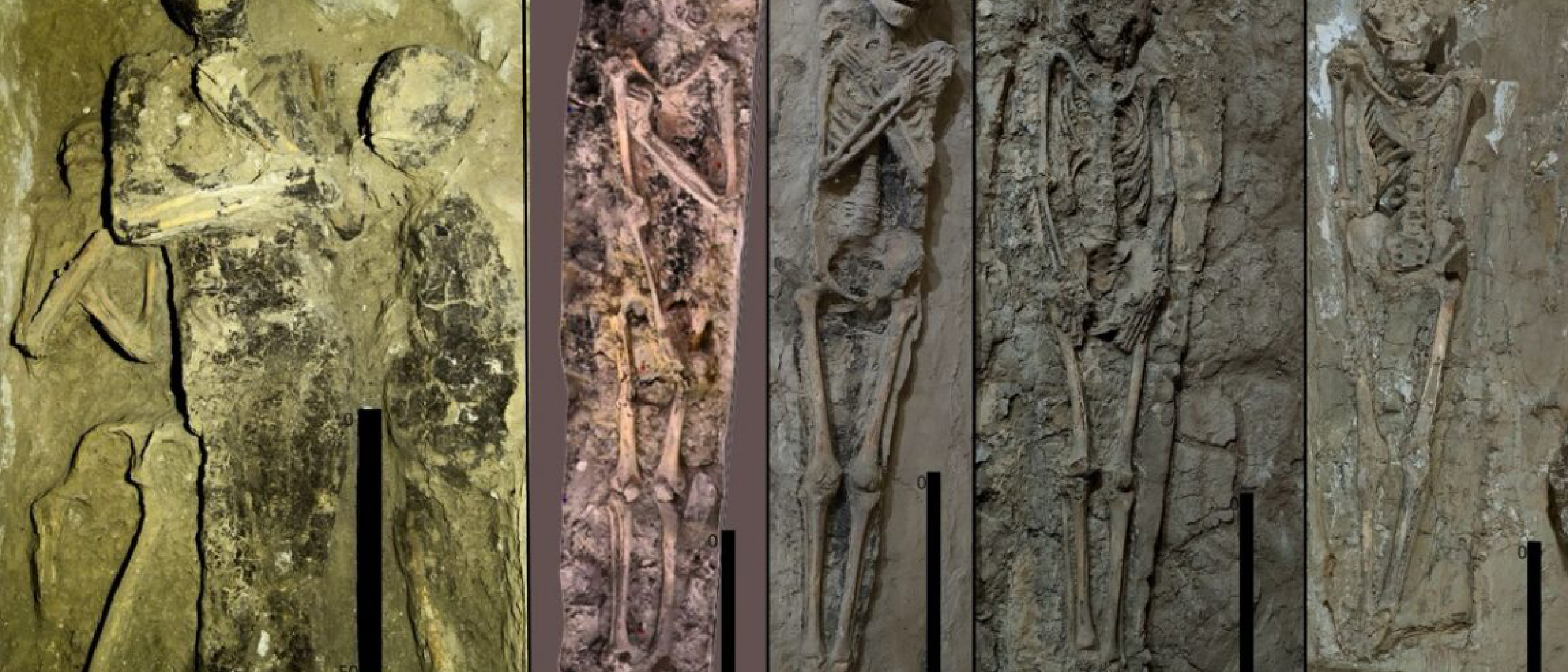
Body Position and Coffin Use: By examining the orientation, posture, and coffin arrangements of the remains, researchers could infer the social status and cultural practices associated with each burial. For example, elaborate coffins often signified higher status, while simpler burials or reused coffins suggested economic constraints or changing funerary traditions.
Stratigraphic Relationships: The layering of sediment and artifacts within the tomb provided a timeline of burials. Flash flooding in the Wadi Hatasun deposited distinct layers of silt, which helped archaeologists distinguish between different phases of tomb use. This stratigraphic data was crucial for identifying periods of abandonment and reuse.
Osteological Analysis: The study of skeletal remains revealed insights into the age, sex, health, and possible causes of death of the individuals buried in Tomb 209. Osteological data also helped determine whether bodies were moved or disturbed during later burials, a common practice in reused tombs.
The focus on Side Chamber 3, one of the tomb’s secondary areas, was particularly fruitful. Unlike other parts of Tomb 209, Side Chamber 3 remained largely undisrupted, offering a clear and undisturbed record of burial practices. This chamber became a time capsule, preserving evidence of the shift from individual burials to the superposition of multiple bodies—a trend that reflects broader changes in Egyptian society.
Why This Research Matters: Industry Impact and Broader Implications
The findings from Tomb 209 are more than just a footnote in Egyptology; they offer valuable lessons for modern archaeology, anthropology, and even climate science. Here’s why this research matters:
1. Understanding Cultural and Economic Shifts
The transition from elaborate individual burials to tomb reuse suggests significant socio-economic changes in ancient Egypt. During the 25th Dynasty, Egypt was under Nubian rule, and the country faced political instability and economic challenges. The reuse of tombs may have been a pragmatic response to these pressures, as families sought to reduce the cost and effort of constructing new burial sites. This trend continued into the Ptolemaic period, reflecting a broader shift in funerary practices across the Mediterranean.
2. Environmental Resilience and Adaptation
The study highlights how ancient societies adapted to environmental challenges. The repeated flash flooding in the Wadi Hatasun would have posed a constant threat to tombs in the area. The fact that Tomb 209 was reused despite these conditions demonstrates the resilience of ancient Egyptians in the face of natural disasters. This research could inform modern discussions about climate resilience, particularly in regions prone to flooding or other environmental hazards.
3. Advancing Archaeological Methodologies
The integrated archaeothanatological approach used in this study sets a new standard for interdisciplinary research. By combining stratigraphy, osteology, and cultural analysis, the authors have created a more holistic understanding of burial practices. This methodology could be applied to other archaeological sites, particularly those with complex stratigraphies or histories of reuse.
4. Cultural Exchange and Identity
The presence of Nisemro, a Nubian official, in Thebes underscores the cultural and political ties between Egypt and Nubia. This research adds to the growing body of evidence that the 25th Dynasty was a period of significant cultural exchange, rather than simply a foreign occupation. Understanding these dynamics is crucial for reconstructing the identities and interactions of ancient societies.
The Future of Theban Necropolis Research
While this study provides a detailed analysis of Tomb 209, it also raises new questions for future research. Here are some key areas that archaeologists may explore next:
Expanding the Scope: The Theban necropolis contains hundreds of tombs, many of which have not been studied in such detail. Applying the integrated archaeothanatological approach to other tombs could reveal whether the trends observed in Tomb 209 were widespread or unique to this site.
Climate and Environmental Studies: The impact of flash flooding on tomb preservation is a critical area of study. Future research could use advanced geospatial technologies, such as LiDAR or ground-penetrating radar, to map the necropolis’s drainage patterns and identify tombs at risk of erosion or flooding. For more on how environmental factors affect archaeological sites, see our article on how heat surges boost pesticide dangers for farmworkers , which explores the intersection of climate and human activity.
Digital Reconstruction: 3D modeling and virtual reality could be used to reconstruct Tomb 209 and other tombs in the necropolis. These tools would allow researchers to visualize the tomb’s evolution over time and share their findings with a broader audience.
Genetic and Isotopic Analysis: Advances in DNA and isotopic analysis could provide further insights into the origins and relationships of the individuals buried in Tomb 209. This data could help trace migration patterns and familial ties within the necropolis.
FAQ: Common Questions About the Theban Necropolis Study
1. What is the Theban necropolis, and why is it important?
The Theban necropolis is a vast burial ground on the west bank of the Nile in modern-day Luxor, Egypt. It contains over 400 tombs, including those of pharaohs, nobles, and high-ranking officials. The site is crucial for understanding ancient Egyptian funerary practices, societal hierarchies, and cultural exchanges.
2. Who was Nisemro, and why does his tomb matter?
Nisemro was likely a high-ranking official of Nubian origin during the 25th Dynasty (754–656 BCE). His tomb, Tomb 209, is significant because it reflects the cultural and political ties between Egypt and Nubia during this period. The study of his tomb provides insights into the burial practices of Nubian elites in Egypt.
3. What is archaeothanatology, and how was it used in this study?
Archaeothanatology is the study of ancient burial practices, combining archaeological, anthropological, and osteological methods. In this study, researchers used an integrated archaeothanatological approach to analyze body positions, coffin use, stratigraphic relationships, and skeletal remains in Tomb 209. This methodology allowed them to reconstruct the chronological sequence of burials and understand how funerary practices evolved over time.
4. How did flash flooding affect Tomb 209?
Tomb 209 is located in the Wadi Hatasun, an active drainage channel prone to flash flooding. These floods deposited layers of silt within the tomb, creating a complex stratigraphy that archaeologists had to carefully analyze. The flooding also contributed to the tomb’s eventual abandonment during the Ptolemaic period.
5. What does the shift from individual burials to tomb reuse tell us about ancient Egyptian society?
The shift from elaborate individual burials to the reuse of older tombs suggests significant socio-economic changes. During periods of political instability or economic hardship, families may have opted to reuse tombs to reduce costs. This trend also reflects a broader shift in funerary practices, where practicality began to outweigh tradition.
6. How can modern technology aid in the study of the Theban necropolis?
Modern technologies like LiDAR, ground-penetrating radar, 3D modeling, and genetic analysis can provide deeper insights into the necropolis. These tools can help map the site, reconstruct tombs virtually, and analyze skeletal remains for clues about migration, health, and familial relationships.
Conclusion: A Window into Ancient Egypt’s Past and Future
The study of Tomb 209 in the Theban necropolis is a testament to the power of interdisciplinary research. By combining archaeology, anthropology, and environmental science, the authors have uncovered a nuanced story of cultural evolution, economic adaptation, and environmental resilience. Their findings not only deepen our understanding of ancient Egyptian burial practices but also offer valuable lessons for modern archaeology and climate science.
As technology advances, the Theban necropolis will continue to yield new discoveries. From digital reconstructions to genetic analysis, the tools available to researchers are more powerful than ever. Yet, the core questions remain the same: How did ancient societies adapt to change? What can their practices teach us about our own world? The answers lie buried in the sands of Thebes, waiting to be uncovered.
For those interested in how modern technology intersects with historical research, our article on how major Chinese car brands are adopting Apple Wallet car keys explores another fascinating blend of innovation and tradition.
Source: Original Article