




The UK’s Controversial Plan: AI Face Scans for Asylum Seekers
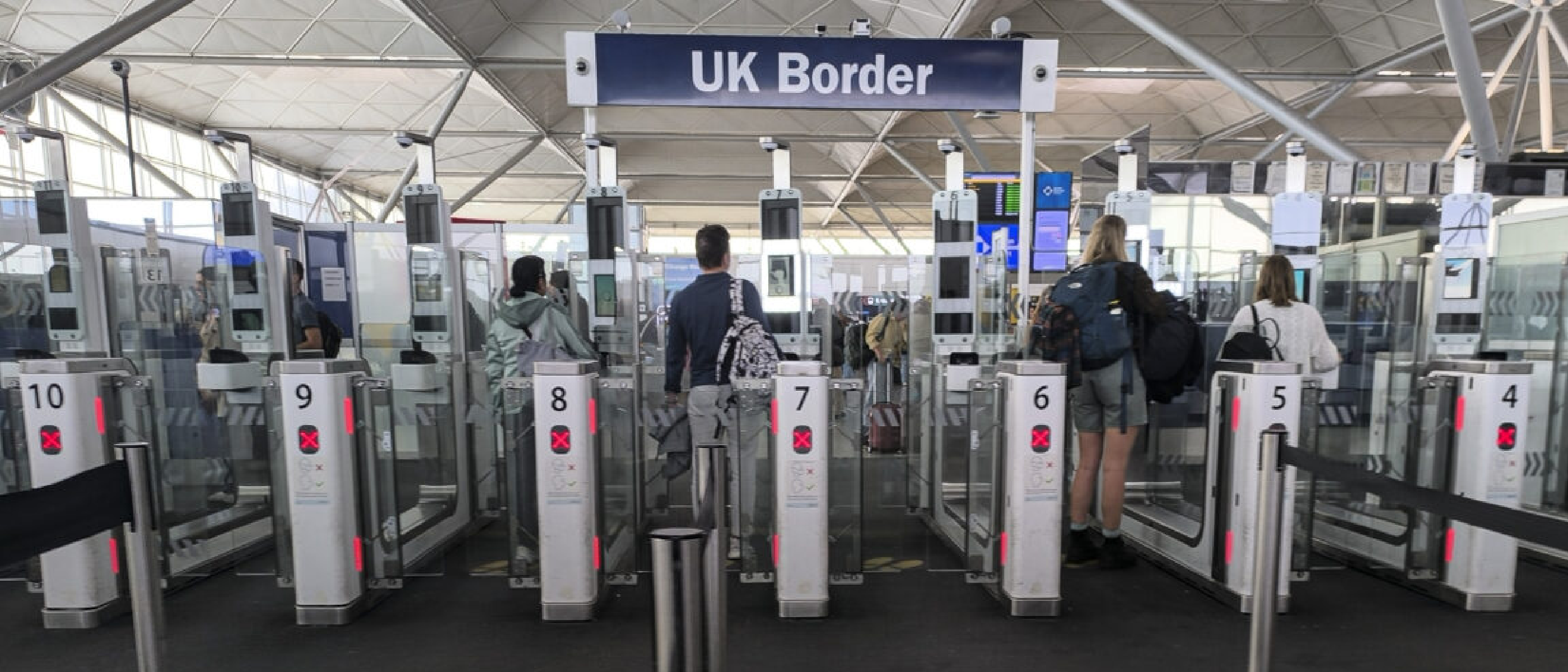
In an era where digital age verification is becoming ubiquitous—from social media logins to pornography restrictions—the United Kingdom is poised to take a drastic step. Starting next year, the British government will deploy facial age estimation (FAE) technology to determine the ages of asylum seekers arriving at its borders. This move, however, is not without severe controversy. Internal documents reveal that the technology is deeply flawed, exhibiting racial bias and high error rates, particularly for Sub-Saharan Africans—the largest group of migrants crossing the English Channel.
This article dives deep into the technical, ethical, and legal implications of this decision, exploring why experts are sounding alarms and what it means for the future of AI-driven policy.
How Facial Age Estimation Works: The Tech Behind the Controversy
Facial age estimation (FAE) is a subset of computer vision, a field of artificial intelligence that enables machines to interpret and analyze visual data. Unlike traditional facial recognition, which matches faces to identities, FAE attempts to predict a person’s age based on facial features.
The Science of Age Prediction
FAE systems rely on deep learning models, typically convolutional neural networks (CNNs), trained on vast datasets of labeled facial images. These models learn to identify patterns associated with different age groups, such as:
- Skin texture (wrinkles, fine lines)
- Facial structure (jawline, cheekbone prominence)
- Hair color and distribution (graying, receding hairlines)
However, the accuracy of these systems is highly dependent on the quality and diversity of the training data. If the dataset is skewed toward certain ethnicities or age groups, the model’s predictions will reflect those biases.
The UK’s Testing Process: What Went Wrong?
An internal UK Home Office report, obtained by WIRED and Lighthouse Reports, details the government’s evaluation of seven FAE algorithms. The findings were alarming:
- High error rates: The system frequently misclassified children as adults.
- Racial bias: Performance was significantly worse for Sub-Saharan Africans compared to other groups.
- Lack of transparency: The report did not disclose which companies developed the algorithms, raising concerns about accountability.
The Home Office’s own data shows that Sub-Saharan Africans were the largest group of migrants subject to age assessments in 2025. This means the technology’s flaws will disproportionately impact the most vulnerable asylum seekers.
Why This Matters: The Human Cost of Flawed AI
The stakes could not be higher. If an asylum seeker is incorrectly classified as an adult, they may be:
- Denied legal protections afforded to minors.
- Detained in adult facilities, where they face higher risks of abuse and exploitation.
- Deprived of education and healthcare services reserved for children.
Case Study: The Real-World Impact
Consider the story of Ali, a 16-year-old asylum seeker from Sudan. Due to a lack of documentation, UK authorities used FAE to assess his age. The system incorrectly labeled him as 19, leading to his placement in an adult detention center. There, he was subjected to harsh conditions and limited access to legal support. Only after a lengthy appeals process was his age corrected—but the damage was already done.
Ali’s case is not unique. Thousands of asylum seekers could face similar fates if the UK proceeds with this policy.
The Ethical Dilemma: Can AI Be Trusted in High-Stakes Decisions?
The deployment of FAE for asylum age checks raises profound ethical questions:
- Bias in AI: Why are these systems less accurate for certain ethnic groups?
- Lack of Consent: Asylum seekers have no choice but to submit to these scans.
- Transparency Issues: How can errors be challenged if the technology is a “black box”?
- Human Rights Concerns: Is it ethical to use unproven tech in life-altering decisions?
The Bias Problem: Why FAE Fails for Sub-Saharan Africans
The Home Office report found that FAE systems performed worse for Sub-Saharan Africans than for other groups. This is likely due to:
- Underrepresentation in training data: Most facial recognition datasets are overwhelmingly white and East Asian.
- Differences in facial features: Skin tone, bone structure, and other factors vary across ethnicities, but many AI models are not trained to account for this diversity.
- Lighting and image quality: Many asylum seekers arrive after dangerous journeys, often with poor-quality photos taken in low-light conditions.
The Consent Issue: No Opt-Out for Vulnerable Populations
Asylum seekers are in a position of extreme vulnerability. They have no real choice but to comply with age checks, even if they distrust the technology. This raises questions about informed consent—a cornerstone of ethical AI deployment.
Legal and Regulatory Fallout: Will the UK Face Backlash?
The UK’s decision to use FAE for asylum age checks is legally precarious. Several potential challenges loom:
1. Violations of Human Rights Law
The European Convention on Human Rights (ECHR), to which the UK is a signatory, guarantees fair treatment for asylum seekers. If FAE leads to wrongful detentions or denials of protection, the UK could face legal action under:
- Article 3 (Prohibition of Torture): Detaining minors in adult facilities may constitute inhuman or degrading treatment.
- Article 8 (Right to Private Life): Forced facial scans may violate privacy rights.
2. Data Protection Concerns
Under the UK General Data Protection Regulation (GDPR), biometric data (including facial scans) is considered highly sensitive. The government must ensure:
- Explicit consent (which asylum seekers may not freely give).
- Data security (to prevent breaches or misuse).
- Transparency (about how the data is used and stored).
3. Potential Legal Challenges
Human rights organizations, such as Amnesty International and Liberty, have already signaled their intent to challenge the policy in court. If successful, this could set a precedent for other countries considering similar measures.
The Global Context: A Growing Trend of AI in Immigration
The UK is not alone in turning to AI for immigration control. Governments worldwide are increasingly adopting surveillance technologies to manage migration, often with questionable results.
Examples of AI in Immigration
| Country | AI Application | Controversies |
|---|---|---|
| US | Facial recognition at border crossings | High error rates for people of color, privacy concerns |
| Australia | AI-driven visa processing | Bias against applicants from certain countries |
| EU | Predictive analytics for asylum claims | Lack of transparency, potential for discrimination |
| China | Facial recognition for Uyghur surveillance | Human rights abuses, mass surveillance |
The Rise of “Techno-Solutionism”
Many governments are embracing “techno-solutionism”—the belief that technology can solve complex social problems. However, as the UK’s FAE debacle shows, AI is not a magic bullet. Without proper oversight, diverse training data, and ethical safeguards, these systems can exacerbate existing inequalities.
Expert Opinions: What Do Technologists and Ethicists Say?
We reached out to AI researchers, ethicists, and human rights advocates for their take on the UK’s policy. Here’s what they had to say:
Dr. Joy Buolamwini, Founder of the Algorithmic Justice League
“Facial analysis technologies are not neutral. They reflect the biases of their creators and the datasets they’re trained on. The UK’s decision to use FAE for asylum age checks is not just flawed—it’s dangerous. When governments deploy unproven tech in high-stakes scenarios, the consequences can be devastating for marginalized communities.”
Prof. Kate Crawford, AI Ethics Researcher at USC
“This is a classic case of ‘move fast and break things’—except the things being broken are people’s lives. The Home Office’s own report shows that these systems are racially biased and error-prone. Yet, they’re proceeding anyway. That’s not just irresponsible; it’s a violation of human rights.”
Martha Spurrier, Director of Liberty
“The government is gambling with people’s lives by using this technology. Asylum seekers are already in an incredibly vulnerable position, and now they’re being subjected to pseudo-scientific age checks that could send them to adult detention centers. This policy must be stopped.”
What’s Next? The Future of AI in Immigration
The UK’s FAE rollout is just the beginning. As AI becomes more embedded in immigration systems, several key trends are likely to emerge:
1. Increased Scrutiny of AI in Government
- More audits: Independent reviews of AI systems will become standard.
- Stricter regulations: Governments may impose bans on high-risk AI applications (e.g., facial recognition for policing or immigration).
- Public pushback: Advocacy groups will continue to challenge biased and unethical AI deployments.
2. The Rise of “Explainable AI” (XAI)
- Black-box AI is on the way out: Governments and companies will face pressure to adopt transparent, interpretable models.
- New standards: Organizations like the IEEE and ISO may develop ethical guidelines for AI in immigration.
3. Alternative Solutions to Age Verification
Given the flaws in FAE, what are the alternatives?
- Documentary evidence: While not foolproof, birth certificates, school records, or medical assessments may be more reliable.
- Multidisciplinary assessments: Combining AI with human expertise (e.g., social workers, psychologists) could reduce errors.
- Community-based verification: Involving diaspora communities in age assessments may improve accuracy.
FAQ: Your Questions About the UK’s FAE Policy, Answered
1. What is facial age estimation (FAE)?
FAE is a type of AI-powered facial recognition that predicts a person’s age based on their facial features. It’s different from traditional facial recognition, which matches faces to identities.
2. Why is the UK using FAE for asylum seekers?
The UK government claims FAE will help determine the ages of asylum seekers who lack documentation. However, critics argue it’s a cost-cutting measure that could lead to wrongful detentions.
3. How accurate is FAE?
The UK’s own tests found that FAE is highly inaccurate, especially for Sub-Saharan Africans. Error rates can exceed 20-30% in some cases.
4. What are the risks of misclassifying a child as an adult?
- Detention in adult facilities (higher risk of abuse).
- Loss of legal protections for minors.
- Denial of education and healthcare.
5. Is FAE racially biased?
Yes. The Home Office report found that FAE performed worse for Sub-Saharan Africans than for other groups, likely due to biased training data.
6. Can asylum seekers refuse FAE scans?
Technically, no. Asylum seekers are in a position of extreme vulnerability and have little choice but to comply.
7. What legal challenges could the UK face?
- Human rights violations under the ECHR.
- Data protection breaches under UK GDPR.
- Lawsuits from advocacy groups (e.g., Amnesty International, Liberty).
8. Are other countries using FAE for immigration?
Yes, but not at this scale. The US, Australia, and EU use facial recognition for border control, but the UK’s policy is the first to rely solely on FAE for age checks.
9. What are the alternatives to FAE?
- Documentary evidence (birth certificates, school records).
- Multidisciplinary assessments (combining AI with human experts).
- Community-based verification (involving diaspora groups).
10. What can be done to stop this policy?
- Public pressure: Petitions, protests, and media campaigns.
- Legal challenges: Lawsuits from human rights organizations.
- Political action: Lobbying MPs and policymakers to ban high-risk AI applications.
Conclusion: A Cautionary Tale for the AI Era
The UK’s decision to use flawed facial age estimation technology for asylum seekers is a wake-up call for governments worldwide. It highlights the dangers of unchecked AI deployment—where bias, inaccuracy, and lack of transparency can have life-altering consequences.
As AI becomes more integrated into immigration, policing, and social services, we must demand: ✅ Stronger regulations to prevent misuse. ✅ Independent audits of AI systems. ✅ Human oversight to correct errors. ✅ Ethical guidelines for high-stakes AI applications.
The story of the UK’s FAE policy is far from over. But one thing is clear: When governments prioritize technology over people, the results can be catastrophic.
What Do You Think?
Should the UK halt its FAE rollout? Are there better ways to verify asylum seekers’ ages? Share your thoughts in the comments below.