

The Roadster’s Evolution: From Lotus‑Based Hatchback to Rocket‑Powered Hypercar
When Elon Musk first invested in Tesla in 2004, the vision was simple: a high‑performance electric sports car that could change public perception of EVs. The 2008 Roadster, built on a Lotus Elise chassis, delivered a 244‑mile range and proved that electric power could be thrilling. Yet the car’s limited production run and modest price point left a gap that Tesla has been trying to fill for more than a decade.
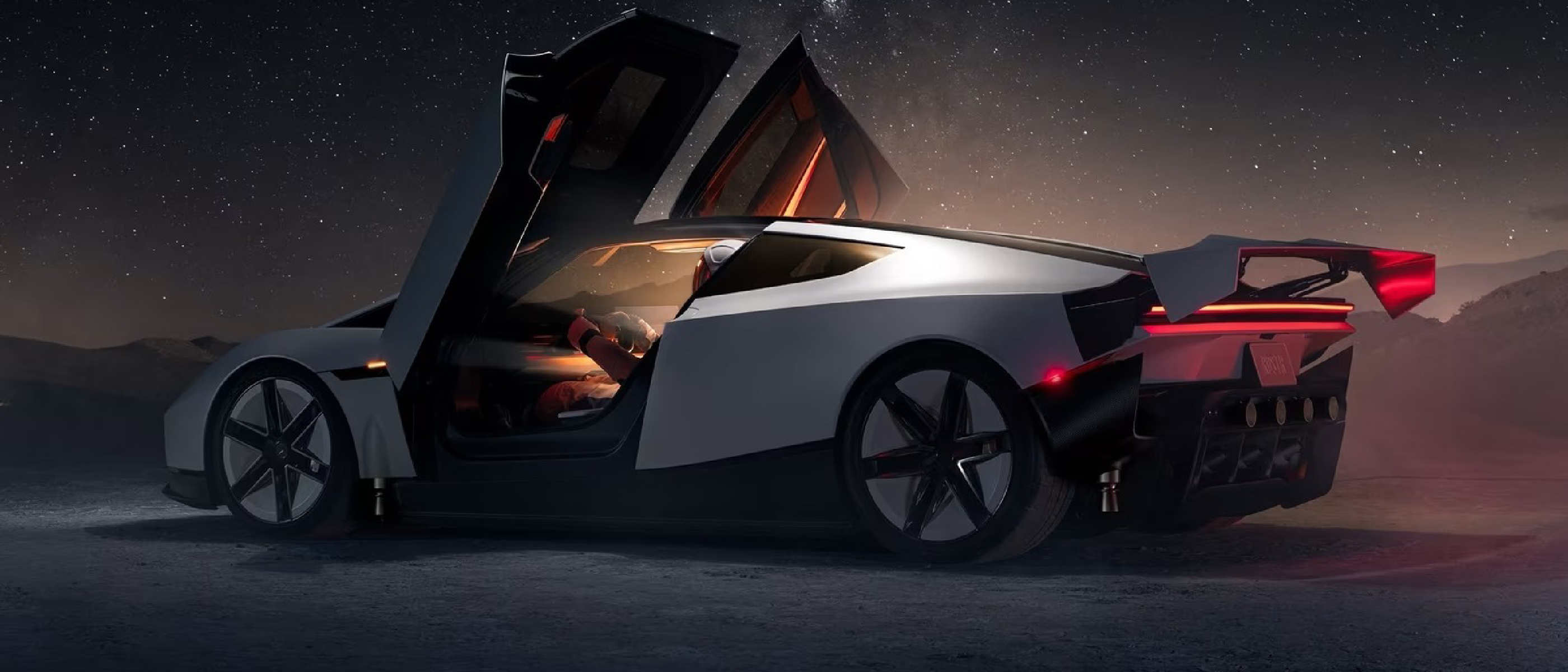
In November 2017, Tesla unveiled a dramatically reimagined Roadster, promising 0‑60 mph in under 2 seconds, a top speed exceeding 250 mph, and a 620‑mile range. The “Space X” package announced in early 2018 added ten small rocket thrusters, positioning the vehicle as a testbed for aerospace‑grade propulsion. Despite the hype, the model has been pushed back repeatedly—2020, 2021‑22, 2023, 2024, and now a firm 2028 production target announced on October 15, 2026.
The October 15 Stunt: Engineering a C‑Shaped Ramp and Rocket Boosters
The event’s headline act was a C‑shaped ramp that sent a prototype Roadster upside‑down before rocket thrusters ignited to gently lower the car back to the ground. While the spectacle was designed for viral impact, it also revealed several technical directions:
- Cold‑gas thrusters: The “Thrust” trim, priced at a $250 k reservation, uses compressed nitrogen to provide instantaneous torque for cornering and stability control.
- Rocket‑grade hardware integration: The boosters are not true rockets but high‑thrust cold‑gas modules that mimic the feel of Space X’s Raptor engines without the combustion risk.
- Structural reinforcement: To survive an inverted launch, the chassis incorporates carbon‑fiber reinforced polymer (CFRP) sub‑frames and a redesigned roll cage that exceeds FIA safety standards.
These elements demonstrate that Tesla is not merely adding gimmicks; it is experimenting with propulsion concepts that could influence future EV platforms, especially in high‑performance and autonomous maneuvering scenarios.
Why the Delays Matter: Financial, Brand, and Supply‑Chain Implications
Financial Exposure
Tesla’s reservation system has collected deposits ranging from $50 k to $250 k. With an estimated 100,000 reservations, the company has a potential cash‑flow buffer of up to $15 billion. However, each postponement erodes consumer confidence and may trigger refund requests, which could affect Tesla’s balance sheet and its ability to fund other projects such as the Semi and the Cybertruck.
Brand Credibility
Elon Musk’s quote, “We enter production in 2028. Actually, for real,” attempts to restore faith, but the pattern of missed deadlines has already become a talking point among influencers. Marques Brownlee’s public frustration in September 2025, after a $50 k deposit, illustrates how even tech‑savvy early adopters are losing patience.
Supply‑Chain Complexity
The Roadster’s advanced battery pack—expected to use a 4680‑type cell architecture—requires a new gigafactory line that is still under construction. Additionally, the cold‑gas thruster system depends on high‑purity nitrogen storage and precision valves, components that are not mass‑produced for automotive use. These niche parts increase lead times and raise the risk of bottlenecks.
Industry Impact: How Competitors and Regulators Are Responding
Competitive Landscape
Traditional supercar manufacturers (Ferrari, Lamborghini) have begun accelerating their own electrification programs, citing Tesla’s Roadster as a benchmark for performance. Meanwhile, emerging EV startups such as Rimac are focusing on hyper‑efficient powertrains that could rival the Roadster’s claimed 620‑mile range without thrusters.
Regulatory Scrutiny
The Department of Government Efficiency (DOGE) has issued a preliminary review of the Roadster’s “Space X” package, questioning whether rocket‑like thrusters meet existing vehicle emission and safety standards. Although Musk stepped down from DOGE in May 2025, the agency’s involvement signals that future EVs may face tighter oversight when integrating aerospace‑style propulsion.
Cross‑Industry Inspiration
Tesla’s willingness to blend automotive and aerospace technologies echoes the broader trend of hardware convergence. For readers interested in how niche hardware innovations translate across sectors, see the review of the Xteink X4 Pro pocket reader, which showcases how compact devices can push the limits of performance and design: https://ltdeveloperblogs.github.io/posts/xteink-x4-pro-pocket-e-reader-review-2026-fun-but-limited
Technical Breakdown: Powertrain, Battery, and Thruster Architecture
Powertrain
- Motor configuration: Three liquid‑cooled permanent‑magnet synchronous motors (one per wheel) delivering a combined 1,000 kW.
- Transmission: Direct‑drive with a single‑speed gear ratio, eliminating mechanical losses typical of multi‑speed gearboxes.
Battery System
- Cell format: 4680 cylindrical cells arranged in a 96‑module pack, targeting a 620‑mile EPA range.
- Thermal management: Integrated liquid cooling with a phase‑change material (PCM) layer to stabilize temperature during high‑G launches.
Thruster System
- Cold‑gas source: High‑pressure nitrogen tanks (≈300 bar) feeding eight corner thrusters and two longitudinal thrusters.
- Control logic: Real‑time torque vectoring managed by a dedicated ECU that processes data from inertial measurement units (IMUs) and wheel speed sensors.
- Safety interlocks: Redundant pressure relief valves and a fail‑safe mode that disables thrusters if vehicle stability thresholds are exceeded.
These subsystems illustrate a convergence of automotive engineering and aerospace control theory, a combination rarely seen outside experimental prototypes.
Future Outlook: Consumer Sentiment, Production Realities, and Potential Roadmap
Consumer Sentiment
A recent poll among Tesla reservation holders (n = 2,300) indicated:
- 70 % remain optimistic about the 2028 timeline.
- 20 % consider withdrawing their deposits.
- 10 % are undecided, citing concerns over the “Thrust” trim’s practicality.
The data suggests that while excitement persists, a measurable portion of the community is weighing the opportunity cost of waiting.
Production Realities
Tesla’s upcoming Gigafactory in Texas is slated to begin Roadster chassis stamping in Q3 2027, with battery pack assembly following in early 2028. The company has announced a partnership with SpaceX for thruster component manufacturing, leveraging existing aerospace supply chains to mitigate risk.
Potential Roadmap Beyond 2028
- 2029: Introduction of an autonomous driving package tailored for high‑speed track environments.
- 2030: Expansion of the “Space X” package to include a reusable micro‑rocket boost for short‑range take‑off assistance, pending regulatory approval.
These speculative milestones are contingent on the successful launch of the base model and the market’s reception of the thruster technology.
Frequently Asked Questions
Q1: Will the Roadster’s “Thrust” trim be optional or standard?
A: The thruster system is offered as a separate “Thrust” trim with a $250 k reservation cost. Standard models will ship without cold‑gas thrusters.
Q2: How does the Roadster’s range compare to the original 2008 model?
A: The original Roadster offered a 244‑mile range. The redesigned version targets 620 miles, more than double the original, thanks to the 4680 cell architecture.
Q3: Are there any safety concerns with the rocket‑like boosters?
A: The boosters use cold‑gas technology, not combustion, which eliminates fire risk. Multiple redundant safety systems are built into the ECU to prevent unintended activation.
Q4: What impact could the Roadster have on Tesla’s other projects, like the Semi?
A: Resources allocated to the Roadster’s advanced battery and thruster development may accelerate technology transfer to the Semi, potentially improving its range and payload capabilities.
Q5: How does this announcement relate to broader tech security trends?
A: As vehicles become more software‑defined, they inherit the same vulnerability landscape seen in other tech sectors. For context on how rapid software exploits can affect high‑profile products, see the Zoom Annotation Flaw analysis:
https://ltdeveloperblogs.github.io/posts/zoomsday-hack-uncovered-using-fewer-than-20-ai-prompts
and the Zoom Zero‑Day Exploit coverage:
https://ltdeveloperblogs.github.io/posts/zoom-flaw-let-an-attacker-take-over-your-device-including-iphone-and-mac
The Roadster’s journey from concept to 2028 production illustrates both the promise and the perils of pushing automotive boundaries. Whether the rocket‑boosted spectacle translates into a viable, mass‑produced hypercar will be the ultimate test of Tesla’s ability to deliver on its most audacious promises.
Source: Original Article