


The Leak That Sparked a Buzz
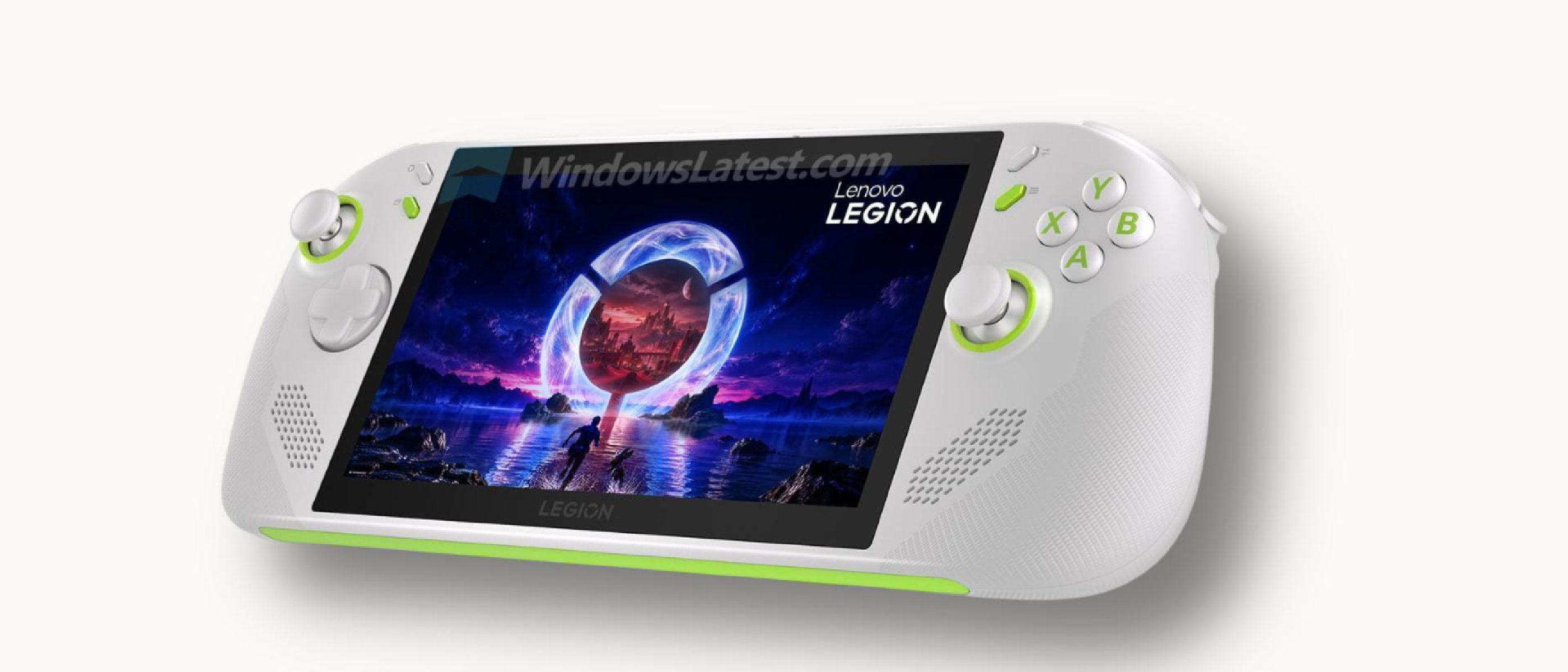
Windows Latest recently published a set of high‑resolution images that reveal Lenovo’s next handheld, the Legion Go Beam. The visual cues are unmistakable: the same large, stippled grips and ergonomic triggers that have defined the Legion Go 2 and Go S line‑up. What sets the Beam apart, however, is a single USB‑C port perched on the top edge—a departure from the dual‑port layout of its predecessors.
The accompanying caption from Windows Latest reads: “Windows Latest has leaked images of the handheld, and there’s no question it’s designed to be a value alternative to even the company’s least expensive Legion Go S variant.” This statement alone positions the Beam as a strategic response to the steep price trajectory that has plagued the current Legion series.
Technical Speculation: What We Know So Far
While Lenovo has kept most specifications under wraps, the leaked visuals allow us to infer several design decisions that will shape the Beam’s performance and user experience.
Core Hardware Assumptions
- CPU/GPU: The Go 2 runs on an AMD Ryzen Z1 Extreme APU, delivering desktop‑class performance at the cost of higher power draw. To keep the Beam affordable, Lenovo may opt for a lower‑tier Ryzen Z1 or even a Z1 Pro, sacrificing a few teraflops but still outclassing most ARM‑based competitors.
- Memory & Storage: Existing Legion handhelds ship with 16 GB of LPDDR5 RAM and 512 GB–1 TB NVMe SSDs. A cost‑focused model could drop to 12 GB RAM and a 256 GB SSD, still sufficient for most modern titles when paired with Windows 11’s game‑mode optimizations.
- Display: The Go S features a 7‑inch 1080p LCD with a 120 Hz refresh rate. Maintaining this panel would preserve visual fidelity while keeping component costs predictable.
Design Trade‑offs
| Feature | Current Legion Go S | Expected Legion Go Beam |
|---|---|---|
| USB‑C ports | 2 (top & side) | 1 (top only) |
| Battery capacity | 53 Wh | Likely similar or slightly smaller |
| Cooling system | Dual‑fan with vapor chamber | Single‑fan or passive cooling variant |
| Weight | ~650 g | Potentially lighter due to fewer components |
The reduction to a single USB‑C port suggests Lenovo is prioritizing a slimmer chassis and lower BOM (bill of materials). This could also mean fewer accessories are bundled, pushing users toward third‑party docks for external display or Ethernet connectivity.
Pricing Landscape: Where the Beam Fits
Handheld gaming PCs have traditionally occupied the $1,000–$2,000 bracket. The Legion Go 2, launched at the upper end of that range, quickly became a premium option, while the Go S, marketed as the “budget” variant, still hovered near $1,200. The Beam’s promise of a “relatively cheap” price point signals a potential sub‑$1,000 launch, perhaps in the $799–$899 window.
Why Price Matters
- Consumer Adoption: A sub‑$1,000 price lowers the barrier for casual gamers who balk at the $1,500‑plus price tags of competing Windows handhelds.
- Competitive Pressure: Devices like the ASUS ROG Ally and the upcoming Razer Edge are already flirting with the $1,000 mark. Lenovo’s price cut could force a market‑wide recalibration.
- Ecosystem Growth: More affordable hardware expands the Windows gaming ecosystem, encouraging developers to optimize titles for handheld performance.
Why It Matters: Consumer and Industry Implications
For Gamers
- Accessibility: A lower price expands the handheld market beyond enthusiasts to include students, commuters, and budget‑conscious players.
- Portability vs. Power: Retaining the familiar grips and triggers ensures that the ergonomic experience remains premium, even if raw horsepower is modestly reduced.
- Software Flexibility: Running full Windows 11 means access to the entire PC game library, from Steam to Epic, without the constraints of a proprietary OS.
For the Industry
- Supply Chain Signals: By simplifying the port layout and possibly scaling back on high‑end components, Lenovo may be reacting to component shortages that have inflated costs across the sector.
- Strategic Positioning: The Beam could act as a gateway product, funneling users into Lenovo’s broader ecosystem of accessories, docks, and cloud gaming services.
- Competitive Catalysis: Historically, a price drop from a major player triggers a cascade of responses. Expect AMD, Intel, and even ARM‑based handheld manufacturers to revisit their pricing strategies.
Cross‑Industry Perspective
Security and platform policies continue to shape the handheld experience. For instance, the recent Zoom zero‑day exploit highlighted how vulnerabilities can affect any connected device, including gaming handhelds that rely on webcams and microphones for streaming. Likewise, YouTube’s new AI‑slop monetization rules may influence how creators monetize gameplay footage from devices like the Beam, pushing them toward platforms that better support gaming content. Finally, the Zoox robotaxi rollout underscores a broader trend: as hardware becomes more affordable, software services (cloud gaming, streaming, AI‑driven matchmaking) become the differentiators.
Future Outlook: Handheld Gaming PCs in 2027 and Beyond
The Legion Go Beam could be the catalyst that normalizes sub‑$1,000 handheld PCs. If Lenovo succeeds, several trajectories are plausible:
- Modular Accessories: Expect a surge in third‑party docks, external GPUs, and battery packs designed specifically for a single‑port device.
- Cloud Gaming Integration: With lower local performance, users may lean more heavily on services like Xbox Cloud Gaming or Nvidia GeForce Now, prompting Lenovo to bundle subscription trials.
- Software Optimization: Game developers might prioritize “handheld‑friendly” settings, similar to the “Game Mode” on Windows, to ensure smooth performance on modest hardware.
- Regulatory Scrutiny: As handhelds become more ubiquitous, regulators could examine power consumption standards and e‑waste policies, influencing future design choices.
Frequently Asked Questions
Q1: Will the Legion Go Beam run Windows 11 out of the box? A: Yes. All Legion handhelds ship with a full Windows 11 installation, granting access to the entire PC gaming ecosystem.
Q2: How will the single USB‑C port affect peripheral connectivity? A: Users will need a USB‑C hub or dock for simultaneous HDMI output, Ethernet, and charging. Lenovo is likely to release an official dock to streamline this setup.
Q3: Is the Beam expected to support Xbox Game Pass? A: While not confirmed, previous Legion models have integrated Xbox Game Pass, and Lenovo will probably continue that partnership to enhance value.
Q4: Will the Beam have a detachable controller like the Steam Deck? A: The leaked images show integrated triggers and grips, indicating a fixed controller layout rather than a detachable design.
Q5: When can we expect an official announcement? A: Leaks typically surface 2–3 months before launch. If the pattern holds, Lenovo may unveil the Beam in early 2027.
The Legion Go Beam represents a pivotal moment for handheld gaming PCs—a potential shift from premium‑only pricing toward broader accessibility. By trimming ports, likely scaling back on high‑end components, and targeting a sub‑
targeting a sub‑$1,000 price point, the Beam could democratize handheld PC gaming and force the entire market to rethink what a “budget” device looks like.
Final Thoughts
Lenovo’s decision to strip back ports, potentially trim the battery and opt for a slightly less powerful APU is a calculated gamble. If the Legion Go Beam can deliver the ergonomic comfort that has become a hallmark of the Legion line while keeping performance within the sweet spot for most modern titles, it will likely attract a wave of new users who previously dismissed Windows‑based handhelds as too expensive.
The real test will come at launch: will the price cut be deep enough to undercut the $1,000 barrier, and will the single‑USB‑C design prove more of a convenience than a limitation? Early adopters will be watching closely, and competitors will be forced to answer with either their own value‑focused offerings or by doubling down on premium specs.
Either way, the Beam signals that the handheld PC segment is entering a maturation phase—one where price, portability, and ecosystem integration matter just as much as raw horsepower. For gamers, that can only mean more choices, more competition, and ultimately, better value.
Key Takeaways
- Affordability: Expected launch price in the $799–$899 range, a notable drop from the $1,200‑plus price tags of current Legion models.
- Design Simplicity: One USB‑C port reduces chassis complexity and cost, but may require a dock for full peripheral support.
- Performance Trade‑offs: Likely a lower‑tier Ryzen Z1 or Z1 Pro APU, 12 GB RAM, and a 256 GB SSD—still capable of most AAA titles at 1080p/60 Hz.
- Ecosystem Leverage: Full Windows 11, Xbox Game Pass integration, and potential cloud‑gaming bundles keep the device tied to Microsoft’s broader gaming strategy.
- Market Impact: Could trigger a price war, inspire modular accessory ecosystems, and push other manufacturers toward more budget‑centric handhelds.
Additional Frequently Asked Questions
Q6: Will the Beam support external GPU (eGPU) solutions? A: While Lenovo has not confirmed eGPU compatibility, the presence of a USB‑C port with DisplayPort Alt Mode suggests that an external GPU enclosure could be used, albeit with performance limitations due to bandwidth constraints.
Q7: How does the battery life compare to the Go S? A: Assuming a similar 53 Wh cell, the Beam’s reduced power draw from a lower‑tier APU should translate to slightly longer real‑world battery life—potentially 2–3 hours of continuous gaming at medium settings.
Q8: Are there any plans for a Linux‑friendly firmware mode? A: Lenovo’s previous handhelds have shipped with a BIOS that allows users to install alternative operating systems. It is reasonable to expect the Beam to retain this flexibility, catering to the enthusiast community.
Q9: Will there be a warranty or service program specific to the Beam? A: Lenovo typically offers a one‑year limited warranty on its Legion handhelds, with optional extensions. The Beam is likely to follow the same model, possibly with a dedicated support portal for handheld devices.
Q10: When will the official specs be released? A: Lenovo usually unveils full specifications at a dedicated launch event or via a press release. If the current leak timeline holds, we can anticipate a formal announcement in Q1 2027, with detailed specs revealed shortly thereafter.
The Lenovo Legion Go Beam may well be the affordable handheld the market has been waiting for. Whether it lives up to the hype will depend on how well Lenovo balances cost savings with the performance expectations of today’s gamers. One thing is clear: the handheld PC arena is about to get a lot more interesting.
Source: Original Article