





Introduction
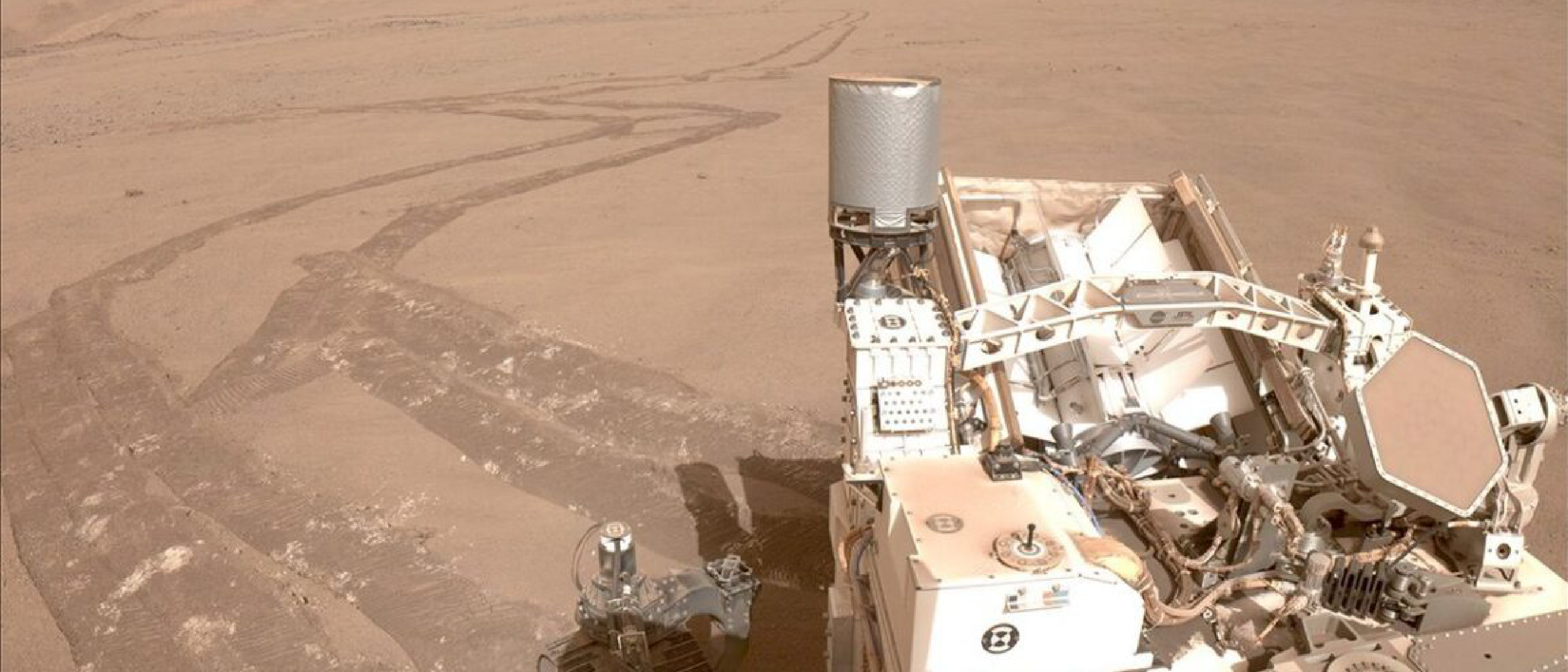
NASA’s Perseverance rover, the latest in a lineage of Martian explorers, is poised to eclipse the distance record previously held by its predecessor, Opportunity. After landing in February 2021, Perseverance has already traversed more than 45.16 km (28.06 mi) across the rugged terrain of Jezero Crater. This milestone, expected to be achieved sometime next week, will make Perseverance the most‑traveled vehicle on another world. The achievement is not merely a numerical triumph; it signals a leap in autonomous navigation, power management, and mission longevity that will shape the future of planetary exploration.
Why It Matters
Extending the Reach of Autonomous Systems
Perseverance’s ability to cover such a vast distance with minimal human intervention underscores the maturity of autonomous navigation algorithms. The rover relies on a suite of sensors—LiDAR, stereo cameras, and inertial measurement units—to construct high‑resolution maps of its surroundings. By continuously refining its internal model, the rover can plan safe paths around obstacles, adjust wheel torque, and manage energy consumption in real time. This level of autonomy reduces the need for constant telecommand from Earth, thereby accelerating scientific return.
Demonstrating Sustainable Power Management
The rover’s journey is powered by a radioisotope thermoelectric generator (RTG) that converts heat from plutonium‑238 decay into electricity. Perseverance’s RTG has delivered a steady 110 W of power since launch, enabling the rover to operate its instruments, drive, and communicate simultaneously. The record distance showcases the RTG’s reliability over extended periods, reinforcing confidence in nuclear power for future deep‑space missions where solar energy is insufficient.
Validating Long‑Term Mission Design
Opportunity’s record was set in 2004, and it operated for 15 years before communications ceased in 2018. Perseverance’s rapid attainment of a comparable distance—within a third of the time Opportunity took—illustrates how modern engineering, materials science, and software design can dramatically shorten the development cycle while extending operational life. This efficiency is critical for agencies and private partners planning ambitious missions to Mars, Europa, or beyond.
Technical Breakdown
| Component | Function | Key Features |
|---|---|---|
| Navigation Suite | Autonomous path planning | LiDAR, stereo vision, inertial sensors |
| Propulsion | Mobility across regolith | Six-wheel rocker‑bogie, torque‑controlled motors |
| Power | Sustained energy supply | RTG (110 W), solar arrays for auxiliary power |
| Communication | Data relay to Earth | UHF radio, X‑band transmitter, Deep Space Network |
| Science Payload | Sample collection & analysis | MOXIE (oxygen generator), ChemCam, Mastcam-Z |
Autonomous Navigation
Perseverance’s navigation system uses a combination of LiDAR and stereo cameras to generate 3‑D point clouds of the terrain. The rover’s onboard computer runs the Autonomy and Navigation (A&N) software stack, which processes these data to identify safe traversable paths. The system employs a cost‑map approach, assigning penalties to rough terrain, steep slopes, and known hazards. By iteratively updating the map as new data arrive, Perseverance can adapt to unexpected obstacles such as rocks or dust devils.
Power Management
The RTG’s thermal output is converted to electricity via thermocouples. Unlike solar panels, the RTG’s output is independent of sunlight, allowing Perseverance to operate during dust storms or at night. The rover’s power budget is carefully managed: high‑power instruments are scheduled during peak RTG output, while lower‑power systems run continuously. This strategy ensures that the rover can maintain mobility and scientific operations for years.
Communication Architecture
Perseverance communicates with Earth via the Deep Space Network (DSN) using an X‑band transmitter. Data are first relayed to Mars orbiters (e.g., Mars Reconnaissance Orbiter) before being transmitted to Earth. This relay architecture reduces the power required for direct Earth communication and increases data throughput. The rover’s UHF radio also supports low‑latency commands from orbiters, enabling rapid response to dynamic events.
Industry Impact
Advancing Autonomous Robotics
The success of Perseverance’s autonomous navigation has ripple effects across terrestrial robotics. Techniques refined on Mars—such as real‑time 3‑D mapping, obstacle avoidance, and energy‑aware path planning—are being adapted for autonomous vehicles, drones, and planetary rovers on Earth. Companies in the autonomous vehicle sector are increasingly collaborating with space agencies to transfer knowledge and accelerate innovation.
Fueling the Commercial Space Economy
Perseverance’s record demonstrates that long‑duration, high‑mobility missions are feasible with current technology. This validation lowers the barrier to entry for private space companies seeking to launch their own planetary probes.
Private firms such as SpaceX, Blue Origin, and Astrobotic are already leveraging these advancements to develop their own lunar and Martian rovers. For instance, SpaceX’s Starship program envisions deploying fleets of autonomous rovers to support human settlements, while Astrobotic’s Griffin lander will carry NASA’s VIPER rover to the Moon’s south pole in 2024, relying on similar autonomous navigation systems. The commercial space economy stands to benefit from reduced mission risks and increased operational efficiency, making interplanetary exploration more accessible and cost-effective.
Enhancing Scientific Collaboration
Perseverance’s mission is a testament to international collaboration, with contributions from the European Space Agency (ESA), the French space agency CNES, and research institutions worldwide. The rover’s Sample Caching System, designed to collect and store Martian rock and regolith samples for future return to Earth, exemplifies how shared expertise accelerates scientific discovery. As private companies enter the fray, partnerships between government agencies and commercial entities will become even more critical, fostering a new era of cooperative exploration.
Challenges and Lessons Learned
Overcoming Martian Terrain
Mars presents a uniquely hostile environment for robotic explorers. The planet’s regolith—fine, abrasive dust—can clog mechanisms, while temperature swings of over 100°C between day and night strain materials. Perseverance’s rocker-bogie suspension system, inherited from Opportunity and Spirit, distributes weight evenly across its six wheels, preventing sinkage in soft soil. However, the rover has encountered unexpected challenges, such as the “gator-back” terrain in Jezero Crater, where sharp, wind-sculpted rocks threatened to damage its wheels. Engineers responded by adjusting the rover’s path and reducing wheel speed in hazardous areas, demonstrating the importance of adaptive mission planning.
Dust and Power Degradation
While Perseverance’s RTG is immune to the dust storms that ultimately ended Opportunity’s mission, dust accumulation on its solar panels (used for auxiliary power) remains a concern. The rover’s team has developed strategies to mitigate this, including periodic “dust clearing” maneuvers where the rover tilts its panels to dislodge particles. These lessons are informing the design of future missions, such as NASA’s Dragonfly rotorcraft, which will explore Saturn’s moon Titan and must contend with its own unique environmental challenges.
Software and Hardware Resilience
Perseverance’s autonomy software has undergone multiple updates since landing, with over-the-air patches improving obstacle detection and path planning. The rover’s computer systems are radiation-hardened to withstand cosmic rays, but occasional glitches—such as the “safe mode” event in 2021—highlight the need for robust fault tolerance. NASA’s Jet Propulsion Laboratory (JPL) has implemented redundant systems and self-diagnostic protocols to ensure the rover can recover from anomalies without human intervention. These innovations are being incorporated into next-generation rovers, including the European ExoMars Rosalind Franklin rover, slated for launch in 2028.
The Road Ahead
Future Milestones for Perseverance
With the distance record within reach, Perseverance’s team is already planning its next objectives. The rover is currently en route to the “Margin Unit,” a region of Jezero Crater rich in carbonate deposits that may hold clues to Mars’ ancient climate. Beyond this, Perseverance will continue its ascent of the crater’s rim, where orbital data suggest the presence of hydrated minerals. The rover’s extended mission will also focus on caching additional samples for the Mars Sample Return campaign, a joint NASA-ESA effort to bring Martian material to Earth by the early 2030s.
Implications for Human Exploration
Perseverance’s achievements are laying the groundwork for crewed missions to Mars. The rover’s MOXIE experiment, which successfully produced oxygen from Martian CO₂, demonstrates a critical technology for sustaining human life and fueling return trips. Additionally, the rover’s autonomous navigation systems are being studied to inform the design of crewed rovers, which will need to transport astronauts safely across the Martian surface. NASA’s Artemis program, which aims to return humans to the Moon by 2026, will serve as a proving ground for these technologies before they are deployed on Mars.
Inspiring the Next Generation
Perseverance’s journey has captivated audiences worldwide, with millions following its progress through NASA’s interactive maps, live streams, and social media updates. The rover’s success is inspiring a new generation of scientists, engineers, and explorers, many of whom will play pivotal roles in humanity’s future beyond Earth. Educational initiatives, such as NASA’s “Send Your Name to Mars” campaign and the Mars Student Challenge, are engaging students in STEM fields and fostering a culture of innovation and curiosity.
Conclusion
Perseverance’s impending distance record is more than a numerical achievement—it is a testament to human ingenuity, resilience, and the relentless pursuit of knowledge. By surpassing Opportunity’s legacy in a fraction of the time, the rover has demonstrated the rapid evolution of robotic exploration technology. Its success underscores the importance of autonomy, sustainable power, and international collaboration in pushing the boundaries of what is possible. As Perseverance continues its journey across Jezero Crater, it paves the way for future missions, both robotic and crewed, that will unlock the secrets of Mars and beyond. The record is not just a milestone; it is a stepping stone toward humanity’s multi-planetary future.
FAQ
1. How does Perseverance’s distance compare to other rovers?
Perseverance will surpass Opportunity’s record of 45.16 km (28.06 mi), making it the most-traveled vehicle on another world. For context:
- Opportunity: 45.16 km over 15 years.
- Spirit: 7.73 km over 6 years.
- Curiosity: 31.5 km (as of 2026) over 14 years.
- Lunokhod 2 (Moon): 39 km (Soviet rover, 1973).
2. What is the significance of Jezero Crater?
Jezero Crater was selected as Perseverance’s landing site because it once hosted a lake and river delta, making it an ideal location to search for signs of ancient microbial life. The crater’s geology includes clay minerals and carbonates, which can preserve biosignatures. The rover’s samples from this region could provide unprecedented insights into Mars’ habitability.
3. How does Perseverance navigate autonomously?
Perseverance uses a combination of:
- Stereo cameras (Mastcam-Z) to create 3D terrain maps.
- LiDAR (Light Detection and Ranging) for precise distance measurements.
- Inertial Measurement Units (IMUs) to track movement.
- Onboard AI (Autonomy and Navigation software) to plan safe paths and avoid obstacles.
4. What happens to the samples Perseverance collects?
Perseverance is caching samples in sealed tubes for future retrieval. NASA and ESA’s Mars Sample Return mission, planned for the early 2030s, will send a lander to collect these tubes, launch them into Mars orbit, and return them to Earth for detailed analysis.
5. How long will Perseverance continue operating?
Perseverance’s RTG has a lifespan of at least 14 years, though its operational duration will depend on mechanical wear, power degradation, and mission priorities. NASA aims to keep the rover active as long as possible to maximize scientific return, with potential extensions beyond its primary mission.
6. What are the biggest challenges for future Mars rovers?
Key challenges include:
- Dust accumulation on solar panels (for solar-powered rovers).
- Extreme temperatures and radiation exposure.
- Terrain hazards (rocks, sand traps, steep slopes).
- Communication delays (up to 22 minutes one-way to Earth). Future rovers will need enhanced autonomy, durability, and power systems to overcome these obstacles.
7. How can the public follow Perseverance’s progress?
NASA provides multiple ways to track the rover:
- Interactive map: NASA’s Mars Trek
- Live updates: NASA’s Perseverance website
- Social media: Twitter/X (@NASAPersevere), Instagram (@NASA), and YouTube.
- Raw images: Perseverance’s image gallery .
Source: Original Article