







Overview of the Operation
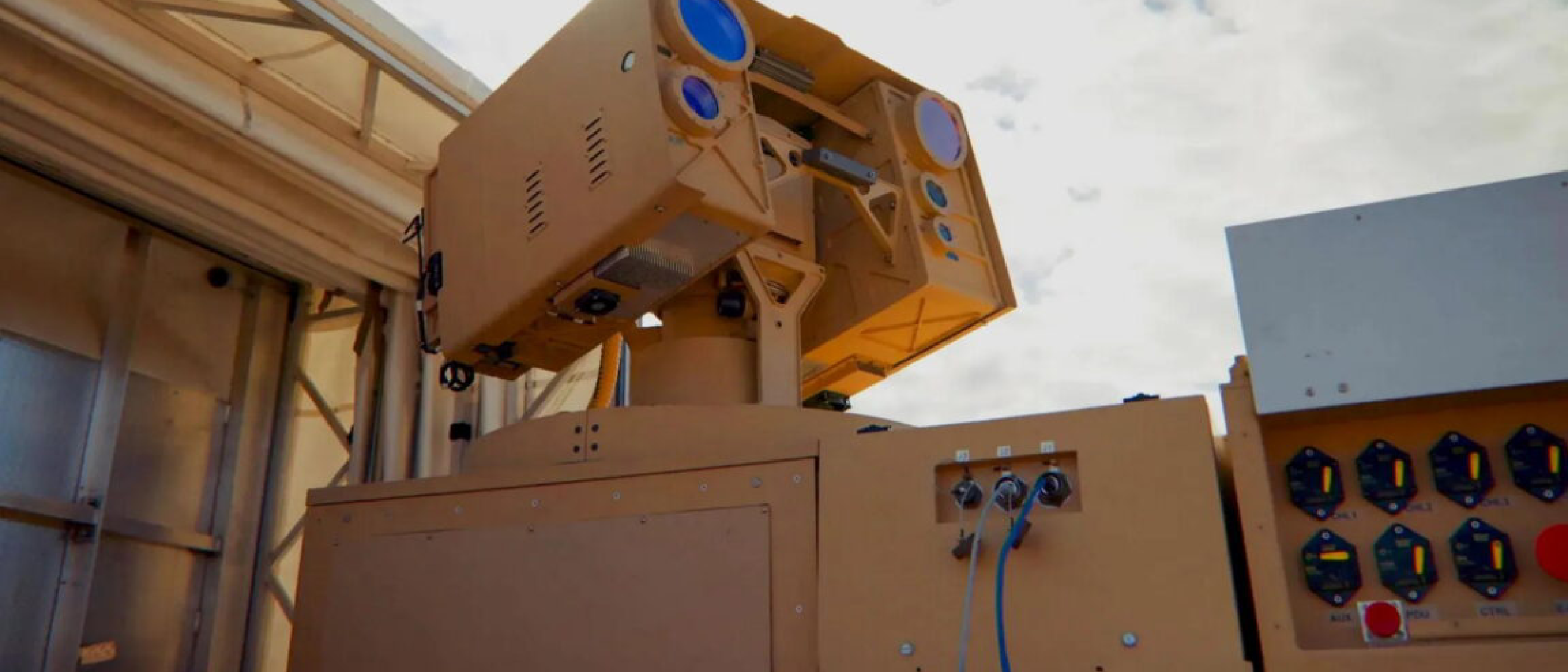
On the night of August 25 and the early hours of August 26, 2024, the U.S. Army’s Joint Task Force Southern Border (JTF‑SB) executed a high‑profile counter‑drone mission in the Rio Grande Valley, Texas. Using a 20‑kilowatt high‑energy laser mounted on a military vehicle, the unit intercepted and destroyed three drones that were deemed to pose a physical threat to U.S. military personnel and CBP partners. The engagement, conducted under the umbrella of U.S. Northern Command, marked the first operational deployment of AeroVironment’s Locust Laser Weapon System (L‑LWS) in a real‑world border security scenario.
The drones, likely small unmanned aerial vehicles (UAVs) operating in the 30‑to‑50 km altitude band, were tracked by a combination of ground‑based radar and electro‑optical sensors. Once within lethal range, the laser fired a series of high‑energy pulses that vaporized the drones’ airframes, leaving no debris or secondary hazards. The operation demonstrated the feasibility of laser‑based kinetic deterrence in a contested environment and underscored the growing importance of directed‑energy weapons in modern defense portfolios.
Technical Breakdown of the Locust Laser System
AeroVironment’s Locust platform is a modular, vehicle‑mounted laser weapon designed for rapid deployment and scalability. Key technical attributes include:
- Power Output: 20 kW continuous‑wave (CW) laser, capable of delivering sufficient photon flux to ablate target structures within seconds.
- Beam Quality: Advanced adaptive optics correct atmospheric turbulence, maintaining a diffraction‑limited spot size at ranges up to 5 km.
- Thermal Management: Integrated liquid‑cooling loops and heat‑pipe arrays dissipate excess heat, enabling sustained firing for up to 30 minutes per session.
- Control Architecture: A closed‑loop guidance system links the laser’s pointing mechanism to real‑time target tracking data, ensuring sub‑arcsecond accuracy.
- Mobility: The system is mounted on a 4×4 tactical vehicle, allowing rapid repositioning across the border corridor.
The Locust is part of the broader AMP‑HEL (High‑Energy Multipurpose Laser) program, which aims to field a suite of high‑energy laser (HEL) platforms across the U.S. Armed Forces. The program’s milestones—delivery of the first two functional prototypes in September 2025 and the subsequent improved systems in December 2025—highlight a rapid development cycle driven by both technological innovation and operational urgency.
Why 20 kW Matters
In the context of counter‑drone operations, laser power directly correlates with engagement envelope and kill probability. A 20 kW system can:
- Engage multiple targets simultaneously by rapidly cycling the beam between points of interest.
- Maintain engagement against drones with higher endurance or faster speeds, which would otherwise outpace kinetic interceptors.
- Reduce collateral damage by delivering
precise, instantaneous energy to the target, eliminating the need for explosive warheads and minimizing the risk to nearby civilians or infrastructure.
Operational Impact and Lessons Learned
The successful engagement demonstrated several key capabilities:
- Rapid Threat Neutralization – The laser’s ability to transition between multiple drones in under a second reduced the window of exposure for personnel on the ground.
- Low Logistical Footprint – Unlike traditional kinetic interceptors, the system requires only electrical power and a modest supply of coolant, simplifying resupply chains in remote border outposts.
- Scalable Architecture – The modular design allows the same laser head to be integrated onto a variety of platforms, from light tactical vehicles to larger ground‑based shelters, providing flexibility for future missions.
Post‑mission debriefs highlighted the importance of integrating the laser’s sensor suite with existing border‑monitoring radars. By fusing data streams, operators achieved a “track‑while‑scan” capability that kept the laser locked on fast‑moving UAVs even in cluttered environments.
Future Deployments and Program Outlook
The AMP‑HEL program is slated to expand beyond the Southern Border:
- Forward Operating Bases (FOBs) – Plans are under way to field 30‑kW and 50‑kW variants at forward bases in the Indo‑Pacific region, where the threat of swarming drones is a growing concern.
- Naval Integration – AeroVironment is collaborating with the U.S. Navy to adapt the Locust’s laser head for ship‑board mounting, aiming to protect high‑value vessels from low‑altitude threats in littoral waters.
- Joint Inter‑Service Exercises – The Army, Air Force, and Marine Corps are scheduling joint training events in 2027 to validate cross‑domain laser engagements, including integration with airborne laser platforms.
Funding for the next phase of AMP‑HEL has been earmarked in the FY 2027 defense budget, with an emphasis on improving beam‑control algorithms and reducing the system’s overall power consumption.
Challenges and Considerations
While the operation was a clear success, several hurdles remain:
- Atmospheric Attenuation – Dust, humidity, and temperature gradients can degrade beam quality. Ongoing research into adaptive optics and beam‑shaping techniques aims to mitigate these effects, especially in desert or maritime environments.
- Power Generation – Sustained high‑energy output demands robust generators. Future iterations may incorporate hybrid diesel‑electric or fuel‑cell power packs to extend on‑station endurance.
- Rules of Engagement (ROE) – Deploying directed‑energy weapons in civilian‑adjacent areas requires clear ROE to avoid unintended escalation. The Army is working with legal advisors to codify protocols for laser use in domestic security missions.
Conclusion
The deployment of AeroVironment’s 20‑kW Locust Laser Weapon System marks a pivotal moment in the U.S. military’s transition toward directed‑energy solutions for low‑altitude threats. By neutralizing three hostile drones with pinpoint accuracy and minimal collateral risk, the Army has validated the operational viability of high‑energy lasers in a real‑world border‑security context. As the AMP‑HEL program matures, we can expect larger‑scale fielding, integration across multiple services, and continued refinement of the technology that could redefine how the United States counters emerging aerial threats.
Frequently Asked Questions
Q: How does a laser actually “shoot down” a drone?
A: The laser delivers concentrated photon energy to a small spot on the UAV’s airframe or propulsion system. This rapid heating vaporizes material, creating a hole or disabling critical components, causing the drone to lose lift and fall.
Q: What is the effective range of the 20‑kW Locust system?
A: Under optimal atmospheric conditions, the system can engage targets up to 5 km away. Real‑world performance may vary based on weather and line‑of‑sight constraints.
Q: Is the laser weapon lethal to humans?
A: The beam is designed to focus on small, low‑mass aerial targets. While the energy density is high enough to cause severe burns at close range, the system’s safety interlocks and targeting algorithms are configured to prevent engagement of personnel.
Q: How many shots can the system fire before it needs to cool down?
A: The integrated liquid‑cooling system allows continuous operation for roughly 30 minutes, after which a brief cooldown period (5–10 minutes) is required to prevent thermal overload.
Q: Will this technology be deployed elsewhere along the U.S. border?
A: The Army is evaluating additional deployments based on threat assessments and budgetary considerations. Early indications suggest that similar systems could be positioned at high‑traffic crossing points in Arizona and California.
Q: Are there any international treaties that restrict the use of laser weapons?
A: Current international law, including the 1972 Biological and Toxin Weapons Convention and the 1993 Convention on Certain Conventional Weapons, does not specifically prohibit the use of non‑blinding directed‑energy weapons for defensive purposes. The U.S. adheres to all applicable regulations and ensures compliance with the Protocol on Blinding Laser Weapons.
Source: Original Article