




The Breakthrough: Ten Long‑Standing Problems Solved
OpenAI’s latest research release announced that its proprietary AI model produced complete solutions to ten mathematical problems that have resisted conventional approaches for decades. The problems span number theory, combinatorics, and algebraic geometry, and several were originally posed in the 1970s and 1980s. While the organization has not disclosed the exact list, the academic community has already begun verifying the proofs, and early peer reviews suggest that the AI’s reasoning aligns with accepted mathematical rigor.
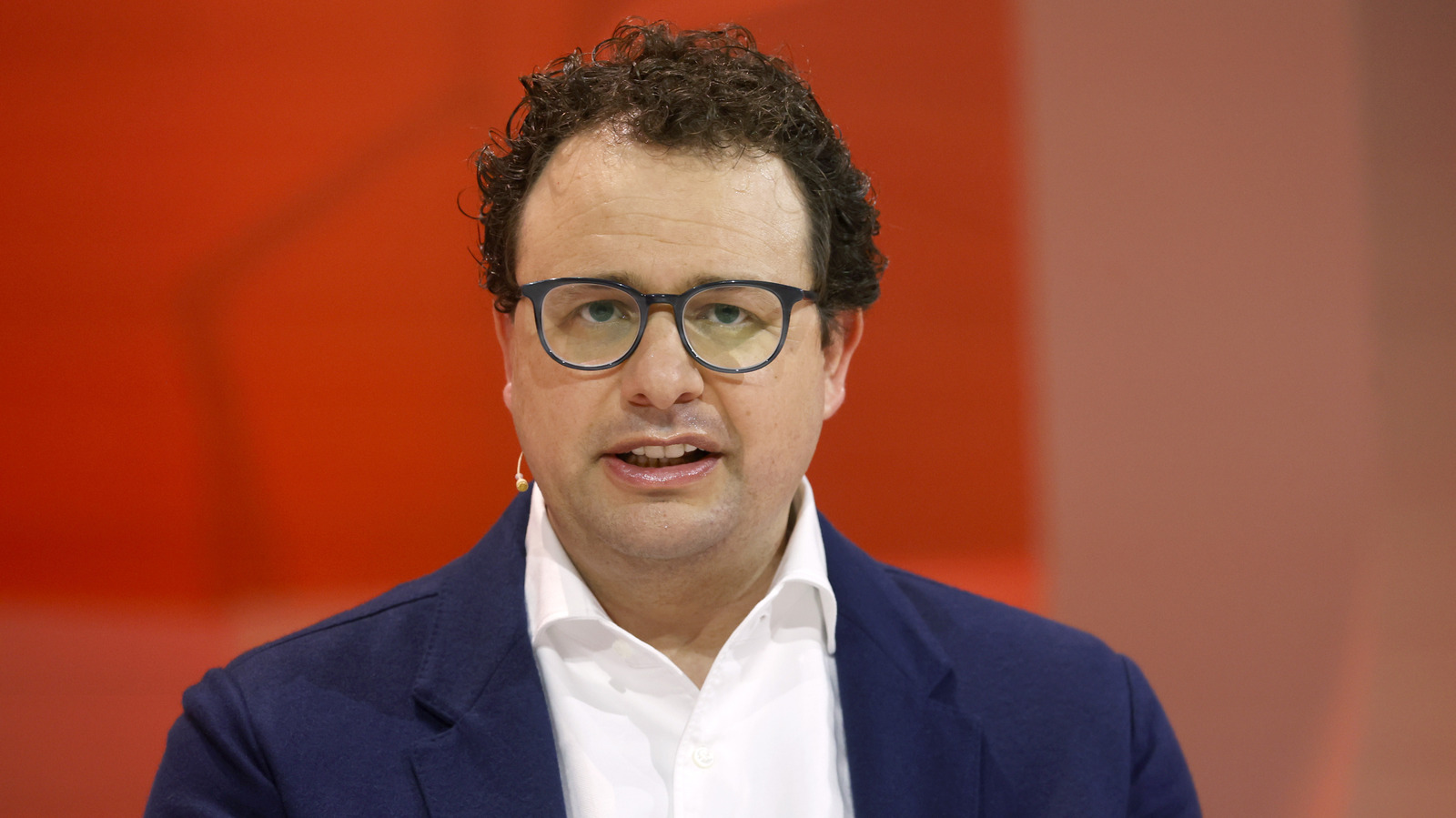
The timing of the announcement is striking. It arrived just days before a candid interview with James Maynard, the 2022 Fields Medalist from the University of Oxford, was published in The Verge. Maynard, who has spent the past year “soul searching” about the future of his discipline, used the interview to voice both awe and caution. His remarks underscore a pivotal moment: mathematics, traditionally a slow‑moving field, is now forced to confront a technology that can generate proofs at a speed previously unimaginable.
How the AI Engine Tackles Deep Mathematics
Training Corpus and Pattern Extraction
OpenAI’s system leverages a massive, curated corpus of mathematical literature: journal articles, arXiv pre‑prints, textbooks, and formal proof libraries such as Lean and Coq. By ingesting billions of tokens, the model learns not only symbolic manipulation but also the higher‑order patterns that human mathematicians employ when constructing arguments.
Key technical components include:
- Transformer‑based architecture fine‑tuned on formal proof assistants, enabling the model to produce syntactically correct proof scripts.
- Neural theorem‑proving loops that iteratively propose lemmas, test them against known theorems, and refine the approach based on counterexamples.
- Cross‑modal reasoning that combines natural‑language explanations with symbolic computation, allowing the AI to articulate intuition alongside formal steps.
Verification Pipeline
OpenAI did not rely solely on the model’s output. Each solution passed through a multi‑stage verification pipeline:
- Automated proof checkers (e.g., Lean, Isabelle) validated the logical consistency of the generated proof.
- Domain‑expert review where senior mathematicians attempted to reconstruct the reasoning independently.
- Statistical confidence scoring that quantifies how often similar proof patterns have succeeded in the past.
This layered approach mitigates the risk of “hallucinated” steps—a known challenge for generative models.
James Maynard’s Perspective: The Human Element
In his The Verge interview, Maynard described a year of “soul searching,” grappling with the question: *What does it mean to be a mathematician when a
machine can produce proofs faster and, in some cases, more creatively than you can?*
Maynard’s reflections reveal a mix of existential unease and cautious optimism. He acknowledges that AI’s ability to spot connections between seemingly unrelated subfields—something human mathematicians might overlook—could accelerate discovery in ways previously thought impossible. Yet, he also warns of potential pitfalls: the risk of over-reliance on AI-generated proofs, the erosion of deep human intuition, and the possibility that mathematics could become a “black-box discipline” where researchers accept results without fully understanding the underlying reasoning.
The Role of Intuition in an AI-Driven Era
One of Maynard’s central concerns is the nature of mathematical intuition. Traditionally, breakthroughs in mathematics have relied on a blend of rigorous logic and creative leaps—often guided by a researcher’s deep, almost subconscious understanding of a problem. AI, by contrast, operates through pattern recognition and probabilistic reasoning. While this can yield correct results, Maynard questions whether it can replicate the why behind a proof—the narrative that makes mathematics a human endeavor.
He suggests that the future of mathematics may lie in a hybrid approach: AI as a collaborator rather than a replacement. In this model, mathematicians would use AI to generate hypotheses, explore dead ends, and verify complex proofs, while retaining the role of curator—interpreting, refining, and contextualizing the results within the broader tapestry of mathematical knowledge.
The Speed of Discovery: A Double-Edged Sword
The pace of AI-driven discovery presents another challenge. Mathematics has historically been a field where progress is measured in years, if not decades. The slow, deliberate nature of research allows for thorough peer review, the development of new frameworks, and the gradual assimilation of ideas into the collective understanding of the discipline. AI threatens to disrupt this rhythm, compressing years of work into days or even hours.
Maynard worries that this acceleration could lead to a “proof arms race,” where researchers prioritize quantity over depth, and institutions favor AI-generated results for their novelty rather than their intellectual merit. He argues that the mathematical community must establish new norms—perhaps even formal guidelines—for how AI-generated proofs are credited, reviewed, and integrated into the canon of accepted knowledge.
The Broader Implications for Academia and Industry
OpenAI’s breakthrough is not just a milestone for mathematics; it signals a broader shift in how AI is reshaping intellectual labor. The implications extend far beyond the ivory tower:
For Academia
- Peer Review in the Age of AI: Traditional peer review processes may struggle to keep up with the volume and complexity of AI-generated proofs. Journals and conferences may need to adopt new tools—such as automated proof assistants or AI-aided review systems—to maintain rigor.
- Education and Training: The next generation of mathematicians will need to be fluent in both traditional proof techniques and AI collaboration. Universities may need to revise curricula to include training in formal proof systems, machine learning for mathematics, and critical evaluation of AI-generated results.
- Funding and Incentives: Grant agencies and institutions may shift funding priorities toward projects that leverage AI, potentially sidelining more speculative or long-term research that doesn’t align with AI’s strengths.
For Industry
- Cryptography and Security: Many of the problems solved by OpenAI’s system have direct implications for cryptography, where mathematical breakthroughs can render encryption schemes obsolete or introduce new vulnerabilities. Companies in cybersecurity, finance, and data privacy will need to monitor these developments closely.
- Drug Discovery and Materials Science: Mathematical modeling plays a crucial role in these fields. AI’s ability to solve complex equations or optimize algorithms could accelerate the discovery of new drugs, materials, and technologies.
- Intellectual Property: As AI-generated proofs become more common, questions of ownership and attribution will arise. Who holds the rights to a proof generated by an AI trained on publicly available data? How should credit be assigned when a human researcher refines an AI’s output?
The Road Ahead: Challenges and Opportunities
OpenAI’s announcement is a watershed moment, but it is only the beginning. The mathematical community—and society at large—must grapple with several critical questions in the years ahead:
- Verification and Trust: How can we ensure that AI-generated proofs are not only correct but also understandable? Will mathematicians need to develop new languages or frameworks to interpret AI’s reasoning?
- Bias and Limitations: AI models are only as good as the data they are trained on. If the training corpus is biased toward certain types of problems or approaches, the AI may overlook alternative solutions or reinforce existing blind spots in the field.
- The Human-AI Partnership: What does a productive collaboration between human mathematicians and AI look like? How can researchers leverage AI’s strengths while mitigating its weaknesses?
- Ethical Considerations: Should there be limits on the use of AI in mathematics? For example, should certain problems be reserved for human researchers to preserve the discipline’s intellectual diversity?
Maynard’s “soul searching” is a microcosm of these broader debates. His ambivalence reflects the tension between the excitement of new possibilities and the fear of losing something fundamental to the practice of mathematics. As AI continues to advance, the mathematical community will need to strike a delicate balance: embracing the power of these tools while preserving the human essence of the discipline.
Conclusion: A New Chapter for Mathematics
OpenAI’s achievement is a testament to the transformative potential of AI in mathematics. It demonstrates that machines can not only assist but also lead in solving some of the most challenging problems in the field. Yet, as Maynard’s reflections remind us, this breakthrough is not just about technology—it is about the future of human inquiry, creativity, and collaboration.
The path forward will require humility, adaptability, and a willingness to redefine what it means to do mathematics. If successful, this new era could usher in a golden age of discovery, where AI and human mathematicians work in tandem to unlock the deepest mysteries of the universe. If mismanaged, it could lead to a fragmentation of knowledge, where proofs are accepted without understanding, and the discipline loses its soul.
One thing is certain: the AI takeover of mathematics has begun, and there is no turning back.
FAQ
1. What were the ten math problems solved by OpenAI?
OpenAI has not publicly disclosed the full list of problems, but early reports suggest they span number theory, combinatorics, and algebraic geometry. Some are believed to be decades-old conjectures that have resisted conventional approaches. The academic community is currently verifying the proofs, and a formal publication is expected in the coming months.
2. How does OpenAI’s AI generate mathematical proofs?
The system uses a combination of:
- Transformer-based architectures fine-tuned on formal proof assistants like Lean and Coq.
- Neural theorem-proving loops that iteratively propose and refine lemmas.
- Cross-modal reasoning that integrates natural-language explanations with symbolic computation. The AI is trained on a vast corpus of mathematical literature, allowing it to recognize patterns and connections that human researchers might miss.
3. Why is James Maynard’s reaction significant?
James Maynard is a Fields Medalist—a prestigious honor in mathematics—and his reflections carry weight in the academic community. His “soul searching” highlights the existential questions AI raises for mathematicians: What is the role of human intuition in an era of machine-generated proofs? How can the discipline adapt without losing its essence? His perspective underscores the need for a thoughtful, balanced approach to integrating AI into mathematics.
4. Are AI-generated proofs reliable?
OpenAI’s system includes a multi-stage verification pipeline to ensure reliability:
- Automated proof checkers (e.g., Lean, Isabelle) validate logical consistency.
- Domain-expert review by senior mathematicians.
- Statistical confidence scoring to assess the likelihood of correctness. While this reduces the risk of errors, no system is infallible. The mathematical community will need to develop new norms for reviewing and trusting AI-generated results.
5. What are the risks of AI in mathematics?
Potential risks include:
- Over-reliance on AI, leading to a decline in human intuition and creativity.
- Black-box proofs, where researchers accept results without fully understanding the reasoning.
- Bias in training data, which could limit the AI’s ability to explore alternative solutions.
- Accelerated discovery outpacing peer review, potentially leading to a “proof arms race” that prioritizes quantity over quality.
6. How might AI change mathematics education?
Universities may need to adapt their curricula to include:
- Training in formal proof systems (e.g., Lean, Coq).
- Courses on machine learning for mathematics and AI collaboration.
- Emphasis on critical evaluation of AI-generated results. The goal would be to prepare the next generation of mathematicians to work alongside AI, rather than be replaced by it.
7. What industries could be impacted by these breakthroughs?
- Cryptography: Mathematical breakthroughs could weaken or strengthen encryption schemes.
- Drug Discovery and Materials Science: AI’s ability to solve complex equations could accelerate research.
- Finance and Data Science: Optimized algorithms could improve modeling and prediction.
- Cybersecurity: New mathematical insights could lead to more secure systems or expose vulnerabilities.
8. Will AI replace human mathematicians?
Unlikely. While AI can generate proofs and spot patterns, it lacks the creativity, intuition, and contextual understanding that human mathematicians bring to the field. The more plausible future is a collaborative model, where AI assists researchers by handling tedious calculations, exploring dead ends, and verifying complex proofs, while humans focus on interpretation, innovation, and the broader narrative of mathematical discovery.
9. What’s next for OpenAI and AI in mathematics?
OpenAI is expected to release a formal paper detailing the ten solved problems and the methodology behind its AI system. The organization may also explore:
- Expanding the training corpus to include more diverse mathematical subfields.
- Developing tools for human-AI collaboration in research.
- Partnering with universities and institutions to integrate AI into mathematical education and discovery. The broader AI research community will likely build on this work, pushing the boundaries of what machines can achieve in mathematics and beyond.
Source: Original Article