


Overview of the Limited‑Release Cybercab
Tesla has taken a bold step away from the traditional ride‑hail model by offering a consumer‑owned self‑driving vehicle. The “Cybercab” is a two‑seat, gold‑painted pod that eliminates the steering wheel, brake pedals, and any manual driver controls. Priced at $29,900, the vehicle is slated for delivery in December to a group of “select customers” invited by Tesla.
The headline price, however, tells only part of the story. To keep the vehicle’s autonomous capabilities active, owners must subscribe to a $299 monthly service. This recurring fee covers the software stack, over‑the‑air updates, and the data connectivity required for real‑time navigation and safety monitoring. The model mirrors Tesla’s existing “Full Self‑Driving” (FSD) subscription but applies it to a purpose‑built robotaxi platform.
Technical Breakdown of the Cybercab Platform
Hardware Architecture
- Chassis & Body: A lightweight aluminum frame with a reinforced carbon‑fiber shell. The gold finish is a factory‑applied coating designed to resist minor scratches and UV degradation.
- Seating: Two ergonomic seats positioned side‑by‑side, each equipped with integrated seat‑belt sensors that lock when the vehicle is in motion.
- Sensors: A suite of eight forward‑facing cameras, three 360° LiDAR units, and a radar array mounted on the roof. The sensor package is comparable to Tesla’s internal “Full Self‑Driving” hardware but is calibrated for a narrower vehicle envelope.
- Compute: An in‑house Tesla AI chip (the latest iteration of the “Dojo” architecture) delivering 144 TOPS (trillion operations per second) dedicated to perception, planning, and control.
- Powertrain: A single rear‑mounted electric motor producing 200 kW, paired with a 75 kWh battery pack that provides an estimated 250 mi range under autonomous operation.
Software Stack
- Perception Layer: Real‑time object detection, semantic segmentation, and depth estimation run on the AI chip. The system fuses camera, LiDAR, and radar data to create a 3‑D occupancy grid updated at 30 Hz.
- Planning & Decision‑Making: A hierarchical planner evaluates multiple trajectory candidates, scoring them based on safety, efficiency, and passenger comfort. The planner incorporates a reinforcement‑learning policy trained on millions of miles of simulated and real‑world data.
- Control Loop: Low‑latency torque and brake commands are issued directly to the motor controller, bypassing any mechanical driver interface. Redundant safety controllers monitor actuator health and can trigger an emergency stop if anomalies are detected.
- Connectivity: 5G cellular with edge‑computing fallback ensures low‑latency map updates and remote diagnostics. The $299 monthly subscription funds the continuous data stream to Tesla’s cloud for fleet‑wide learning.
Safety Redundancies
- Dual‑Channel Braking: Both regenerative and hydraulic brakes are independently commanded, providing fail‑safe stopping capability.
- Watchdog Timers: Hardware watchdogs reset the compute module if processing stalls exceed 100 ms.
- Remote Override: Tesla’s operations center can intervene via a secure command channel to bring the vehicle to a safe stop in case of critical software anomalies.
Why the Cybercab Matters
Democratizing Autonomous Mobility
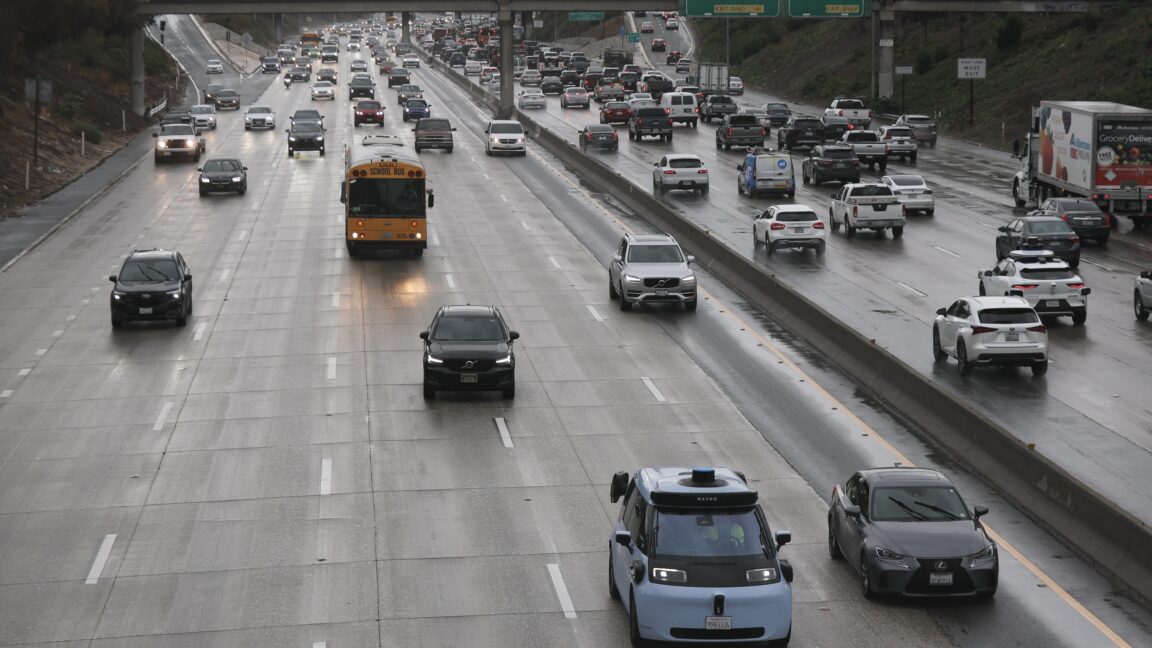
Historically, autonomous robotaxi services have been confined to corporate fleets—Waymo’s robotaxis operate exclusively within its ride‑hail network, and Amazon’s Zoox follows a similar model. By selling the Cybercab directly to consumers, Tesla is testing the hypothesis that private ownership of a fully autonomous vehicle can be viable. If successful, it could reshape the economics of personal mobility, reducing the need for a human driver and potentially lowering the total cost of ownership over the vehicle’s lifespan.
Subscription Model as a Revenue Engine
The $299 monthly fee creates a recurring revenue stream that decouples profit from hardware sales. This mirrors the shift seen in software‑as‑a‑service (SaaS) models and aligns with Tesla’s broader strategy of monetizing its AI capabilities. The fee also funds continuous improvements, meaning early adopters will benefit from future software upgrades without additional hardware purchases.
Data Collection at Scale
Each Cybercab contributes to Tesla’s massive fleet‑learning dataset. By placing autonomous pods in private hands, Tesla can gather diverse driving scenarios—suburban streets, private driveways, and low‑traffic neighborhoods—that are less accessible to fleet‑only operators. This data diversity accelerates the refinement of perception algorithms and edge‑case handling.
Industry Impact and Competitive Landscape
Direct Comparison with Waymo and Zoox
Waymo’s approach, detailed in the recent article “Waymo Halts Highway Robotaxis Over Construction Errors”, emphasizes tightly controlled deployment zones and a subscription‑free ride‑hail service. Zoox follows a similar path, focusing on purpose‑built robotaxis that operate only within its own network. Tesla’s consumer‑sale model introduces a new variable: private users become both customers and data sources.
Implications for Regulatory Frameworks
Regulators have traditionally licensed autonomous fleets rather than individual vehicles. The Cybercab will force agencies to consider vehicle‑by‑vehicle certification and ongoing compliance monitoring tied to the subscription service. This could accelerate the development of standards for over‑the‑air safety updates and remote diagnostics.
AI Investment Trends
The autonomous sector continues to attract significant AI funding. Yvonne Bajela’s $17 M fund targeting EU AI startups, described in “Yvonne Bajela’s $17M Fund Targets EU AI Startups”, underscores the appetite for technologies that improve perception and decision‑making. Tesla’s Cybercab, with its heavy reliance on AI, may become a benchmark for future investments, prompting startups to focus on sensor fusion, edge AI, and safety‑critical software.
Security Considerations
Autonomous vehicles are high‑value targets for cyber‑attacks. The recent discovery of an AI‑prompt exploit in Zoom’s annotation system, covered in “Zoom Annotation Flaw Patched After AI‑Prompt Exploit”, illustrates how AI‑driven interfaces can be manipulated. Tesla’s reliance on continuous connectivity and AI models means its security posture must be robust, with secure boot, encrypted communications, and regular penetration testing to mitigate similar threats.
Future Outlook: What Comes Next?
Scaling the Limited Release
Tesla has not disclosed the exact number of units in this “limited release.” If demand outpaces supply, the company may expand the program to additional markets, potentially offering variations such as a three‑seat “Cybervan” for family use or a cargo‑optimized version for last‑mile delivery.
Evolution of the Subscription Model
The $299 fee could evolve into tiered plans—basic navigation versus premium “city‑wide” coverage that includes high‑definition map updates and priority routing. Tesla might also bundle insurance, maintenance, and charging credits into a single package, further simplifying ownership.
Integration with Tesla’s Energy Ecosystem
Future iterations could allow the Cybercab to serve as a mobile energy storage unit, feeding excess battery power back to the grid or home solar systems when parked. This would align with Tesla’s broader vision of a vehicle‑to‑grid (V2G) ecosystem.
Potential Regulatory Milestones
As more private autonomous pods hit the road, we can expect new legislation around driver‑less licensing, mandatory safety reporting, and liability frameworks. Early adopters will likely become case studies for policymakers worldwide.
Frequently Asked Questions
Q1: Do I need a driver’s license to own a Cybercab? A: Current Tesla statements indicate that the vehicle operates without a steering wheel, so a traditional driver’s license is not required. However, local regulations may still mandate a minimum age or background check for subscription eligibility.
Q2: What happens if I stop paying the $299 monthly fee? A: The vehicle will enter a “limited‑function” mode where autonomous capabilities are disabled. Basic manual control is not possible because the hardware lacks a steering wheel, effectively rendering the car inoperable until the subscription is reinstated.
**Q
Q3: How does Tesla ensure safety without a human driver? A: The Cybercab relies on multiple layers of redundancy. Dual‑channel braking, independent watchdog timers, and a remote‑override capability allow the vehicle to bring itself to a safe stop if any sensor, compute, or actuator anomaly is detected. Tesla’s safety case is also backed by continuous over‑the‑air updates that patch software bugs and improve perception models as new data is collected from the fleet.
Q4: Is insurance required, and who provides it? A: Tesla plans to partner with insurers to offer a bundled “autonomous‑vehicle” policy that can be purchased through the same subscription portal. The policy will cover liability, collision, and comprehensive damage, with premiums adjusted based on usage patterns and the vehicle’s real‑time health telemetry.
Q5: Where can I charge the Cybercab? A: The Cybercab is compatible with all Tesla Superchargers and third‑party CCS‑2 stations. Tesla’s navigation stack automatically routes to the nearest compatible charger and can pre‑condition the battery to optimize charging speed. In addition, Tesla is rolling out “home‑dock” units that allow owners to charge overnight using a standard 240 V outlet.
Q6: What data does Tesla collect, and how is my privacy protected? A: The monthly subscription funds a continuous data stream that includes sensor logs, vehicle state, and anonymized location traces. Tesla states that personally identifiable information (PII) is stripped before storage, and data is encrypted both in transit and at rest. Owners can review and delete non‑essential logs via the vehicle’s companion app, though core safety‑critical data must be retained for regulatory compliance.
Q7: Can the Cybercab be used for commercial purposes? A: While the initial limited release is marketed to private consumers, Tesla’s terms of service allow owners to opt‑in to a “ride‑share” program that lets the vehicle operate on approved platforms for a revenue‑share arrangement. This program is expected to launch in early 2027 after additional regulatory clearances.
Q8: What happens if the vehicle is involved in an accident? A: In the event of a collision, the Cybercab’s onboard diagnostics will generate a detailed incident report that is automatically uploaded to Tesla’s cloud. This report includes sensor footage, vehicle telemetry, and the state of all safety systems at the moment of impact. The data is used for root‑cause analysis, insurance claims processing, and to inform future software updates.
Conclusion
Tesla’s limited‑release Cybercab represents a bold experiment at the intersection of consumer robotics, subscription‑based software monetization, and autonomous mobility. By handing over a fully driverless pod to private owners, Tesla is testing whether the economics of personal robotaxis can rival traditional car ownership while simultaneously expanding its data moat. The $299 monthly fee not only guarantees a revenue stream but also underwrites the continuous improvement loop that keeps the fleet safe and competitive.
If the program scales successfully, we could see a future where the line between personal vehicle and on‑demand robotaxi blurs—owners might earn income by sharing their pods, while the same hardware serves daily commuting needs. Conversely, regulatory hurdles, security concerns, and the practicalities of a steering‑wheel‑less car in mixed traffic will shape how quickly—and how widely—this vision becomes reality.
For now, the Cybercab is a glimpse into a possible next chapter of mobility: one where software, not hardware, defines value, and where the subscription model becomes as integral to a car as the engine itself.
Source: Original Article