



The Concept Explained
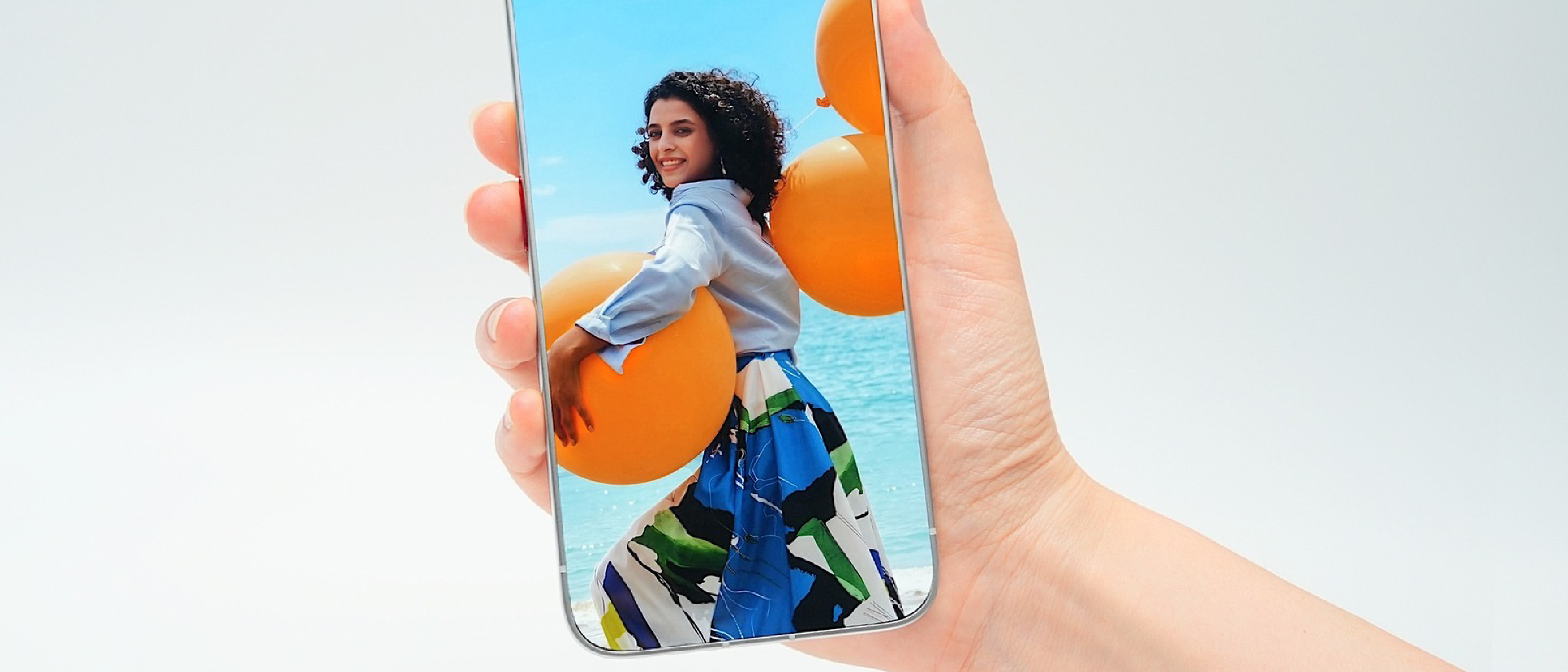
At this year’s IFA 2026, Chinese smartphone maker Tecno stepped onto the stage with a claim that could redraw the visual boundaries of mobile design: a “zero‑millimeter border”—essentially a phone with 0 µm of bezel. The prototype, dubbed the Tecno Bezel‑Less Concept, showcases a display that occupies 100 % of the front panel, eliminating the final millimeter traditionally reserved for internal circuitry, pressure‑sensing layers, and safety clearances.
The company frames the innovation as the birth of a “distinct design language” that will differentiate its future lineup from the crowded flagship market. While the device remains a concept—no pricing, production schedule, or Western market rollout has been announced—the visual impact is undeniable. The screen appears to float, with no visible frame to distract the eye, promising an “immersive viewing experience” that rivals the edge‑to‑edge displays of Apple’s iPhone 15 Pro Max or Samsung’s Galaxy S24 Ultra, yet pushes the envelope further.
Technical Challenges and Innovations
Achieving a true zero‑mm bezel is not merely a matter of trimming plastic. Modern smartphones rely on a multi‑layer stack: the OLED panel, touch sensor, protective cover glass, and a series of flex cables that route power and data to the motherboard. Each layer traditionally requires a thin border to accommodate:
- Signal routing – Flex cables need a margin to bend without fatigue.
- Structural integrity – The chassis must retain rigidity, especially around the edges.
- Safety clearances – Regulations demand a minimum distance between the display and the device’s antenna or battery to prevent overheating.
Tecno’s concept claims to solve these constraints through “advanced internal stacking” and new screen‑packing techniques. While the company has not released detailed schematics, industry analysts speculate the following possible approaches:
- Micro‑flex interposers: Ultra‑thin polymer layers that embed routing traces directly beneath the display, removing the need for external flex cables.
- Integrated touch‑on‑glass: Sensors printed directly onto the cover glass, eliminating a separate touch layer.
- Edge‑bonded bonding: Using high‑precision laser welding to fuse the display to the chassis, creating a seamless edge without a traditional frame.
These methods would require sub‑micron tolerances and a manufacturing ecosystem capable of clean‑room assembly at scale. The concept also hints at a re‑engineered display driver that can operate without the conventional bezel‑mounted sensors, potentially leveraging AI‑driven touch prediction to compensate for the loss of physical borders.
Why Zero‑Millimeter Matters
From a consumer perspective, the bezel has become a visual metric of premium quality. The race from 20 mm (early 2010s) to sub‑2 mm (today) has been a hallmark of flagship evolution. Tecno’s claim of 0 mm pushes the metric into a new category:
- Pure immersion – With no visual interruption, videos, games, and AR content fill the entire visual field, reducing the “letterbox” effect that can break immersion.
- Aesthetic differentiation – In a market where many devices look alike, a truly borderless front can become a brand identifier, echoing the way Apple’s notch or Samsung’s “Infinity‑O” once served as visual signatures.
- Potential ergonomic trade‑offs – The absence of a bezel may affect grip comfort and accidental touches. Tecno acknowledges that “overly sensitive touch response where users grip the phone” could be a challenge, suggesting software‑level palm‑rejection algorithms will be essential.
Industry Impact and Competitive Landscape
Tecno’s announcement arrives at a time when Apple, Samsung, Xiaomi, and Honor are already flirting with 95 % screen‑to‑body ratios, often by hiding front‑facing cameras behind tiny holes or under the display. Xiaomi’s recent flagship, for example, achieved ~95 % coverage by integrating a hidden camera module and ultra‑thin bezels. The Xiaomi Phones Rarely Sold article discusses how Xiaomi’s aggressive design pushes have not always translated into Western market dominance, highlighting the importance of brand perception alongside technical specs.
Tecno
has positioned itself as a disruptor in this space, leveraging its stronghold in emerging markets to experiment with bold design choices that Western OEMs might hesitate to adopt. While Tecno’s market share in Europe and North America remains negligible, the company’s willingness to push boundaries could pressure established players to accelerate their own bezel-less innovations—or risk ceding the “design leadership” narrative to a brand that has historically been seen as a budget alternative.
Manufacturing and Scalability Hurdles
The biggest question surrounding Tecno’s concept is whether it can transition from a trade-show prototype to a mass-produced reality. The challenges are multifaceted:
- Yield rates: Sub-micron precision in display bonding and flex cable integration could lead to high defect rates, driving up costs. Industry sources suggest that even a 1% yield loss could make the device commercially unviable at scale.
- Durability: Eliminating the bezel removes a critical structural buffer. Drop tests and long-term reliability will be paramount, especially if the display’s edges are exposed to direct impacts. Tecno has not disclosed whether it uses reinforced glass or novel materials to mitigate this risk.
- Thermal management: Packing components more densely could exacerbate heat buildup, particularly in gaming or AR applications. The company hints at “AI-driven thermal throttling” to dynamically adjust performance, but this remains unproven in real-world scenarios.
- Regulatory compliance: Safety standards (e.g., SAR limits for radiation) may require re-certification if the antenna or battery is repositioned closer to the display. Tecno’s silence on this front suggests the concept may not yet meet global compliance benchmarks.
The Road Ahead: Concept to Consumer
Tecno’s timeline for commercialization remains opaque. The company has a history of teasing ambitious concepts at IFA—such as its 2024 “foldable with a self-healing hinge”—only to delay or shelve them due to technical or market constraints. However, the zero-millimeter bezel concept could follow a different path if:
- Partnerships materialize: Collaborations with display giants like BOE or LG Display could accelerate R&D, as seen with Samsung’s early adoption of under-display cameras.
- Software matures: Palm-rejection algorithms and edge-touch calibration will need to be flawless to prevent accidental inputs. Tecno’s HiOS (its Android skin) may require a major overhaul to support the new form factor.
- Market demand shifts: If consumers prioritize immersion over practicality, Tecno could carve out a niche in gaming or content-creation phones, where bezels are seen as a hindrance.
Conclusion: A Glimpse of the Future—or a Dead End?
Tecno’s zero-millimeter bezel concept is undeniably audacious, pushing the limits of what’s possible in smartphone design. Whether it becomes a blueprint for the next decade of devices or a footnote in IFA’s history of “what ifs” depends on three factors: manufacturability, market appetite, and competitive response.
For now, the concept serves as a bold statement of intent—a declaration that Tecno is no longer content to play catch-up. If executed successfully, it could redefine the visual language of smartphones, forcing rivals to rethink their own design philosophies. If it fails, it will join the graveyard of ambitious prototypes that were just a little too ahead of their time.
One thing is certain: the race to the perfect bezel-less phone is far from over, and Tecno has just thrown down the gauntlet.
FAQ
1. Will the zero-millimeter bezel phone be available for purchase?
As of now, Tecno has only showcased a concept at IFA 2026. There is no confirmed release date, pricing, or market availability. Tecno’s track record suggests it may debut in select emerging markets (e.g., India, Africa) before considering Western regions.
2. How does Tecno’s concept compare to existing bezel-less phones?
Current flagships (e.g., iPhone 15 Pro Max, Galaxy S24 Ultra) achieve ~90-95% screen coverage using hidden cameras, ultra-thin bezels, or under-display tech. Tecno’s concept claims 100% coverage by eliminating the final millimeter of border, though it remains to be seen if this is achievable without trade-offs in durability or functionality.
3. What are the potential downsides of a zero-millimeter bezel?
- Accidental touches: Without a bezel, users may trigger inputs while gripping the phone.
- Durability concerns: Exposed display edges could be more prone to cracks or scratches.
- Heat dissipation: Denser component packing might lead to thermal throttling.
- Regulatory hurdles: Compliance with safety standards (e.g., antenna placement) could delay or block launches.
4. Could other brands adopt this technology?
Yes, but likely with modifications. Apple and Samsung have the resources to refine Tecno’s approach, but they may prioritize practicality over perfection—e.g., a 0.5mm bezel that balances aesthetics and usability. Xiaomi or Honor might attempt a similar design if Tecno proves the concept viable.
5. What’s next for Tecno’s bezel-less concept?
Tecno will likely spend the next 12-18 months refining the prototype, testing durability, and securing manufacturing partners. If successful, we could see a limited-edition device in 2027 or 2028, possibly targeting niche markets like gamers or content creators.
Source: Original Article