







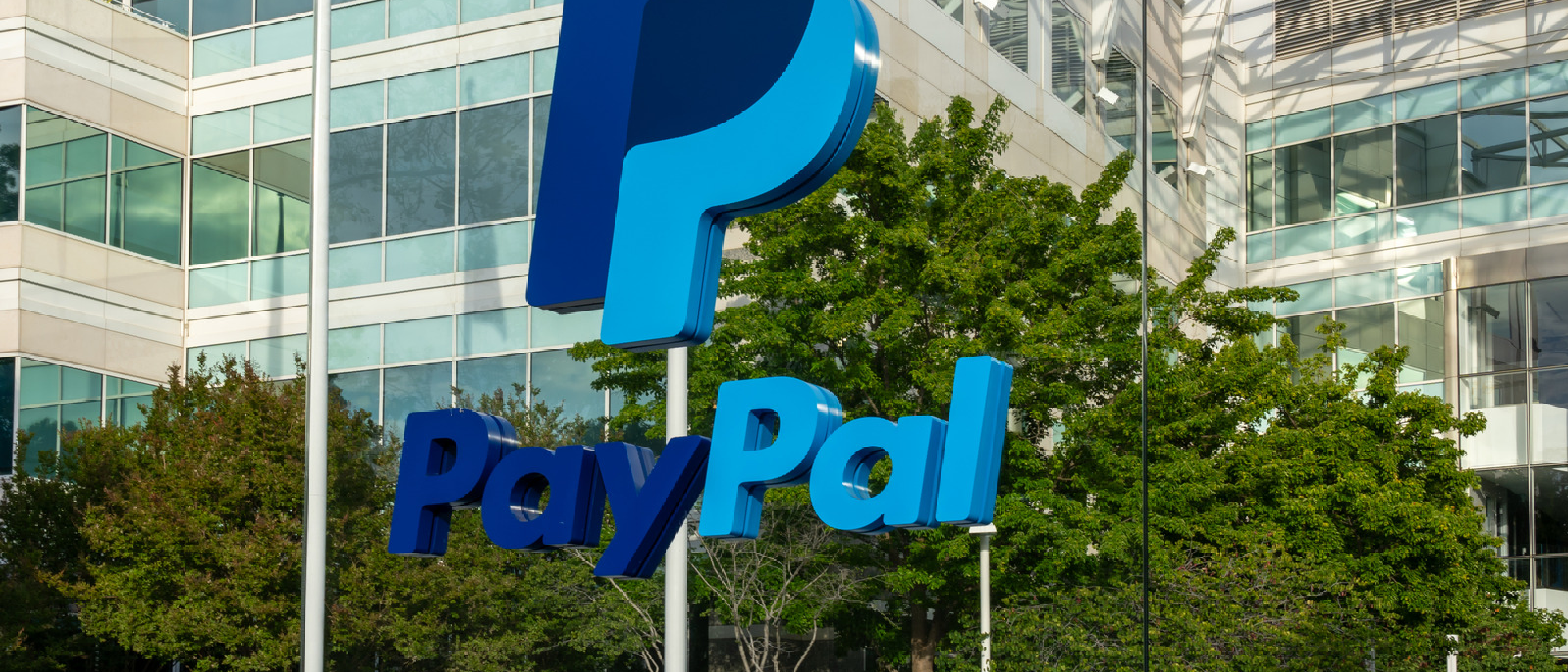
The $53 Billion Question: Why Stripe Wants PayPal
The fintech world is buzzing with a blockbuster rumor: Stripe and private equity firm Advent International are in advanced talks to acquire PayPal for a staggering $53 billion. If successful, this deal would not only redefine the digital payments landscape but also mark one of the largest fintech acquisitions in history. The initial offer of $60.50 per share, proposed in July, represents a significant premium over PayPal’s market value at the time—roughly $40 billion, a far cry from its COVID-era peak of $360 billion.
For Stripe, a company already synonymous with seamless online payments, the acquisition is more than just a financial play. It’s a strategic masterstroke. PayPal’s $3.7 trillion in projected annual payment volume would instantly catapult Stripe into a league of its own, rivaling even the most dominant players in global finance. But the real prize? Venmo, PayPal’s checkout system, and its burgeoning crypto features—assets that could supercharge Stripe’s already formidable ecosystem.
The Strategic Rationale Behind the Deal
Stripe’s reliance on Visa and Mastercard has long been a double-edged sword. While these networks provide critical infrastructure, they also impose fees and limitations that can stifle innovation. By acquiring PayPal, Stripe would gain direct access to PayPal’s proprietary payment rails, reducing its dependency on third-party networks. This could lead to lower transaction costs, faster settlements, and greater control over the user experience—a trifecta of advantages in the hyper-competitive fintech space.
Moreover, PayPal’s three-unit restructuring under new CEO Enrique Lores—divided into Checkout, Venmo, and Payments & Crypto—aligns neatly with Stripe’s ambitions. Venmo, with its 80+ million active users, is a goldmine for peer-to-peer (P2P) payments, a segment where Stripe has historically lagged. Meanwhile, PayPal’s crypto integrations, though still in their infancy, could provide Stripe with a ready-made platform to expand into digital assets without building from scratch.
How the Deal Could Reshape the Fintech Ecosystem
A New Era of Consolidation
The potential Stripe-PayPal merger is a watershed moment for fintech consolidation. Over the past decade, the industry has been defined by fragmentation, with countless startups vying for dominance in niche segments like P2P payments, cross-border transactions, and embedded finance. However, as growth slows and profitability becomes paramount, scale is now the name of the game.
This deal would signal a shift toward mega-mergers, where only the largest players can afford to acquire competitors to expand their market share. For smaller fintech firms, this could mean fewer exit opportunities and increased pressure to differentiate or risk being left behind. Investors, too, may pivot toward late-stage fintech giants like Stripe, Adyen, and Block, rather than betting on early-stage disruptors.
The Impact on Visa and Mastercard
Stripe’s move to acquire PayPal is, in many ways, a direct challenge to Visa and Mastercard’s dominance. While Stripe has built its business on top of these networks, the company has long sought ways to reduce its reliance on them. PayPal’s closed-loop payment system—which processes transactions without routing them through Visa or Mastercard—could be a game-changer.
If Stripe successfully integrates PayPal’s infrastructure, it could negotiate better terms with card networks or even bypass them entirely for certain transactions. This would not only lower costs for merchants but also give Stripe a competitive edge in markets where card fees are prohibitively high, such as Latin America and Southeast Asia.
For Visa and Mastercard, the deal is a double-edged sword. On one hand, they stand to lose transaction volume if Stripe shifts more payments to PayPal’s rails. On the other, they could benefit from increased adoption of their networks if Stripe uses PayPal’s reach to expand into new markets.
The Technical Breakdown: What Happens to PayPal’s Infrastructure?
PayPal’s Three-Unit Structure Under the Microscope
PayPal’s recent restructuring under Enrique Lores has divided the company into three distinct units:
- Checkout – Focused on payment processing for merchants and consumers.
- Venmo – The P2P payments app with a strong social component.
- Payments & Crypto – A unit dedicated to digital payments and cryptocurrency features.
The big question is: How will Stripe integrate these units? While Reuters reports that there are no plans to break up PayPal, Stripe is likely to cherry-pick the most valuable assets from each division.
1. Checkout: A Seamless Integration?
PayPal’s checkout system is one of its most valuable assets, processing billions of transactions annually for merchants of all sizes. Stripe could merge PayPal’s checkout with its own, creating a unified payment gateway that supports both Stripe’s developer-friendly APIs and PayPal’s consumer-facing checkout buttons.
This would give merchants more flexibility in how they accept payments, while also reducing cart abandonment by offering familiar payment options like PayPal Credit and “Buy Now, Pay Later” (BNPL).
2. Venmo: The P2P Wildcard
Venmo is arguably PayPal’s crown jewel, with a loyal user base that skews younger and more socially engaged. Stripe has no direct equivalent to Venmo, making this a high-priority integration.
However, merging Venmo with Stripe’s ecosystem won’t be easy. Venmo’s social feed, which allows users to share payment notes with friends, is a unique feature that doesn’t align with Stripe’s B2B-focused model. Stripe may choose to keep Venmo as a standalone app while integrating its payment processing capabilities into Stripe’s platform.
3. Payments & Crypto: The Future of Finance?
PayPal’s crypto features, including Bitcoin, Ethereum, and stablecoin support, are still in their early stages. However, they represent a strategic bet on the future of digital assets. Stripe, which briefly experimented with crypto payments before abandoning them in 2018, could revive its crypto ambitions by leveraging PayPal’s infrastructure.
This could position Stripe as a leader in blockchain-based payments, particularly in markets where crypto adoption is surging, such as Latin America and Africa.
The Road Ahead: Challenges and Opportunities
Regulatory Hurdles: The Elephant in the Room
A deal of this magnitude will inevitably face intense regulatory scrutiny. Antitrust authorities in the U.S. and EU will closely examine whether the merger reduces competition in the digital payments space. PayPal and Stripe are already two of the largest players in online payments, and combining them could limit choices for merchants and consumers.
Stripe and Advent International will need to convince regulators that the deal benefits competition by enabling lower fees, better services, and greater innovation. This won’t be easy, especially given the Biden administration’s aggressive stance on antitrust enforcement.
The Advent International Factor: Why a PE Firm?
Advent International’s involvement is unusual for a fintech deal of this size. Typically, private equity firms acquire companies to restructure them for profitability before selling them off. However, Advent’s equal stake with Stripe suggests a long-term partnership rather than a quick flip.
This could mean Advent is betting on fintech’s next growth phase, where scale and integration are more important than standalone innovation. Alternatively, Advent may see an opportunity to streamline PayPal’s operations and unlock hidden value before a future IPO or sale.
What This Means for Consumers and Merchants
For consumers, the deal could lead to more payment options at checkout, including Venmo, PayPal Credit, and crypto. However, there’s also a risk of higher fees if the merged entity dominates the market and reduces competition.
For merchants, the biggest benefit would be lower transaction costs if Stripe successfully integrates PayPal’s payment rails. However, smaller businesses may find themselves locked into Stripe’s ecosystem, with fewer alternatives for payment processing.
FAQ: Your Burning Questions Answered
1. Why is Stripe buying PayPal?
Stripe wants to reduce its reliance on Visa and Mastercard, gain access to PayPal’s $3.7 trillion in annual payments, and integrate Venmo, PayPal’s checkout system, and crypto features into its platform.
2. How much is PayPal worth in this deal?
The initial offer values PayPal at $53 billion, or $60.50 per share. This is a premium over PayPal’s market value at the time (~$40 billion).
3. Will PayPal be broken up after the acquisition?
No. According to Reuters, Stripe and Advent International have no plans to break up PayPal.
4. What happens to Venmo if the deal goes through?
Venmo will likely remain a standalone app, but its payment processing capabilities may be integrated into Stripe’s platform.
5. How will this deal affect Visa and Mastercard?
Stripe could reduce its reliance on Visa and Mastercard by using PayPal’s proprietary payment rails, potentially lowering transaction costs for merchants.
6. What are the regulatory risks?
The deal will face antitrust scrutiny in the U.S. and EU, as combining Stripe and PayPal could reduce competition in digital payments.
7. When will the deal be finalized?
If negotiations succeed, a deal could be announced in the coming weeks, but regulatory approval may take months or even years.
The Bottom Line: A Fintech Power Play for the Ages
The potential Stripe-PayPal merger is more than just a blockbuster deal—it’s a strategic gambit that could reshape the fintech landscape for decades. By acquiring PayPal, Stripe would instantly become one of the largest online payment companies in the world, with $3.7 trillion in annual payments and a diverse portfolio of assets, including Venmo and crypto.
However, the road ahead is fraught with challenges, from regulatory hurdles to integration risks. If successful, the deal could accelerate fintech consolidation, forcing smaller players to adapt or perish. For consumers and merchants, the impact will depend on how Stripe balances innovation with market dominance.
One thing is certain: the fintech wars are far from over. As Stripe and PayPal prepare for their next chapter, the rest of the industry will be watching closely—because in the world of digital payments, only the strongest survive.
For more insights on how financial scams are evolving in the digital age, check out our article on World Cup Scams Increase . And if you’re interested in how crypto and fintech intersect, don’t miss our deep dive into X’s Original Content Rewards: Creators’ 2026 Guide .
Source: Original Article