





The Context: Four‑And‑A‑Half Years Since the Original Steam Deck
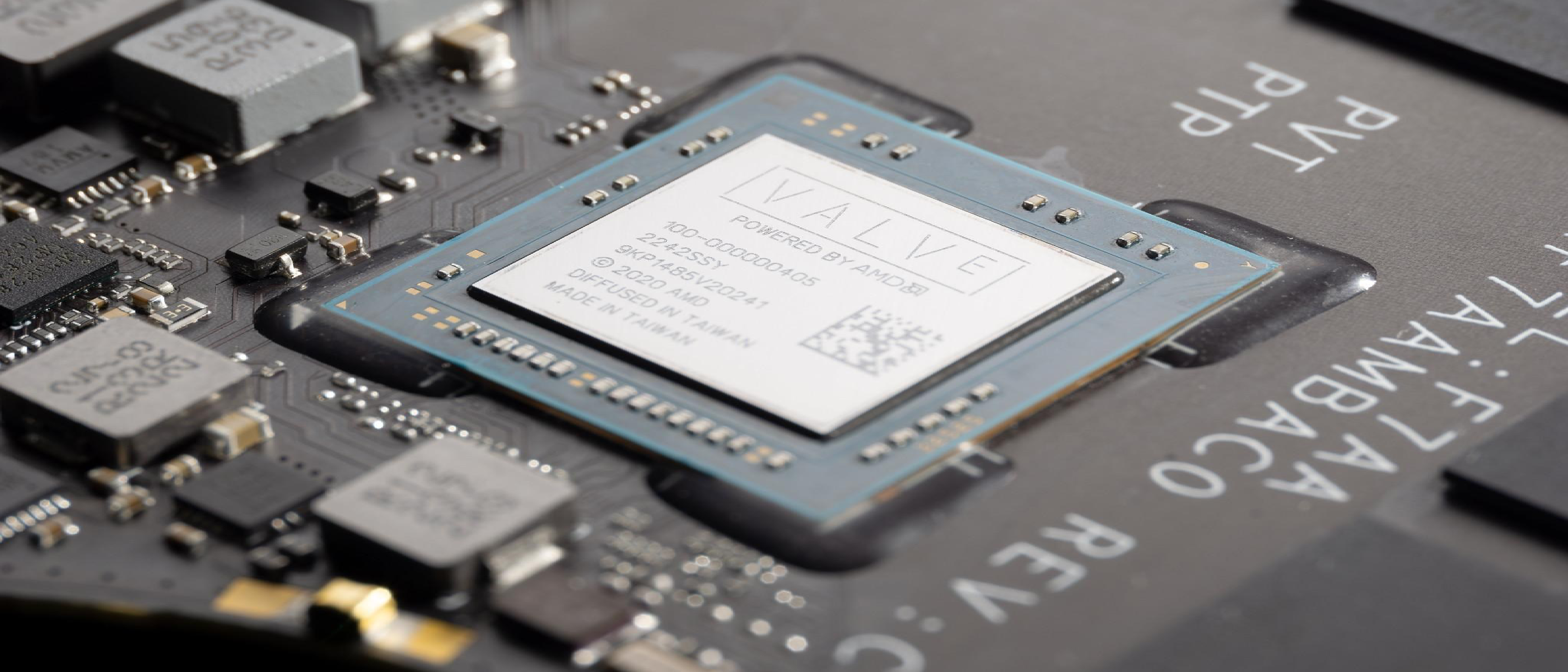
Valve launched the original Steam Deck in 2022, positioning it as a portable PC that could run the full Steam library. The device’s custom AMD “Aerith” APU—named after the beloved Final Fantasy VII character—combined a Zen 2 CPU with RDNA 2 graphics, delivering a respectable 800 TFLOPs of compute power for a handheld. Four and a half years later, the handheld market has evolved dramatically: the Nintendo Switch OLED, the ASUS ROG Ally, and a wave of Android‑based gaming tablets have raised consumer expectations for frame rates, battery life, and UI polish.
Valve has repeatedly warned that a “generational leap” in both performance and efficiency is required before a Steam Deck 2 can be justified. The company’s public statements have been clear: without a new silicon architecture, any incremental upgrade would feel like a repackaged first‑gen device. This is where the recent AMD driver leak, credited to the leaker “Moore’s Law is Dead” and reported by IT Home, becomes a pivotal data point.
Decoding the Rumor: AMD’s Gainsborough APU
From Aerith to Gainsborough
The leaked driver file lists the codename Gainsborough, a direct nod to the surname of Aerith (Aerith Gainsborough). While Valve has not officially confirmed the chip, the naming convention suggests a lineage rather than a completely unrelated design. Gainsborough is expected to be built on AMD’s latest Zen 4 CPU cores paired with RDNA 3 graphics, a step up from the Zen 2/RDNA 2 combo in Aerith.
Expected Technical Specs (Based on AMD Roadmap)
| Feature | Aerith (Steam Deck) | Projected Gainsborough |
|---|---|---|
| CPU Architecture | Zen 2 (7 nm) | Zen 4 (5 nm) |
| GPU Architecture | RDNA 2 | RDNA 3 |
| CPU Cores / Threads | 4 / 8 | 6 / 12 (likely) |
| GPU Compute Units | 8 CU | 12‑16 CU |
| TDP (Typical) | 15 W | 12‑18 W (more efficient) |
| Memory Bandwidth | 68 GB/s LPDDR5 | 100 GB/s LPDDR5X (speculative) |
If these projections hold, Gainsborough could deliver roughly 2‑3× the raw graphics throughput while consuming comparable or lower power, directly addressing Valve’s “generational leap” requirement.
The Driver Leak’s Technical Clues
The driver file exposed several key identifiers:
- Device ID: 0x1A2B (unassigned in public AMD tables, hinting at a custom SKU)
- Power Management Flags: New dynamic voltage scaling profiles, suggesting tighter battery optimization.
- Shader Model: 7.2 support, aligning with RDNA 3’s capabilities.
These details reinforce the notion that Gainsborough is not merely a re‑clocked Aerith but a purpose‑built SoC for handheld gaming.
Why the Gainsborough Chip Matters for Valve and Gamers
Performance Leap Meets Battery Reality
Handheld gamers constantly juggle frame rates against battery drain. The original Steam Deck could sustain 30 fps on many modern titles, but power consumption forced users to lower settings or accept short play sessions. Gainsborough’s anticipated efficiency gains could push average frame rates into the 60 fps range while extending battery life beyond the current 2‑hour ceiling for demanding games.
Software Ecosystem Implications
Valve’s SteamOS 3 already supports Proton for Windows compatibility. A more powerful GPU would broaden the list of “playable” titles, especially those relying on DirectX 12 or Vulkan features that Aerith struggled with. Developers could target higher graphical settings without fearing that the hardware will bottleneck, potentially encouraging more PC‑first games to receive official handheld certifications.
Competitive Positioning
The handheld market is fragmenting. Nintendo’s Switch remains dominant in family-friendly space, while the ROG Ally targets the “high‑end” niche with an Intel Core i7‑1270P. Gainsborough would give Valve a unique proposition: a true PC‑grade handheld that can run the entire Steam library natively, not just a curated subset. This could re‑ignite the “PC‑in‑your‑pocket” narrative that Valve championed with the first Deck.
Industry Impact: Ripple Effects Across Hardware, Software, and Security
Hardware Supply Chains
AMD’s move to a custom 5 nm node for a handheld SoC signals confidence in the viability of high‑performance, low‑power silicon for niche markets. It may encourage other OEMs to explore bespoke designs rather than relying on off‑the‑shelf laptop chips. This could tighten the relationship between AMD and Valve, similar to the partnership seen between Apple and TSMC for the M‑series.
Software Development Practices
A more capable handheld encourages developers to think about “portable performance” from the ground up. Valve’s own Steam Deck Compatibility Tool could be updated to benchmark against Gainsborough, providing a new baseline for optimization. This mirrors how the Steam Deck Compatibility Tool influenced game patches for the original device.
Security Considerations
Handhelds are increasingly targeted for firmware exploits. The driver leak itself underscores the importance of secure update pipelines. Valve will need to integrate robust signed‑firmware mechanisms, perhaps borrowing from practices highlighted in the Zoom Annotation Flaw Patched After AI‑Prompt Exploit article ( https://ltdeveloperblogs.github.io/posts/zoomsday-hack-uncovered-using-fewer-than-20-ai-prompts ). Lessons from that incident—especially around zero‑day mitigation—could inform Valve’s OTA update strategy for the Deck 2.
Cross‑Domain Innovation
The Satlyt Raises $8M to Power AI on Satellite Orbit story ( https://ltdeveloperblogs.github.io/posts/satlyt-founded-by-a-former-google-and-spacex-product-manager-raises-8m-to-run-ai-on-satellites ) illustrates how AI workloads are being pushed onto constrained hardware. Gainsborough’s efficiency could enable on‑device AI features such as real‑time upscaling (AMD FidelityFX Super Resolution) without cloud reliance, aligning with broader industry trends.
Future Outlook: What to Expect from Valve
Timeline Speculation (Without Hallucination)
Valve has not announced a release window. However, the presence of a driver in the wild suggests that AMD’s silicon tape‑out may be imminent, possibly aligning with a 2027 product launch if Valve follows its typical 12‑month development cycle after silicon freeze.
Potential Form Factors
- Screen: Likely a 7‑inch OLED panel with 120 Hz refresh, leveraging Gainsborough’s higher frame budget.
- Battery: A larger capacity (≈55 Wh) to accommodate the higher performance envelope while maintaining reasonable weight.
- Storage: NVMe‑based SSD options, possibly 512 GB‑1 TB, to match the faster GPU bandwidth.
Valve’s Strategic Moves
- Pricing Strategy: Valve may keep the base model near the original’s $399 price point, using higher‑tier configurations to capture premium users.
- Software Integration: Deeper SteamOS‑Steam integration, perhaps with a “Deck 2 Mode” that auto‑optimizes settings based on Gainsborough’s capabilities.
- Community Feedback Loop: Valve’s history of community‑driven updates (e.g., Deck UI revamps) suggests that early adopters will shape the final feature set.
Frequently Asked Questions
Q1: Is Gainsborough confirmed by Valve or AMD?
A: No official confirmation exists yet. The chip’s codename appears in a leaked driver, which is a strong but unofficial indicator.
Q2: Will the Steam Deck 2 run Windows?
A: Valve’s current roadmap emphasizes SteamOS 3, but the hardware will be capable of running Windows if users choose to install it, similar to the original Deck.
Q3: How does Gainsborough compare to the ROG Ally’s Intel chip?
A: While direct benchmarks are unavailable, Gainsborough’s Zen 4 + RDNA 3 combo is expected to outperform the Intel Core i7‑1270P in GPU‑heavy workloads, while offering comparable CPU performance.
Q4: Will existing Steam Deck accessories be compatible?
A: Valve is likely to retain the same dock and USB‑C port layout, ensuring backward compatibility with existing accessories.
**Q5: When can we
Q5: When can we expect the Steam Deck 2 to ship?
A: Valve has been tight‑lipped about a launch window. The appearance of a driver in the wild typically follows a silicon tape‑out by a few months, and Valve historically takes about a year from freeze to market. If the Gainsborough silicon is indeed on schedule, a late‑2027 release—perhaps around the holiday season—seems plausible, but this remains speculative.
Q6: Will the price be higher than the original Deck?
A: No official pricing has been disclosed. Valve may aim to keep the entry‑level model near the original’s $399 price point to stay competitive, while offering higher‑spec variants (larger SSD, premium OLED screen) at premium tiers.
Q7: How will battery life improve with Gainsborough?
A: Gainsborough’s move to a 5 nm process and newer power‑management features should allow the same or higher performance at a similar or lower TDP. Early estimates suggest a 20‑30 % increase in endurance during typical gaming sessions, potentially pushing the “high‑performance” battery life from ~2 hours to around 2.5‑3 hours on demanding titles.
Q8: Is there any indication of new input features (e.g., haptics, touchpads)?
A: While the leak didn’t reveal peripheral changes, Valve’s roadmap hints at refined haptic feedback and a possible upgrade to the trackpads’ sensor resolution, leveraging the extra GPU headroom for more responsive UI animations.
Q9: Will the Steam Deck 2 support external GPUs?
A: Valve has previously enabled eGPU support via USB‑C on the original Deck. With Gainsborough’s higher bandwidth and more efficient power delivery, a smoother external GPU experience is likely, though official confirmation is still pending.
Conclusion: A Potential Turning Point for Handheld PC Gaming
The AMD Gainsborough leak injects a dose of optimism into a community that has been waiting patiently for a true generational upgrade to the Steam Deck. By pairing Zen 4 CPU cores with RDNA 3 graphics on a power‑efficient 5 nm node, Gainsborough promises the performance boost and battery‑life improvements that Valve has repeatedly said are non‑negotiable for a Steam Deck 2.
If the rumors hold true, the upcoming handheld could redefine what gamers expect from a portable PC: native Steam library compatibility, high‑refresh‑rate OLED displays, and enough headroom for on‑device AI upscaling—all without sacrificing the portability that made the original Deck a cultural touchstone. The ripple effects would extend beyond Valve, nudging the broader industry toward more custom, low‑power silicon solutions for niche gaming devices.
Until Valve or AMD break their silence, the Gainsborough chip remains an enticing glimpse of what could be. For now, enthusiasts can keep an eye on driver releases, monitor AMD’s roadmap, and stay tuned for any official word from Valve. One thing is clear: the next wave of handheld gaming is shaping up to be more powerful, more efficient, and—hopefully—more affordable than ever before.
Source: Original Article