




What Spotify Is Changing Today
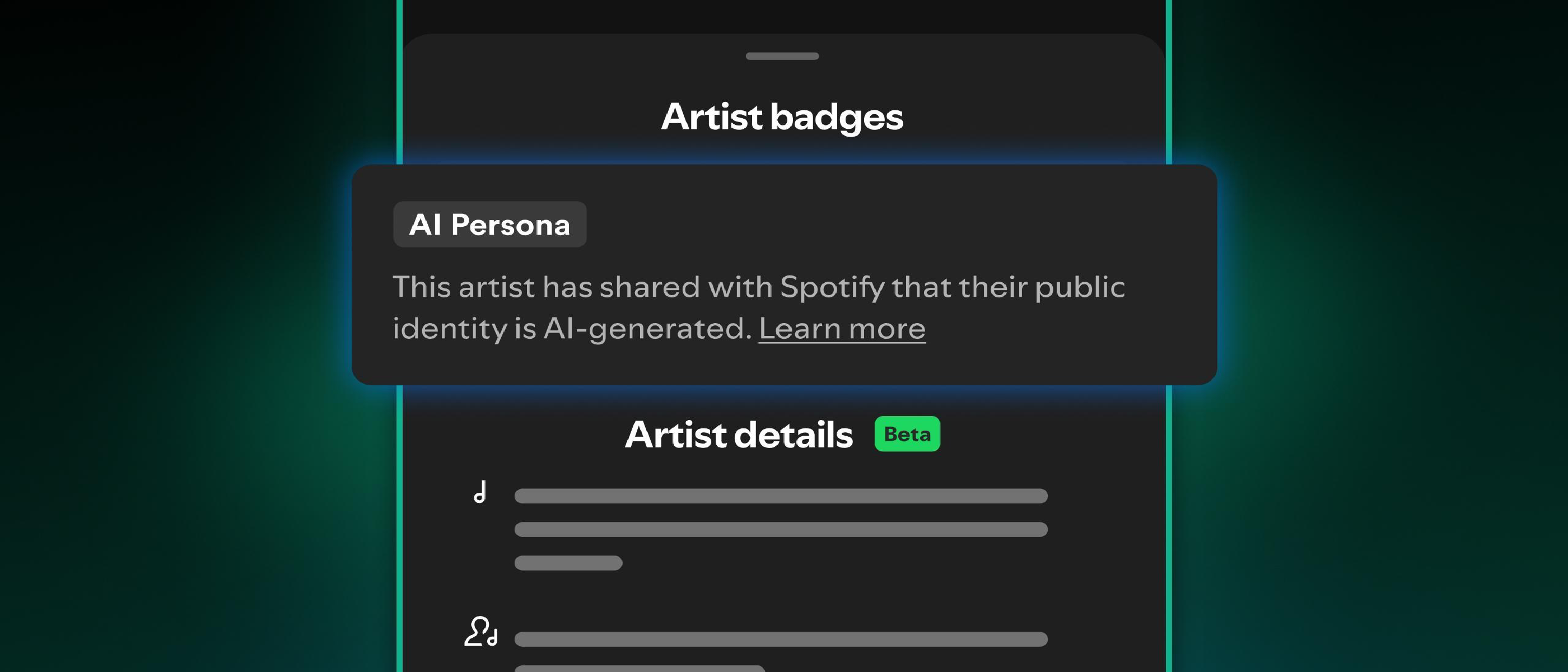
Starting today, any creator who identifies as an AI‑generated act can voluntarily disclose that status through a new self‑disclosure mechanism. By mid‑September, Spotify will roll out two concrete actions across its entire platform:
- AI Persona Badge – A visual label that appears on the artist’s profile, explicitly stating that the act “does not represent a real person.”
- Removal from Recommendation Feeds – Tracks belonging to artists flagged as AI personas will be excluded from personalized playlists, Discover Weekly, Release Radar, and other algorithmic suggestions.
The policy is not purely self‑reported. Spotify will supplement disclosures with human review and AI‑driven verification to detect profiles that “appear to represent photorealistic AI‑generated identities.” This dual‑layer approach aims to prevent misuse while preserving artistic freedom for legitimate AI‑assisted projects.
Why the AI Persona Badge Matters
Transparency for Listeners
Music streaming has become the primary discovery channel for most listeners. When an algorithm surfaces a track, users implicitly trust that the recommendation reflects genuine human creativity or at least a vetted curation process. An AI‑generated act can blur that trust, especially if the listener cannot differentiate between a human‑produced song and a synthetic composition. The badge restores clarity, letting users decide whether they want to engage with AI‑originated content.
Ethical and Legal Considerations
The rise of deep‑fake audio and hyper‑realistic avatars raises questions about consent, attribution, and potential deception. By flagging AI personas, Spotify aligns itself with emerging regulatory conversations around synthetic media. This move also mirrors actions taken by other platforms, such as YouTube’s recent crackdown on “AI slop” to protect creators and advertisers — see the detailed policy analysis in our post “ YouTube Fights AI Slop with New Monetization Rules ”.
Market Differentiation
In a crowded streaming market, trust is a competitive moat. Spotify’s proactive stance may attract users who value authenticity, while also positioning the service as a responsible steward of AI technology. This could translate into higher retention rates, especially among older demographics that are more skeptical of synthetic media.
Technical Implementation Details
Badge Rendering Pipeline
- Profile Metadata Extension – Spotify adds a new boolean field
is_ai_personato the artist object in its backend database. - Front‑End Integration – The badge component is injected into the UI layer for web, iOS, Android, and desktop clients. It appears next to the artist name and on album pages, using the exact phrasing “AI Persona” as defined in the policy.
- Caching Strategy – To avoid latency spikes, badge status is cached at the CDN edge for 24 hours, with an invalidation hook triggered when a profile’s status changes.
Recommendation Engine Adjustments
- Filtering Layer – Before the collaborative‑filtering or content‑based models generate a recommendation list, a pre‑filter removes any track whose
artist.is_ai_personaflag is true. - Model Retraining – Historical data that included AI‑persona tracks is re‑weighted to prevent the model from learning patterns that favor synthetic content. This ensures that the algorithm’s latent space reflects the new policy without a sudden drop in recommendation quality.
Human Review & AI Verification Workflow
- Initial Flagging – When an artist self‑discloses, the system logs the claim and queues the profile for review.
- AI‑Based Image & Name Analysis – A convolutional neural network scans profile pictures for signs of generative‑adversarial‑network (GAN) artifacts. A separate language model evaluates the artist name for patterns typical of AI‑generated monikers (e.g., random alphanumeric strings).
- Human Auditor Decision – Trained moderators assess the AI output, cross‑reference public records, and make a final determination.
- Feedback Loop – The outcome feeds back into the AI models, improving future detection accuracy.
Self‑Disclosure Interface
The disclosure UI is embedded in the Spotify for Artists dashboard. Creators can toggle a switch labeled “I am an AI persona” and submit supporting documentation (e.g., a statement from the development team). The interface also displays a timeline indicating when the badge will appear and when recommendation removal takes effect.
Impact on Artists and Listeners
For Human Artists
- Reduced Competition from Synthetic Catalogs – By removing AI‑generated tracks from recommendation streams, human creators may see a modest uplift in organic discovery.
- Clearer Attribution – Listeners will no longer be misled into thinking a synthetic track is the work of a human, preserving the cultural value of human‑made music.
For AI‑Generated Projects
- Visibility Trade‑Off – While the badge provides transparency, the loss of algorithmic promotion could limit audience reach. Creators may need to rely more heavily on direct marketing, social media, or curated playlists.
- Potential for Niche Communities – The badge could become a badge of honor for experimental artists, fostering dedicated follower bases that specifically seek AI‑driven music.
For Listeners
- Choice Empowerment – Users can filter out AI personas entirely if they prefer, or explore them deliberately by visiting the artist page.
- Enhanced Trust – Knowing that Spotify actively vets and labels synthetic content reduces the risk of accidental exposure to deep‑fake audio, which can be unsettling for some audiences.
Industry Ripple Effects
Spotify’s policy is likely to influence other streaming services, podcast platforms, and even video‑hosting sites. The move aligns with broader industry trends toward synthetic media governance, as illustrated by the recent Zoom security patch that addressed AI‑prompt exploits — details are covered in “ Zoom Annotation Flaw Patched After AI‑Prompt Exploit ”.
Competitive Responses
- Apple Music may introduce its own labeling system to stay competitive.
- Amazon Music could double‑down on AI‑generated playlists, positioning them as a distinct product line rather than integrating them into mainstream recommendations.
Regulatory Landscape
Governments worldwide are drafting legislation on deep‑fake audio and video. By pre‑emptively labeling AI personas, Spotify could avoid future compliance penalties and set a benchmark for “transparent AI” practices.
Future Technological Directions
- Dynamic Badging – Future iterations might allow multiple badges (e.g., “AI‑Assisted Production” vs. “Fully Synthetic”).
- User‑Controlled Filters – Spotify could expose a toggle in
the settings menu that lets listeners exclude or include AI-generated content based on their preferences.
- Blockchain Verification – Some artists may opt to use blockchain-based verification systems to prove their human status, creating a new layer of trust in the digital music ecosystem.
Challenges and Criticisms
Defining the Boundaries of AI Personas
One of the most contentious aspects of Spotify’s policy is the ambiguity around what constitutes an “AI persona.” For example:
- AI-Assisted Artists – Musicians who use AI tools for production (e.g., vocal tuning, drum programming) but are otherwise human may not be flagged, even though their work incorporates synthetic elements.
- Hybrid Acts – Projects where AI generates lyrics or melodies but a human performs or refines the output could fall into a gray area, complicating the labeling process.
- Anonymous or Pseudonymous Artists – Some human artists operate under fictional personas or stage names. Distinguishing these from AI-generated identities may require additional scrutiny, potentially delaying the verification process.
Potential for False Positives and Negatives
Despite Spotify’s dual-layer verification system, errors are inevitable:
- False Positives – Human artists with unconventional names or digital avatars might be mistakenly flagged as AI personas, leading to unwarranted removal from recommendations.
- False Negatives – Sophisticated AI-generated acts that evade detection could continue to appear in recommendation feeds, undermining the policy’s transparency goals.
Spotify has acknowledged these risks and plans to iterate on its verification tools based on user and artist feedback.
Impact on Emerging AI Music Startups
The policy could disproportionately affect startups specializing in AI-generated music, such as Boomy, Soundraw, or AIVA. These platforms rely on streaming services like Spotify to distribute their content and may see a decline in user engagement if their tracks are deprioritized. Some startups may pivot to:
- Direct-to-Fan Models – Selling AI-generated tracks through their own platforms or NFT marketplaces.
- B2B Licensing – Offering AI music tools to filmmakers, game developers, or advertisers rather than targeting general listeners.
Ethical Concerns Around Censorship
Critics argue that Spotify’s policy could be seen as a form of censorship, limiting the creative expression of AI artists. While the company frames the move as a transparency measure, some creators view it as a value judgment against synthetic media. This debate mirrors broader discussions about the role of AI in art, where questions of authenticity, ownership, and cultural value remain unresolved.
How Artists Can Prepare
For Human Artists
- Verify Your Profile – Ensure your Spotify for Artists account is up-to-date with accurate information, including a clear profile picture and bio. This reduces the risk of being mistakenly flagged as an AI persona.
- Engage with Your Audience – Use social media and Spotify’s built-in tools (e.g., Canvas, Storylines) to highlight your creative process and human identity.
- Monitor Recommendations – If you notice a sudden drop in algorithmic recommendations, check whether your profile has been incorrectly flagged and appeal through Spotify’s support channels.
For AI Artists and Developers
- Self-Disclose Early – If you’re an AI-generated act, use the self-disclosure mechanism as soon as possible to avoid last-minute disruptions.
- Diversify Distribution – Explore alternative platforms (e.g., SoundCloud, Bandcamp) or direct-to-fan models to mitigate the impact of recommendation removal.
- Leverage the Badge – Treat the “AI Persona” label as a branding opportunity. Some listeners may actively seek out AI-generated music, and the badge can serve as a mark of distinction.
- Document Your Process – Provide clear documentation (e.g., a statement from your development team) to support your self-disclosure and streamline the verification process.
What’s Next for Spotify?
Short-Term Roadmap
- Feedback Collection – Spotify will gather input from artists, listeners, and industry stakeholders to refine the policy. This may include adjustments to the verification process or the scope of recommendation removal.
- Global Rollout – The policy will initially launch in key markets (e.g., the U.S., U.K., and EU) before expanding to other regions. Localized versions of the badge and disclosure interface will be introduced as needed.
- Partnerships with AI Platforms – Spotify may collaborate with AI music startups to create curated playlists or hubs for AI-generated content, ensuring these artists still have a path to visibility.
Long-Term Vision
- Expanded Labeling System – Future updates could introduce granular badges, such as:
- “AI-Assisted Production” for tracks that use AI tools but are primarily human-made.
- “Fully Synthetic” for music generated entirely by AI.
- “Deepfake Audio” for tracks that mimic real artists without consent.
- User Customization – Spotify may allow listeners to fine-tune their recommendation preferences, such as opting into or out of AI-generated content, similar to how users can currently adjust explicit content filters.
- Integration with Other Media – The policy could extend to podcasts, audiobooks, or even video content on Spotify, creating a unified approach to synthetic media governance.
Conclusion
Spotify’s new “AI Persona” badge and recommendation policy mark a significant step toward addressing the challenges posed by AI-generated content in the music industry. By prioritizing transparency and listener trust, the company is setting a precedent for how platforms can responsibly integrate synthetic media while preserving the value of human creativity.
However, the policy is not without its complexities. Defining the boundaries of AI personas, avoiding false positives, and balancing artistic freedom with ethical considerations will require ongoing refinement. As AI technology evolves, so too will the strategies for managing its impact on culture and commerce.
For now, artists and listeners alike should familiarize themselves with the changes and adapt their strategies accordingly. Whether you’re a human musician seeking to stand out or an AI creator navigating the new landscape, the key will be to embrace the opportunities while staying informed about the shifting rules of the game.
FAQ
1. What exactly is an “AI Persona” on Spotify?
An “AI Persona” is an artist profile on Spotify that represents a non-human entity, such as an AI-generated act or synthetic musician. These profiles will be labeled with an “AI Persona” badge to indicate that the artist does not represent a real person.
2. How does Spotify determine if an artist is an AI persona?
Spotify uses a combination of self-disclosure, human review, and AI-driven verification. Artists can voluntarily disclose their AI status, but Spotify will also assess profiles for signs of photorealistic AI-generated identities, such as profile pictures or names that appear synthetic.
3. Will AI-generated music still be available on Spotify?
Yes, AI-generated music will remain available on Spotify, but it will no longer appear in personalized recommendation feeds (e.g., Discover Weekly, Release Radar). Listeners can still find these tracks by visiting the artist’s profile or searching for them directly.
4. Can human artists be mistakenly flagged as AI personas?
While unlikely, it is possible for human artists with unconventional profiles to be flagged incorrectly. Spotify has a review process in place to minimize false positives, and artists can appeal any incorrect flags through Spotify for Artists.
5. How will this policy affect AI music startups?
AI music startups may see a decline in algorithmic recommendations, which could reduce their visibility on Spotify. These companies may need to explore alternative distribution models, such as direct-to-fan sales or partnerships with other platforms.
6. Can listeners opt out of seeing AI-generated music entirely?
Currently, Spotify does not offer a user-controlled filter to exclude AI-generated music. However, the company may introduce such a feature in the future as part of its long-term roadmap.
7. What should AI artists do to prepare for this change?
AI artists should self-disclose their status as soon as possible to avoid disruptions. They should also diversify their distribution strategies, such as promoting their music on social media or exploring direct-to-fan models.
8. Will this policy apply to AI-assisted music (e.g., tracks produced with AI tools)?
No, the current policy only applies to artists who are fully AI-generated personas. Tracks produced with AI tools but performed by human artists will not be affected.
9. How will this policy impact the broader music industry?
Spotify’s move could influence other streaming platforms to adopt similar policies, shaping the future of AI-generated content in music. It may also accelerate discussions about synthetic media governance and the ethical use of AI in creative industries.
10. Where can I learn more about Spotify’s AI persona policy?
For the latest updates, visit Spotify’s official blog or the Spotify for Artists help center. You can also follow industry news outlets for analysis and commentary on the policy’s impact.
Source: Original Article