






Introduction: A New Transparency Layer for Music Streaming
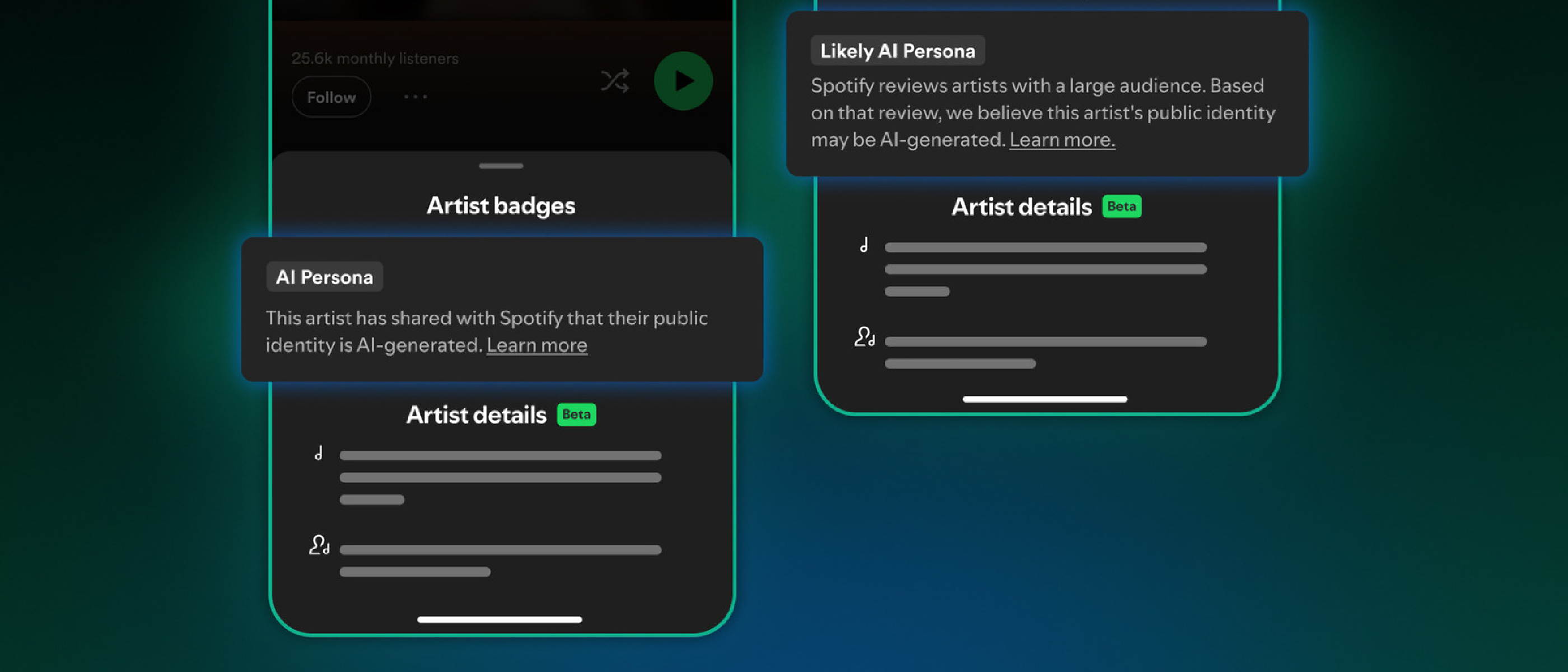
Spotify, the world’s leading audio‑streaming platform, announced a decisive step toward transparency in the age of generative AI. Beginning in mid‑September, the service will display an AI Persona badge on artist profiles that are not human creators but are instead generated by artificial‑intelligence models. The move follows a broader industry push to label synthetic content, mirroring initiatives such as YouTube’s recent AI‑slop monetization rules — see the detailed coverage here: https://ltdeveloperblogs.github.io/posts/youtube-clarifies-policies-around-ai-slop-and-upsetting-videos .
The rollout is two‑phased: from August 11, artists can self‑declare their AI status via the Spotify for Artists portal; a few weeks later the badge will appear on mobile profiles, search results, and playlist rows. This article dissects why the badge matters, how Spotify’s technical pipeline works, the ripple effects across the music ecosystem, and what the future may hold for AI‑generated art.
Why It Matters: Trust, Attribution, and Listener Choice
Protecting Listener Trust
Music listeners have long relied on the implicit trust that an artist’s name represents a real person or collective. When a track is produced entirely by a language model or a diffusion‑based music generator, that trust can be eroded if the listener is unaware. By surfacing a clear visual cue, Spotify gives users the agency to decide whether they want to engage with AI‑generated content.
Legal and Ethical Attribution
Copyright law still grapples with the notion of “authorship” when a non‑human entity creates a work. While many jurisdictions currently treat AI‑generated works as belonging to the human who commissioned or operated the model, the public-facing label helps avoid accusations of deceptive practices. It also aligns with emerging regulatory guidance that calls for clear disclosure of synthetic media.
Business Implications for Artists
Human creators may worry about competition from AI‑generated tracks that can flood the catalog with cheap, algorithm‑friendly songs. The badge creates a level playing field: AI Personas are default‑excluded from personalized recommendation engines (e.g., Discover Weekly, Daily Mix). Human artists retain priority in the recommendation pipeline unless they explicitly opt‑in to be considered alongside AI‑generated tracks.
Technical Breakdown: From Detection to Display
1. AI Persona Badge Creation
- Self‑Declaration: Through the Spotify for Artists portal, creators can mark their account as an AI Persona. This is the primary source of truth for the badge.
- Likely AI Persona Badge: Spotify’s internal moderation team runs a hybrid review process. Human moderators flag suspicious accounts, and a proprietary AI model evaluates metadata, vocal timbre, lyrical patterns, and release cadence to assign a “likely” badge.
2. Account Alert & Appeal Workflow
When a badge is applied, the affected account receives an in‑app notification detailing the reason and the next steps. If the creator believes the badge is erroneous, they can submit an appeal. The appeal is routed to a dedicated review queue where both human experts and the detection model reassess the case. The process mirrors the appeal mechanisms used in other content‑moderation systems, such as Samsung’s hearing‑aid feature rollout, which also incorporated a user‑feedback loop — see https://ltdeveloperblogs.github.io/posts/samsung-says-a-hearing-aid-feature-is-coming-to-galaxy-buds-later-this-year .
3. UI Integration Points
- Mobile Artist Profiles: The badge appears next to the artist name on the profile header.
- Search Results: When users search for a track or artist, the badge is displayed alongside the result.
- Playlist Track Rows: In any playlist view, tracks belonging to an AI Persona carry a small badge icon, ensuring visibility even when users scroll quickly.
4. Recommendation Engine Exclusion
Spotify’s recommendation stack—based on collaborative filtering, natural language processing of lyrics, and user listening behavior—automatically filters out AI Persona tracks unless a label owner opts in. This safeguard prevents algorithmic amplification of synthetic content, preserving the curated experience that listeners expect.
Industry Impact: Shaping the Future of Music Creation
Competitive Landscape
Other streaming platforms are watching closely. Apple Music and Amazon Music have hinted at similar labeling initiatives, but Spotify’s early move gives it a first‑mover advantage in establishing industry standards. The badge could become a de‑facto requirement for any platform that wants to claim transparency.
Implications for AI Music Startups
Companies like AIVA, Endlesss, and OpenAI’s Jukebox will now need to consider how their generated tracks are presented. Some may choose to embrace the badge as a marketing differentiator, positioning AI Personas as a novel artistic genre. Others might develop “human‑in‑the‑loop” workflows to retain eligibility for personalized recommendations.
Listener Experience and Monetization
By default, AI‑generated tracks will not benefit from the same recommendation boost, potentially limiting their streaming revenue. However, the badge also opens new monetization pathways: playlists dedicated to AI art, sponsorships for AI‑driven concerts, and data‑driven collaborations between human artists and generative models.
Cross‑Platform Policy Convergence
The move aligns with broader policy trends. For instance, YouTube’s updated monetization rules require creators to disclose AI‑generated video content, and Samsung’s hearing‑aid integration demonstrates how hardware manufacturers are embedding AI transparency into user‑facing features. Spotify’s badge could serve as a reference point for future cross‑industry standards.
Future Outlook: From Labels to Co‑Creation
Evolution of the Badge System
- Granular Labels: Future iterations may differentiate between “AI‑assisted” (human‑guided) and “fully AI‑generated” works, providing finer granularity for listeners.
- Dynamic Badging: Real‑time detection could allow the badge to appear as soon as a track is uploaded, reducing the lag between release and labeling.
Integration with Generative Tools
Spotify is already experimenting with generative‑AI tools for playlist curation and podcast summarization. As these tools mature, the platform may offer creators a seamless pipeline: generate a track, automatically receive a badge, and optionally request inclusion in recommendation pools.
Regulatory Landscape
Governments worldwide are drafting legislation around synthetic media disclosure. Spotify’s proactive labeling positions it favorably for compliance, potentially avoiding future legal challenges and reinforcing its brand as a responsible steward of the music ecosystem.
Community‑Driven Governance
The appeal process could evolve into
a community-driven governance model where artists and listeners vote on edge cases, such as hybrid human-AI collaborations or experimental works that defy easy categorization. This participatory approach could help refine the labeling system over time, ensuring it remains fair and adaptable to the evolving landscape of music creation.
Ethical Considerations and Challenges
While the AI Persona badge addresses transparency, it also raises ethical questions. For instance, how should the system handle artists who use AI tools for inspiration or production assistance but still consider themselves human creators? The current binary distinction—human or AI—may not capture the nuanced reality of modern music production, where tools like AI-powered mixing, mastering, or even lyric generation are increasingly common.
Additionally, there is the risk of over-reliance on automated detection. False positives could unfairly label human artists as AI, damaging their reputation and limiting their reach. Conversely, false negatives might allow AI-generated content to slip through unnoticed, undermining the system’s credibility. Spotify’s hybrid review process—combining human moderators with AI detection—aims to mitigate these risks, but the challenge of balancing accuracy with scalability remains.
The Role of Listeners in Shaping the System
Listeners will play a crucial role in the success of the AI Persona badge. Their engagement with labeled content will provide valuable feedback on whether the system is working as intended. For example, if listeners consistently skip or dislike AI-generated tracks, it could reinforce the decision to exclude them from recommendations. On the other hand, if certain AI Personas gain popularity, it might prompt Spotify to revisit its default exclusion policy or introduce new ways for listeners to discover and support AI-generated art.
Spotify could also introduce features that allow listeners to customize their experience, such as toggling the visibility of AI Persona tracks or creating playlists that blend human and AI-generated content. This level of control would empower users to curate their listening experience according to their preferences, further enhancing transparency and trust.
Conclusion: A Step Toward a More Transparent Future
Spotify’s introduction of the AI Persona badge marks a significant milestone in the intersection of music, technology, and ethics. By providing clear labeling and an appeal process, the platform is taking a proactive stance on transparency, ensuring that listeners can make informed choices about the content they engage with. While the system is not without its challenges—such as the potential for mislabeling or the ethical complexities of hybrid creation—it sets a precedent for how streaming platforms can navigate the rise of generative AI.
As the music industry continues to evolve, the AI Persona badge may serve as a model for other platforms and industries grappling with similar issues. Whether it’s video, literature, or visual art, the need for transparency in synthetic media is becoming increasingly urgent. Spotify’s initiative is a step in the right direction, but it is only the beginning. The future of music—and indeed, all creative industries—will depend on how well platforms, creators, and listeners adapt to the opportunities and challenges presented by AI.
FAQ
1. What is the AI Persona badge?
The AI Persona badge is a visual label that Spotify will display on artist profiles that are generated by artificial intelligence rather than real human creators. It is designed to provide transparency to listeners about the nature of the content they are engaging with.
2. How does Spotify determine which artists receive the badge?
Spotify uses a two-pronged approach:
- Self-Declaration: Artists can voluntarily mark their accounts as AI Personas through the Spotify for Artists portal.
- Automated Detection: Spotify’s internal moderation team, supported by AI-powered reviews, flags accounts that exhibit characteristics of generative-AI creation (e.g., unusual release patterns, vocal timbre, or lyrical content).
3. What happens if an artist is incorrectly labeled as an AI Persona?
If an artist believes they have been mislabeled, they can submit an appeal through the Spotify for Artists portal. The appeal will be reviewed by a dedicated team, which may include both human moderators and the AI detection model, to reassess the case.
4. Will AI-generated music still be available on Spotify?
Yes, AI-generated music will remain available on Spotify, but it will be clearly labeled with the AI Persona badge. By default, these tracks will be excluded from personalized recommendation tools like Discover Weekly or Daily Mix unless the artist or label opts in to be included.
5. Why is Spotify excluding AI Personas from recommendations by default?
The default exclusion is intended to preserve the curated experience that listeners expect from Spotify’s recommendation engines. It also addresses concerns from human artists about unfair competition from AI-generated tracks, which can be produced at scale and often lack the creative intent or emotional depth of human-made music.
6. Can listeners opt out of seeing AI-generated content?
Currently, Spotify does not offer a direct opt-out feature for AI-generated content. However, the AI Persona badge ensures that listeners are always aware of the nature of the content they are engaging with. Future updates may include more customization options, such as toggling the visibility of AI Persona tracks.
7. How will this affect AI music startups and tools?
AI music startups and tools will need to adapt to Spotify’s labeling system. Some may embrace the badge as a way to differentiate their offerings, while others might explore hybrid models that combine human and AI input to avoid being labeled as fully AI-generated. The exclusion from recommendations could also impact the discoverability and revenue potential of AI-generated tracks.
8. Will other streaming platforms adopt similar labeling systems?
It is likely that other streaming platforms, such as Apple Music and Amazon Music, will follow Spotify’s lead in implementing transparency measures for AI-generated content. Spotify’s early move positions it as a leader in this space, and its approach could serve as a blueprint for industry-wide standards.
9. What are the long-term implications of this initiative?
In the long term, Spotify’s AI Persona badge could influence broader discussions about the role of AI in creative industries. It may prompt regulators to establish clearer guidelines for synthetic media disclosure, and it could encourage other platforms to adopt similar transparency measures. Additionally, the badge could pave the way for new genres or business models centered around AI-generated art.
10. How can artists prepare for this change?
Artists who use AI tools in their creative process should review Spotify’s guidelines to understand how their work might be classified. Those who wish to avoid the AI Persona badge may need to adjust their workflows or provide additional documentation to prove their human involvement. For AI creators, embracing the badge as part of their artistic identity could open up new opportunities for engagement with listeners.
Source: Original Article