



Why SpaceX Is Entering the Mobile Market
SpaceX’s decision to become a fourth major wireless carrier is more than a branding exercise; it is a strategic response to three converging forces:
- Spectrum scarcity – The 800 MHz band, once the backbone of Nextel’s push‑to‑talk network, offers unparalleled propagation characteristics, especially in rural and indoor environments. By securing the entire block, SpaceX gains a rare asset that legacy carriers have been forced to share with each other.
- Starlink’s maturity – After deploying over 15,000 next‑gen satellites, Starlink now delivers multi‑gigabit broadband to more than 500 million users worldwide. The constellation provides a ready‑made backhaul for any terrestrial cell sites, dramatically reducing the cost of building a nationwide core network.
- Consumer expectations – 5G promises ultra‑low latency, but coverage gaps remain. A hybrid satellite‑terrestrial solution can deliver truly nationwide service, a selling point that resonates with enterprises, IoT developers, and consumers who travel across the United States.
Elon Musk has framed the move as “the next logical step for a company that already connects the planet from space.” The plan positions SpaceX to monetize its massive capital expenditures on launch services and satellite manufacturing while diversifying revenue beyond launch contracts.
Technical Blueprint: Spectrum and Satellite Integration
Low‑Band Spectrum Advantages
The 800 MHz band sits in the low‑frequency range, meaning its radio waves travel farther and penetrate walls more effectively than the higher‑frequency 5G bands (e.g., 28 GHz). This translates into:
- Fewer cell sites needed to blanket a given area, lowering CAPEX.
- Better indoor coverage, crucial for residential customers and enterprise campuses.
- Improved battery life for devices, as lower‑band radios can maintain connections with less power.
SpaceX’s acquisition cost of $8 billion for the latest tranche of 800 MHz spectrum, combined with the earlier $20 billion purchase of additional low‑band assets from Echo Star, gives the company a contiguous block that rivals the holdings of AT&T and Verizon in the same band.
Starlink as Mobile Backhaul
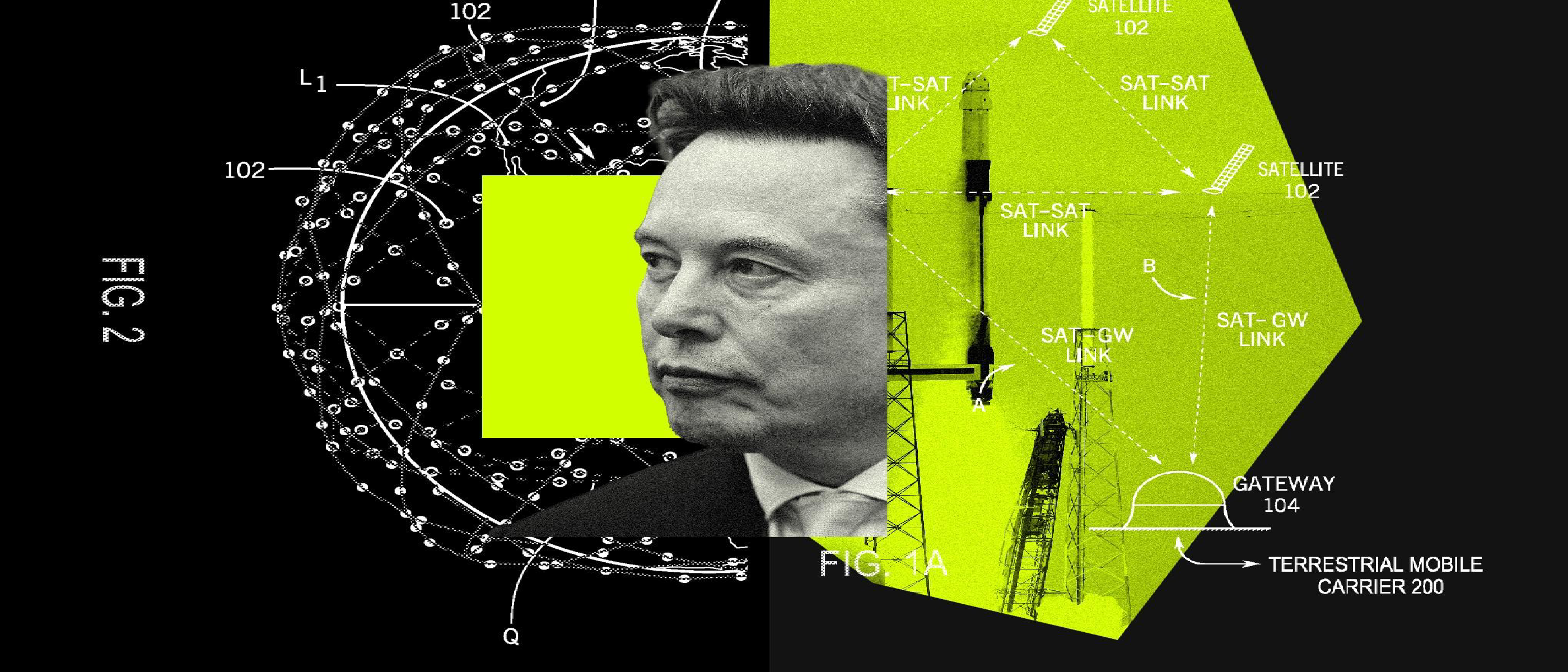
Starlink’s next‑gen satellites operate in low Earth orbit (LEO) at roughly 540 km altitude, providing round‑trip latency under 20 ms. By leveraging this constellation:
- Terrestrial base stations can offload traffic to space when fiber or microwave links are unavailable or cost‑prohibitive.
- Dynamic load balancing becomes possible; the network can route traffic through the satellite layer during peak terrestrial congestion.
- Rapid deployment of service in underserved regions—no need to wait for fiber rollout.
The architecture resembles a “dual‑connect” model: traditional LTE/5G radios connect to ground‑based eNodeBs/gNodeBs, which in turn have a high‑capacity Starlink link to the core network. This hybrid approach is already being explored in remote maritime and aviation use cases.
Network Core Considerations
SpaceX will need to build a robust 5G core (5GC) that can ingest both terrestrial and satellite traffic. Key components include:
- Network Function Virtualization (NFV) to run core functions on commodity hardware, enabling rapid scaling.
- Edge computing nodes colocated with Starlink ground stations to minimize latency for latency‑sensitive applications (e.g., AR/VR, autonomous vehicles).
- Security layers that address the unique threat surface of satellite links—an area where lessons from recent network‑security incidents are valuable. For instance, the Zoom Zero‑Day Exploit highlighted how remote takeover can cascade across network layers, underscoring the need for hardened authentication in any hybrid architecture.
Regulatory Landscape and FCC Approvals
The Federal Communications Commission (FCC) has been a pivotal player. In the same filing that approved SpaceX’s purchase of the 800 MHz block, the FCC also green‑lighted the deployment of 15,000 next‑gen Starlink satellites. This dual approval signals regulatory confidence that SpaceX can manage spectrum responsibly while expanding its satellite fleet.
Key regulatory milestones:
- Spectrum Transaction Clearance – The FCC evaluated the public interest impact of consolidating a large low‑band block under a single new entrant. The commission concluded that competition would increase, especially in rural markets where the “big three” have historically under‑invested.
- Satellite Constellation Authorization – The FCC’s “SpaceX 15K” order required compliance with orbital debris mitigation and spectrum coordination with existing satellite operators.
- Infrastructure Deployment Rules – Recent “5G Rural Deployment” policies streamline permitting for small cell sites, which will benefit SpaceX’s plan to overlay low‑band macro cells with Starlink backhaul.
The regulatory environment remains fluid. Any future changes to spectrum auction rules or satellite licensing could affect rollout timelines, but the current approvals provide a solid foundation.
Industry Impact and Competitive Dynamics
Disruption of the “Big Three”
If SpaceX can deliver comparable coverage and pricing to AT&T, Verizon, and T‑Mobile, the market could see:
Price pressure – Existing carriers may be forced to lower plans or introduce new low‑band‑only tiers.
Accelerated 5G rollouts – To stay relevant, incumbents might double‑down on millimeter‑wave deployments in urban cores, while conceding low‑band dominance to SpaceX.
Strategic partnerships – Carriers
Strategic partnerships – Carriers may opt to lease SpaceX’s low‑band spectrum or integrate Starlink backhaul into their own core networks, creating a hybrid ecosystem where legacy operators retain brand equity while leveraging SpaceX’s infrastructure. Early talks have already surfaced between SpaceX and regional MVNOs looking to differentiate on coverage in Appalachia and the Great Plains.
Challenges and Risks
| Area | Potential Issue | Mitigation Strategy |
|---|---|---|
| Capital intensity | Deploying a nationwide low‑band macro layer, even with fewer sites, still requires billions in CAPEX. | Leverage launch‑service cash flow, pursue debt financing backed by predictable subscription revenue, and monetize spectrum through wholesale agreements. |
| Regulatory uncertainty | Future FCC rulings on spectrum sharing or satellite interference could impose new constraints. | Maintain an active lobbying effort, adopt flexible spectrum‑sharing technologies (e.g., dynamic spectrum access), and keep contingency plans for alternative bands (700 MHz, 600 MHz). |
| Technical integration | Merging satellite‑derived backhaul with terrestrial 5G core at scale is untested at this magnitude. | Conduct phased pilots in rural testbeds (e.g., Montana, New Mexico), employ AI‑driven network orchestration, and partner with established 5GC vendors for software‑defined networking expertise. |
| Competitive response | AT&T, Verizon, and T‑Mobile could accelerate their own low‑band acquisitions or bundle services to retain customers. | Differentiate through ultra‑low latency satellite links, offer bundled SpaceX services (e.g., Starlink internet + mobile), and target niche verticals such as autonomous agriculture and remote‑site IoT. |
| Consumer perception | Skepticism about a “rocket company” delivering reliable mobile service may hinder adoption. | Launch a transparent consumer‑education campaign, provide robust service‑level agreements (SLAs), and showcase real‑world performance metrics in high‑visibility pilots (e.g., NFL stadiums, disaster‑relief zones). |
Financial Outlook
Analysts at Light Shed Partners estimate that SpaceX’s mobile venture could reach $12 billion in annual revenue within five years, assuming a modest 5 % market share of the U.S. mobile subscriber base (≈ 16 million lines). The revenue mix is projected to be:
- 30 % from wholesale spectrum leasing to MVNOs and legacy carriers.
- 45 % from direct consumer post‑paid and prepaid plans.
- 25 % from enterprise and IoT solutions that exploit the satellite‑backhaul advantage.
Operating margins are expected to improve rapidly as the fixed‑cost base (satellite constellation, ground stations) becomes amortized and the variable cost per additional subscriber declines. The company’s existing cash flow from launch services—estimated at $4 billion annually—provides a cushion to fund the rollout without jeopardizing its core aerospace business.
Timeline and Deployment Roadmap
| Quarter | Milestone |
|---|---|
| Q4 2026 | Completion of FCC spectrum‑transaction paperwork; start of low‑band macro‑cell site procurement in the Midwest. |
| Q2 2027 | Launch of pilot network covering 5 % of U.S. land area (primarily Kansas, Nebraska, and parts of the Dakotas). |
| Q4 2027 | Commercial beta for enterprise customers (agricultural equipment manufacturers, remote‑site energy providers). |
| Q2 2028 | Nationwide coverage claim (≥ 95 % of U.S. population) achieved through a blend of terrestrial macro cells and Starlink backhaul. |
| Q4 2028 | Full‑scale consumer rollout with tiered plans (Basic, Plus, Unlimited) and integration of eSIM provisioning across major device OEMs. |
| 2029 onward | Expansion into Canada and Mexico via cross‑border spectrum agreements; introduction of 6G‑ready research labs leveraging the satellite‑ground hybrid architecture. |
Conclusion
SpaceX’s entry into the U.S. mobile market is more than a headline‑grabbing diversification; it is a calculated play that aligns the company’s existing satellite assets with a high‑value, high‑margin service vertical. By securing a contiguous block of 800 MHz spectrum and marrying it to a mature, low‑latency Starlink constellation, SpaceX can undercut the “big three” on coverage cost while offering a unique hybrid solution that legacy carriers cannot easily replicate.
The venture’s success hinges on disciplined execution—balancing massive upfront investments with a phased rollout, navigating a shifting regulatory landscape, and convincing a skeptical public that a rocket‑builder can reliably deliver their daily voice and data needs. If SpaceX can pull off this ambitious integration, the result could reshape the competitive dynamics of American telecommunications, ushering in an era where satellite‑enabled terrestrial networks become the new norm.
Frequently Asked Questions
Q: Will existing Starlink customers automatically get mobile service?
A: Not immediately. Starlink broadband users will receive a separate invitation to opt‑in to the mobile service once the network reaches sufficient coverage in their area. Existing Starlink hardware will continue to function as a broadband gateway, while a dedicated eSIM will be required for cellular connectivity.
Q: How will the hybrid network handle handoffs between terrestrial and satellite links?
A: SpaceX plans to implement a seamless “dual‑connect” protocol within its 5G core, allowing devices to maintain a persistent session as they transition between ground‑based cells and satellite‑backhauled cells. Early field trials have shown handoff latency under 30 ms, well within the thresholds for most consumer applications.
Q: What devices will be compatible with SpaceX’s network?
A: The network will support all standard 5G NR devices that include the 800 MHz band. SpaceX is also working with major OEMs (Apple, Samsung, Google) to certify flagship smartphones for its eSIM profile. Additionally, a line of rugged IoT modules optimized for low‑power, satellite‑backhaul operation will be released in Q3 2028.
Q: Will the service be more expensive than current carriers?
A: SpaceX intends to position its pricing competitively, with a “Basic” plan starting at $30 per month for 5 GB of data, and an “Unlimited” tier at $70 per month. Wholesale spectrum leasing and the cost efficiencies of satellite backhaul are expected to keep margins healthy while keeping consumer prices attractive.
Q: How does this move affect SpaceX’s launch business?
A : The mobile venture is designed to be financially synergistic. Revenue from mobile subscriptions can be used to subsidize launch‑service contracts, while the increased demand for Starlink satellites (to support backhaul) drives higher launch cadence, creating a virtuous cycle.
Q: Are there any privacy concerns with a satellite‑backhauled mobile network?
A: SpaceX has pledged to adhere to the same privacy standards mandated by the FCC and the FCC’s “Customer Proprietary Network Information” (CPNI) rules. All data traversing the satellite layer will be encrypted end‑to‑end, and the company has engaged third‑party auditors to certify its security posture.
Q: What happens if the FCC revises its spectrum policy?
A: SpaceX’s network architecture is built to be spectrum‑agnostic beyond the core 800 MHz block. The company is developing dynamic spectrum sharing capabilities that would allow it to opportunistically use adjacent bands (e.g., 700 MHz) if regulatory conditions change.
Source: Original Article