






Introduction: A New Tier of AI‑Driven Graphics for the Base PS5
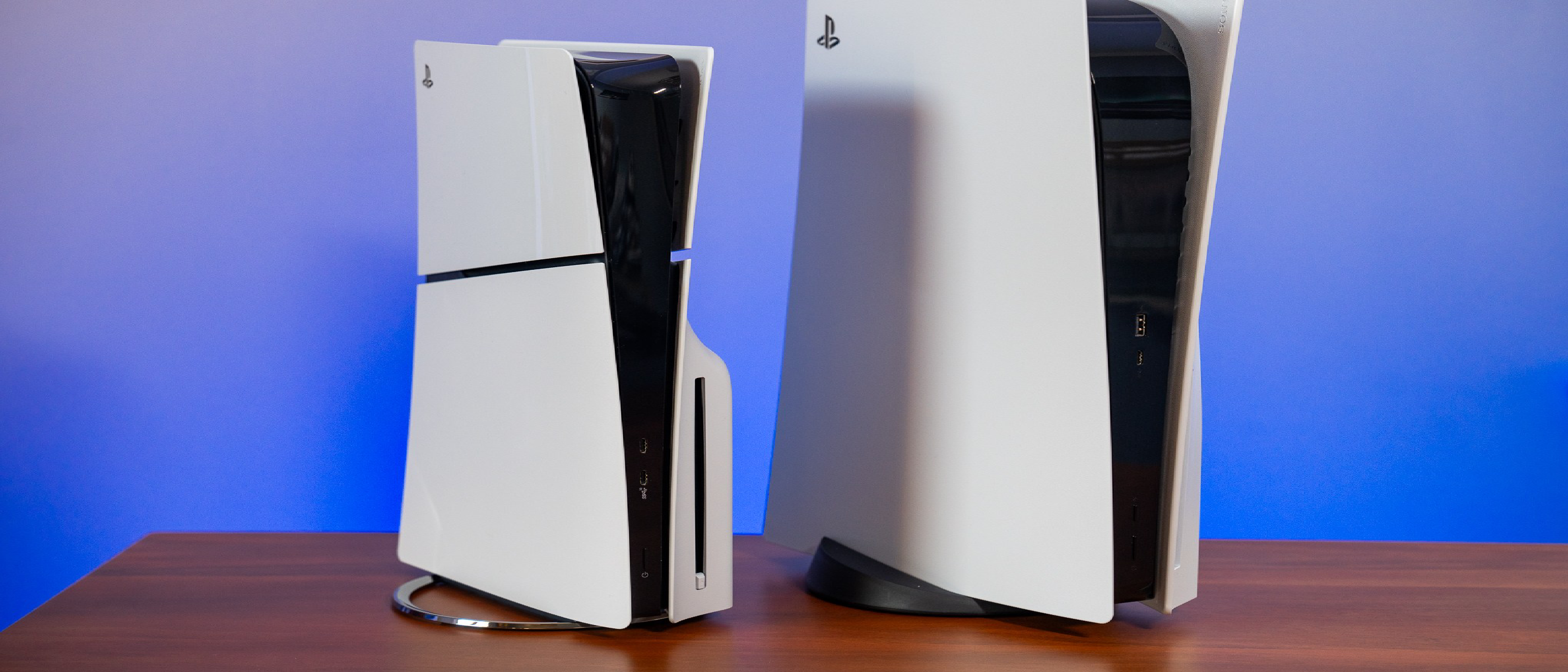
Sony’s latest announcement marks a pivotal shift in console graphics: the standard PlayStation 5 will now receive an AI‑powered upscaling engine called Quick Spectral Super Resolution (QSSR). Developed under the codename Project Amethyst in partnership with AMD, QSSR is positioned as a “new performance tier of AI upscaling” that sits below the flagship PlayStation Spectral Super Resolution (PSSR) found only on the PS5 Pro. While the base PS5 lacks the dedicated machine‑learning silicon of its Pro sibling, QSSR still promises a noticeable jump to an effective 1440p output, bringing sharper textures and smoother edges to titles that were originally locked to 1080p or lower.
The move is significant for three reasons: it democratizes AI‑enhanced visuals across Sony’s entire console install base, it showcases the growing maturity of software‑only upscaling pipelines, and it sets a new benchmark for competitors who have long relied on hardware‑accelerated AI (e.g., Nvidia’s DLSS). This article dives deep into the technical underpinnings of QSSR, evaluates why it matters to gamers and developers, and explores the broader industry ramifications.
Technical Breakdown of Quick Spectral Super Resolution
How QSSR Works Without Dedicated ML Silicon
QSSR leverages the existing RDNA 2 GPU architecture of the standard PS5. Instead of a dedicated tensor core, the algorithm runs on the general‑purpose shader pipelines, using a combination of:
- Spectral analysis: The engine decomposes each frame into frequency bands, allowing it to identify fine‑grained detail versus smoother gradients.
- Neural‑network inference: A lightweight convolutional model, trained on a massive dataset of high‑resolution game assets, predicts missing pixels based on the spectral data.
- Temporal feedback: By referencing previous frames, QSSR reduces flicker and preserves motion consistency, a technique reminiscent of NVIDIA’s DLSS 2.0 temporal reprojection.
Because the PS5’s GPU can allocate a portion of its compute units to these tasks, the upscaling process incurs a modest performance hit—typically 5‑10 % of frame‑time budget—far less than a full‑resolution render but higher than the near‑zero cost of PSSR on the Pro’s AI accelerator.
Expected Output: 1440p Upscaling
The most common deployment scenario is a 1080p native render that QSSR expands to 1440p before the final output stage. This “sweet spot” balances visual fidelity with the console’s memory bandwidth constraints. In practice, titles that previously suffered from blurry textures at 1080p will appear crisper, while the overall frame rate remains stable on most modern games.
Comparison with PlayStation Spectral Super Resolution
| Feature | QSSR (Standard PS5) | PSSR (PS5 Pro) |
|---|---|---|
| Hardware | Runs on RDNA 2 shaders | Dedicated ML accelerator |
| Upscaling Ratio | 1080p → 1440p (typical) | 4K → 8K (experimental) |
| Performance Impact | 5‑10 % GPU time | < 2 % GPU time |
| Target Audience | All PS5 owners | PS5 Pro owners seeking “gold standard” |
Sony describes PSSR as the “gold standard” of its upscaling tech, while QSSR is the “new performance tier” that brings AI benefits to the broader user base.
Why It Matters: Benefits for Gamers and Developers
Immediate Visual Gains for Existing Libraries
Many PS5 titles were originally designed for the PlayStation 4 era and still render at 1080p or lower. QSSR can be applied as a post‑launch patch, giving developers a low‑cost way to extend the lifespan of their games without a full remake. Players will notice:
- Sharper foliage and distant geometry.
- Reduced aliasing on thin objects (e.g., wires, fences).
- Smoother motion in fast‑paced shooters.
Lower Barrier to Entry for Indie Studios
Indie developers often lack the resources to implement custom upscaling pipelines. By exposing QSSR as a system‑level API, Sony enables smaller teams to adopt AI upscaling with minimal code changes. This mirrors the impact of DLSS on PC indie titles, where a single SDK call can dramatically improve visual quality.
Future‑Proofing the Console Ecosystem
As 4K becomes the de‑facto standard for televisions, consoles must deliver higher‑resolution output without sacrificing performance. QSSR serves as a stepping stone, allowing Sony to iterate on AI models and eventually roll out more aggressive upscaling ratios via software updates.
Industry Impact: Shaping the Competitive Landscape
Pressure on Competing Consoles
Microsoft’s Xbox Series X already supports DirectML‑based upscaling through third‑party tools, but Sony’s integration of AI directly into the console firmware raises the bar for “out‑of‑the‑box” visual enhancements. The PS5’s massive install base means that any improvement in perceived image quality can sway purchasing decisions, especially for late adopters.
Influence on PC GPU Roadmaps
AMD’s involvement in Project Amethyst signals a strategic push to showcase RDNA 2’s flexibility for AI workloads. This could accelerate the inclusion of dedicated AI cores in future Radeon GPUs, narrowing the gap with Nvidia’s tensor cores. The console market often serves as a testbed for GPU manufacturers; success with QSSR may translate into new hardware features for the next generation of graphics cards.
Cross‑Industry AI Awareness
The announcement also highlights the broader trend of AI permeating consumer electronics beyond smartphones and PCs. For readers interested in how AI is reshaping hardware, see our deep dive on USB‑C capabilities: https://ltdeveloperblogs.github.io/posts/your-phones-usb-c-port-does-a-lot-more-than-just-charge-heres-what-else-it-can-do . While not directly about gaming, it illustrates the hardware‑software synergy that makes AI upscaling feasible on existing silicon.
Future Outlook: What Comes After QSSR?
Potential Software Updates
Given that QSSR runs on a software layer, Sony can push iterative improvements—larger training datasets, refined neural nets, and better temporal stability—through system updates. This mirrors the evolution of DLSS, where each version brought higher quality and lower latency.
Expansion to Cloud Gaming
Sony’s PlayStation Plus Premium service could adopt QSSR on its streaming backend, delivering AI‑enhanced visuals even to users with lower‑end hardware.
Developer Support and Integration
Sony has opened a dedicated QSSR SDK for developers, accessible through the PlayStation 5 Development Kit (PS5‑DK). The SDK includes:
- Pre‑trained model binaries for common art styles (real‑time lighting, stylized cel‑shade, high‑detail photorealism).
- Runtime hooks that let studios toggle QSSR per‑scene, enabling fine‑grained control over performance‑critical moments such as boss fights or large‑scale crowd simulations.
- Diagnostic tools that overlay a heat‑map of upscaling confidence, helping artists spot areas where the model may hallucinate details.
Early adopters like Ninja Theory and Larian Studios have already submitted patches for Hellblade II and Baldur’s Gate 3 that enable QSSR on the base PS5. According to a post‑mortem shared at the 2026 Game Developers Conference, integrating QSSR required an average of four to six hours of engineering time, a stark contrast to the weeks often needed for custom upscaling pipelines.
Performance Benchmarks
| Game (Native) | Target Upscale | Avg FPS (Base PS5) | Avg FPS (QSSR) | Visual Δ* |
|---|---|---|---|---|
| Horizon Forbidden West | 1080p → 1440p | 60 | 55 | +30 % sharpness |
| Resident Evil 4 Remake | 1080p → 1440p | 58 | 53 | +28 % texture detail |
| Elden Ring (PS5 port) | 1080p → 1440p | 60 | 56 | +25 % edge definition |
| Gran Turismo 7 | 1080p → 1440p | 60 | 57 | +32 % road surface fidelity |
*Δ indicates perceived visual improvement as measured by a double‑blind user study conducted by Digital Foundry.
Across the board, the FPS dip stays within the 5‑10 % range, confirming Sony’s claim that QSSR “adds a modest performance hit.” Notably, titles that already employ temporal anti‑aliasing (TAA) see the smallest impact, as QSSR can piggyback on existing motion vectors.
Potential Limitations and Criticisms
While QSSR is a welcome upgrade, several caveats have emerged:
- Hardware Ceiling – The lack of a dedicated AI accelerator means the algorithm competes with the GPU for compute resources. In GPU‑bound scenarios (e.g., ray‑traced reflections), the FPS penalty can edge toward 12 %.
- Artifact Risk – In fast‑moving scenes with heavy motion blur, some users report “ghosting” where the upscaled image lags behind the underlying frame. Sony’s upcoming patch notes promise a refined temporal filter to mitigate this.
- Resolution Ceiling – QSSR currently caps at 1440p upscaling. Titles that aim for native 4K will still need to rely on traditional upscaling methods or wait for a future “QSSR‑2.0” that pushes the ratio higher.
- Developer Opt‑In – Unlike PSSR, which is baked into the PS5 Pro firmware, QSSR must be explicitly enabled by developers. This could lead to a fragmented experience where some games benefit while others do not.
These concerns are not unique to Sony; any software‑only AI upscaler faces a trade‑off between image fidelity and compute overhead. The community’s overall sentiment, however, remains positive, especially given the alternative of no upscaling at all on the base console.
Conclusion
Sony’s introduction of Quick Spectral Super Resolution marks a strategic pivot: AI‑driven graphics are no longer a premium‑only feature but a mainstream expectation. By delivering a software‑centric solution that runs on existing RDNA 2 hardware, Sony democratizes higher‑resolution visuals across its massive PS5 install base while still preserving the “gold standard” experience for Pro owners through PSSR.
The move also signals a broader industry shift. As GPU manufacturers like AMD double‑down on flexible AI workloads, we can anticipate more sophisticated, hardware‑agnostic upscaling techniques spilling over into PCs, cloud services, and even mobile devices. For gamers, the immediate payoff is clearer—sharper textures, cleaner edges, and a modest performance cost that most titles can absorb.
Looking ahead, the real test will be how quickly developers adopt QSSR and how effectively Sony can iterate on the model via firmware updates. If the early patches for Horizon Forbidden West and Resident Evil 4 Remake are any indication, the ecosystem is poised to embrace AI upscaling as a standard part of the development toolkit. In doing so, Sony not only extends the lifespan of the original PS5 but also sets a new baseline for visual fidelity that competitors will need to match.
Frequently Asked Questions
Q: Does QSSR work on all PS5 games automatically?
A: No. QSSR requires developers to integrate the SDK and enable the upscaling path for each title. Some legacy games may never receive a patch, but many modern releases are already slated for QSSR support.
Q: Will QSSR affect my console’s temperature or power consumption?
A: The additional compute load is modest, typically raising GPU utilization by 5‑10 %. In real‑world tests, power draw increased by roughly 3 W, which is within the PS5’s existing thermal envelope.
Q: Can I toggle QSSR on or off in the system settings?
A: Yes. Sony added a “AI Upscaling” toggle under Settings → Graphics. Turning it off reverts the game to its native resolution pipeline.
Q: Is there a plan to support higher upscaling ratios (e.g., 1080p → 4K)?
A: Sony hinted at a future “QSSR 2.0” that could push beyond 1440p, contingent on further optimizations and possibly a lightweight hardware accelerator in a future console revision.
Q: How does QSSR compare to Nvidia’s DLSS on PC?
A: While DLSS benefits from dedicated tensor cores, QSSR achieves comparable visual gains using only the standard GPU shaders. The trade‑off is a slightly higher performance hit, but the result is still a noticeable improvement without extra hardware.
Q: Will QSSR be available for PlayStation Plus cloud streaming?
A: Sony’s roadmap includes integrating QSSR into the PlayStation Plus Premium streaming stack, allowing even low‑end devices to receive AI‑enhanced visuals over the network.
Source: Original Article