





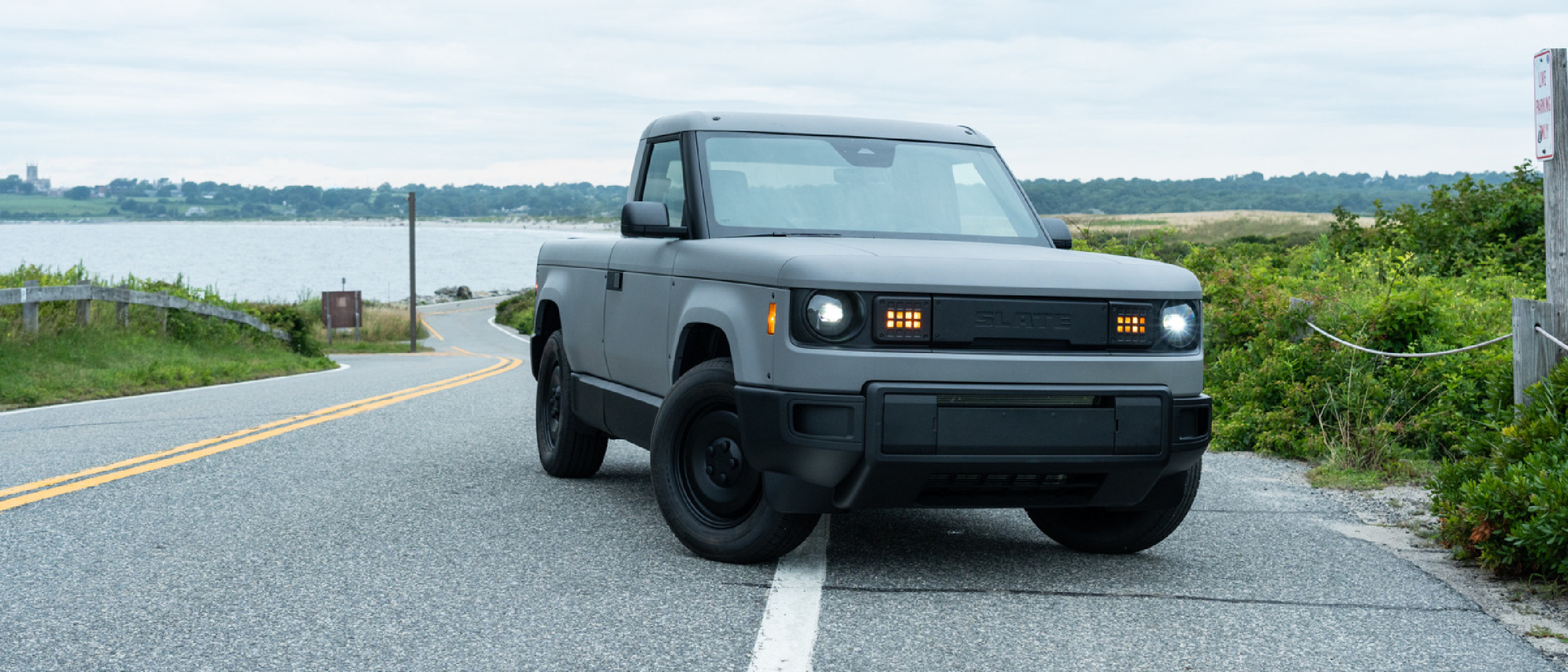
Overview of the Slate Truck
Slate’s newest offering, the Slate Truck, arrives with a clear manifesto: strip away every non‑essential component, leave a rugged chassis, and let the owner decide what else belongs on it. Marketed as an “anti‑truck,” the vehicle is a 5‑foot‑bed, single‑motor electric utility platform that costs $24,950 in its base form. The design philosophy mirrors the growing DIY ethos championed by the EU Right to Repair Directive , giving owners a canvas rather than a finished product.
Tim Stevens, a seasoned automotive journalist, spent just over an hour behind the wheel. His experience provides a concise yet revealing snapshot of how the Slate Truck behaves in everyday scenarios—urban deliveries, small‑site construction, and weekend hobby projects alike.
Technical Breakdown of Powertrain and Performance
| Specification | Detail |
|---|---|
| Motor | Single‑speed electric motor |
| Power | 181 hp |
| Torque | Not disclosed, but sufficient for light‑duty towing |
| Range | Up to 205 mi per charge |
| Towing Capacity | 2,000 lb |
| Payload | 1,550 lb (5‑ft bed) |
| Drive Layout | Rear‑wheel drive |
| Charging | Standard Level 2 (no fast‑charge data released) |
Acceleration and Driving Dynamics
The Slate Truck’s acceleration is deliberately modest. Stevens notes that 0–30 mph feels “urgent,” but the vehicle quickly loses momentum beyond that point. The throttle response is relaxed, especially in reverse, where the truck feels nimble enough to “chirp” the tires for a light burnout. This characteristic is intentional: the vehicle targets low‑speed work zones rather than highway cruising.
Energy Efficiency
With a 205‑mile EPA‑estimated range, the truck averages roughly 3.5 mi/kWh, assuming typical payloads. While not a record‑breaker, the efficiency is respectable for a vehicle that carries a sizable payload and offers a 2,000‑lb tow rating.
Design Philosophy: Minimalism Meets DIY
Exterior Simplicity
- No paint – The body arrives with a primer finish, inviting owners to apply vinyl wraps. Slate claims a full wrap can be completed in a few hours for a few hundred dollars.
- Modular SUV conversion kit – For $5,000, buyers can add a second row of seats and a hard top that covers the bed, effectively turning the utility vehicle into a compact SUV.
Interior Minimalism
- Dashboard – A tiny LCD behind the steering wheel displays speed, battery state, and a rear‑view camera feed when reversing. There is no infotainment screen, stereo,
or even a traditional radio. The startup sequence is equally sparse—no dramatic lighting or sound effects, just an instant-on readiness that aligns with the truck’s utilitarian ethos.
Mounting points – Exposed screw heads and T-slot extrusions on the dashboard serve as anchor points for accessories. Stevens tested a smartphone mount (compatible with the Galaxy S25 Ultra) and noted how easily it attached to the dashboard’s rail system. This modularity extends to the cabin’s storage solutions, with cargo slings and flashlight holders available as aftermarket add-ons.
Manual windows – A throwback to older vehicles, the crank-operated windows reinforce the truck’s no-frills approach. While some may find this inconvenient, it eliminates potential electrical failures and reduces weight.
Air conditioning – Despite the lack of luxury features, the A/C system is surprisingly effective, capable of cooling the cabin even with the windows rolled up. Stevens remarked that it was “more than adequate for short trips or work-site breaks.”
Practicality and Safety
The Slate Truck’s compact dimensions make it more maneuverable than full-size pickups like the Ford F-150 or Chevrolet Silverado 1500. Its lower height also reduces the risk to pedestrians, a consideration often overlooked in larger trucks. Visibility is excellent, thanks to large windows and a redundant rear-view camera (though Stevens noted the camera felt unnecessary given the unobstructed sightlines).
The cabin offers ample headroom, and the space between the seats can accommodate a backpack or small toolbox. However, the plastics used throughout the interior are functional but unrefined, with a texture Stevens described as “unpleasant to touch.” This is a deliberate trade-off to keep costs low and prioritize durability over aesthetics.
Customization and DIY Potential
One of the Slate Truck’s most compelling features is its adaptability. The primer finish and vinyl-friendly body panels allow owners to personalize their vehicles without expensive paint jobs. The SUV conversion kit, priced at $5,000, transforms the truck into a family-friendly hauler with a second row of seats and a hard top. Installation is designed to be DIY-friendly, with Slate providing detailed instructions and pre-drilled mounting points.
For those who prefer a more hands-off approach, Slate offers a network of approved modifiers and upfitters. These partners can install everything from off-road suspension kits to custom bed liners, ensuring the truck can be tailored to specific needs without voiding the warranty.
Real-World Use Cases
Stevens’ test drive highlighted several scenarios where the Slate Truck could excel:
Urban deliveries – The truck’s compact size and tight turning radius make it ideal for navigating city streets and tight loading docks. The 205-mile range is sufficient for a day’s worth of local deliveries, and the rear-wheel-drive layout provides enough traction for light off-road use.
Small-scale construction – With a 1,550-pound payload capacity and 2,000-pound towing rating, the Slate Truck can handle tools, materials, and small trailers. The exposed mounting points allow for easy attachment of racks, toolboxes, or even a portable workbench.
Weekend projects – The truck’s DIY-friendly design makes it a blank canvas for hobbyists. Whether it’s a mobile camping setup, a food truck, or a rolling workshop, the Slate Truck’s simplicity encourages creativity. Stevens mused about outfitting his with a rooftop tent and solar panels for off-grid adventures.
Fleet applications – Businesses looking to electrify their fleets without breaking the bank could find the Slate Truck an attractive option. Its low upfront cost and customizable nature make it adaptable to a variety of commercial uses, from landscaping to last-mile delivery.
Challenges and Limitations
While the Slate Truck’s minimalist approach is refreshing, it’s not without drawbacks. The lack of modern amenities—like a touchscreen, power windows, or even a radio—may deter buyers accustomed to contemporary vehicles. The acceleration, while adequate for its intended use, is sluggish compared to other electric trucks, and the top speed is electronically limited to 75 mph for safety and efficiency.
The interior plastics and exposed screw heads, while functional, give the cabin a “work in progress” feel. Stevens acknowledged that the truck’s rough edges might not appeal to everyone, but he also noted that these imperfections are part of its charm. “It’s still a little rough around the edges,” he wrote, “but it’s already got me thinking about the potential.”
Pricing and Availability
The Slate Truck starts at $24,950, a price that reflects its no-frills approach. While this is higher than the originally promised sub-$20,000 target, Slate attributes the increase to “the federal government,” likely referencing regulatory costs or supply chain challenges. The SUV conversion kit adds another $5,000, bringing the total to just under $30,000 for a more versatile configuration.
First deliveries are expected before the end of the year, with initial production focused on the U.S. market. Slate has not yet announced international availability, but given the truck’s modular design, it’s likely to attract interest from global buyers seeking a customizable electric utility vehicle.
Conclusion: A Truck for the Hands-On Owner
The Slate Truck is not for everyone. It lacks the refinement, power, and luxury of mainstream electric trucks like the Ford F-150 Lightning or Rivian R1T. Instead, it offers something far more intriguing: a blank slate for owners who value simplicity, customization, and hands-on involvement.
Tim Stevens’ first drive left him impressed with the truck’s potential. “The Slate Truck, then, is shaping up to be exactly what it promised: a bare-bones, just-enough truck with productivity and creativity in mind,” he concluded. For those willing to embrace its minimalist philosophy, the Slate Truck could be the ultimate DIY electric vehicle—a tool as much as a mode of transportation.
FAQ
1. Who is the Slate Truck designed for?
The Slate Truck is aimed at DIY enthusiasts, small business owners, and urban dwellers who need a compact, customizable electric utility vehicle. Its minimalist design and modular features make it ideal for those who want to tailor their truck to specific needs, whether for work or play.
2. How does the Slate Truck compare to other electric trucks?
Unlike mainstream electric trucks (e.g., Ford F-150 Lightning, Rivian R1T), the Slate Truck prioritizes simplicity and customization over luxury and performance. It has a lower price point, smaller size, and fewer features, but its modular design allows for greater personalization.
3. Can I install the SUV conversion kit myself?
Yes. The SUV conversion kit is designed to be DIY-friendly, with pre-drilled mounting points and detailed instructions provided by Slate. However, buyers can also opt to have it installed by an approved upfitter.
4. What is the charging time for the Slate Truck?
Slate has not released official charging times, but the truck supports standard Level 2 charging. Given its 205-mile range and modest battery size, a full charge from empty is likely to take 6–8 hours on a Level 2 charger. Fast-charging capabilities have not been announced.
5. Is the Slate Truck available outside the U.S.?
As of now, Slate has only announced U.S. availability. However, the truck’s modular design and global interest in electric vehicles suggest that international markets could be explored in the future.
6. What are the warranty and maintenance options?
Slate has not yet released full warranty details, but the company emphasizes the truck’s durability and ease of repair. The minimalist design reduces the number of components that could fail, and the DIY-friendly nature of the vehicle encourages owners to perform their own maintenance.
7. Can I add a stereo or infotainment system to the Slate Truck?
While the truck does not come with a stereo or infotainment system, the exposed mounting points and T-slot extrusions on the dashboard allow for aftermarket installations. Owners can add a Bluetooth speaker, a tablet mount, or even a full stereo system if desired.
8. How does the Slate Truck handle off-road?
The Slate Truck is not designed as an off-road vehicle, but its rear-wheel-drive layout and compact size make it capable of light off-road use. For more serious off-roading, Slate offers optional suspension upgrades and all-terrain tires through its network of modifiers.
Source: Original Article