
Overview of Aqara’s New Smart Lighting Portfolio
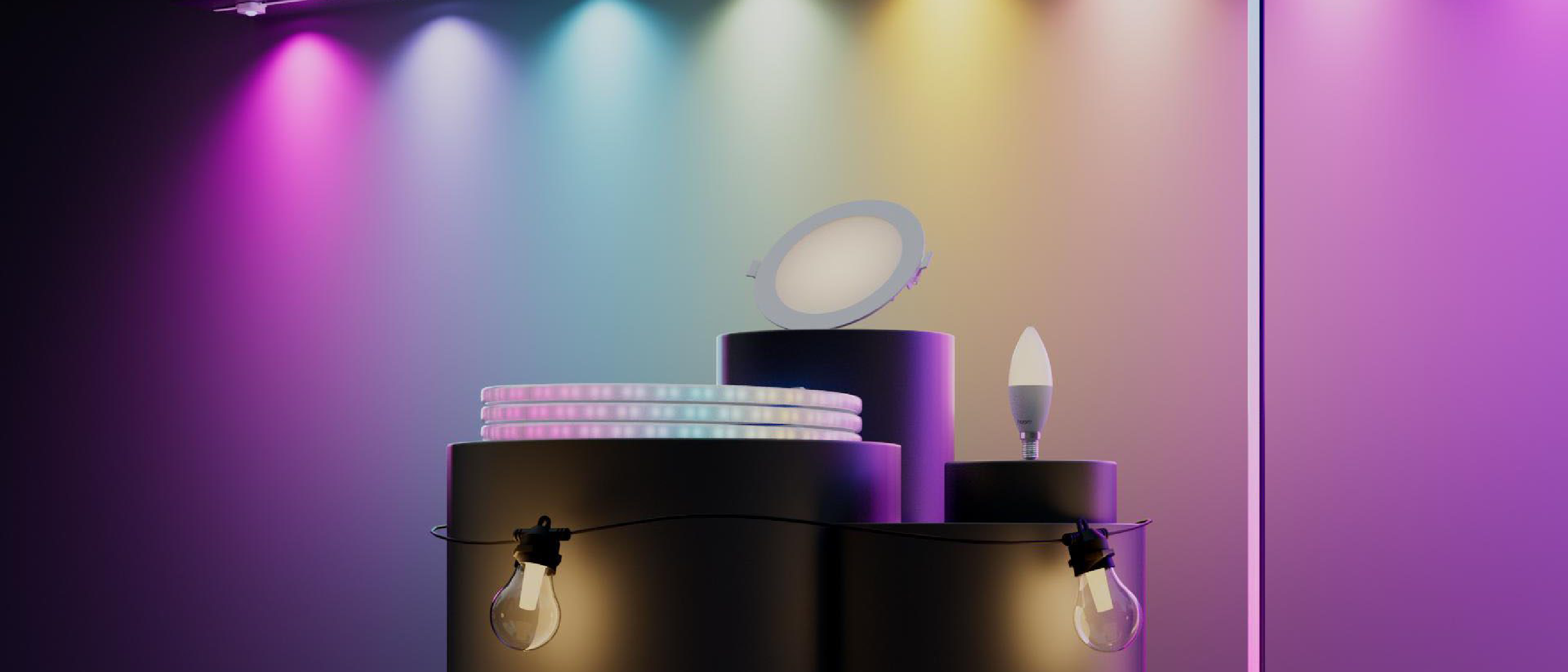
Aqara, a long‑standing player in the IoT ecosystem, announced a global launch of six new smart lighting products. While the full lineup remains partially under wraps, the company has revealed two flagship items that illustrate the direction of the entire series:
- Vertical Floor Lamp – a sleek, space‑saving fixture divided into 18 individually addressable lighting zones.
- LED Strip – a flexible ribbon capable of seamless color gradients, dynamic flowing effects, and music‑synchronised illumination.
Both devices are built from the ground up with full Apple Home support and a proprietary “spatial intelligence” engine. This combination signals Aqara’s intent to compete not only with traditional smart‑bulb manufacturers but also with ecosystem‑centric players such as Philips Hue and LIFX.
The remaining four products, though not detailed in the press release, are expected to follow the same design philosophy: modular control, high‑resolution color rendering, and deep integration with Apple’s HomeKit framework.
Technical Deep Dive: Spatial Intelligence and Addressable Zones
What Is “Spatial Intelligence”?
Aqara describes spatial intelligence as the ability of a lighting system to understand and react to the three‑dimensional layout of a room. In practice, this means:
- Zone‑aware rendering – each of the 18 zones in the floor lamp can be programmed independently, allowing for gradients that follow the lamp’s vertical axis.
- Contextual ambience – sensors (or HomeKit scenes) can trigger different lighting patterns based on occupancy, time of day, or even the content playing on a nearby Apple TV.
- Dynamic mapping – the LED strip can map visual effects onto the physical shape of a surface, creating the illusion of light flowing along walls or furniture.
These capabilities rely on a combination of high‑speed PWM drivers, a dedicated microcontroller that runs a lightweight AI inference engine, and a cloud‑synced profile that learns user preferences over time.
Addressable Zones: From Theory to Practice
The floor lamp’s 18 zones are more than a marketing gimmick. Each zone is driven by a separate channel, giving developers granular control via HomeKit’s characteristic API. This enables:
- Fine‑grained colour transitions – for example, a sunrise simulation that starts at the base of the lamp and climbs upward, mimicking natural light.
- Interactive feedback – notifications such as incoming calls can pulse a single zone, keeping the visual disturbance minimal.
- Energy optimisation – only the zones needed for a particular scene are powered, reducing overall consumption.
The LED strip follows a similar architecture, with each LED acting as an addressable node. The strip’s firmware supports dynamic flowing effects, which are algorithmically generated patterns that travel along the strip at configurable speeds. When paired with music sync, the strip analyses audio frequencies in real time and translates beats into visual bursts, a feature that will appeal to home‑entertainment enthusiasts.
Apple Home Integration: What It Means for Users
Aqara’s commitment to full Apple Home support goes beyond simple on/off control. By leveraging HomeKit Secure Video, Thread, and Matter, the new lights inherit several advantages:
- Secure, local‑only communication – thanks to Thread, commands travel over a low‑power mesh network, reducing latency and eliminating reliance on cloud servers for routine actions.
- Matter compatibility – the devices can be discovered and controlled by any Matter‑enabled hub, future‑proofing them against ecosystem shifts.
- Siri voice control – users can ask Siri to “set the floor lamp to a warm sunrise” or “sync the LED strip with my playlist,” with the request being processed locally on the HomePod or iPhone.
The integration also aligns Aqara with Apple’s broader smart‑home strategy, as seen in recent announcements such as the Apple TV 4K Siri Remote firmware update that expands HomeKit scene handling. For developers, the new lights expose a rich set of HomeKit characteristics, enabling custom automations in the Home app or third‑party platforms like Home Assistant.
Market Impact and Competitive Landscape
Positioning Against Established Brands
The smart‑lighting market has been dominated by Philips Hue, LIFX, and Nanoleaf. Aqara’s differentiators are:
| Feature | Aqara | Philips Hue | LIFX |
|---|---|---|---|
| Apple Home (Full) | ✅ | ✅ (limited) | ✅ |
| Spatial Intelligence | ✅ | ❌ | ❌ |
| Addressable Zones (≥18) | ✅ | ✅ (up to 10) | ✅ (up to 12) |
| Music Sync | ✅ | ✅ (via Hue Sync) | ✅ |
| Matter Support | ✅ | ✅ | ✅ |
Aqara’s emphasis on spatial intelligence and a higher zone count gives it a technical edge for designers seeking nuanced ambience. Moreover, the price point—historically lower for Aqara products—could pressure incumbents to innovate or adjust pricing.
Synergy with Apple’s Ecosystem
Apple’s recent rollout of four iPhone 20 models (see Apple Unveils Four iPhone 20 Models for 2024 Launch) underscores the company’s push toward richer on‑device experiences. High‑resolution displays and advanced audio pipelines on those iPhones make music‑sync lighting a natural extension of the user’s media consumption. Aqara’s lights, being Apple‑first, stand to benefit from this hardware momentum.
Additionally, the Apple App Store Award finalists (referenced in Apple Announces 2026 App Store Award Finalists) highlight a growing ecosystem of creative apps that could integrate directly with Aqara’s lighting API, opening doors for third‑party developers to craft immersive experiences.
Future Outlook for Smart Lighting
Anticipated Software Enhancements
While Aqara has not disclosed a roadmap, the underlying hardware suggests future firmware updates could introduce:
- Adaptive circadian lighting – leveraging the zone system to gradually shift colour temperature throughout the day.
- AI‑driven scene recommendation – using on‑device inference to suggest lighting moods based on user activity patterns.
- Cross‑device choreography – synchronising the floor lamp, LED strip, and other Matter‑compatible lights for coordinated shows.
These features would align with broader industry trends toward health‑focused lighting and immersive home entertainment.
Potential Expansion of the Product Line
Given the emphasis on modularity, it is plausible that the four undisclosed products include:
- A table lamp with a similar zone architecture.
- A wall‑mounted panel for ambient backlighting.
- A smart bulb that retrofits existing fixtures.
- An outdoor-rated strip for patio or garden use.
If
If the speculation proves correct, Aqara could be positioning itself to cover virtually every lighting scenario in a typical smart‑home setup—from bedside reading to outdoor entertaining—while keeping the ecosystem tightly knit with Apple’s HomeKit and the emerging Matter standard.
Anticipated Release Timeline & Availability
Aqara has indicated a global rollout beginning Q1 2027, with pre‑orders opening shortly after the announcement. Early shipments are expected in North America, Europe, and select Asian markets (China, Japan, South Korea). Retail distribution will likely follow Aqara’s existing channels:
- Online – Aqana’s official website and major e‑commerce platforms (Amazon, Apple Store, JD.com).
- Brick‑and‑mortar – Partnerships with Best Buy, MediaMarkt, and local IoT specialty stores.
Given Aqara’s history of competitive pricing, analysts predict a price band of $49‑$149 per unit, depending on form factor and feature set. The LED strip, for example, may launch at around $79 for a 5‑meter roll, while the premium vertical floor lamp could sit near $149.
Software Ecosystem & Developer Opportunities
Beyond the out‑of‑the‑box HomeKit scenes, Aqara is releasing a public SDK that exposes the full suite of spatial‑intelligence APIs. This move invites developers to craft:
- Custom music‑visualisation plugins that react to streaming services beyond Apple Music (Spotify, Tidal).
- AR‑enhanced lighting controls using iPhone’s LiDAR scanner to map room geometry and automatically assign zones.
- Health‑focused routines that integrate with Apple HealthKit to adjust colour temperature based on sleep‑tracking data.
The SDK will be available on GitHub under an Apache 2.0 license, with documentation hosted on Aqara’s developer portal. Early adopters can test the APIs via a sandbox environment that simulates Matter‑compatible hubs.
Conclusion
Aqara’s six‑product smart‑lighting launch marks a decisive step toward a more immersive, AI‑driven home environment. By marrying full Apple Home support, Matter compatibility, and a proprietary spatial‑intelligence engine, the company not only narrows the feature gap with established players but also opens new creative avenues for developers and end‑users alike.
If the remaining four products live up to the hinted specifications—high‑resolution colour control, modular form factors, and outdoor‑ready durability—Aqara could soon become the go‑to brand for anyone building a cohesive, Apple‑first smart‑home ecosystem. The upcoming 2027 release window will be the true test, but the technical groundwork laid today suggests a bright (and colourful) future for Aqara’s lighting portfolio.
Frequently Asked Questions (FAQ)
| Question | Answer |
|---|---|
| Do the new Aqara lights require a separate hub? | No. The devices connect directly to a Thread‑enabled HomeKit hub (HomePod mini, Apple TV 4K, or an Apple‑certified Matter hub). |
| Can I control the lights with Siri on non‑Apple devices? | Siri voice control is limited to Apple hardware, but the lights are Matter‑compatible, so they can be managed via other Matter hubs (e.g., Google Nest Hub, Amazon Echo) using their respective voice assistants. |
| Is there a subscription fee for the spatial‑intelligence features? | All core functionalities, including zone control and music sync, are available out‑of‑the‑box. Future AI‑driven scene recommendations may be offered as an optional subscription, but Aqara has not confirmed any pricing yet. |
| What Wi‑Fi standards are supported? | The lights support 2.4 GHz Wi‑Fi for initial provisioning, after which they switch to Thread for low‑latency, low‑power operation. |
| Are the products compatible with existing Aqara ecosystems (e.g., sensors, switches)? | Yes. They integrate seamlessly with Aqara’s broader IoT platform, allowing automations such as “turn on the floor lamp when the motion sensor detects presence.” |
| Will firmware updates be automatic? | Firmware updates are delivered over the air (OTA) via the Home app. Users can enable automatic updates or choose to install manually. |
| What is the warranty period? | Aqara offers a standard 2‑year limited warranty covering manufacturing defects. Extended warranties may be purchased through select retailers. |
Stay tuned for hands‑on reviews once the devices ship, and keep an eye on Aqara’s developer portal for the latest SDK releases and sample projects.
Source: Original Article