


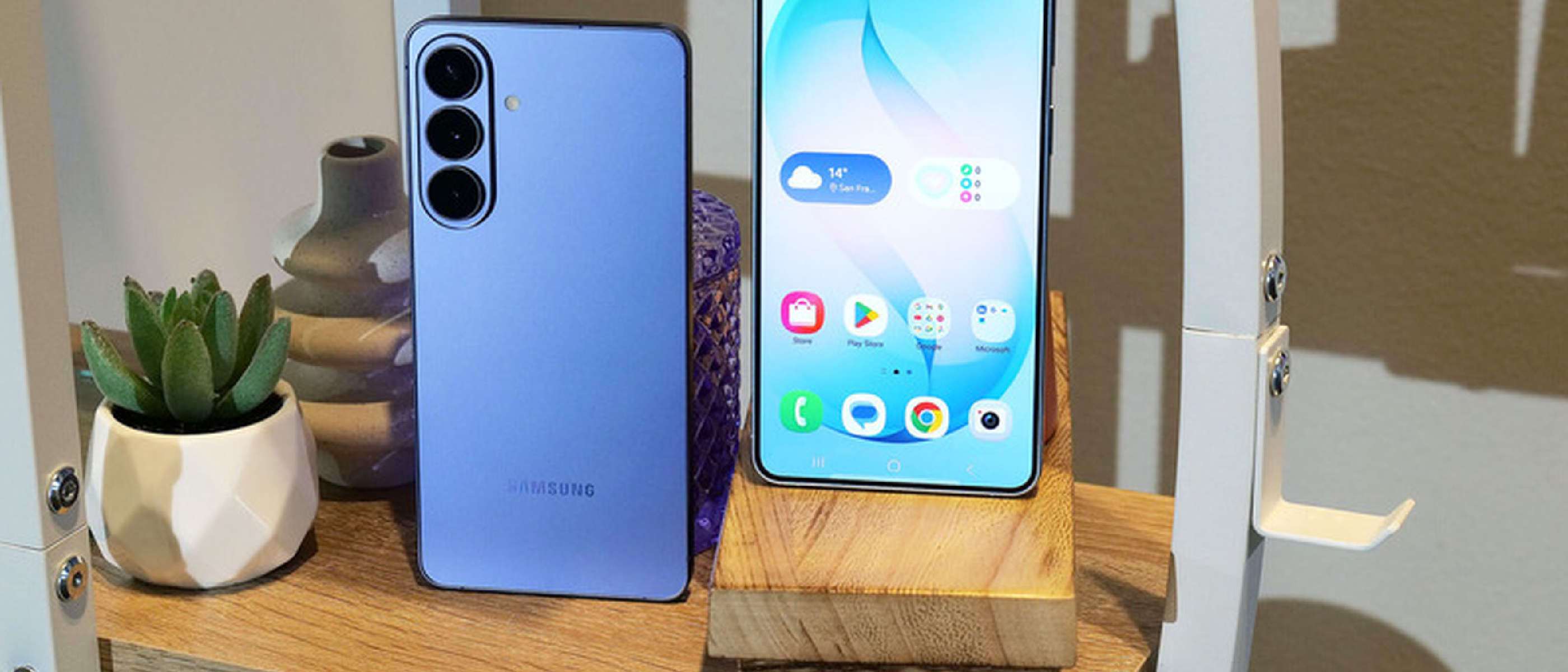
Samsung’s official storefront has quietly lifted the price tags on its flagship Galaxy S26 line. The base S26 now starts at $1,000 for the 256 GB variant, the S26+ jumps to $1,200, and the top‑end S26 Ultra 1 TB model climbs to a round $2,000—a $200 premium over its previous listing. While the S26 FE remains untouched, the timing of the hike—just weeks before Black Friday and Amazon’s Prime Big Deal Days—has sparked a flurry of speculation among analysts, competitors, and consumers alike.
The Price Shift in Detail
Samsung’s price adjustments are not uniform across the lineup:
| Model | Storage | New Price | Price Increase |
|---|---|---|---|
| Galaxy S26 FE | — | unchanged (released a month ago) | — |
| Galaxy S26 (base) | 256 GB | $1,000 | +$100 |
| Galaxy S26+ | 256 GB | $1,200 | +$100 |
| Galaxy S26 Ultra | 512 GB | $1,800 | +$100 |
| Galaxy S26 Ultra | 1 TB | $2,000 | +$200 |
The most striking jump is the 1 TB Ultra, now priced at the psychological $2,000 barrier. This move aligns the device with premium Windows‑based laptops and high‑end photography gear, positioning the phone as a “mobile workstation” rather than a mere communication tool.
Why Samsung Raised Prices
1. Margin Pressure from a Historic Mobile Loss
Samsung’s mobile division posted its first‑ever loss in Q2 FY 2025, a stark contrast to the chip division’s record‑setting quarterly revenue and operating profit. The mobile shortfall stems from several macro factors:
- Supply‑chain volatility: Component shortages have driven up BOM (Bill of Materials) costs, especially for high‑resolution displays and advanced camera modules.
- Currency fluctuations: A stronger Korean won against the dollar erodes overseas profit margins, prompting price realignment.
- Competitive discounting: Rivals such as Apple and Google have deepened their promotional calendars, forcing Samsung to protect its bottom line.
By raising MSRP, Samsung aims to recoup a portion of these pressures without relying solely on volume discounts.
2. Inflation‑Adjusted Pricing
The S26 series launched at a time when global inflation was still climbing. Adjusting prices to reflect current purchasing power helps maintain the perceived value of the flagship line. A $100‑$200 hike may appear modest, but when expressed as a percentage of the base price (10‑20 %), it signals a strategic repositioning toward the ultra‑premium segment.
3. Feature‑Driven Justification
The S26 Ultra’s 1 TB storage option is a rarity in the Android ecosystem. It enables:
- Native 8K video capture without external drives.
- Large‑scale AI models for on‑device processing (e.g., real‑time translation, advanced photography AI).
- Enterprise‑grade security with encrypted storage partitions.
These capabilities justify a higher price point, especially for power users and professionals who would otherwise need a separate laptop or external SSD.
Technical Breakdown of the S26 Ultra 1 TB Model
Storage Architecture
The 1 TB variant uses Samsung’s latest V‑NAND 4-bit TLC technology, paired with a custom UFS 4.0 controller. This combination delivers sequential read speeds exceeding 4 GB/s and random IOPS that rival entry‑level SSDs. The integration of a dedicated DRAM cache (8 GB LPDDR5X) further reduces latency during intensive tasks such as 8K video editing.
Camera System
The Ultra retains the 200 MP primary sensor, now paired with a larger 1/1.12‑inch sensor size and an improved OIS (Optical Image Stabilization) algorithm. The larger storage buffer accommodates burst RAW shooting at 30 fps, a feature previously limited to the Pro‑grade DSLR market.
Battery and Thermal Management
A 5,200 mAh graphene‑enhanced battery powers the device, while a vapor‑chamber cooling system dissipates heat generated by the Exynos 2400 (or Snapdragon 8 Gen 4, depending on region). The thermal design ensures sustained performance during prolonged 8K recording—a scenario that would otherwise throttle the SoC.
Security Implications
With more data stored locally, the attack surface expands. Samsung’s Knox platform now includes a hardware‑rooted secure enclave for the 1 TB model, providing isolated execution for sensitive workloads. For readers interested in broader mobile security trends, see how software vulnerabilities can cascade across platforms in the recent Zoom Annotation Flaw Patched After AI‑Prompt Exploit and the Zoom Zero‑Day Exploit: Remote Takeover of iPhone & Mac . Samsung’s approach mirrors the defensive posture advocated by the Mac Antivirus Intego One suite, emphasizing hardware‑backed isolation.
Market and Competitive Landscape
Direct Competitors
- Apple iPhone 16 Pro Max: Starts at $1,199 for 256 GB, with a 1 TB option at $1,599. Apple’s pricing remains lower for the highest storage tier, but Samsung counters with superior display refresh rates (120 Hz vs. Apple’s 60 Hz) and a more versatile camera array.
- Google Pixel 9 Pro: Priced at $999 for 256 GB, with a 512 GB model at $1,199. Google’s advantage lies in its clean Android experience and timely updates, but it lacks a 1 TB offering.
Seasonal Sales Pressure
Black Friday and Amazon’s Prime Big Deal Days traditionally see deep discounts on flagship phones. Samsung’s price hike could be a pre‑emptive move to preserve margin before the discount wave. Historically, Samsung has offered up to 15 % off its flagships during these events; a higher base price gives the company more room to maneuver while still presenting “discounted” pricing to consumers.
Consumer Sentiment
Early social‑media chatter indicates a split reaction:
- Power users appreciate the added storage and are willing to pay a premium.
- Average consumers express frustration, fearing that Samsung is “price‑gouging” ahead of holiday sales.
The net effect may be a modest dip in Q3 shipments, but the brand’s strong ecosystem (Galaxy Buds, Watch, Tab) could mitigate churn.
Future Outlook and Consumer Strategies
Potential S27 Pricing Speculation
Analysts predict the upcoming S27 lineup could start at $1,099 for the base model, with a 1 TB Ultra possibly exceeding $2,200. If Samsung continues the trend of aligning price with storage capacity, we may see a tiered pricing matrix that mirrors laptop pricing structures.
How Buyers Can Navigate the Hike
- Lock‑in pre‑order pricing: Samsung often honors pre‑order rates for a limited window.
- Leverage carrier subsidies: Contract plans can offset the upfront cost, though they may lock users into longer terms.
- Consider the S26 FE: For users who don’t need the ultra‑high‑end specs, the FE offers flagship performance at a stable
stable price point and avoids the recent markup.
2. Take advantage of trade‑in programs
Samsung’s “Galaxy Upcycling” and carrier trade‑in schemes still value older flagships at up to $350. Pairing a trade‑in with a carrier‑subsidized plan can bring the effective out‑of‑pocket cost of a 1 TB Ultra down to roughly $1,600, which is competitive with Apple’s top‑tier offering.
3. Watch for flash‑sale windows
Historically, Samsung releases “Lightning Deals” on its own storefront and on major e‑commerce platforms (e.g., Amazon, Best Buy) within a 24‑hour window. These deals often shave $50‑$150 off the MSRP, effectively nullifying the recent hike for a short period.
4. Consider financing options
Both Samsung and major carriers now provide 0 % APR financing over 12‑ or 24‑month terms. While the total price remains unchanged, spreading the cost can make the $2,000 tag feel more manageable for budget‑conscious buyers.
5. Evaluate ecosystem lock‑in benefits
If you already own Galaxy Buds 2 Pro, a Galaxy Watch 7, or a Galaxy Tab S9, the seamless hand‑off features (Continuity, DeX, SmartThings) add intangible value that can justify the higher price. Samsung’s “Galaxy Ecosystem Discount” occasionally offers $50‑$100 off when you purchase multiple devices together.
What This Means for Samsung’s Bottom Line
The price adjustment is a tactical response to a confluence of macro‑economic pressures and internal performance targets. By nudging the flagship’s MSRP upward, Samsung can:
- Boost average selling price (ASP): Even a $100 increase across a high‑volume model can lift quarterly revenue by several hundred million dollars.
- Protect profit margins in the face of rising component costs, especially for the cutting‑edge UFS 4.0 storage and 200 MP sensor modules.
- Signal premium positioning to investors, reinforcing the narrative that Samsung’s flagship line is moving toward a “mobile workstation” category rather than competing solely on price.
Analysts at Bloomberg Intelligence project that if Samsung maintains a 10‑12 % ASP uplift for the remainder of FY 2025, the mobile division could swing back to modest profitability by Q4, assuming shipment volumes hold steady.
Frequently Asked Questions
| Question | Answer |
|---|---|
| Will the price hike affect the S26 FE’s availability? | No. Samsung has kept the FE’s MSRP unchanged and continues to ship it from existing inventory. The FE remains the most affordable entry point into the S26 family. |
| Is the 1 TB Ultra the only model with the new price? | The 1 TB Ultra sees a $200 increase to $2,000. All other storage variants (512 GB and below) received a $100 bump. |
| Can I still get the original launch price through carrier deals? | Some carriers may honor legacy promotional pricing for a limited time, but most have already updated their plans to reflect the new MSRP. It’s worth checking with your provider for any “legacy” offers. |
| Will future software updates be impacted by the price change? | No. Samsung has committed to delivering three years of major Android OS upgrades and four years of security patches across the entire S26 lineup, regardless of price. |
| How does the new price compare to the competition? | Apple’s iPhone 16 Pro Max 1 TB starts at $1,599, while Google’s Pixel 9 Pro caps at 512 GB for $1,199. Samsung’s $2,000 tag places the Ultra in a higher‑priced niche, justified by its larger storage, superior display, and advanced camera hardware. |
| Is there any risk of the 1 TB model being discontinued due to low demand? | Unlikely. Samsung’s production forecasts indicate sufficient demand from power users, enterprise customers, and content creators who need on‑device 8K video storage. |
| Will the price hike affect upcoming software features like on‑device AI? | The price change does not impact feature rollout. Samsung plans to introduce new AI‑driven camera modes and DeX enhancements later this year across all S26 variants. |
Bottom Line
Samsung’s decision to raise the Galaxy S26, S26+, and S26 Ultra prices by $100‑$200 is a calculated move to offset margin compression, align with inflation, and reinforce the Ultra’s positioning as a true mobile workstation. While the hike may sting casual buyers, power users and ecosystem loyalists will likely find the added storage, camera prowess, and Samsung’s robust security suite worth the premium. As the holiday shopping season approaches, savvy shoppers can still capture discounts through pre‑orders, trade‑ins, and flash sales, ensuring that the flagship remains within reach for those who need its top‑tier capabilities.
Source: Original Article