




The Shifting Landscape of U.S. Government Launch Services
United Launch Alliance (ULA) has been a cornerstone of American national security launches since its formation in 2006. Backed by aerospace giants Boeing and Lockheed Martin, the partnership once enjoyed a near‑monopoly on Department of Defense (DoD) and intelligence payloads. Stephen Clark’s latest Rocket Report deep‑dive, however, paints a starkly different picture: ULA’s market share is eroding, and its core business model—centered on expendable launch vehicles—faces an existential challenge.
The catalyst for this shift is not a single event but a confluence of market forces:
- SpaceX’s aggressive pricing and rapid cadence have forced the government to reconsider legacy contracts.
- The Falcon 9 order freeze—SpaceX’s decision to stop accepting new commercial Falcon 9 missions—has created a temporary vacuum that other providers, notably Italy’s Avio, are eager to fill.
- Policy pressure from the U.S. Space Force to diversify launch sources and to prioritize reusability for cost‑effectiveness.
Understanding why these dynamics matter requires a look at the technical, financial, and strategic dimensions of launch services.
Why SpaceX’s Falcon 9 Order Freeze Matters
SpaceX announced that it would no longer accept new commercial orders for its Falcon 9 vehicle. The statement, reported across industry outlets, signals a strategic pivot: the company is reallocating production capacity to its Starship program and to high‑value government missions. The immediate fallout is twofold:
- Supply‑Side Shock for Commercial Customers – Companies that had been lining up Falcon 9 slots now face a scramble for alternative launch providers.
- Opportunity for Competitors – The sudden gap in the market has opened doors for firms with expendable rockets, such as Avio, to capture “captive” customers who are desperate for a launch window.
Giulio Ranzo, Avio’s CEO, summed up the sentiment during the September 10 earnings call:
“I can tell you Space X has already gone captive because we have a whole bunch of customers coming to us and saying, ‘Oh my God, can you fly us?’”
Ranzo’s comment underscores a broader industry truth: launch demand is inelastic. When one provider reaches capacity, customers will migrate to the next viable option, even if that option relies on older, expendable technology.
Avio’s Strategic Gains in a Falcon‑9 Void
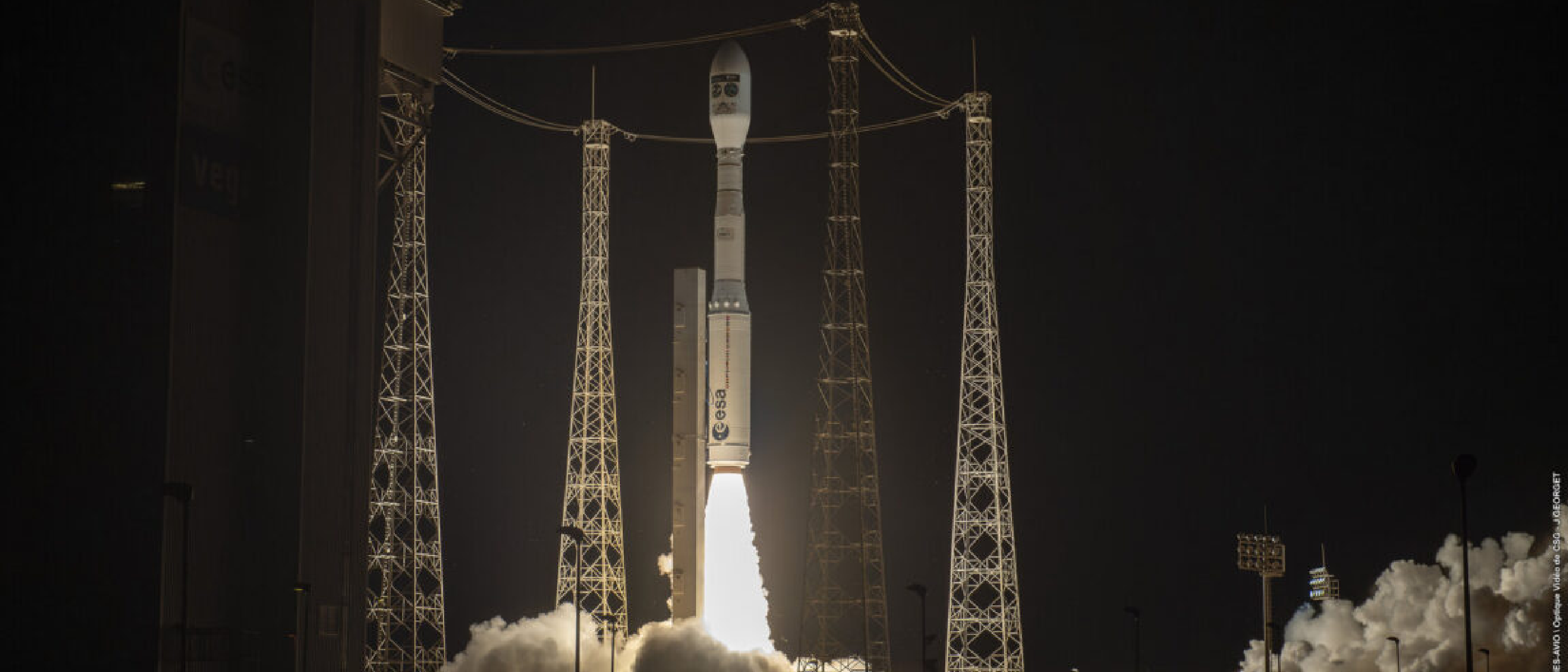
Avio, traditionally known for its Vega family of small‑to‑medium lift rockets, has been quietly expanding its service portfolio. The company’s recent earnings call highlighted a surge in inbound inquiries from satellite operators, telecom firms, and scientific missions that were previously slated for Falcon 9.
Key factors driving Avio’s newfound momentum:
- European Government Backing – The European Space Agency (ESA) has pledged additional funding for Vega‑C and upcoming Vega‑E developments, ensuring a steady pipeline of launch opportunities.
- Flexibility in Payload Integration – Avio’s modular fairing designs allow for rapid re‑configuration, a valuable trait for customers with tight schedules.
- Competitive Pricing – While not as low as SpaceX’s historic rates, Avio’s pricing is attractive when the alternative is a delayed launch or a costly re‑flight on a reusable vehicle.
Avio’s growth also illustrates a subtle but important market segmentation: customers who prioritize schedule certainty over reusability may willingly accept expendable rockets if the provider can guarantee a launch slot within a narrow window.
Technical Breakdown: Expendable vs. Reusable Launch Vehicles
The core technical debate centers on the trade‑offs between expendable rockets (like ULA’s Atlas V and Delta IV, and Avio’s Vega) and reusable systems (SpaceX’s Falcon 9 first stage, upcoming Starship). Below is a concise comparison:
| Aspect | Expendable Rockets | Reusable Rockets |
|---|---|---|
| Cost per Launch | Higher per‑flight hardware cost; no refurbishment expenses. | Lower marginal cost after initial development; refurbishment adds operational overhead. |
| Payload Capacity | Often optimized for specific mass‑to‑orbit envelopes; can be tailored per mission. | Slightly reduced payload due to added recovery hardware, but improvements are narrowing the gap. |
| Turnaround Time | Typically weeks to months for manufacturing and integration. | Potentially days to weeks if the booster is recovered and inspected quickly. |
| Reliability Record | Decades of flight heritage; proven for high‑value national security payloads. | Rapidly improving; Falcon 9 has achieved >200 successful flights, but re‑entry adds complexity. |
| Environmental Impact | One‑off material consumption; higher carbon footprint per kilogram delivered. | Re‑use reduces material waste, though propellant burn and recovery operations still generate emissions. |
From a systems engineering perspective, expendable rockets still hold advantages for certain mission profiles:
- Heavy, high‑energy trajectories where the mass penalty of recovery hardware is prohibitive.
- Classified payloads that require strict chain‑of‑custody controls, making a fresh vehicle per launch preferable.
- Rapidly evolving payload designs that need custom fairings or unique integration solutions not yet standardized for reusable platforms.
Conversely, reusable rockets excel in high‑frequency, low‑to‑medium mass missions, such as Earth‑observation constellations and small‑sat deployments—segments where SpaceX’s Starlink and similar constellations dominate.
Market Outlook: What’s Next for ULA?
Given the current pressures, ULA faces three plausible strategic pathways:
- Double‑Down on Expendable Excellence – Continue refining Atlas V and Delta IV, targeting niche government contracts that demand the highest reliability and security. This would involve investing in next‑generation propulsion (e.g., BE‑4 engines) while maintaining a clean‑sheet expendable architecture.
- Hybrid Reusability Transition – Adopt a mixed‑fleet approach, integrating reusable first‑stage technology (potentially through partnerships or in‑house development) while retaining expendable upper stages for payload flexibility. This mirrors the approach of companies like Blue Origin, which operate both New Glenn (reusable) and New Shepard (expendable) vehicles.
- Strategic Partnerships or Mergers – Align with emerging European launch firms (e.g., Avio) to co‑develop a reusable system that satisfies
satisfies both the U.S. national‑security requirements and the commercial market’s demand for more frequent, lower‑cost access. Such a collaboration could leverage Avio’s proven expendable heritage while tapping ULA’s deep integration expertise and the BE‑4 engine’s performance envelope, potentially yielding a semi‑reusable vehicle that bridges the current capability gap.
The Next Three Launches on the Calendar
While the Rocket Report reserves a detailed launch‑schedule deep‑dive for a future edition, the immediate horizon offers a snapshot of how the market is re‑balancing:
| Date (UTC) | Provider | Vehicle | Payload | Notable Context |
|---|---|---|---|---|
| 2026‑10‑12 | ULA | Vulcan Centaur (first flight with BE‑4) | NRO‑12 (reconnaissance satellite) | First operational mission for Vulcan, testing the new engine and advanced avionics suite. |
| 2026‑10‑28 | Avio | Vega‑E (upgraded Vega‑C with larger payload fairing) | EuroSat‑5 (European Earth‑observation constellation) | Demonstrates Avio’s expanded payload capacity, filling a slot vacated by a delayed Falcon 9. |
| 2026‑11‑03 | SpaceX | Starship (orbital test flight) | Starlink‑V2‑Beta (prototype broadband satellite) | Marks the first Starship launch from the newly‑commissioned Texas site, underscoring SpaceX’s shift toward fully reusable heavy‑lift capability. |
These three missions illustrate the divergent strategies at play: ULA is betting on a next‑generation expendable that incorporates modern propulsion; Avio is stretching its expendable platform to capture market share; and SpaceX is pushing the envelope of reusability with Starship.
Strategic Implications for Stakeholders
- U.S. Government & DoD – The diversification of launch sources reduces single‑point‑failure risk, but it also forces procurement offices to reassess cost‑benefit analyses that have traditionally favored ULA’s “sure‑thing” expendables. The upcoming Vulcan flight will be a litmus test for whether the agency can accept a newer, less‑flight‑proven system without compromising mission assurance.
- Commercial Satellite Operators – Companies that once relied on Falcon 9’s predictable cadence now have to juggle multiple providers. Those with tight launch windows may opt for Avio’s guaranteed slot, while cost‑sensitive operators could negotiate bulk contracts with SpaceX’s Starship once its per‑kilogram price point becomes clear.
- Investors & Industry Analysts – The market’s pivot creates valuation opportunities. Avio’s stock has already seen a 12 % rally since the September earnings call, whereas ULA’s parent companies are under pressure to demonstrate a clear roadmap for integrating reusability or risk losing market relevance.
Looking Ahead: Reusability as the New Baseline?
The broader trend suggests that reusability will become the baseline expectation, not a differentiator. Even traditional expendable providers are feeling the pressure to incorporate reusable elements—whether that means recovering first stages, developing partially reusable upper stages, or offering rapid‑turnaround services through modular manufacturing.
For ULA, the most pragmatic route may be a hybrid architecture: retain an expendable upper stage for high‑energy missions while introducing a recoverable first stage derived from the BE‑4‑powered core. This mirrors the approach taken by Blue Origin with New Glenn (reusable) paired with New Shepard (expendable) and could satisfy both defense and commercial customers.
Conclusion
United Launch Alliance stands at a crossroads. The erosion of its market share is not merely a symptom of SpaceX’s aggressive pricing; it reflects a fundamental shift toward launch cadence, cost efficiency, and reusability. Avio’s surge demonstrates that expendable rockets still have a role—particularly when they can guarantee launch windows that reusables sometimes cannot. However, the long‑term viability of any provider will hinge on how quickly they can adapt to a market that increasingly expects reusable, rapid, and reliable access to space.
ULA’s strategic choices over the next 12‑18 months—whether to double‑down on expendables, adopt a hybrid model, or forge deep partnerships with European firms—will determine whether the alliance remains a cornerstone of U.S. launch capability or becomes a legacy player watching from the sidelines.
FAQ
Q: Why is SpaceX no longer accepting new Falcon 9 commercial orders?
A: SpaceX is reallocating production capacity to its Starship program and prioritizing high‑value government missions, creating a temporary gap in the Falcon 9 commercial pipeline.
Q: Can Avio’s Vega‑E compete with Falcon 9 in terms of payload capacity?
A: Vega‑E remains a small‑to‑medium lift vehicle, offering up to ~2.5 t to low‑Earth orbit, which is lower than Falcon 9’s ~22 t capability. Its advantage lies in schedule certainty and flexibility for payload integration.
Q: What is the significance of the Vulcan Centaur’s first flight?
A: It marks ULA’s transition to the BE‑4 engine, a key step toward modernizing its launch fleet and potentially integrating reusable elements in future variants.
Q: Will reusability eventually make expendable rockets obsolete?
A: Not entirely. Certain missions—especially those requiring very high energy or stringent security constraints—may continue to favor expendable designs. However, the economic and operational benefits of reusability are driving most commercial and many government customers toward reusable solutions.
Q: How might ULA’s partnership with Avio look in practice?
A: A joint venture could involve co‑development of a semi‑reusable launch system that uses Avio’s proven upper‑stage technology combined with a recoverable first stage powered by BE‑4 engines, sharing development costs and market risk.
Source: Original Article