





NVIDIA’s AI Factories: A New Paradigm for High-ROI Infrastructure
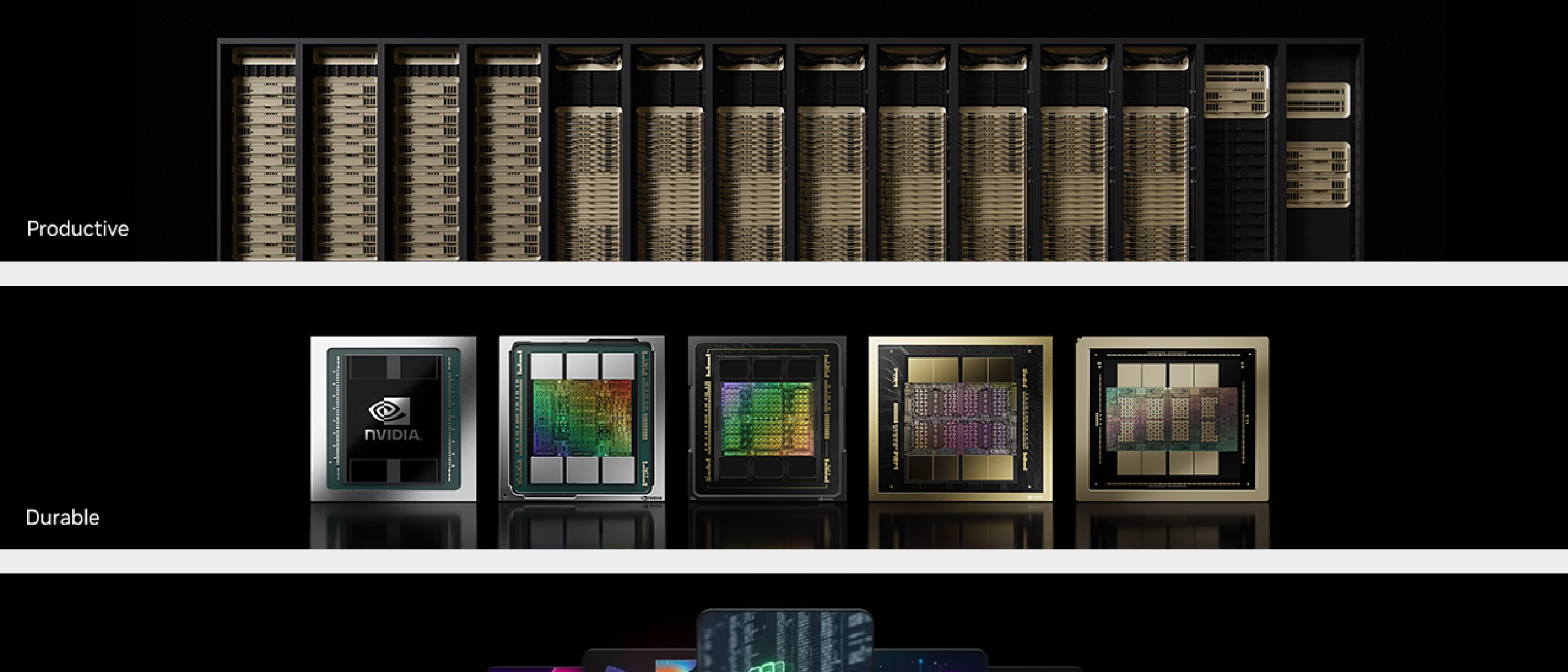
NVIDIA is reshaping the AI infrastructure landscape with its “AI Factories,” a concept designed to maximize return on investment (ROI) through three core engineering pillars: Productivity, Durability, and Fungibility. At the heart of this strategy is the need to justify massive capital expenditures—often measured in megawatts/gigawatts—by ensuring sustainable revenue streams. By focusing on these pillars, NVIDIA aims to create infrastructure that not only delivers high utilization but also extends the earning life of hardware and adapts to diverse workloads.
Why It Matters: The Economics of AI Infrastructure
Building and maintaining AI infrastructure is a capital-intensive endeavor. With costs reaching roughly $60 million per megawatt, companies must ensure their investments yield long-term value. NVIDIA’s approach addresses this challenge by optimizing throughput, minimizing costs, and ensuring hardware remains relevant as AI workloads evolve. This is particularly critical as the AI industry faces constraints like power availability and hardware depreciation.
For instance, NVIDIA’s Vera Rubin NVL72 delivers 30x higher throughput per megawatt compared to the GB300 NVL72, while reducing the cost per million tokens by up to 45x on models like Deep Seek V4 Pro. Such advancements highlight NVIDIA’s commitment to making AI infrastructure economically viable.
Technical Breakdown: The Three Pillars of AI Factories
1. Productivity: Maximizing Throughput and Minimizing Costs
Productivity is the cornerstone of NVIDIA’s AI Factories. By leveraging advanced hardware like the H100 and Blackwell GPUs, NVIDIA ensures that infrastructure operates at peak efficiency. For example, Runway uses Hopper GPUs for training world models and Blackwell for serving, achieving optimal performance across different workloads.
NVIDIA’s CUDA and CUDA-X Libraries further enhance productivity by providing a unified software platform that supports over 10 million developers. Tools like cuDF enable companies like Revolut to process billions of transaction records efficiently, demonstrating the versatility of NVIDIA’s ecosystem.
2. Durability: Extending Hardware Lifespan
Durability is critical for maximizing ROI. NVIDIA’s GPUs are designed to operate well beyond their initial depreciation periods. For instance, Microsoft’s V100 fleet ran for 8.4 years, exceeding its 6-year book life. Similarly, the A100 GPU, shipped in 2020, remains in commercial service six years later, retaining 25% of its original cost in resale value.
Data from Barkr and Silicon Data underscores this trend, with GPUs like the GB300 NVL72 estimated to have a useful life of 9–10 years. This longevity reduces the need for frequent hardware upgrades, lowering total cost of ownership.
3. Fungibility: Adapting to Diverse Workloads
Fungibility ensures that AI infrastructure remains versatile, capable of handling both AI and non-AI workloads. NVIDIA’s Tensor Cores and Transformer Engine provide the flexibility needed to run everything from vision language models (used by Pinterest) to molecular simulations (used by Texas A&M University).
This adaptability is crucial in a rapidly evolving AI landscape. As Jensen Huang noted, “A factory built for one kind of work is a bet that the work stays.” By designing fungible infrastructure, NVIDIA ensures its systems remain relevant across industries and use cases.
Industry Impact: Real-World Applications
NVIDIA’s AI Factories are already transforming industries. Lilly uses a 1,016-GPU cluster for drug discovery, while Unilever leverages digital twins to reduce product imagery costs by 50%. CoreWeave, an AI infrastructure operator, relies on NVIDIA’s hardware to deliver scalable solutions to clients.
These examples illustrate the broad applicability of NVIDIA’s approach, from healthcare and retail to academia and automotive design. By providing durable, productive, and fungible infrastructure, NVIDIA is enabling companies to innovate without being constrained by hardware limitations.
Future Outlook: Sustainable AI Infrastructure
As AI continues to grow, the demand for sustainable, high-ROI infrastructure will only increase. NVIDIA’s focus on productivity, durability, and fungibility positions it as a leader in this space. With advancements like the Vera Rubin NVL72 and ongoing software innovations, NVIDIA is setting new standards for what AI infrastructure can achieve.
The GTC Berlin keynote on October 21, 2026, promises further insights into NVIDIA’s vision. As the industry watches, one thing is clear: NVIDIA’s AI Factories are not just a technological advancement—they’re a blueprint for the future of AI infrastructure.
FAQ
Q: What makes NVIDIA’s AI Factories unique?
A: NVIDIA’s AI Factories focus on productivity, durability, and fungibility, ensuring high ROI through optimized throughput, extended hardware lifespan, and adaptability to diverse workloads.
Q: How does NVIDIA ensure hardware longevity?
A: NVIDIA designs GPUs with extended useful lives, supported by software platforms like CUDA that ensure cross-generational compatibility.
Q: What industries benefit from NVIDIA’s AI Factories?
A: Industries ranging from healthcare (e.g., Lilly) to retail (e.g., Unilever) and academia (e.g., Texas A&M University) benefit from NVIDIA’s versatile infrastructure.
Q: What is the cost of building an AI Factory?
A: The cost is approximately $60 million per megawatt, highlighting the need for high-ROI solutions.
Related Articles
For more insights into cutting-edge technology, explore these articles:
Source: Original Article