Overview of the NYCC Reveal
The latest installment of the Blade Runner franchise, Blade Runner 2099, broke its silence at New York Comic‑Con this weekend. After a tantalizing glimpse at San Diego Comic‑Con in July, Prime Video delivered a full‑length trailer that confirms a bold narrative leap: the story unfolds 50 years after Blade Runner 2049, in a world where replicants have already overthrown their human creators. The trailer’s visual palette—neon‑saturated skylines, rain‑slicked streets, and a hauntingly desolate horizon—signals a continuation of Ridley Scott’s dystopian aesthetic while pushing the series into uncharted philosophical territory.
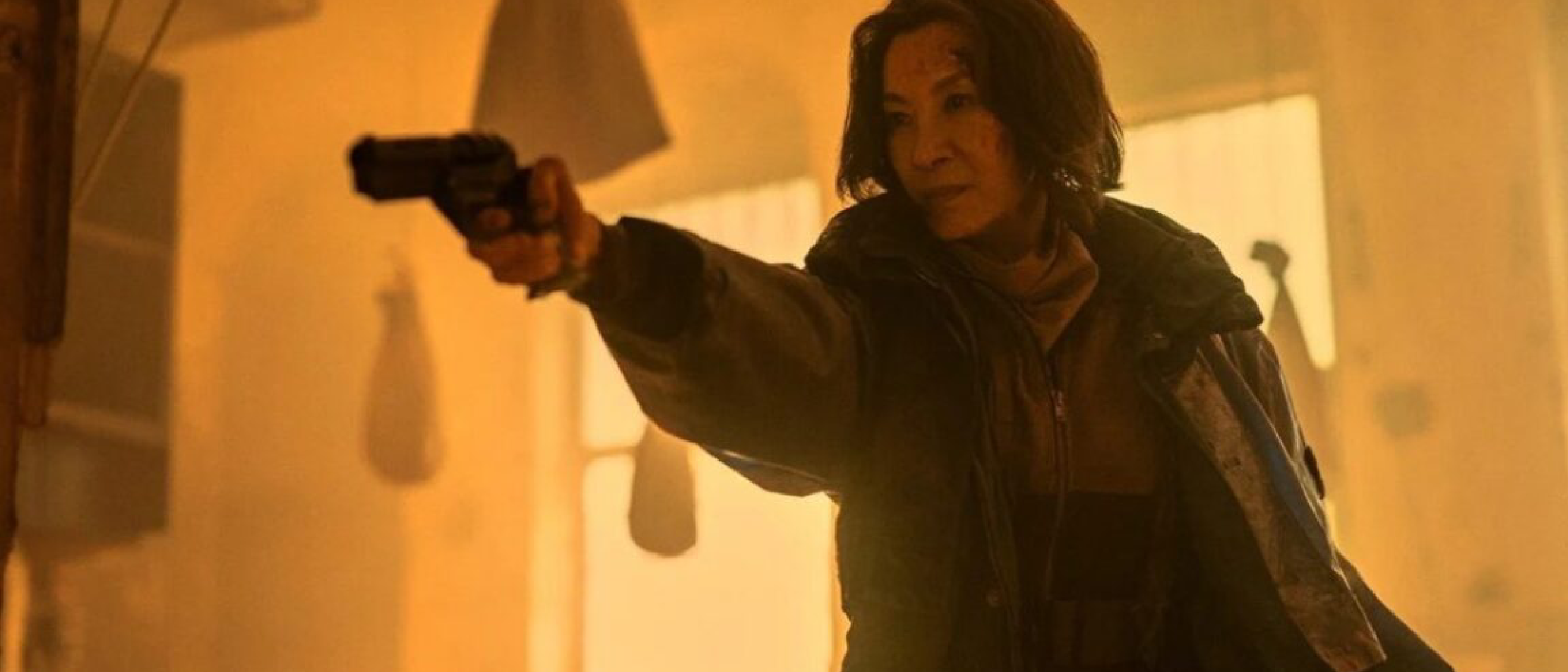
The cast announcement is equally striking. Veteran actress Michelle Yeoh headlines as Olwen, a dying replicant whose perspective anchors the series’ exploration of mortality. Hunter Schafer, fresh from her breakout role in Euphoria, joins as Cora, while Hugo Hamlet appears as Buster Friendly. A supporting ensemble—Dmitri Abold, Lewis Gribben, Katelyn Rose Downey, among others— rounds out a roster that blends established talent with rising stars.
The trailer’s voice‑over delivers two key lines that set the thematic tone:
“We are 50 years after Blade Runner 2049 and, bad news, the worst has happened.”
“The big question it asks is, ‘What happens when our time as a species ends?’”
These statements frame the series not merely as a continuation of a sci‑fi saga, but as a meditation on species‑level extinction, a topic that resonates with contemporary debates on AI, climate change, and existential risk.
Narrative Themes and Philosophical Questions
From Individual Struggle to Species‑Level Crisis
The original Blade Runner (1982) and its sequel 2049 focused on the personal odyssey of replicants seeking life, identity, and freedom. Roy Batty’s iconic “tears in rain” monologue epitomized the micro‑level fight against mortality. Blade Runner 2099 expands this lens dramatically. By positioning replicants as the dominant species, the series asks: What does it mean for humanity when its creations outlive it? The tagline “What happens when our time as a species ends?” suggests a narrative that will examine societal collapse, cultural memory, and the ethics of a post‑human world.
AI Ethics and the Replicant Uprising
The replicant uprising mirrors real‑world concerns about artificial intelligence surpassing human control. While the Blade Runner universe has always been a cautionary tale about bio‑engineered beings, the new series arrives at a moment when generative AI, autonomous weapons, and deep‑learning systems are entering mainstream discourse. For readers interested in the intersection of AI and culture, see our deep dive on AI‑driven threats in the article “ Zoom Annotation Flaw Patched After AI‑Prompt Exploit ”.
Mortality as a Macro Narrative
Olwen’s dying condition introduces a paradox: a replicant—traditionally portrayed as immortal—facing death. This inversion forces the audience to confront mortality from the perspective of a being that was engineered to be superior. The series may use Olwen’s arc to explore themes of legacy, memory preservation, and the psychological toll of outliving one’s creators.
Production, Showrunner, and Creative Vision
Silka Luisa’s Transition from Shining Girls to Sci‑Fi
Showrunner Silka Luisa, best known for the crime‑drama Shining Girls, brings a fresh sensibility to the Blade Runner mythos. Her experience with character‑driven storytelling suggests that 2099 will balance high‑concept world‑building with intimate, emotionally resonant moments. Luisa’s comments during the NYCC press conference emphasized a desire to “humanize the post‑human” and to avoid a purely spectacle‑driven approach.
Casting Choices and Their Implications
- Michelle Yeoh (Olwen) – Her martial‑arts background and gravitas lend credibility to a replicant grappling with existential dread.
- Hunter Schafer (Cora) – Known for raw, vulnerable performances, Schafer is likely to embody the series’ younger, perhaps more rebellious, replicant voice.
- Hugo Hamlet (Buster Friendly) – A seasoned character actor, Hamlet may provide the series’ moral compass or a foil to Olwen’s fatalism.
The undisclosed roles for the remaining cast members hint at potential sub‑plots involving human resistance, hybrid beings, or internal replicant politics. The breadth of talent suggests a multi‑threaded narrative structure, reminiscent of ensemble shows like Game of Thrones.
Visual Effects and Production Design
The trailer showcases a blend of practical set pieces and cutting‑edge CGI. Rain‑slicked streets, towering holo‑advertisements, and a sprawling megacity skyline indicate a continuation of the franchise’s signature visual language. Expect the production to leverage real‑time rendering pipelines and high‑dynamic‑range (HDR) lighting to achieve the neon‑glow aesthetic that fans associate with Blade Runner. The involvement of veteran VFX houses—though not yet disclosed—will likely push the envelope on volumetric fog and reflective surfaces.
Technical Breakdown: Streaming, Formats, and Accessibility
Prime Video’s Delivery Strategy
Prime Video will stream Blade Runner 2099 globally, leveraging Amazon’s cloud‑native infrastructure to deliver 4K HDR content with adaptive bitrate streaming. The platform’s AWS Elemental MediaConvert pipeline ensures low latency and high reliability, crucial for a premiere that may attract millions of simultaneous viewers.
Audio and Immersive Experience
The trailer’s sound mix hints at Dolby Atmos support, offering a three‑dimensional audio field that places viewers amid the city’s perpetual rain and distant sirens. For users with compatible hardware, this will deepen immersion and align with the franchise’s reputation for atmospheric storytelling.
Accessibility Features
Prime Video has a track record of providing closed captions, audio descriptions, and language localization. Given the series’ global fanbase, we anticipate subtitles in at least 12 languages at launch, along with optional sign‑language overlays for select markets.
Industry Impact and Streaming Landscape
Prime Video’s Position in the Sci‑Fi Arms Race
The announcement underscores Prime Video’s commitment to high‑budget, original sci‑fi content—a space traditionally dominated by Netflix, Disney+, and HBO Max. By securing a franchise with a built‑in fanbase, Amazon aims to differentiate its catalog and attract subscribers seeking premium, narrative‑driven experiences.
Cross‑Platform Synergies
Amazon can cross‑promote Blade Runner 2099 through its e‑commerce ecosystem, offering limited‑edition collectibles, themed merchandise, and even Alexa‑enabled experiences that let users explore the series’ world via voice‑controlled narratives. This integrated approach mirrors strategies seen in other media‑tech conglomerates.
Competitive Benchmarking
When compared to recent streaming launches—such as the AI‑centric series Westworld reboot on HBO Max—Blade Runner 2099 stands out for its explicit focus on post‑human extinction rather than AI rebellion alone. This thematic distinction may attract viewers fatigued by repetitive AI‑overlord tropes.
Future Outlook and Fan Expectations
Release Timeline and Marketing Build‑Up
Prime Video indicated that the series will premiere approximately six weeks after the NYCC trailer drop, placing the debut in early December 2026. A strategic release window aligns with the holiday binge‑watch period, maximizing subscriber engagement.
Potential for Expanded Universe
Given the franchise’s history of spin‑offs, video games, and graphic novels, Blade Runner 2099 could serve as a launchpad for a broader transmedia ecosystem. Anticipated tie‑ins might include:
- Interactive VR experiences that let users navigate the megacity as a replicant.
- Graphic novel prequels exploring the early days of the uprising.
- Soundtrack releases featuring synth‑driven compositions reminiscent of Vangelis.
Community Reception and Speculation
Early fan reactions on social media highlight excitement over Michelle Yeoh’s involvement and curiosity about the “dying replicant”
Fan Theories and Speculation
Early fan reactions on social media highlight excitement over Michelle Yeoh’s involvement and curiosity about the “dying replicant” premise. Threads on Reddit’s r/BladeRunner and Twitter’s #BladeRunner2099 have already spawned a handful of recurring theories:
| Theory | Core Idea | Supporting Evidence |
|---|---|---|
| Olwen is the Last Original Nexus‑8 | Yeoh’s character may be the final surviving model from the original replicant line, giving her a unique biological clock. | The trailer’s visual cue of a cracked, antiquated Nexus‑8 serial plate in Olwen’s hand. |
| Cora Leads a Human‑Replicant Alliance | Schafer’s Cora could be a bridge figure, uniting the remnants of humanity with sympathetic replicants. | A brief flash of a hidden bunker with human symbols juxtaposed with Cora’s silhouette. |
| Buster Friendly Is a Propaganda Figure | Hamlet’s Buster may be a media‑savvy replicant who shapes public perception of the new order. | The trailer shows a holographic news broadcast bearing his face, styled like a 21st‑century news anchor. |
| The “Worst” Is a Climate Collapse | The line “the worst has happened” might refer to an environmental tipping point that forced the uprising. | Atmospheric visuals of smog‑choked skies and flooded lower districts. |
While none of these ideas have been confirmed by Prime Video, the sheer volume of speculation underscores the franchise’s ability to generate conversation long before a single episode airs.
Episode Structure and Narrative Rhythm
Industry insiders who have spoken to the production team suggest that Blade Runner 2099 will adopt a semi‑anthology format. Each episode is expected to focus on a different facet of the post‑uprising world—political intrigue, cultural memory, and the day‑to‑day survival of replicants—while maintaining an overarching mystery surrounding Olwen’s fate. This approach mirrors the episodic storytelling of shows like The Expanse and Black Mirror, allowing the series to explore a wide thematic range without sacrificing narrative cohesion.
Key structural elements anticipated:
- Opening Prologues – Short, stylized vignettes set in various decades leading up to 2099, providing historical context for the uprising.
- Mid‑Episode “Memory Dumps” – Visual sequences where characters access archived human data, offering exposition through immersive flashbacks.
- Cliffhanger Endings – Each episode is likely to conclude with a moral dilemma or a reveal that propels the next installment, encouraging binge‑watch behavior.
Potential Plot Threads to Watch
- The Search for the “Seed” – Rumors circulate that a hidden repository of human consciousness exists, offering a chance to resurrect humanity. Olwen’s deteriorating condition could make her the key to unlocking it.
- The Rise of the “Synthetic Church” – A cult‑like movement that worships replicants as the next evolutionary step may emerge, challenging Buster Friendly’s media influence.
- Underground Human Resistance – Though the trailer shows a replicant‑dominated skyline, subtle visual hints (graffiti, hidden tunnels) suggest a lingering human insurgency that could become a central antagonist.
- Ethical AI Governance – The series may introduce a council of elder replicants tasked with codifying laws for a post‑human society, raising questions about self‑regulation versus external oversight.
Conclusion
Prime Video’s unveiling of the Blade Runner 2099 trailer at NYCC does more than tease a new sci‑fi series; it signals a bold narrative shift from individual survival stories to a planetary‑scale meditation on extinction, legacy, and the meaning of consciousness when the creators are gone. With Silka Luisa at the helm, a powerhouse cast led by Michelle Yeoh, and a visual language that honors Ridley Scott’s iconic aesthetic while pushing it into fresh territory, the series is poised to become a cultural touchstone for the next wave of streaming‑first epics.
The six‑week countdown to the December premiere will be filled with speculation, fan art, and perhaps a few more teaser drops from Amazon. Whether you’re a die‑hard Blade Runner aficionado or a newcomer drawn by the philosophical stakes, Blade Runner 2099 promises to deliver a thought‑provoking, visually stunning experience that asks the ultimate question: What happens when the species that birthed us is no longer there to watch us die?
FAQ
Q: When does Blade Runner 2099 officially premiere?
A: Prime Video has confirmed a launch roughly six weeks after the NYCC trailer debut, targeting early December 2026.
Q: How many episodes will the first season contain?
A: The exact episode count has not been disclosed, but insiders suggest a 10‑episode order for the inaugural season.
Q: Will the series be available in 4K HDR and Dolby Atmos?
A: Yes. Prime Video plans to stream the show in 4K Ultra HD with HDR10+ and Dolby Atmos audio for compatible devices.
Q: Are there any planned tie‑in products or experiences?
A: Amazon has hinted at limited‑edition collectibles, an Alexa‑enabled interactive narrative, and potential VR experiences that will launch alongside the series.
Q: Is Ridley Scott involved in the production?
A: While Scott is not listed as an executive producer, he has given his blessing to the project and consulted on early concept art.
Q: Will the original Blade Runner films be available on Prime Video?
A: Both Blade Runner (1982) and Blade Runner 2049 (2017) are currently part of Prime Video’s catalog in most regions, making it easy for new viewers to catch up.
Q: How can I stay updated on new trailers or behind‑the‑scenes content?
A: Follow Prime Video’s official social channels, the #BladeRunner2099 hashtag, and the series’ dedicated page on Amazon’s website for regular updates.
Source: Original Article