





Overview: A Virus Takes Center Stage
When the flu season hits, most of us reach for tissues and hot tea. One indie developer, however, turned a personal bout of cold into a marketing hook for Pathogenic, a twin‑stick roguelite that casts players as the invading pathogen. Developed by Aberrant Labs, the game’s premise—“wage a war against immune systems”—flips the classic hero‑versus‑villain formula on its head. The result is a surprisingly satisfying experience that has resonated with both casual players and hardcore roguelite fans, driving the title past 100,000 sales and earning an “overwhelmingly positive” review score on Steam.
The author of the original review, battling a lingering cold, found the gameplay “much more fun” than expected, noting that “Being on the enemy’s side is much more fun. Really fun, as it turns out.” This sentiment captures a broader shift in game design: players are increasingly eager to explore morally ambiguous or outright antagonistic roles, a trend that Pathogenic capitalizes on with polished mechanics and a distinctive visual style.
Why It Matters: The Appeal of the Antagonist Perspective
1. Fresh Narrative Territory
Traditional shooters place the player in the shoes of a soldier, astronaut, or space marine. Pathogenic subverts that expectation by making the player the disease itself. This narrative inversion does more than provide novelty; it invites players to consider the microscopic battlefield that underlies everyday health. By embodying a virus, gamers experience the strategic tension of evading antibodies, hijacking cells, and mutating to survive—mechanics that mirror real‑world virology without sacrificing fun.
2. Psychological Engagement
Research in game psychology suggests that role reversal can increase immersion. When players act as the “bad guy,” they must adopt a mindset focused on disruption and adaptation, which can be more cognitively stimulating than straightforward combat. The review’s quote—“Being on the enemy’s side is much more fun”—highlights this psychological hook. It aligns with findings from studies on empathy in games, where stepping into an antagonist’s shoes can deepen emotional investment.
3. Market Differentiation for Indie Studios
For an indie studio, standing out in a saturated market is a constant challenge. Pathogenic’s unique premise, combined with solid execution, demonstrates how a bold concept can translate into commercial success. The 100k sales milestone underscores that players are willing to back innovative ideas, especially when they are packaged in a familiar roguelite framework that promises replayability.
Technical Breakdown: Engine, Systems, and Design Choices
Engine and Performance
Aberrant Labs built Pathogenic using Unity, a common choice for indie developers due to its flexibility and cross‑platform support. The developers leveraged Unity’s Entity Component System (ECS) to handle the massive swarms of immune cells and viral particles without sacrificing frame rate. This architectural decision allowed for:
- Scalable enemy AI: Each immune cell operates as an independent entity with its own behavior tree, enabling emergent combat scenarios.
- Dynamic mutation system: The virus can acquire upgrades (e.g., increased speed, resistance to antibodies) that are applied as component changes at runtime, keeping the gameplay loop fresh.
Twin‑Stick Controls and Accessibility
The twin‑stick shooter format is executed with tight, responsive controls. The left stick governs movement across a 2D plane, while the right stick aims and fires. To accommodate players with limited mobility—especially relevant given the author’s cold—Aberrant Labs included customizable key bindings and a “slow‑motion” toggle that reduces enemy speed without altering difficulty, ensuring the game remains accessible without diluting challenge.
Procedural Generation and Replayability
Each run is procedurally generated, featuring:
- Randomized organ layouts: Lungs, liver, and bloodstream sections shuffle, forcing players to adapt strategies on the fly.
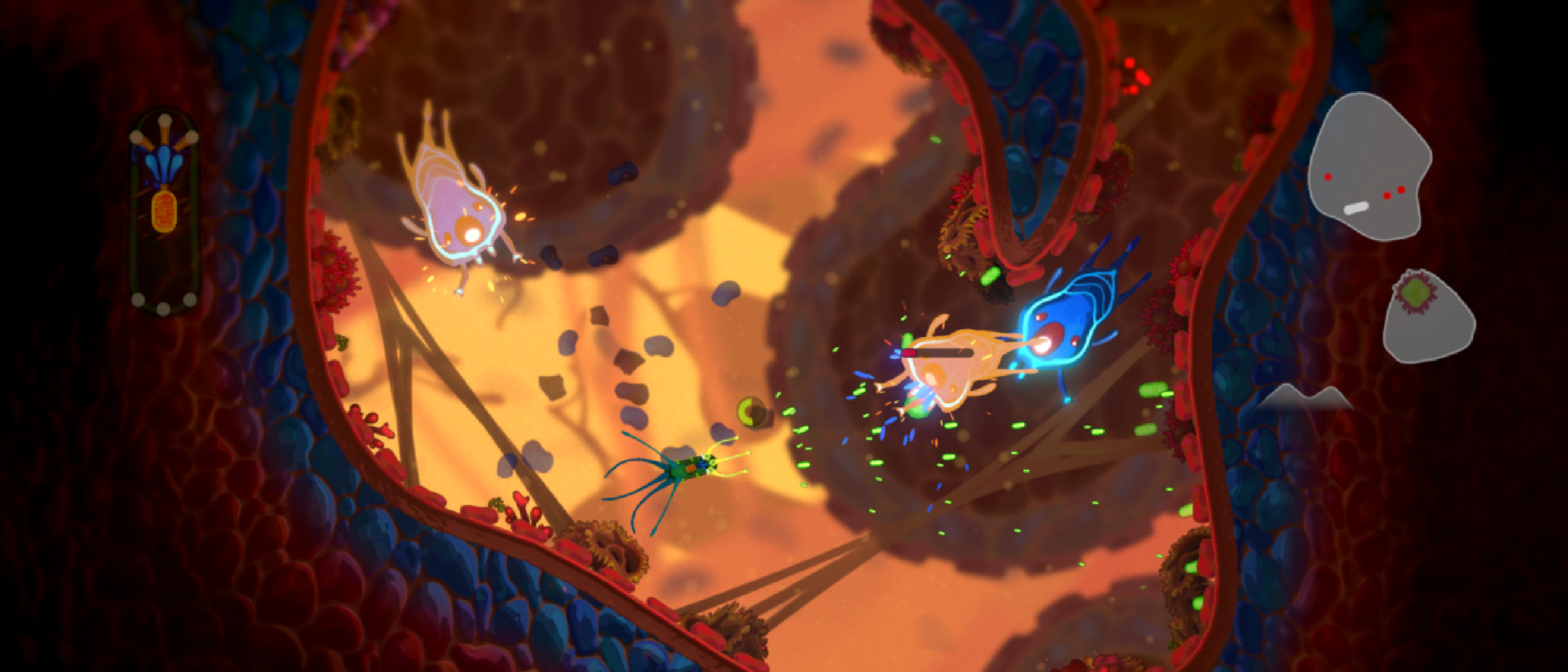
- Variable immune response patterns: Different immune cell types (macrophages, neutrophils, T‑cells) appear in unpredictable ratios, influencing the difficulty curve.
- Upgrade roulette: After each level, players spin a wheel that offers mutations, power‑ups, or temporary debuffs, adding a risk‑reward element.
These systems collectively contribute to an average playtime of 30‑45 minutes per run, encouraging multiple attempts and fostering the “just one more try” mentality typical of roguelites.
Audio‑Visual Design
Visually, Pathogenic employs a stylized, neon‑infused aesthetic that contrasts the organic nature of cells with the synthetic feel of a video game. The UI mimics a medical scanner, reinforcing the theme. The soundtrack, composed by an independent electronic artist, uses pulsating synths that sync with the player’s heartbeat meter, creating an immersive feedback loop that heightens tension during intense immune onslaughts.
Industry Impact: Shaping Indie Trends and Player Expectations
Reinforcing the “Play as Villain” Trend
Recent titles like Evil Genius and Darkest Dungeon have shown that audiences enjoy managing evil enterprises or confronting darkness head‑on. Pathogenic adds a biological twist, expanding the genre’s thematic palette. Its success may inspire other indie studios to explore unconventional perspectives—think games where you control invasive species, ransomware, or even climate change effects.
Data‑Driven Validation
The “overwhelmingly positive” Steam rating, derived from thousands of user reviews, provides quantitative proof that the market rewards risk‑taking design. For publishers scouting indie talent, Pathogenic serves as a case study: a clear, compelling hook paired with solid execution can generate both critical acclaim and respectable sales without a massive marketing budget.
Cross‑Disciplinary Opportunities
The game’s virology theme opens doors for collaborations with educational platforms. Imagine a partnership where Pathogenic is used in biology classrooms to illustrate infection dynamics. Such cross‑industry synergies could become a new revenue stream for indie developers, blending entertainment with learning.
Related Industry Discussions
The conversation around AI‑driven content moderation and trust‑building in digital platforms is relevant here. For instance, the article on AI Chatbots Surpass Humans Trust‑Building Romance Scams explores how AI can manipulate narratives—a concept that parallels how Pathogenic manipulates the player’s perception of “good” versus “evil.” Similarly, YouTube Fights AI Slop with New Monetization Rules highlights the importance of clear guidelines for emerging tech, a principle that indie developers can apply when framing unconventional game premises to avoid community backlash.
Future Outlook: What Lies Ahead for Pathogenic and Its Genre
Potential Expansions
While we cannot speculate on unannounced features, the existing architecture—particularly the modular ECS design—positions Pathogenic well for post‑launch content. Community‑driven mod support could enable players to design new organ maps or introduce alternative pathogens (e.g., bacterial strains), extending longevity.
Platform Reach
Currently available on PC, the game’s modest hardware requirements make it a strong candidate for console ports and even mobile adaptations. The twin‑stick control scheme translates naturally to touch‑screen joysticks, and the procedural nature ensures a fresh experience on any device.
Influence on Upcoming Indie Titles
Developers observing Pathogenic’s trajectory may prioritize:
- Narrative inversion as a core mechanic.
- Robust procedural systems to sustain replay value.
- Clear, data‑backed marketing that highlights unique selling points (e.g., “play as the virus”).
These trends could reshape indie roadmaps for the next few years, encouraging more daring concepts that challenge player expectations.
FAQ
Q1: Do I need any prior knowledge of virology to enjoy Pathogenic?
A: No. The game abstracts biological concepts into intuitive mechanics, so players can have fun without a science background.
Q2: Is the game suitable for younger audiences?
A: While the graphics are stylized and not graphic, the theme of disease may be unsettling for very young children. The ESRB rating is E10+.
Q3: Can I play Pathogenic with a controller on PC?
A: Yes. The game supports Xbox, PlayStation, and generic gamepad controllers out of the box.
Q4: How does the “slow‑motion” toggle affect difficulty?
A: It reduces enemy movement speed by 30 % without altering AI behavior, offering a more forgiving experience while preserving challenge.
**Q5: Are
there plans for a multiplayer mode in Pathogenic? A: As of the latest update, Aberrant Labs has not announced multiplayer features. However, the developers have expressed interest in community feedback, so future updates could explore cooperative or competitive modes.
Conclusion: A Viral Success Story
Pathogenic proves that innovation in game design doesn’t always require cutting-edge graphics or AAA budgets. By flipping the script on traditional shooter narratives and embracing the chaos of biological warfare, Aberrant Labs has crafted a title that is as intellectually engaging as it is mechanically satisfying. Its rapid ascent to 100,000 sales and an “overwhelmingly positive” Steam rating underscores a growing appetite for games that challenge players to think—and play—differently.
For indie developers, Pathogenic serves as a blueprint for how a bold premise, executed with polish and accessibility in mind, can carve out a niche in a crowded market. For players, it offers a rare opportunity to experience the thrill of the hunt from the perspective of the hunted, all while delivering the addictive replayability of a roguelite. As the gaming industry continues to evolve, titles like Pathogenic remind us that sometimes, the most compelling stories are the ones we never expected to tell—especially when we’re the ones causing the chaos.
Source: Original Article