




The Vision Behind SLAB
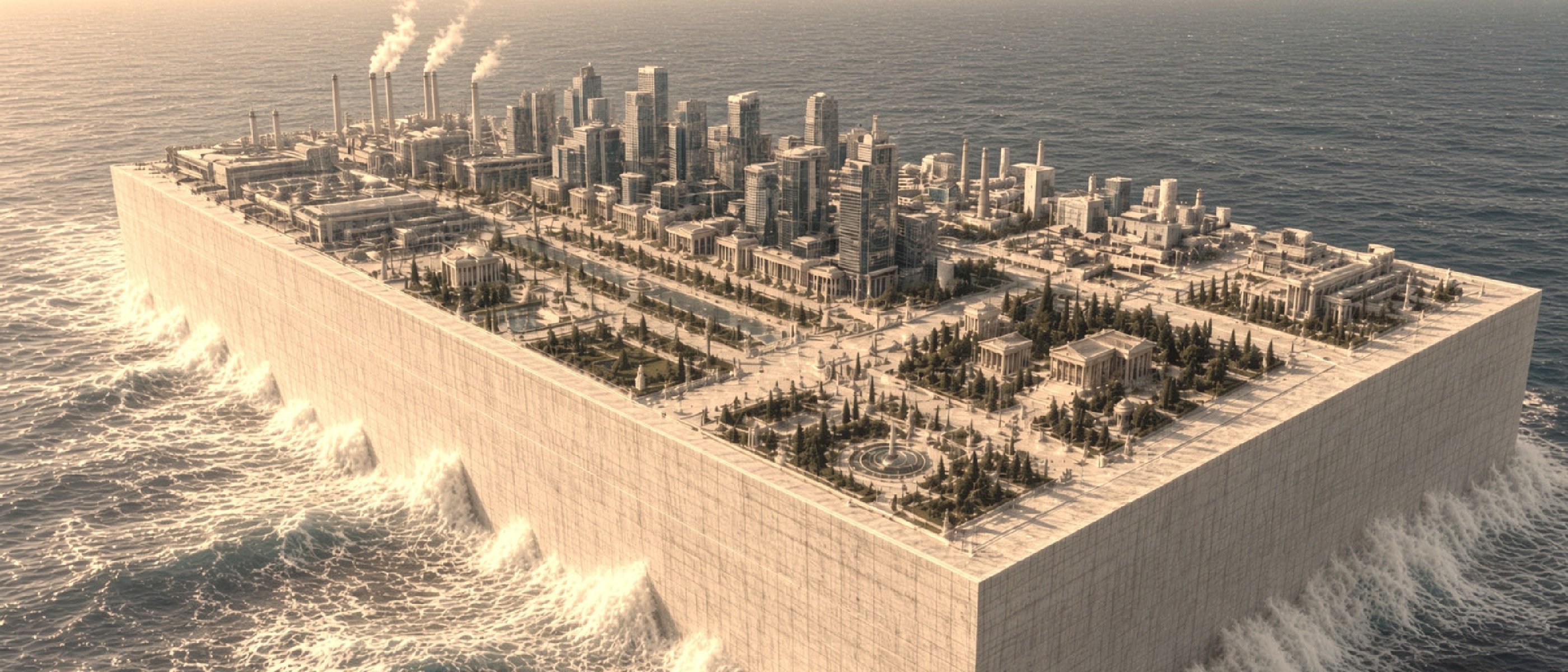
Palmer Luckey, best known for founding Oculus and later steering defense‑technology firm Anduril, has resurfaced with a project that feels more like a science‑fiction manifesto than a conventional startup. Dubbed SLAB (Seasteading Laboratory and Base), the initiative proposes a massive artificial island that hovers above the ocean surface, designed to endure 1,000 years and operate as a sovereign city‑state untethered from existing national jurisdictions.
Luckey frames SLAB as a “relief valve” for what he calls “ill‑considered or outdated rules and regulations.” In his own words:
“The goal was to be cheaper than land and absent state/local laws that cripple critical American industries like metal processing, medical research/treatment, desalination, oil refining [and] chemical engineering.”
The ambition is not merely to host a floating data center—something he dismisses as “way cooler” than that—but to create a self‑sustaining hub where heavy industry can thrive without the bureaucratic friction that often stalls innovation on land. By invoking the language of “manifest destiny” and “westward expansion,” Luckey positions SLAB as the next frontier of American enterprise, a literal oceanic extension of the nation’s industrial base.
Technical Blueprint and Engineering Challenges
Structural Design
SLAB’s architecture is envisioned as a massive platform elevated well above the sea to mitigate wave impact and corrosion. While exact dimensions have not been disclosed, the design must accommodate:
- Office towers for corporate and research activities.
- Residential units to house a permanent workforce.
- Industrial modules for metal processing, oil refining, and chemical engineering.
- Desalination plants to provide fresh water at scale.
- Potential data center capacity, leveraging the ocean’s natural cooling.
Achieving a 1,000‑year lifespan demands materials that resist saltwater erosion, UV degradation, and seismic activity. Advanced composites, marine‑grade steel, and self‑healing concrete are likely candidates, each requiring rigorous testing in harsh marine environments.
Power and Energy
A self‑contained energy strategy is essential. Options include:
- Offshore wind turbines integrated into the platform’s perimeter.
- Solar arrays on rooftops and floating decks.
- Small modular nuclear reactors (SMRs) for baseload power, subject to strict safety protocols.
Balancing energy generation with consumption—especially for energy‑intensive processes like metal smelting—will dictate the platform’s overall feasibility.
Logistics and Supply Chain
Operating far from traditional ports raises logistical questions:
- Autonomous cargo vessels could deliver raw materials and export finished goods.
- On‑board manufacturing reduces dependence on external supply chains, aligning with Luckey’s “cheaper than land” mantra.
- Water and waste management systems must be closed‑loop to minimize environmental impact and comply with emerging maritime regulations.
Governance and Legal Architecture
By situating SLAB beyond any nation’s territorial waters (typically 12 nautical miles from shore), the project aims to sidestep conventional legal frameworks. However, international law—particularly the United Nations Convention on the Law of the Sea (UNCLOS)—still governs high seas activities. SLAB will need to negotiate:
- Flag state registration to obtain a legal identity.
- Customs and customs‑free zones for trade.
- Dispute resolution mechanisms for conflicts with neighboring vessels or states.
Economic and Regulatory Implications
Cost Competitiveness
Luckey’s promise of “cheaper than land” hinges on several cost drivers:
- Reduced land acquisition expenses.
- Lower property taxes (or none, given the lack of jurisdiction).
- Potentially lower labor costs if the platform attracts a global talent pool willing to work in a novel environment.
However, upfront capital expenditures for construction, anchoring, and certification could be substantial. Funding, according to the summary, comes from Luckey’s proceeds after selling Oculus to Facebook in 2014, but scaling to a fully operational city‑state will likely require additional investors.
Industry Disruption
If SLAB succeeds, it could reshape sectors that are heavily regulated:
- Metal processing could bypass emissions caps and permitting delays.
- Medical research might operate under a more permissive ethical framework, accelerating trials.
- Desalination could be deployed at scale without water‑rights disputes.
- Oil refining could sidestep local environmental statutes, though this raises geopolitical concerns.
Strategic Partnerships
The involvement of tech luminaries like Peter Thiel and Joe Lonsdale—both known for backing bold, frontier‑focused ventures—suggests a network of venture capital and strategic expertise that could accelerate regulatory navigation and market entry.
Strategic Impact on Industry and National Security
Defense and Security Considerations
Anduril’s core business lies in defense technology, and Luckey’s dual role raises questions about the intersection of private defense capabilities and sovereign platforms. A floating industrial hub could serve as a forward operating base for:
- Maritime surveillance using drones and satellite links.
- Rapid prototyping of autonomous systems in a low‑regulation environment.
- Testing of AI‑driven logistics without the constraints of domestic export controls.
These capabilities echo concerns raised in the Zoom Zero‑Day Exploit article, where sovereign platforms can become both attractive targets and launchpads for cyber‑operations. Ensuring robust cybersecurity on SLAB will be paramount, especially if critical infrastructure like power grids and data centers are hosted offshore.
Data Sovereignty and AI
SLAB’s potential as a “floating AI datacenter” (a label journalists attempted to assign) dovetails with ongoing debates about data jurisdiction. Hosting AI workloads on a platform outside any nation’s legal reach could:
- Circumvent data‑localization laws, appealing to multinational corporations.
- Raise ethical questions about accountability for AI‑generated content or decisions made on the platform.
The YouTube Fights AI Slop article illustrates how platforms are tightening AI policies; a sovereign seastead could become a haven for less‑regulated AI experimentation, prompting a new wave of policy discussions.
Geopolitical Ripple Effects
A U.S.-aligned sovereign city‑state could be perceived as an extension of American influence in international waters, potentially prompting reactions from other maritime powers. The precedent set by earlier seasteading attempts, such as Sea Island—once eyed by the Pirate Bay—shows that offshore jurisdictions can quickly become flashpoints for legal and diplomatic disputes.
Future Outlook and Potential Scenarios
Short‑Term Milestones (0‑5 Years)
- Prototype Deployment: A scaled‑down test module to validate anchoring, power, and waste systems.
- Regulatory Clearance: Securing a flag state and establishing a legal framework under UNCLOS.
- Strategic Partnerships: Formal agreements with industrial players willing to pilot operations on SLAB.
Mid‑Term Expansion (5‑15 Years)
- Full‑Scale Construction: Completion of the primary platform with mixed‑use facilities.
- Industrial Ramp‑Up: Initiation of metal processing and desalination at commercial volumes.
- Population Growth: Attraction of a resident workforce, potentially reaching several thousand inhabitants.
Long‑Term Vision (15+ Years)
- Self‑Sustaining Economy: Export of high‑value goods, services, and data to global markets.
- Replication: Deployment of additional SLAB‑type platforms, creating a network of floating sovereign entities.
- Technological Legacy: Influence on future maritime engineering, offshore manufacturing, and the legal definition of sovereignty.
While the timeline is speculative, the fact that Luckey has been quietly developing SLAB for years suggests a methodical approach rather than a hype‑driven sprint.
Frequently Asked Questions
Q1: How does SLAB differ from existing floating data centers? A: Unlike data centers that primarily host servers for cloud services, SLAB integrates heavy industry, residential zones, and research facilities, aiming for a self‑contained economy rather than a single‑purpose infrastructure.
Q2: What legal jurisdiction will SLAB fall under? A: The platform intends to operate beyond the 12‑nautical‑mile territorial sea, registering under a flag state to obtain a legal identity while leveraging the relative regulatory vacuum of the high seas.
Q3: Who is financing the project beyond Luckey’s Oculus proceeds? A: Public details are limited, but involvement from investors such as Peter Thiel and Joe Lonsdale hints at additional venture capital backing. Future rounds may attract industrial partners seeking regulatory
regulatory flexibility that traditional on‑shore facilities cannot obtain. Such investors could include specialty steel producers, biotech firms, and energy companies eager to test next‑generation processes without the lag of permitting cycles.
Risks and Criticisms
Technical Feasibility – Building a structure that can survive a millennium in a corrosive marine environment is an unprecedented engineering challenge. Even with cutting‑edge composites and self‑healing concrete, long‑term degradation, biofouling, and extreme weather events (e.g., super‑typhoons) remain significant unknowns.
Economic Viability – The upfront capital outlay for a full‑scale SLAB is likely to run into the tens of billions of dollars. While Luckey’s personal fortune can seed early phases, scaling to a self‑sustaining city‑state will require a consortium of investors who must be convinced that the operating cost curve will indeed undercut comparable land‑based facilities.
Legal Grey Zones – Although positioning the platform beyond the 12‑nautical‑mile limit sidesteps many national regulations, UNCLOS still imposes obligations concerning safety, pollution, and the rights of other states. A misstep—such as an oil spill or a breach of maritime traffic rules—could trigger diplomatic disputes and possible enforcement actions by coastal nations.
Environmental Concerns – Critics argue that a floating industrial hub could exacerbate marine pollution, disrupt ecosystems, and set a precedent for “regulation shopping” that undermines global environmental standards. NGOs have already called for an independent impact assessment before any construction begins.
Geopolitical Tensions – A U.S.-aligned sovereign platform could be perceived as a strategic foothold, prompting pushback from rival powers. The platform’s dual use for defense research and commercial industry may blur the line between civilian enterprise and military asset, raising questions under export‑control regimes such as the International Traffic in Arms Regulations (ITAR).
Investor Perspective
From a venture‑capital standpoint, SLAB presents a classic high‑risk, high‑reward scenario:
| Factor | Assessment |
|---|---|
| Market Opportunity | Access to regulated‑heavy industries with potential cost savings of 20‑30 % versus land‑based operations. |
| Competitive Landscape | Few direct competitors; most seasteading projects remain conceptual or small‑scale. |
| Exit Strategies | Potential acquisition by a multinational conglomerate, public listing of a “floating industrial” REIT, or licensing of proprietary maritime construction technology. |
| Risk Mitigation | Staged financing tied to prototype milestones; partnership with established shipbuilders and classification societies to ensure compliance. |
Investors with a long‑term horizon—particularly sovereign wealth funds and deep‑tech funds—may find the 1,000‑year design horizon appealing as a legacy asset, albeit one that demands rigorous governance structures.
Conclusion
Palmer Luckey’s SLAB is more than a publicity stunt; it is a concrete expression of a broader movement that seeks to rewrite the rules of where and how we build. By marrying ambitious marine engineering with a libertarian‑leaning vision of sovereignty, the project challenges entrenched regulatory regimes and forces policymakers to confront the limits of jurisdiction in an increasingly border‑less technological world.
Whether SLAB will become the prototype for a new class of offshore industrial cities or fade into the annals of “big ideas that never left the drawing board” depends on three pivotal factors:
- Proof‑of‑Concept Success – A functional pilot that demonstrates reliable power, waste management, and structural integrity will be the decisive signal to both regulators and investors.
- Regulatory Navigation – Securing a flag state, adhering to UNCLOS, and establishing transparent environmental safeguards will determine the platform’s legal survivability.
- Economic Scale – Achieving the promised cost advantage while delivering high‑value outputs will dictate whether SLAB can attract the critical mass of industry partners needed for long‑term sustainability.
If these hurdles are cleared, SLAB could usher in a new era of “maritime industrialization,” where the ocean becomes a canvas for the next wave of manufacturing, research, and even community life. If not, it will stand as a cautionary tale about the perils of over‑promising in a domain where nature, law, and politics intersect in complex ways.
Expanded FAQ
Q4: How will residents obtain basic services such as healthcare and education? A: Luckey envisions a self‑contained ecosystem where telemedicine, modular schools, and on‑site clinics are integrated into the residential modules. Partnerships with existing service providers could deliver remote support, while a small on‑site staff would handle day‑to‑day operations.
Q5: What happens if a natural disaster damages the platform? A: The design includes redundant buoyancy chambers and modular sections that can be isolated and repaired independently. Emergency protocols would involve autonomous rescue vessels and coordination with nearby maritime authorities for evacuation if necessary.
Q6: Can other nations claim jurisdiction over SLAB? A: Under UNCLOS, a vessel or structure beyond the 12‑nautical‑mile territorial sea is subject to the jurisdiction of its flag state. However, any activities that affect the marine environment or interfere with navigation could invite scrutiny from coastal states, making diplomatic engagement essential.
Q7: Is there a plan for eventual decommissioning after 1,000 years? A: The long‑term vision includes a “circular‑economy” approach where components are designed for disassembly and recycling. At the end of its service life, the platform could be dismantled and its materials repurposed for new offshore projects, minimizing ecological impact.
Q8: How does SLAB address cybersecurity threats? A: Given its potential role as a data hub and a testing ground for AI, SLAB will implement air‑gapped networks for critical industrial control systems, alongside quantum‑resistant encryption for communications. Continuous monitoring by Anduril’s cyber‑defense team is planned to mitigate both external attacks and insider threats.
The seasteading conversation has always balanced on the edge of utopian ambition and pragmatic engineering. Palmer Luckey’s SLAB pushes that balance further out to sea, daring to ask whether a sovereign, self‑sustaining industrial city can truly exist beyond the reach of any flag. Only time—and a lot of steel—will tell.
Source: Original Article