







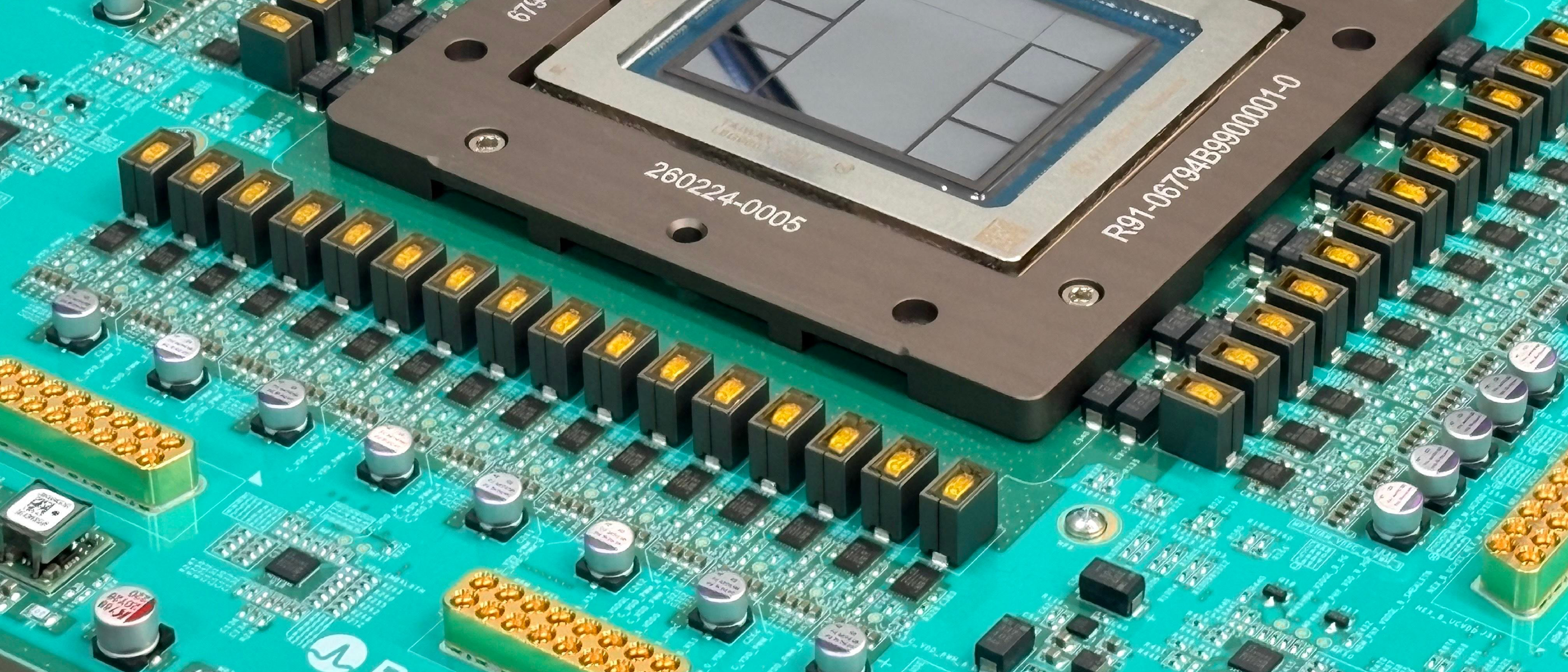
Overview of the Jalapeño AI Chip
OpenAI announced its first custom ASIC, Jalapeño, in a blog post published on Tuesday. The chip is positioned squarely as an inference‑only accelerator, meaning it is optimized for running already‑trained models rather than for the massive matrix multiplications required during training. By partnering with Broadcom for fabrication, OpenAI leverages a proven semiconductor foundry while retaining full control over the silicon architecture.
The core claim is simple yet bold: Jalapeño delivers lower latency and higher throughput simultaneously, a combination that most existing AI accelerators treat as mutually exclusive. As Richard Ho, OpenAI’s Vice President of Hardware, put it, “Jalapeño offers the ‘best of both worlds’ with lower latency and higher throughput, as AI systems typically ‘have to make a trade‑off between the two.’”
Technical Architecture and ASIC Design
ASIC Focus on Inference
Jalapeño is an application‑specific integrated circuit (ASIC) built from the ground up for inference workloads. Unlike general‑purpose GPUs, which must accommodate a wide range of compute patterns, Jalapeño’s datapath is trimmed to the operations most common in transformer‑based models—matrix‑vector multiplications, activation functions, and attention mechanisms.
Key architectural choices include:
- Sparse‑matrix engines that exploit the natural sparsity in modern quantized models, reducing unnecessary arithmetic.
- On‑chip high‑bandwidth memory (HBM) tightly coupled to the compute units, minimizing data movement latency.
- Dynamic voltage and frequency scaling (DVFS) tuned for inference bursts, allowing the chip to ramp up performance for latency‑critical requests while throttling back during high‑throughput batch processing.
Manufacturing with Broadcom
Broadcom’s involvement brings a mature 7‑nm process node to the table, balancing power efficiency with die size. While OpenAI has not disclosed the exact transistor count, the partnership suggests a design that can be mass‑produced without the lead times associated with newer sub‑5‑nm processes.
Benchmark Philosophy
OpenAI deliberately withheld detailed benchmark numbers in the initial announcement, directing readers to a full story on The Verge for deeper analysis. However, the company’s messaging emphasizes real‑world latency improvements—measured in milliseconds for single‑prompt responses—while maintaining or exceeding the throughput of existing inference clusters.
Latency vs. Throughput: Why It Matters
In AI services, latency is the time it takes for a single request to travel from input to output. Throughput is the number of requests processed per second. Historically, engineers have tuned systems for one at the expense of the other:
- Low‑latency configurations allocate dedicated compute per request, leading to under‑utilized silicon during idle periods.
- High‑throughput setups batch many requests together, reducing per‑request latency but increasing overall response time for interactive users.
Jalapeño’s architecture claims to collapse this dichotomy by:
- Micro‑batching: The chip can dynamically group incoming tokens into micro‑batches that are small enough to keep latency low but large enough to keep compute units busy.
- Predictive scheduling: On‑chip controllers anticipate request patterns, pre‑fetching weights and allocating resources before the request hits the compute pipeline.
- Parallel inference lanes: Multiple independent inference pipelines run side‑by‑side, allowing simultaneous low‑latency and high‑throughput workloads on the same silicon.
The practical impact is evident for services that blend interactive chat (requiring sub‑100 ms responses) with bulk content generation (requiring thousands of tokens per second). By removing the need to over‑provision hardware for the worst‑case latency scenario, operators can achieve cost savings and lower energy consumption.
Industry Impact and Competitive Landscape
Disrupting the GPU‑Dominated Market
For years, NVIDIA’s GPUs have been the de‑facto standard for both training and inference. Companies like AMD and Intel have introduced their own AI accelerators, but each still relies on a trade‑off model. Jalapeño’s claim of “best of both worlds” forces the market to reconsider the economics of inference‑only silicon.
Potential Ripple Effects
- Cloud providers may integrate Jalapeño into their AI‑as‑a‑service offerings, providing customers with tighter SLAs for latency‑sensitive applications such as real‑time translation or autonomous vehicle decision loops.
- Edge deployments could benefit from a smaller, power‑efficient chip that still meets the demanding throughput of modern LLMs, opening doors for on‑device AI that rivals cloud performance.
- Software stacks will need to adapt. Existing frameworks (TensorRT, ONNX Runtime) will likely add Jalapeño back‑ends,
will likely add Jalapeño back‑ends, enabling developers to compile models directly to the chip without extensive hand‑tuning. OpenAI has hinted at an upcoming SDK that will expose high‑level primitives (e.g., jalapeno.run(model, input)) while still supporting lower‑level control for power‑users who need to squeeze every nanosecond out of the silicon.
Software Ecosystem and Tooling
OpenAI’s early‑access program already includes a Jalapeño Compiler built on top of LLVM. The compiler performs:
- Quantization‑aware optimization, automatically converting FP16/FP32 weights to the 4‑bit integer format that the sparse‑matrix engines natively understand.
- Graph‑level fusion, merging attention, feed‑forward, and layer‑norm operations into single micro‑kernels to reduce memory traffic.
- Profiling hooks, exposing latency‑breakdown metrics (e.g., memory fetch, compute, scheduling) through a lightweight dashboard.
Third‑party frameworks are expected to follow suit. NVIDIA’s TensorRT team has reportedly begun a collaboration with OpenAI to ensure that models exported from the TensorRT Engine can be re‑targeted to Jalapeño with a single command‑line flag. Similarly, the ONNX Runtime community is drafting a Jalapeño Execution Provider, which will allow any ONNX‑compatible model to run on the chip with minimal code changes.
Security and Reliability Considerations
Inference accelerators are increasingly becoming attack surfaces, especially when deployed at the edge. OpenAI has emphasized a hardware‑rooted security model for Jalapeño:
- Secure boot verifies the integrity of the firmware before any model can be loaded.
- Encrypted weight storage ensures that proprietary model parameters cannot be extracted even if an attacker gains physical access to the device.
- Fault‑tolerant design includes ECC on the HBM and redundant compute lanes, reducing the likelihood of silent data corruption during high‑throughput bursts.
These features align with industry standards such as the Trusted Execution Environment (TEE) and could make Jalapeño attractive for regulated sectors like finance and healthcare, where data confidentiality is paramount.
Roadmap and Future Enhancements
OpenAI’s roadmap for Jalapeño extends beyond the initial inference‑only focus:
- Jalapeño‑Pro (Q4 2026) – A larger die variant with double the compute density, aimed at large‑scale data‑center deployments that need to serve billions of tokens per day.
- Jalapeño‑Edge (Early 2027) – A power‑optimized version targeting sub‑5 W envelopes for on‑device applications such as smartphones, AR glasses, and IoT gateways.
- Training‑Assist Mode (Mid 2027) – An optional micro‑code extension that offloads the forward‑pass of training loops, potentially reducing overall training time when paired with conventional GPUs.
OpenAI also plans to open a Jalapeño Developer Program, offering early‑stage access to silicon, technical support, and co‑marketing opportunities for startups building novel AI services.
Conclusion
OpenAI’s Jalapeño chip marks a decisive step toward specialized inference silicon that can finally reconcile the long‑standing latency‑throughput trade‑off. By marrying a purpose‑built ASIC architecture with a mature 7‑nm manufacturing process and a forward‑looking software stack, OpenAI is positioning Jalapeño as a compelling alternative to the GPU‑centric status quo.
If the early benchmarks hold up, we could see a shift in how cloud providers price AI inference—moving from “per‑GPU‑hour” models to “per‑chip‑latency” SLAs that more accurately reflect user experience. Moreover, the chip’s security features and edge‑focused roadmap hint at broader adoption beyond data centers, potentially democratizing high‑performance LLM inference across a spectrum of devices.
Only time will tell whether Jalapeño can sustain its performance promises at scale, but its introduction certainly raises the bar for the next generation of AI accelerators.
FAQ
Q: Is Jalapeño intended for model training?
A: No. Jalapeño is an inference‑only accelerator. OpenAI has indicated that training will continue to rely on GPUs and upcoming specialized training chips from other vendors.
Q: Will existing models need to be retrained to run on Jalapeño?
A: No full retraining is required. Models can be exported to ONNX or OpenAI’s own format and then quantized/optimized by the Jalapeño compiler. Minor fine‑tuning may be recommended to achieve optimal sparsity.
Q: How does Jalapeño compare to NVIDIA’s H100 in terms of power efficiency?
A: OpenAI has not released head‑to‑head numbers yet, but the company claims a 30‑40 % reduction in energy per token for typical transformer inference workloads, thanks to sparse‑matrix engines and on‑chip HBM.
Q: When will the chip be commercially available?
A: The first production units are slated for limited release to OpenAI partners in Q4 2026, with broader availability to cloud providers and enterprise customers in early 2027.
Q: Can developers access the hardware today?
A: OpenAI has opened an early‑access program for select partners. Interested parties can apply through the OpenAI hardware portal; a public SDK is expected later in 2026.
Q: What programming languages are supported?
A: The primary SDK targets Python, but C++ bindings are also planned. Integration with existing frameworks (TensorRT, ONNX Runtime, PyTorch) will be provided via plug‑ins.
Q: Is the chip compatible with existing data‑center infrastructure?
A: Yes. Jalapeño will be delivered in standard PCIe Gen5 form factor cards, allowing drop‑in replacement of GPU accelerators in most server racks.
Source: Original Article