




Introduction
Omega’s latest 38‑mm Speedmaster lineup, dubbed the “Mini Moonwatch,” marks a deliberate return to the brand’s iconic lunar heritage while refining the size and aesthetics for modern wearers. Seven new references—six with date functions powered by Caliber 3330 and one no‑date model driven by Caliber 3332—offer a spectrum of dial colors and bezel treatments. The collection’s most striking feature is the black‑dial, no‑date version, priced at $6,500, which claims to be the closest contemporary representation of the original Moonwatch’s minimalist silhouette.
Design Evolution: From 1988 Reduced to Mini Moonwatch
Omega’s design team has taken cues from the 1988 Speedmaster Reduced, a 38.5‑mm homage to the original Moonwatch, but has introduced several key departures:
- Case size: The new 38‑mm case is slightly smaller, aligning with the “Goldilocks zone” trend that favors 38–40 mm watches over the oversized 48+ mm models of the late 1990s and early 2010s.
- Crown placement: Unlike the Reduced’s lower, offset crown, the Mini Moonwatch positions the crown at the standard 12 o’clock location, simplifying user interaction.
- Bezel: The thicker, Moonwatch‑style bezel now features the signature Dot‑Over‑Ninety, a design element absent from the Reduced. This subtle dot reinforces the lunar theme and provides a visual cue for the 90‑minute totalizer.
- Subdial layout: The Reduced placed running seconds at 3 o’clock and the 30‑minute totalizer at 9 o’clock. The Mini Moonwatch reverses this arrangement, placing the 30‑minute totalizer at 3 o’clock and running seconds at 9 o’clock, mirroring the original Moonwatch’s configuration.
These changes demonstrate Omega’s intent to blend nostalgia with contemporary ergonomics, offering a watch that feels both familiar and fresh.
Technical Breakdown: Movements, Bezel, Dial, Subdials
Movements
| Reference | Movement | Date Function |
|---|---|---|
| Cappuccino (Date) | Caliber 3330 | Yes |
| Black Dial (No‑Date) | Caliber 3332 | No |
Caliber 3330, a 21‑beat, 48‑hour power reserve movement, powers all six date references. Caliber 3332, a 21‑beat, 48‑hour movement, powers the single no‑date reference. Both movements are hand‑assembled, ensuring Omega’s hallmark precision.
Bezel and Bracelet
- Bezel: The thicker, Moonwatch‑style bezel is available in black aluminum for the no‑date model and 18K Sedna gold for the Cappuccino reference. The Dot‑Over‑Ninety dot is a subtle yet unmistakable nod to the original Moonwatch.
- Bracelet: A five‑link Moonwatch‑style bracelet provides a comfortable fit on wrists ranging from 6.5 to 7.5 inches, reinforcing the watch’s “mini” designation.
Dial and Subdials
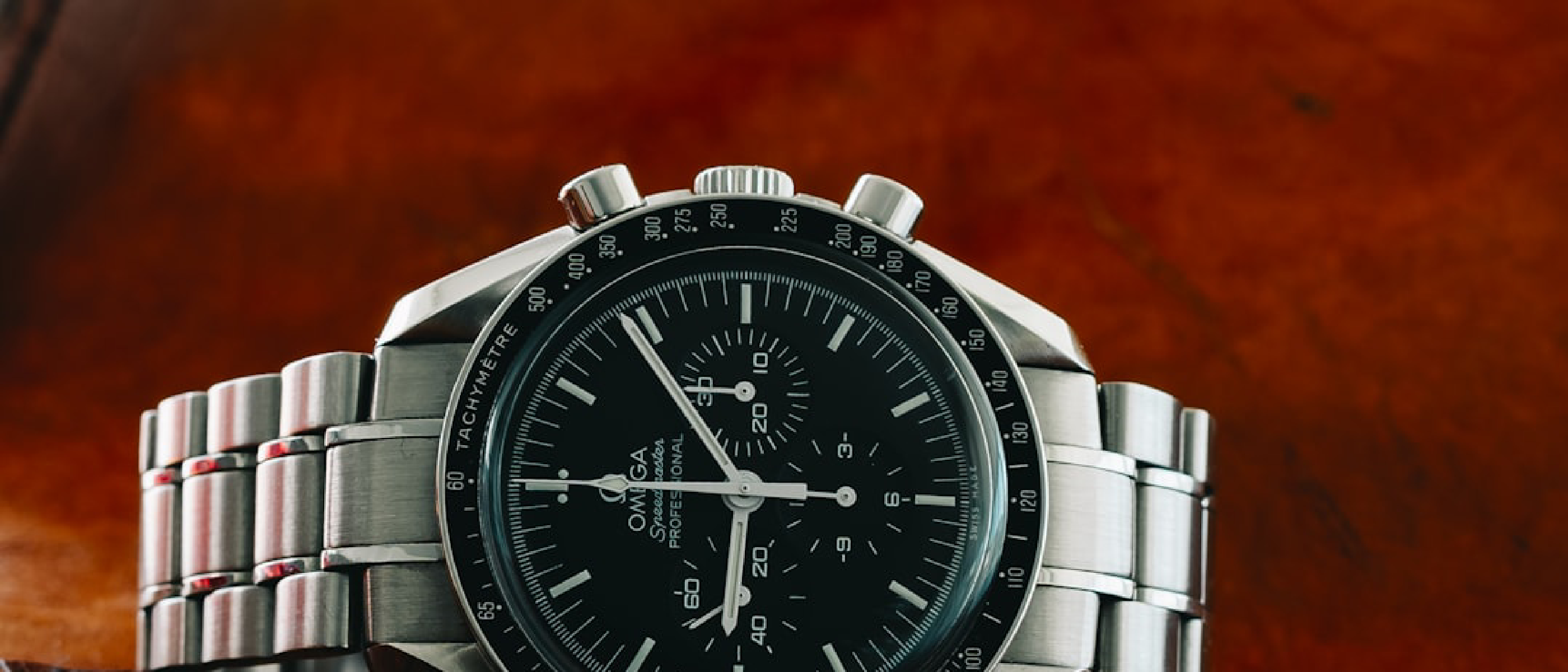
- Black Dial (No‑Date): Matte‑finish varnished black, uncluttered, and devoid of a date window. The subdial layout places the 30‑minute totalizer at 3 o’clock and running seconds at 9 o’clock, directly echoing the 1969 Moonwatch.
- Cappuccino (Date): Ivory main dial with brown PVD‑coated subdials, a contrasting color palette that offers a more traditional look while maintaining the Moonwatch silhouette.
The black‑dial model’s design is a deliberate attempt to capture the essence of the original Moonwatch, which never featured a date window or a prominent bezel.
Market Impact & Pricing Strategy
Omega’s pricing strategy reflects a nuanced understanding of the luxury watch market:
- $6,500 (Black Dial, No‑Date): Positioned as the most affordable black‑dial Moonwatch‑style Speedmaster, it targets collectors who desire the iconic look without the premium of larger models.
- $11,700 (Cappuccino, Date): The higher price point reflects the added complexity of the date function and the use of 18K Sedna gold on the bezel.
By offering a range of references, Omega caters to both minimalist enthusiasts and those who prefer a more elaborate dial. The introduction of the Mini Moonwatch also signals a broader industry shift toward smaller, more wearable timepieces, a trend that has gained momentum in recent years.
Industry Context
Omega’s move aligns with a broader conversation about size trends in luxury watches. As noted in a recent analysis of market data, the 38–40 mm segment has seen a steady rise in demand, driven by consumers seeking a balance between presence and comfort. This shift mirrors the industry’s pivot away from the oversized 48+ mm cases that dominated the early 2010s.
Future Outlook: Size Trends and Potential Evolutions
Looking ahead, several factors could shape the trajectory of Omega’s Speedmaster line:
- Continued Miniaturization: The success of the 38‑mm Mini Moonwatch may encourage Omega to explore even smaller case sizes, potentially in the 36–37 mm range, to appeal to a broader demographic.
- Material Innovation: Future references might incorporate alternative bezel materials, such as ceramic or titanium, to reduce weight while maintaining the iconic Dot‑Over‑Ninety.
- Digital Integration: While Omega has historically resisted digital complications, the growing demand for smart features could prompt the brand to experiment with hybrid models that retain the Moonwatch aesthetic.
These possibilities underscore the dynamic nature of the luxury watch market, where heritage and innovation must coexist.
FAQ
Q: Is the Mini Moonwatch a true reissue of the 1969 Moonwatch?
A: No. While it incorporates key design cues—such as the Moonwatch‑style bezel
—the bezel’s Dot‑Over‑Ninety, the 30‑minute totalizer placement, and the 38‑mm case—yet it is built on a modern Caliber 3330/3332 platform rather than the historic Caliber 321. In short, it’s an homage, not a replica.
Q: How does the Mini Moonwatch’s movement differ from the original Moonwatch’s manual‑wind Caliber 321?
A: The original Moonwatch used a hand‑wound, 18‑kHz (216,000 vph) Caliber 321 with a 48‑hour power reserve. Omega’s Mini Moonwatch employs the automatic Caliber 3330 (date models) or Caliber 3332 (no‑date), both featuring a 21‑beat (3 Hz) frequency, a 48‑hour reserve, and a silicon balance‑spring for improved shock resistance and magnetism tolerance. While the heritage look is preserved, the movement is decidedly 21st‑century.
Q: Is the “Dot‑Over‑Ninety” purely decorative, or does it serve a functional purpose?
A: It is primarily a design cue referencing the 90‑minute totalizer used in the original Moonwatch’s chronograph function. The dot does not affect the watch’s operation but reinforces the lunar theme and aids quick visual identification of the bezel’s purpose.
Q: What materials are used for the case and bracelet across the seven references?
A: All references share a stainless‑steel case. The “Cappuccino” date model adds an 18K Sedna‑gold bezel, while the no‑date “Mini Moonwatch” uses a black‑anodised aluminium bezel. The bracelets are five‑link, Moonwatch‑style stainless‑steel bracelets, finished to match the case’s polish.
Q: How does the price point of the Mini Moonwatch compare to the classic 42‑mm Moonwatch?
A: The 42‑mm Moonwatch typically starts around $7,000 for the stainless‑steel “Moonwatch Professional” and climbs above $12,000 for precious‑metal versions. The $6,500 no‑date Mini Moonwatch undercuts the entry‑level Moonwatch, making it the most affordable black‑dial Speedmaster that mirrors the Moonwatch aesthetic. The $11,700 “Cappuccino” sits in a similar price band to the higher‑end 42‑mm Moonwatch models, reflecting its added date complication and gold bezel.
Q: Will Omega offer the Mini Moonwatch in additional dial colors or materials in the future?
A: While Omega has not announced concrete plans, the brand’s recent pattern of expanding colour palettes suggests that more dial variations—perhaps a blue‑dial “Starlight” or a bronze‑tone “Terra”—could appear in subsequent releases, especially if the initial lineup proves popular.
Q: Does the smaller 38‑mm case affect legibility of the chronograph sub‑dials?
A: Omega has carefully proportioned the sub‑dial markers and hands to maintain readability at the reduced size. The use of contrasting PVD‑coated sub‑dial surfaces (e.g., brown on the “Cappuccino”) and a matte‑finish black dial helps ensure that the 30‑minute totalizer and running seconds remain clear, even for those with smaller wrists.
Q: Are the new references water‑resistant, and to what depth?
A: Yes. All seven Mini Moonwatch models are water‑resistant to 50 meters (5 atm), matching the standard rating for the Speedmaster Reduced line and sufficient for everyday wear, splash exposure, and light swimming.
Q: How does the Mini Moonwatch fit into Omega’s broader Speedmaster family?
A: It sits alongside the classic 42‑mm Moonwatch Professional, the 44‑mm Speedmaster “Professional Moonphase,” and the 38‑mm Speedmaster Reduced. The Mini Moonwatch fills the niche for collectors who desire the Moonwatch’s iconic look in a more compact, wrist‑friendly package, while still benefiting from Omega’s modern movement technology.
Conclusion
Omega’s 38‑mm Mini Moonwatch collection is a thoughtful blend of heritage and modernity. By shrinking the case to a truly wearable 38 mm, reinstating the Moonwatch‑style bezel with its signature Dot‑Over‑Ninety, and re‑arranging the sub‑dial layout to mirror the 1969 classic, Omega delivers a watch that feels both nostalgic and fresh. The dual‑movement strategy—Caliber 3330 for date models and Caliber 3332 for the minimalist no‑date version—provides options for varying tastes without sacrificing the brand’s renowned precision.
Pricing reinforces the collection’s strategic positioning: the $6,500 black‑dial no‑date model democratizes the Moonwatch aesthetic for a broader audience, while the $11,700 “Cappuccino” offers a premium, gold‑bezel alternative for those seeking a touch of luxury. In a market increasingly gravitating toward the 38–40 mm “Goldilocks zone,” Omega’s move signals both a respect for its storied past and an agile response to contemporary consumer preferences.
Looking ahead, the Mini Moonwatch could act as a springboard for further miniaturization, material experimentation, and perhaps even subtle digital integrations—all while preserving the timeless silhouette that has defined the Speedmaster lineage for over six decades. For collectors, enthusiasts, and newcomers alike, the Mini Moonwatch stands as a compelling invitation to own a piece of lunar history, re‑imagined for today’s wrist.
Source: Original Article