





What Is NVIDIA cuDSS?
NVIDIA cuDSS (CUDA‑X library) is a general‑availability GPU‑accelerated solver that targets large sparse linear systems common in engineering and scientific simulations. By offloading the most compute‑intensive portions of a simulation to the GPU, cuDSS reduces the time to results and increases throughput across a wide spectrum of workloads. The library exposes a familiar API surface in C, C++, Python, and Fortran, allowing developers to embed GPU acceleration into existing workflows with minimal code changes. cuDSS scales from a single workstation to multi‑node clusters, making it suitable for both desktop prototyping and high‑performance computing (HPC) environments.
Why GPU Acceleration Matters for Simulations
Engineering simulations routinely solve systems with millions of degrees of freedom. Traditional CPU‑only approaches can become a bottleneck, especially when exploring large design spaces or running iterative optimization loops. GPUs, with their massive parallelism and high memory bandwidth, excel at the dense linear algebra operations that dominate sparse solves. The benefits include:
- Speed: Up to 10× faster sparse solves in some cases, dramatically shortening iteration cycles.
- Cost Efficiency: Lower total cost of ownership by reducing compute time and enabling smaller, cheaper hardware for the same throughput.
- Model Fidelity: Ability to run larger, more realistic models that were previously infeasible due to time constraints.
These advantages translate directly into faster product development, reduced risk, and the capacity to push the boundaries of design complexity.
Industry Adoption and Real‑World Gains
Several leading simulation vendors have already integrated cuDSS into their flagship products, reporting significant performance improvements:
| Vendor | Product | Speedup | Impact |
|---|---|---|---|
| Applied Materials | Ginestra | 10× | Accelerated semiconductor material and reliability studies |
| COMSOL | Multiphysics | 4× | EUV lithography plasma simulation completed in 6 days 14 hrs |
| Cadence | Celsius | – | Faster heat, stress, and warpage analysis for advanced chips |
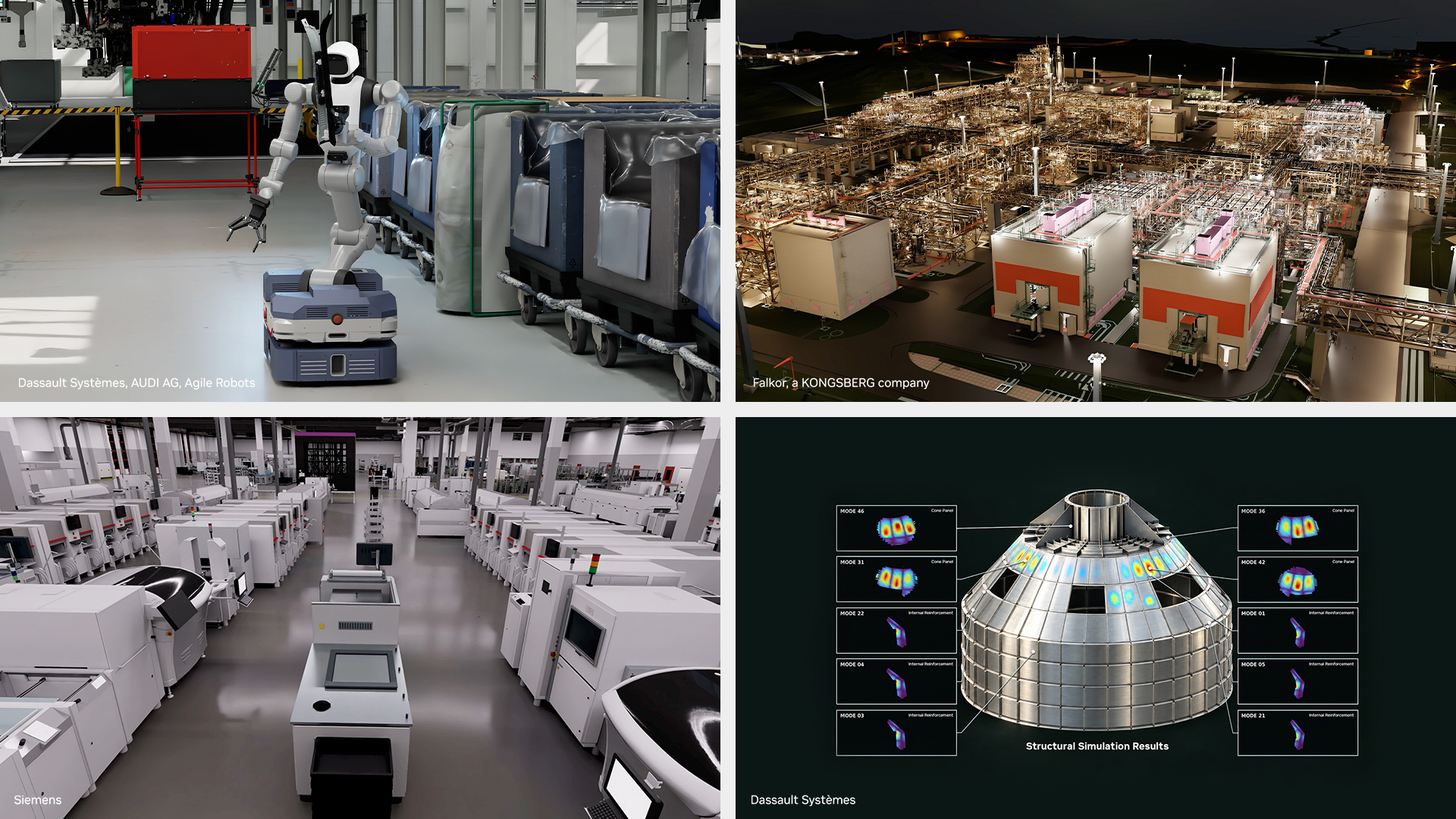
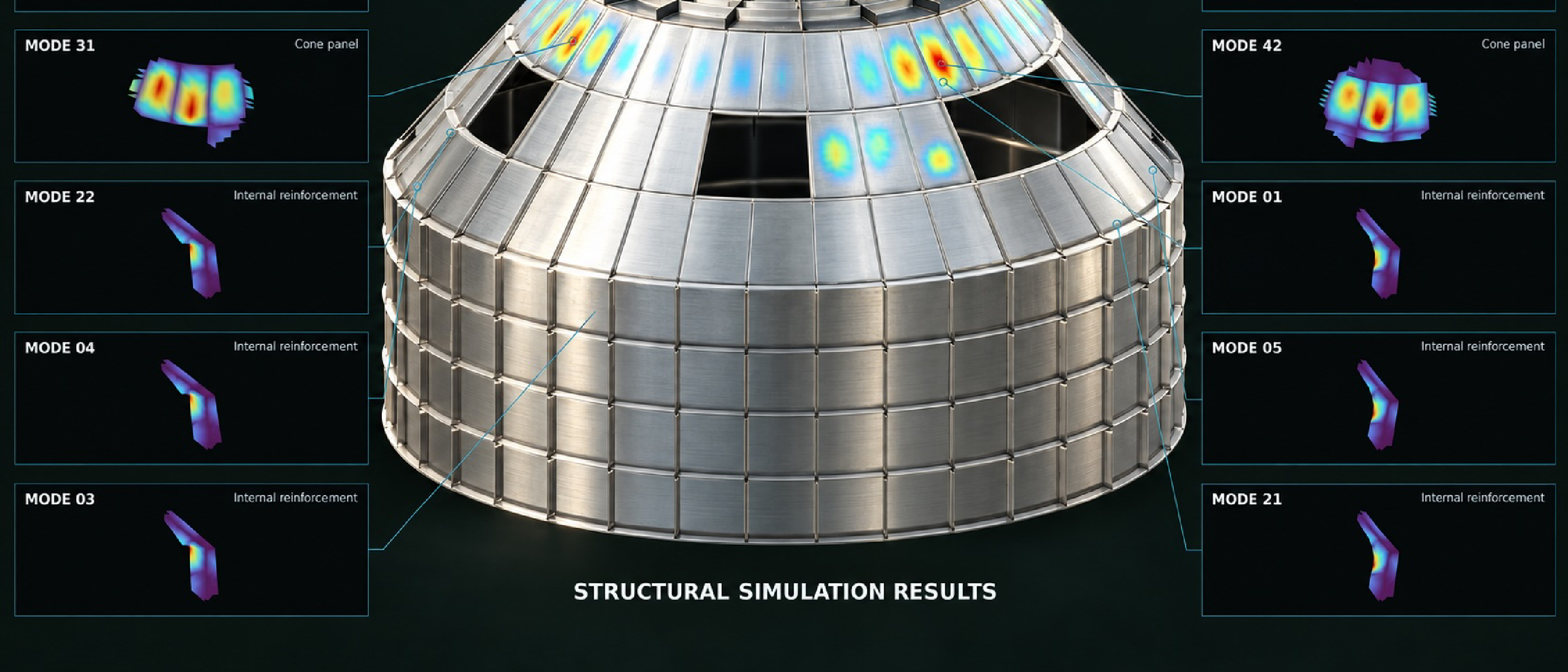
| Dassault Systèmes | Abaqus | 8–10× | Structural and electromagnetic solver acceleration |
| Siemens | Simcenter STAR‑CCM+ | – | Fluid‑structure interaction workflows accelerated |
| Synopsys | Sentaurus Device | – | Advanced logic, memory, and power chip simulations sped up |
These real‑world benchmarks demonstrate that cuDSS is not a theoretical improvement; it delivers tangible gains across a spectrum of industries—from semiconductor design to aerospace and industrial systems. The library’s compatibility with existing APIs means that customers can adopt GPU acceleration without rewriting entire codebases.
Technical Architecture and Integration
cuDSS is built on top of NVIDIA’s CUDA platform, leveraging the same low‑level primitives that power high‑performance deep learning frameworks. Its core components include:
- Sparse Matrix Representation: Compressed Sparse Row (CSR) and other formats optimized for GPU memory access patterns.
- Iterative Solvers: Conjugate Gradient, GMRES, and BiCGSTAB implementations tuned for GPU execution.
- Preconditioners: Incomplete LU (ILU) and Algebraic Multigrid (AMG) variants that run on the GPU.
- Hybrid CPU‑GPU Execution: Workflows that keep data on the GPU while offloading control logic to the CPU, minimizing data transfer overhead.
Integration typically follows a three‑step process:
- Data Transfer: Convert the simulation’s sparse matrix into cuDSS‑compatible format and transfer it to GPU memory.
- Solver Invocation: Call the cuDSS solver through the provided API, optionally configuring solver parameters and preconditioners.
- Result Retrieval: Copy the solution vector back to CPU memory for post‑processing or further simulation steps.
Because cuDSS exposes a C/C++ API, many simulation engines can wrap the calls in a thin layer, preserving their existing code structure while gaining GPU performance.
Future Outlook and Strategic Implications
The general availability of cuDSS signals NVIDIA’s commitment to expanding the GPU ecosystem beyond graphics and AI. As simulation workloads continue to grow in size and complexity, GPU acceleration will become a baseline requirement for competitive engineering tools. Key trends to watch include:
- Expanded Solver Library: Future releases may add support for nonlinear solvers, eigenvalue problems, and coupled multiphysics systems.
- Cloud‑Ready Deployment: Integration with NVIDIA’s GPU‑enabled cloud offerings could enable on‑demand simulation scaling for enterprises.
- AI‑Driven Optimization: Coupling cuDSS with machine learning models could accelerate design space exploration and uncertainty quantification.
- Industry‑Specific Extensions: Custom preconditioners or solver kernels tailored to semiconductor, aerospace, or automotive domains.
Companies that adopt cuDSS early can position themselves as leaders in simulation performance, attracting customers who demand faster time‑to‑market and higher fidelity models.
FAQ
Q: Is cuDSS free to use?
A: The summary does not disclose pricing. Users should consult NVIDIA’s licensing terms for details.
Q: Can I use cuDSS with legacy simulation codes?
A: Yes. cuDSS provides C, C++, Python, and Fortran interfaces, allowing incremental integration into existing codebases.
Q: Does cuDSS require a specific GPU model?
A: The library is compatible with NVIDIA GPUs that support CUDA, but performance scales with GPU compute capability and memory bandwidth.
Q: How does cuDSS compare to other GPU‑accelerated solvers?
A: Benchmarks from industry partners show up to 10× speedups over CPU‑only solvers, positioning cuDSS among the top performers in sparse linear algebra.
Q: Where can I learn more about NVIDIA’s GPU stack for engineering?
A: For a broader view of NVIDIA’s impact on industrial engineering, see the article on European factories adopting the NVIDIA stack:
European Factories Go AI‑First with NVIDIA Stack
.
Source: Original Article