



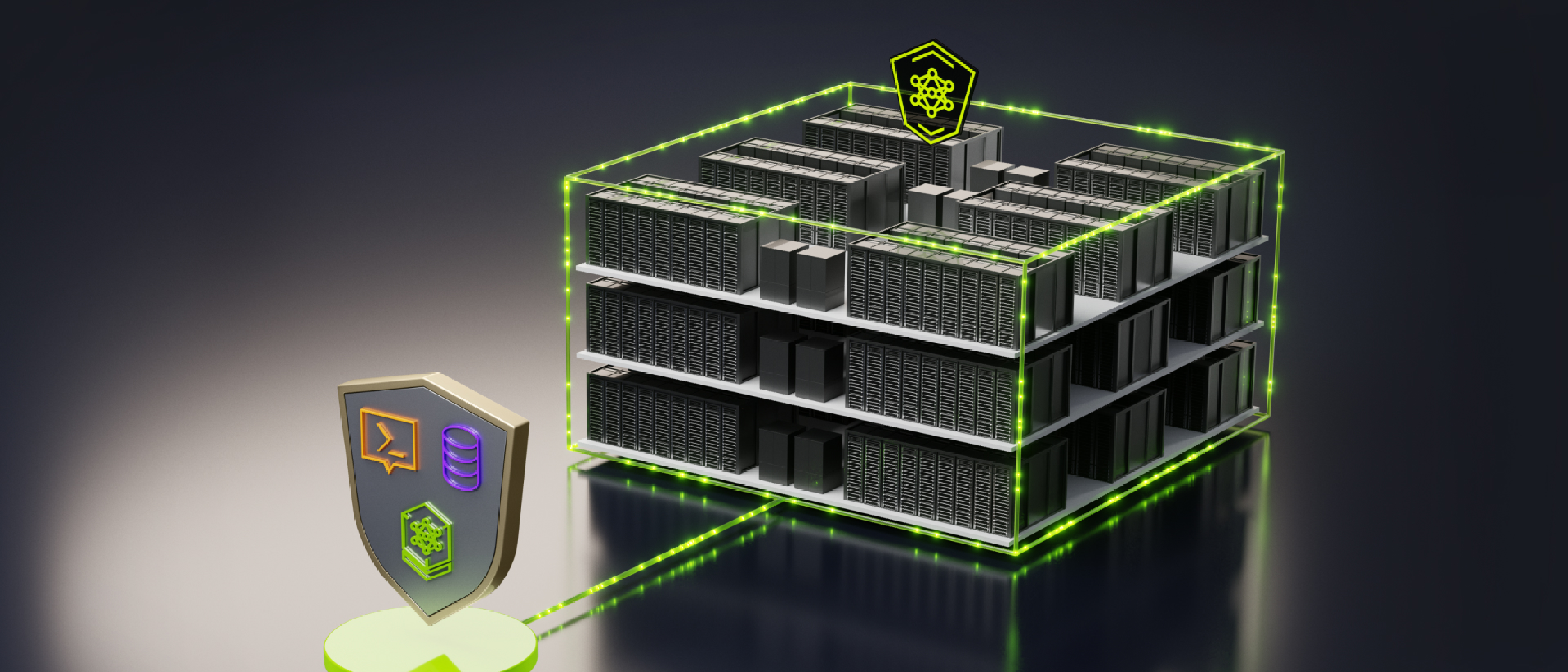
Overview of NVIDIA’s New Confidential Computing Portfolio
NVIDIA’s latest announcement marks a decisive step toward securing the most demanding AI workloads. By introducing the Open Shell Reference Architecture, Confidential Bare Metal, and refined container and VM options, the company is giving frontier‑model builders a hardware‑rooted shield that spans public clouds, private data centers, and hybrid environments. The portfolio now supports a broad hardware spectrum—from the NVL72 rack‑scale systems powered by Grace Blackwell to the x86‑based NVL8 platforms—ensuring that enterprises can choose the form factor that best matches their performance and compliance requirements.
Key partners such as Core Weave, Firmus, Google Cloud, Microsoft Azure, and Vultr are already listed as deployment platforms, while system integrators like Cisco, Dell Technologies, and HPE certify the underlying hardware. This ecosystem breadth signals that confidential computing is moving from a niche security add‑on to a mainstream architectural layer for AI.
Technical Breakdown of the New Features
1. Open Shell Reference Architecture
- Purpose: Provides a standardized, reproducible method for deploying AI agents at scale while preserving confidentiality.
- How it works: Leverages NVIDIA’s SGX‑compatible GPUs to create a sealed execution environment that can be instantiated across multiple nodes without exposing model weights or training data.
- Benefit: Reduces the engineering overhead of building custom secure enclaves, allowing teams to focus on model innovation.
2. Confidential Bare Metal
- Definition: A non‑virtualized compute tier where the entire server—CPU, memory, GPU, and interconnects—is cryptographically sealed.
- Hardware support: Extends to Grace Blackwell NVL72 rack‑scale systems and HGX Rubin NVL8 platforms, delivering up to 8 × H100 GPUs per node with end‑to‑end encryption.
- Use case: Ideal for AI labs that need raw performance (no hypervisor overhead) while protecting intellectual property (IP) and sensitive training data.
3. Confidential Containers & Virtual Machines
- Containers: Integrated with Kubernetes, enabling secure pod‑level isolation. The containers inherit hardware‑rooted keys from the underlying GPU, ensuring that even container‑escaped processes cannot read memory.
- Virtual Machines: Offer a familiar VM‑based workflow for enterprises that already rely on vSphere or Hyper‑V, now fortified with hardware‑based attestation.
4. Platform Security Controls
- Data‑in‑Transit Protection: Mutual TLS between nodes, with keys derived from the GPU’s attestation report.
- Integrity Measurement: Continuous verification of firmware, BIOS, and driver stacks against known good hashes.
- Hardware‑Level Access Restrictions: Fine‑grained policies that limit which processes can issue GPU commands, mitigating side‑channel risks.
5. Integration Highlights
- Cohere Model Vault: Directly couples Confidential Bare Metal with Cohere’s model‑management platform, extending protection to GPU memory and inter‑GPU NVLink traffic.
- Google Cloud A4X Max Instances: First‑generation instances that combine NVIDIA GB300 NVL72 hardware with non‑virtualized, cryptographically sealed compute, delivering “top‑line serving performance” while safeguarding data.
For a deeper look at how NVIDIA’s hardware acceleration is reshaping workloads, see the recent post on NVIDIA cuDSS GA: GPU‑Accelerated Simulations Engineers .
Why It Matters: Security, Compliance, and Competitive Edge
Protecting Model Intellectual Property
Frontier models—large language models, diffusion generators, and multimodal systems—represent multi‑million‑dollar investments. Traditional cloud VMs expose these assets to hypervisor‑level attacks, insider threats, and accidental leakage. By anchoring security in the silicon layer, NVIDIA ensures that even a compromised OS cannot read or tamper with model weights.
Meeting Regulatory Demands
Regulations such as the EU’s AI Act, the U.S. Executive Order on AI, and sector‑specific mandates (healthcare, finance) require demonstrable data protection throughout the ML lifecycle. Confidential Computing provides cryptographic attestation logs that auditors can verify, simplifying compliance reporting.
Enabling New Business Models
Secure enclaves open the door to model‑as‑a‑service offerings where providers can monetize proprietary models without exposing them to customers. Companies can now run inference on client data while guaranteeing that the data never leaves the encrypted boundary—a compelling proposition for industries handling PHI or PII.
Industry Impact and Ecosystem Adoption
Cloud Providers Accelerate Offerings
Google Cloud’s A4X Max instances are the first public‑facing product built on NVIDIA’s Confidential Bare Metal. Microsoft Azure and Amazon Web Services are expected to follow, given the shared hardware
shared hardware‑rooted trust model and the growing demand for AI‑centric security. Early adopters such as Core Weave, Firmus, and Vultr have already announced beta programs that let customers spin up Confidential Bare Metal nodes with a single API call, dramatically shortening the time‑to‑secure‑deployment.
6. Expanded Partner Landscape
| Tier | Partner | Offering | Notable Feature |
|---|---|---|---|
| Cloud | Google Cloud | A4X Max (Confidential Bare Metal) | Non‑virtualized GB300 NVL72, end‑to‑end encryption |
| Microsoft Azure | Confidential Compute Preview (expected Q1 2027) | Integration with Azure Arc for hybrid workloads | |
| Amazon Web Services | “Secure AI” pilot (Q3 2026) | Leveraging AWS Nitro Enclaves with NVIDIA GPUs | |
| Specialized Cloud | Core Weave | Confidential Bare Metal on demand | Pay‑as‑you‑go pricing, auto‑scaling |
| Firmus | Managed Confidential Containers | Pre‑hardened Kubernetes clusters | |
| Lambda | Confidential VM Marketplace | One‑click deployment for enterprise AI teams | |
| System Integrators | Cisco, Dell Technologies, HPE, Lenovo, Supermicro, Bull | NVIDIA‑certified racks (NVL72, NVL8) | Full stack validation, warranty coverage |
| Regional Providers | GMI Cloud, IREN, Nebius, Nscale, Vultr | Localized data‑sovereignty options | GDPR‑compliant zones, on‑prem hybrid links |
These collaborations ensure that developers can choose the exact blend of performance, geography, and compliance they need without sacrificing the hardware‑level guarantees that Confidential Computing provides.
7. Roadmap and Upcoming Features
NVIDIA has hinted at several enhancements slated for the next 12‑month window:
- Confidential Multi‑Node Orchestration – A unified control plane that can attest and coordinate dozens of Confidential Bare Metal nodes for distributed training of trillion‑parameter models.
- Zero‑Trust GPU Memory Paging – Extending encryption to GPU memory that spills over to host DRAM, eliminating a long‑standing attack surface.
- AI‑Ready Attestation APIs – Simplified SDKs for popular frameworks (PyTorch, TensorFlow, JAX) that automatically embed attestation tokens into model checkpoints.
- Edge‑Optimized Confidential Compute – A lightweight variant of Confidential Bare Metal for NVIDIA Jetson and Edge AI devices, targeting autonomous vehicles and IoT gateways.
These additions aim to close the remaining gaps between secure development, secure training, and secure inference, making end‑to‑end confidentiality a default rather than an optional add‑on.
Conclusion
NVIDIA’s expanded Confidential Computing portfolio marks a pivotal moment for the AI industry. By delivering Open Shell, Confidential Bare Metal, and hardened container/VM options across a wide hardware spectrum, NVIDIA gives frontier‑model builders the confidence to push the limits of scale without exposing their most valuable assets. The rapid uptake by cloud giants, specialized providers, and system integrators demonstrates that the market is ready for a hardware‑rooted security layer that can keep pace with the explosive growth of generative AI.
For enterprises, the message is clear: the era of “security as an afterthought” is over. With cryptographic attestation baked into the silicon, compliance becomes demonstrable, IP leakage risks plummet, and new business models—such as secure model‑as‑a‑service—become viable. As the roadmap unfolds, we can expect even tighter integration between AI frameworks and the underlying trust fabric, turning confidential computing from a niche capability into the backbone of responsible AI deployment.
Frequently Asked Questions
Q1: Do I need to rewrite my existing AI code to use Confidential Bare Metal?
No. NVIDIA provides SDK extensions for PyTorch, TensorFlow, and JAX that automatically handle key provisioning and attestation. Existing containers can be re‑packaged with minimal changes, while bare‑metal workloads require only a one‑line configuration flag to enable the sealed environment.
Q2: How does performance compare to traditional VMs?
Because Confidential Bare Metal eliminates the hypervisor layer, raw GPU throughput is virtually identical to a standard bare‑metal server. The added cryptographic operations (encryption of memory and interconnect traffic) incur a latency overhead of less than 2 % on typical training workloads, according to NVIDIA’s internal benchmarks.
Q3: What compliance reports can I generate?
Each Confidential Compute instance produces an immutable attestation log signed by the GPU’s root of trust. These logs can be exported in JSON or CSV format and are compatible with audit frameworks such as ISO 27001, SOC 2, and the EU AI Act’s “technical documentation” requirements.
Q4: Is Confidential Computing available on-premises?
Yes. System integrators like Dell Technologies and HPE ship NVIDIA‑certified racks (NVL72 and NVL8) that support all three deployment modes—Bare Metal, Containers, and VMs. Organizations can run the same security stack in their own data centers as they do in public clouds.
Q5: Will other GPU vendors adopt similar confidential compute models?
While NVIDIA currently leads with a full‑stack solution (hardware, firmware, SDK, and ecosystem), competitors such as AMD and Intel have announced roadmap items for hardware‑rooted enclaves. However, NVIDIA’s early mover advantage and extensive partner network give it a significant head start.
Q6: How does Confidential Computing interact with existing encryption at rest?
Confidential Computing complements storage‑level encryption. Data is encrypted at rest on disks, decrypted only inside the sealed enclave, processed in memory under hardware‑derived keys, and re‑encrypted before leaving the enclave. This end‑to‑end protection eliminates any “clear‑text” exposure on the host OS.
Q7: Can I mix confidential and non‑confidential workloads on the same hardware?
Yes. NVIDIA’s scheduler allows you to partition a node into confidential and standard partitions, each with its own attestation profile. This flexibility lets organizations gradually migrate sensitive workloads while maintaining overall cluster utilization.
Stay tuned for our next deep‑dive on how to integrate NVIDIA’s attestation APIs into a CI/CD pipeline for continuous secure model deployment.
Source: Original Article