


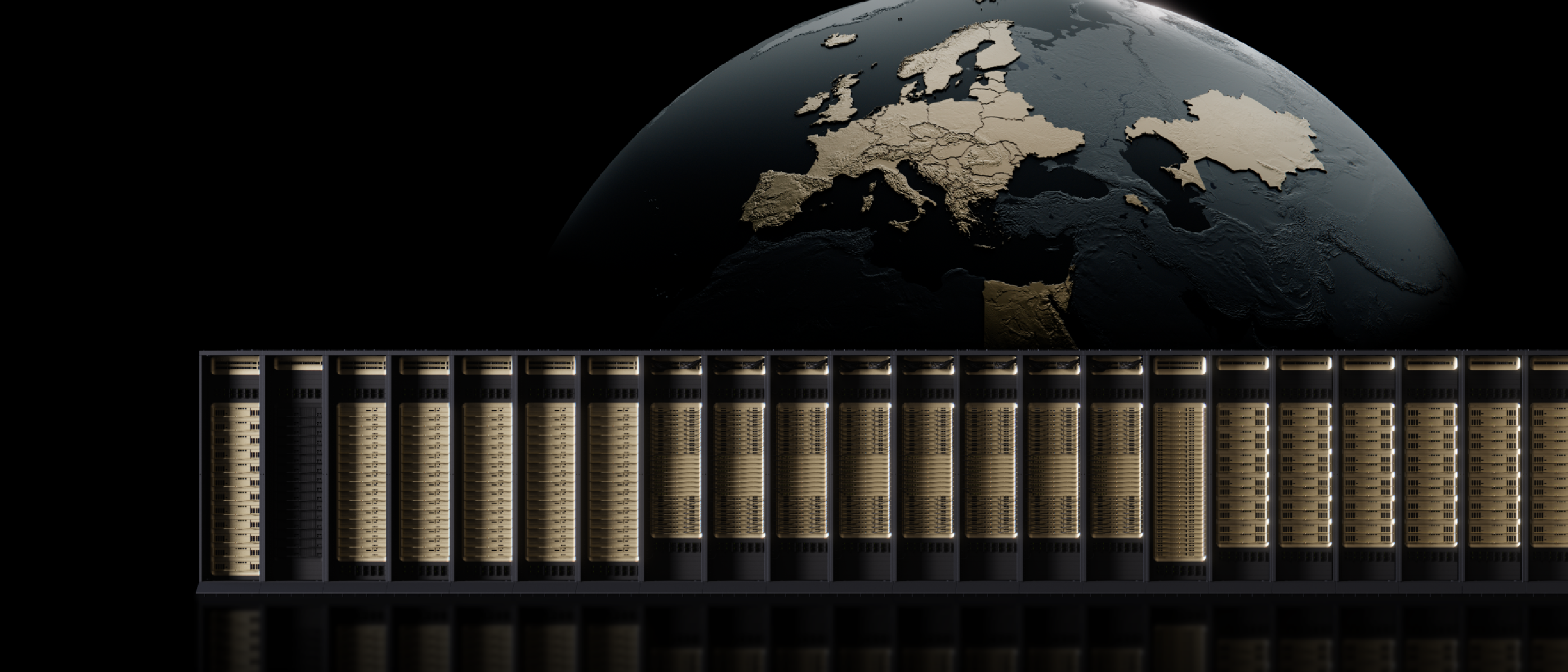
The European AI Cloud Landscape is Expanding
NVIDIA’s Cloud Partners are rolling out a new generation of sovereign, open, and secure AI infrastructure across Europe, the Nordics, Africa, and Central Asia. The initiative is built on the premise that regional compute capacity is essential for training and deploying large language models (LLMs), multimodal agents, and physical AI applications. By leveraging local energy, data, research, and industrial ecosystems, the partners aim to create a self‑sufficient AI ecosystem that can compete with global cloud giants while preserving data sovereignty and security.
The rollout is coordinated through a portfolio of NVIDIA platforms and partner solutions, including the DSX Platform, Vera Rubin, BlueField, Spectrum‑X, Groq 3 LPX, and the Open Shell Reference Architecture. These technologies are being deployed in partnership with companies such as Nscale, Crusoe, Aleria, Cassava Technologies, Firebird, G42, Radiant, SWI Compute, Vultr, Nebius, Baseten, Fireworks, Era4, Mistral, Verda, Rhoda AI, Robo Force, Sereact, Code Rabbit, and SPRIND.
Why It Matters: Sovereign, Secure, and Scalable AI
- Data Sovereignty – By hosting AI workloads on regional clouds, organizations can keep sensitive data within national borders, complying with GDPR and other local regulations.
- Latency Reduction – Edge‑proximate compute enables real‑time inference for agentic and physical AI applications, such as robotics and autonomous vehicles.
- Open Model Ecosystem – Partners can fine‑tune and serve open‑weight models like Mistral 4 and Nemotron 3.5 Lightning, fostering innovation without vendor lock‑in.
- Energy Efficiency – The DSX Platform’s power‑allocation coordination boosts GPU utilization by 37% and inference throughput by nearly 50% within the same power envelope, addressing the growing energy cost of AI training.
These benefits align with the quote from NVIDIA’s leadership: “Demand from AI‑natives is pulling the European AI cloud ecosystem forward faster than ever. Developers need compute closer to their data, open models they can customize and serve at scale, and full‑stack infrastructure that is secure by design.”
Technical Breakdown of the Key Platforms
NVIDIA DSX Platform
The DSX Platform orchestrates power distribution across GPU clusters. In tests with NVIDIA GB300 NVL72 systems, it achieved:
- 37% more GPUs per rack without increasing power draw.
- ~50% higher aggregate inference throughput under the same power budget.
This efficiency is critical for data centers that must balance performance with cooling and electricity costs.
NVIDIA Vera Rubin
Vera Rubin is the backbone for frontier‑model training and production workloads. It is already in use by:
- Nscale, Crusoe, Nebius, Mistral, and Verda for model training, customization, and inference.
- Mistral Large 4 was trained on 3,800 NVIDIA Grace Blackwell GPUs within Vera Rubin, showcasing its capacity for multimodal, agentic workloads.
The Vera Rubin infrastructure is slated for delivery to Mistral in 2027, further expanding the ecosystem.
NVIDIA BlueField & Sentry
BlueField DPUs, integrated with NVIDIA Sentry, provide in‑silicon enforcement of security policies. This combination ensures that AI workloads cannot escape their designated boundaries, a cornerstone of the Open Shell Reference Architecture.
NVIDIA Spectrum‑X Ethernet
Spectrum‑X delivers high‑speed, low‑latency networking essential for token generation in latency‑sensitive applications. When paired with Vera Rubin NVL72 on Nebius Token Factory, it accelerates inference for real‑time agents.
NVIDIA Groq 3 LPX
Nebius adopted Groq 3 LPX for production inference, benefiting from its low‑latency, high‑throughput design tailored for large‑scale inference pipelines.
Nebius Physical AI Workbench
This full‑stack AI cloud solution focuses on robotics and physical AI. It powers clients such as Rhoda AI, Robo Force, and Sereact, enabling them to deploy agentic systems that interact with the physical world.
NVIDIA Retail Agent Blueprints
Three early‑access blueprints cover inventory management, store operations, and fine‑tuning. They are launched on Nebius infrastructure, illustrating the practical application of the Open Shell architecture in retail scenarios.
NVIDIA Blackwell Ultra GPUs
Era4’s Chesterfield facility uses Blackwell Ultra GPUs to deliver enterprise AI solutions across finance, insurance, and life sciences, demonstrating the scalability of NVIDIA’s latest GPU architecture in regulated sectors.
Open Shell Reference Architecture
Announced at GTC Berlin, the Open Shell Reference Architecture provides full‑stack control for deploying AI agents with clear boundaries. Its components include:
- Vera Rubin NVL72 for compute.
- Vera CPUs with Open Shell for orchestration.
- BlueField‑4 DPUs with Sentry for enforcement.
This architecture is supported by over 20 partners, including Aleria, Baseten, Cassava, Core Weave, Crusoe, and others.
Industry Impact: From Edge to Enterprise
The expansion of NVIDIA Cloud Partners has several ripple effects across the AI industry:
- Accelerated Model Development – With regional compute, developers can iterate faster on large models, reducing time‑to‑market.
- Lowered Barriers to Entry – Open‑weight models and modular hardware like Crusoe Spark allow startups to launch AI services without massive upfront capital.
- Enhanced Security Posture – The combination of BlueField, Sentry, and Open Shell ensures that AI agents operate within strict security boundaries, mitigating the risk of malicious exploitation.
- Economic Growth – Sovereign AI clouds stimulate local tech ecosystems, creating jobs and fostering research collaborations.
The partnership ecosystem also includes notable use cases: Baseten’s Nemotron 3.5 Lightning model improved routing agreement from 75.8% to 80.7% while cutting inference costs by 50%, a tangible benefit for enterprises relying on code‑review routing.
Future Outlook: Toward a Global AI Fabric
Looking ahead, the NVIDIA Cloud Partners roadmap includes:
- Expansion into Africa and Central Asia – Bringing sovereign AI clouds to regions with growing data centers and talent pools.
- Integration with Google Cloud – The upcoming A5X Vera Rubin instances on Google Cloud will further broaden access to NVIDIA’s infrastructure.
- Continued Innovation in Open Models – Verda’s promotion of Nemotron and Cosmos as open‑weight models will encourage community contributions and customization.
These developments suggest a shift toward a global AI fabric where compute, data, and models are co‑located, secure, and open. The synergy between NVIDIA’s hardware and partner software will likely set new industry standards for AI deployment.
Frequently Asked Questions
Q: What is the difference between Vera Rubin and the DSX Platform?
A: Vera Rubin is a full‑stack compute platform for training and inference, while the DSX Platform focuses on power allocation and GPU utilization optimization across clusters.
Q: How does the Open Shell Reference Architecture enforce security?
A: It combines BlueField DPUs with NVIDIA Sentry to enforce in‑silicon policies, ensuring that AI agents cannot exceed their designated access or actions.
Q: Are the new AI clouds truly sovereign?
A: Yes. By hosting workloads within regional data centers, customers retain control over data residency and comply with local regulations such as GDPR.
Q: Can small startups use these platforms?
A: Absolutely. Partners like Crusoe Spark and Nebius Physical AI Workbench offer modular, scalable solutions that lower the capital barrier for AI development.
Q: When will the Vera Rubin infrastructure be available to Mistral?
A: Delivery is planned for 2027, as announced by NVIDIA.
Conclusion
NVIDIA’s Cloud Partners are redefining the AI landscape by building sovereign, open, and secure infrastructure across Europe, Africa, and Central Asia. Leveraging a suite of cutting‑edge platforms—from DSX and Vera Rubin to BlueField and Open Shell—these partners are delivering high‑performance, energy‑efficient compute that empowers developers to train, fine‑tune, and deploy advanced AI models at scale. The result is a more resilient, localized AI ecosystem that balances innovation with security and data sovereignty. As the initiative expands, it will likely become a cornerstone of the next generation of AI services worldwide.
Source: Original Article