



Overview of NVIDIA’s August Local‑AI Campaign
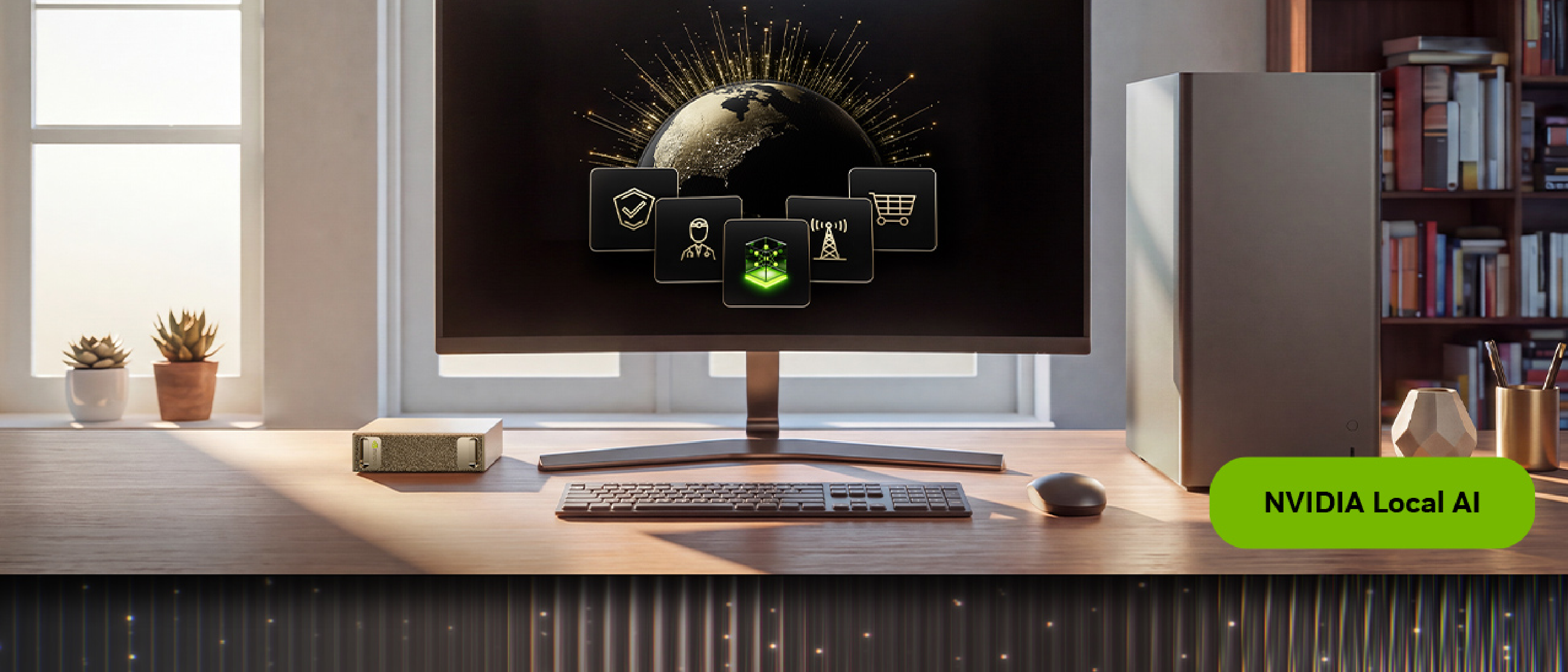
In August, NVIDIA turned its spotlight on the growing demand for local AI—the ability to run sophisticated models on‑premises rather than in the cloud. The company’s “Local AI” blog series, amplified through the NVIDIA RTX Spark and NVIDIA Workstation social channels, showcases a tightly knit ecosystem of partners, hardware OEMs, and open‑source tools.
At the heart of the campaign are two technical pillars:
- Nemotron 3.5 Lightning, a 30‑billion‑parameter Mixture‑of‑Experts (MoE) model designed for agentic workloads.
- NeMo Switchyard, an open‑source routing library that dynamically selects the optimal model for each sub‑task, balancing accuracy, latency, and cost.
Together, they aim to democratize high‑performance AI, allowing developers to fine‑tune, quantize, and deploy models on everything from a consumer RTX‑powered PC to a data‑center‑grade DGX Spark.
Deep Dive into Nemotron 3.5 Lightning
Architecture and Performance
Nemotron 3.5 Lightning is built on a Mixture‑of‑Experts architecture, which partitions the model into multiple expert sub‑networks. During inference, only a subset of experts processes each token, dramatically reducing compute while preserving model capacity. NVIDIA reports four‑times faster token generation and a 30 % reduction in time‑to‑completion compared with other open 30B models.
Key performance metrics:
- Throughput: Up to 1,200 tokens/second on an RTX 4090, scaling linearly across multi‑GPU configurations.
- Latency: Sub‑50 ms per token on DGX Station with NVFP4 precision.
- Cost Efficiency: When paired with the NeMo Switchyard, overall benchmark cost drops to roughly one‑third of the Opus 4.8 baseline.
Open Weights and Customization
All weights are released under an open license, enabling developers to fine‑tune the model for niche domains. Example use cases include:
- Writing assistance: Tailor tone, style, and formatting for emails, reports, or creative prose.
- Domain specialization: Train on photography metadata, gaming mechanics, or 3D design pipelines to improve relevance.
- Code generation: Align output with preferred frameworks, testing conventions, or language standards.
Deployment Flexibility
Nemotron 3.5 Lightning ships in NVFP4 and GGUF formats, ensuring compatibility with a wide range of local deployment tools:
| Tool / Platform | Supported Formats | Typical Use‑Case |
|---|---|---|
| vLLM | NVFP4 | High‑throughput serving |
| Ollama | GGUF | Desktop‑first experimentation |
| llama.cpp | GGUF | Edge devices and low‑resource environments |
| LM Studio | NVFP4 | Interactive fine‑tuning |
| Unsloth Studio | Quantized GGUF | Ultra‑lightweight inference on laptops |
Hardware support spans the entire NVIDIA stack: RTX PCs, DGX Spark, OEM‑branded GB10 systems, and edge‑focused Jetson modules. The model can also be accessed as a NVIDIA NIM microservice via the Open Router or build.nvidia.com, giving developers a cloud‑fallback when local resources are insufficient.
NeMo Switchyard: The Routing Engine for Multi‑Model Workflows
Core Functionality
NeMo Switchyard is an open‑source library that abstracts the complexity of model orchestration. Instead of hard‑coding a single model for an entire pipeline, Switchyard evaluates each sub‑task (e.g., retrieval, reasoning, generation) and routes it to the model that offers the best trade‑off between accuracy, speed, and cost.
The library integrates with popular inference servers (vLLM, Triton) and supports custom cost functions, allowing enterprises to enforce budget caps or latency SLAs programmatically.
Benchmark Results
Internal benchmarks show that Switchyard reduces the overall cost of completing a mixed‑task benchmark to ≈ 33 % of the cost incurred when using a single, high‑end model (Opus 4.8). This is achieved by:
- Dynamic expert selection: Leveraging smaller, faster models for straightforward steps (e.g., tokenization).
- Cost‑aware scheduling: Switching to quantized variants when the marginal accuracy loss is acceptable.
The source code is publicly available on GitHub: https://github.com/NVIDIA/NeMo-Switchyard .
Community and Ecosystem
Switchyard’s open nature encourages contributions from the broader AI community. Early adopters include:
- Open Router – integrates Switchyard to expose a marketplace of routed AI services.
- Unsloth – uses Switchyard to automatically select the optimal quantized model for a given Jetson device.
By providing a common routing layer, NVIDIA hopes to accelerate the interoperability of open‑source models, reducing vendor lock‑in and fostering a healthier AI ecosystem.
Hardware Ecosystem: From Desktops to Edge
Blackwell‑Based Systems
NVIDIA’s Blackwell architecture underpins a new generation of OEM‑branded workstations and servers. Partners such as Acer, ASUS, Dell Technologies, Exxact, GIGABYTE, HP, Lenovo, MSI, and Supermicro offer pre‑built configurations ranging from compact desktops to rack‑mount data‑center nodes.
Key specifications (typical Blackwell workstation):
- GPU: RTX A6000‑class with Tensor Cores optimized for FP8 and NVFP4.
- CPU: 12‑core Intel Xeon or AMD Threadripper, supporting PCIe 5.0.
- Memory: Up to 256 GB DDR5, with NVMe‑based high‑throughput storage.
These systems are marketed as “AI‑ready” out of the box, pre‑installed with the NVIDIA AI Enterprise suite, and validated for Nemotron 3.5 Lightning workloads.
Edge AI with Jetson
For developers targeting robotics, IoT, or on‑device inference, the Jetson family (Nano, Orin, AGX) provides a low‑power platform that can run quantized versions of Nemotron 3.5 Lightning via Unsloth Studio. NVIDIA’s Jetson AI Lab Tutorials and real‑world project showcases illustrate use‑cases such as:
- Autonomous drone navigation with on‑board reasoning.
- Real‑time video analytics for smart retail.
- Edge‑centric language assistants for industrial equipment.
The synergy between Jetson hardware and Switchyard’s routing logic enables hybrid deployments, where heavy reasoning runs on a nearby workstation while latency‑critical steps execute locally on the edge device.
Industry Impact and Future Outlook
Why It Matters
- Data Sovereignty – Enterprises in regulated sectors (finance, healthcare) can keep sensitive data on‑premises while still leveraging state‑of‑the‑art models.
- Cost Reduction – By combining MoE efficiency with Switchyard’s cost‑aware routing, organizations can achieve comparable performance to cloud‑only solutions at a fraction of the expense.
- Open‑Source Momentum – NVIDIA’s decision to release weights and tooling under permissive licenses accelerates community innovation, echoing trends seen in other open‑source AI projects.
Competitive Landscape
NVIDIA’s open‑source push directly challenges cloud‑centric providers (e
such as AWS Bedrock, Google Vertex AI, and Microsoft Azure AI) by offering a viable on-premises alternative. It also positions NVIDIA as a leader in the open-weight model movement, competing with initiatives like Meta’s Llama, Mistral AI, and Alibaba’s Qwen. The key differentiators here are:
- Performance: Nemotron 3.5 Lightning’s MoE architecture and NVFP4 optimization deliver throughput that rivals or exceeds proprietary models of similar size.
- Ecosystem Integration: The combination of Switchyard, NIM microservices, and OEM hardware creates a turnkey solution for enterprises looking to deploy AI without vendor lock-in.
- Edge-to-Cloud Continuum: NVIDIA’s hardware portfolio (from Jetson to Blackwell) ensures seamless scaling from edge devices to data centers, a capability few competitors can match.
Roadmap and Upcoming Developments
NVIDIA’s August campaign is just the beginning. The company has hinted at several future developments:
- Expanded Model Support: Upcoming releases of Nemotron will include multimodal variants (text + image, text + audio) and larger MoE configurations (e.g., 70B+ parameters).
- Switchyard Enhancements: Planned updates include federated learning support, allowing models to be fine-tuned across distributed devices without centralizing data, and real-time cost optimization for dynamic pricing environments.
- Hardware Innovations: The next generation of Jetson modules (codenamed “Nova”) is expected to bring NPU acceleration for even lower-power edge AI, while Blackwell-based systems will see liquid-cooled variants for high-density data center deployments.
- Community Tools: NVIDIA is developing a visual pipeline builder for Switchyard, enabling non-technical users to design multi-model workflows via drag-and-drop interfaces. Additionally, a model marketplace for fine-tuned Nemotron variants is in the works, allowing developers to monetize their customizations.
Conclusion: A New Era for Local AI
NVIDIA’s August push for local AI represents more than just a product launch—it’s a strategic shift toward democratizing AI infrastructure. By open-sourcing Nemotron 3.5 Lightning and NeMo Switchyard, NVIDIA is empowering developers, startups, and enterprises to build, customize, and deploy AI models on their own terms. The combination of high-performance hardware, flexible deployment tools, and cost-efficient routing addresses the core pain points of cloud dependency: latency, cost, and data privacy.
For the AI community, this initiative signals a maturing ecosystem where open-source models can rival proprietary offerings in both performance and usability. For businesses, it offers a path to sovereign AI, where critical workflows remain under local control without sacrificing cutting-edge capabilities. As NVIDIA continues to expand its hardware and software stack, the line between cloud and local AI will blur, giving rise to a hybrid future where the best of both worlds coexist.
The message is clear: the era of local AI is here, and NVIDIA is leading the charge.
FAQ
1. What is Nemotron 3.5 Lightning, and how does it differ from other open-source models?
Nemotron 3.5 Lightning is a 30-billion-parameter Mixture-of-Experts (MoE) model designed for agentic tasks (e.g., coding, writing, domain-specific reasoning). Unlike traditional dense models, its MoE architecture activates only a subset of parameters per token, delivering 4x faster token generation and 30% faster completion times compared to comparable open models. It also features open weights, allowing fine-tuning for niche use cases, and supports NVFP4/GGUF formats for broad deployment compatibility.
2. How does NeMo Switchyard reduce costs?
NeMo Switchyard dynamically routes sub-tasks to the most cost-effective model in a multi-model workflow. For example, it might use a smaller, quantized model for simple tokenization steps while reserving a larger model for complex reasoning. Internal benchmarks show this approach reduces benchmark completion costs to ~1/3 of using a single high-end model (e.g., Opus 4.8).
3. Can Nemotron 3.5 Lightning run on consumer hardware?
Yes. The model is optimized for NVIDIA RTX PCs (e.g., RTX 4090) and can be deployed via tools like Ollama, llama.cpp, or LM Studio. For edge devices, quantized versions (via Unsloth) run on Jetson modules (e.g., Jetson Orin). For heavier workloads, it scales to DGX Spark, Blackwell-based workstations, or cloud NIM microservices.
4. What are the licensing terms for Nemotron 3.5 Lightning and NeMo Switchyard?
- Nemotron 3.5 Lightning: Released under the NVIDIA Open Model License, which permits commercial use, modification, and redistribution with attribution. Fine-tuned derivatives must retain the same license.
- NeMo Switchyard: Licensed under the Apache 2.0 open-source license, allowing unrestricted use, modification, and commercialization.
5. How do I get started with Nemotron 3.5 Lightning?
- Download the model:
- From NVIDIA’s build.nvidia.com (as a NIM microservice).
- From Open Router or Unsloth Studio .
- Directly from the NVIDIA NGC catalog (for enterprise users).
- Deploy locally:
- Use vLLM for high-throughput serving.
- Use Ollama or LM Studio for desktop experimentation.
- Use llama.cpp for edge devices.
- Fine-tune:
- Follow NVIDIA’s fine-tuning guide for domain adaptation.
- Integrate with Switchyard:
- Clone the GitHub repo and follow the routing tutorial.
6. What hardware do I need to run Nemotron 3.5 Lightning?
| Use Case | Recommended Hardware | Notes |
|---|---|---|
| Consumer PC | RTX 4090, RTX 4080 Super | 24GB+ VRAM for full precision. |
| Workstation | RTX A6000, RTX 6000 Ada | Multi-GPU scaling for higher throughput. |
| Edge Device | Jetson Orin, Jetson AGX | Quantized models via Unsloth. |
| Data Center | DGX Spark, GB10/GB300 Blackwell systems | Optimized for NVFP4/FP8 precision. |
| Cloud | NVIDIA NIM microservice (via Open Router) | Pay-as-you-go inference. |
7. How does NVIDIA’s approach compare to Meta’s Llama or Mistral AI?
| Feature | Nemotron 3.5 Lightning | Llama 3.1 | Mistral Large |
|---|---|---|---|
| Architecture | MoE (30B) | Dense (8B/70B/405B) | Dense (123B) |
| Open Weights | Yes (NVIDIA Open Model License) | Yes (Llama License) | No (API-only) |
| Deployment Tools | vLLM, Ollama, llama.cpp, LM Studio, Unsloth | vLLM, Ollama, llama.cpp | API-only |
| Routing Layer | NeMo Switchyard (open-source) | None | None |
| Hardware Optimization | NVFP4, RTX/Jetson/Blackwell | General-purpose | General-purpose |
| Cost Efficiency | High (MoE + Switchyard) | Medium (dense models) | Low (API costs) |
NVIDIA’s advantage lies in its end-to-end ecosystem: hardware (RTX/Blackwell/Jetson), software (Switchyard, NIM), and deployment tools (vLLM, Unsloth) are all optimized to work together.
8. What are the limitations of Nemotron 3.5 Lightning?
- Memory Requirements: The full 30B model requires ~60GB VRAM for FP16 precision, limiting it to high-end GPUs.
- Fine-Tuning Complexity: MoE models are harder to fine-tune than dense models due to their sparse architecture.
- Multimodal Support: Currently text-only; multimodal variants are planned for future releases.
- Quantization Trade-offs: Aggressive quantization (e.g., 4-bit) may reduce accuracy for complex tasks.
9. How can enterprises benefit from this ecosystem?
- Regulated Industries: Keep sensitive data on-premises while leveraging state-of-the-art AI.
- Cost Savings: Reduce cloud inference costs by up to 70% with Switchyard routing.
- Customization: Fine-tune models for proprietary workflows (e.g., legal, medical, or engineering domains).
- Hybrid Deployments: Combine local and cloud AI for latency-critical applications (e.g., real-time analytics).
10. Where can I learn more?
- Technical Blogs:
- Community:
- Social Media:
Source: Original Article