
Why the Expanded Agent Toolkit Matters
NVIDIA’s announcement at GTC Berlin signals a pivotal shift in how enterprises build and deploy AI agents. The core promise is simple yet powerful: agents that are grounded in company data and trustworthy through strict boundary controls. In practice, this means an AI assistant can answer questions, automate workflows, and make decisions based on the exact datasets an organization owns, without exposing sensitive information or violating governance policies.
The toolkit’s emphasis on no data movement and no workflow disruption directly addresses two long‑standing pain points:
- Data Sovereignty – Companies can keep data on-premises or within their preferred cloud, satisfying regulatory requirements.
- Operational Continuity – Existing pipelines and governance frameworks remain intact, reducing the risk of costly migrations.
These capabilities dovetail with NVIDIA’s broader push into secure AI, as detailed in the recent article on NVIDIA Expands Confidential Computing for Secure AI. By combining confidential computing with the Agent Toolkit, enterprises can guarantee that agents process data in a protected enclave, mitigating insider and external threats.
Technical Breakdown of the Toolkit’s New Components
The expanded toolkit introduces several layers that work together to deliver a robust, data‑centric agent ecosystem.
1. NVIDIA Agent Knowledge Foundation
At the heart of the system is the Knowledge Foundation, which ingests raw company data and transforms it into a structured knowledge graph. Key features include:
- Ontology Generation – Automatically maps entities and relationships across disparate data sources.
- Contextual Retrieval – Enables agents to fetch relevant facts on demand, reducing hallucination risk.
- Governance Hooks – Integrates with existing data catalogs and access controls.
2. CUDA‑X Libraries and Auto‑Ontology
The CUDA‑X stack now includes an Auto‑Ontology library that leverages GPU acceleration to build and query ontologies at scale. Coupled with cuDF, cuGraph, cuML, cuOpt, and cuVS, the toolkit offers:
- High‑throughput Data Processing – GPU‑accelerated ETL pipelines that keep up with real‑time data streams.
- Graph Analytics – Fast traversal of knowledge graphs for inference and recommendation tasks.
- Machine Learning Pipelines – Seamless integration of model training and inference within the same GPU ecosystem.
3. Open Models: Nemotron Retriever & Kumo Family
- Nemotron Retriever – A state‑of‑the‑art retrieval engine that delivers sub‑second search across terabytes of structured and unstructured data. Its integration with the Knowledge Foundation ensures that retrieved documents are contextually relevant.
- Kumo Family – A suite of domain‑specific models:
- Kumo Tabular for structured datasets.
- Kumo Relational for relational databases.
- Kumo Time Series for temporal analytics.
- Kumo Forecast for predictive modeling.
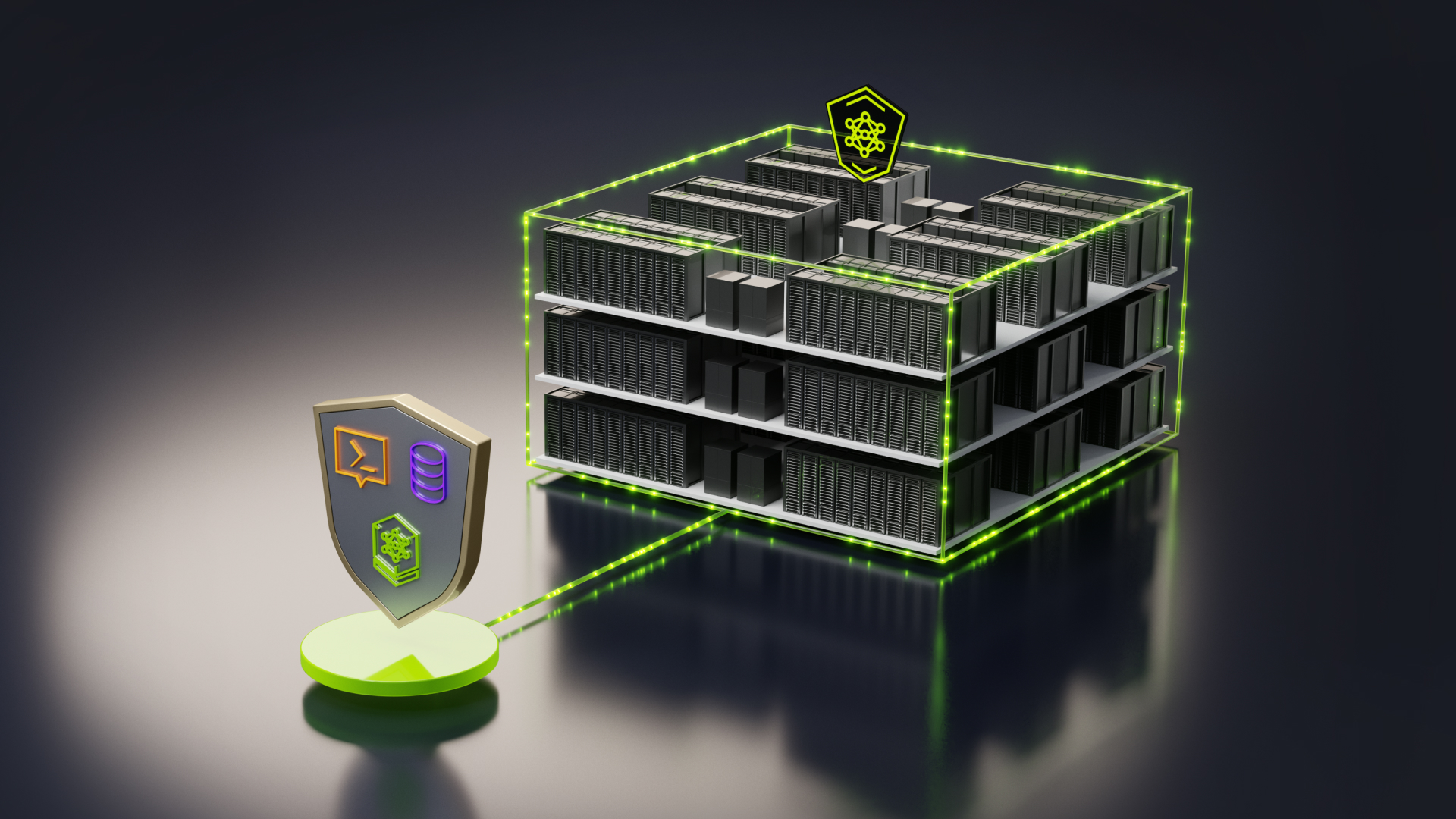
These models are exposed via the NVIDIA Open Shell, which enforces a secure runtime boundary, preventing agents from accessing resources outside their designated scope.
4. Nemo Claw, NeMo Relay, and NeMo Compass
- Nemo Claw provides blueprints for building agents, including a new blueprint focused on optimization. Blueprints encapsulate best practices and reusable components.
- NeMo Relay handles inter‑agent communication, ensuring that agents can collaborate without leaking sensitive data.
- NeMo Compass offers navigation and decision‑making logic, allowing agents to plan multi‑step workflows autonomously.
Enterprise Adoption and Real‑World Use Cases
Several high‑profile organizations have already integrated the toolkit into their operations, demonstrating its versatility across industries.
| Company | Integration Highlights | Impact |
|---|---|---|
| Palantir | Uses the Knowledge Foundation with Palantir Foundry and AIP for supply chain optimization. | Reduced inventory holding costs by 12%. |
| Databricks | Pairs Kumo Anomaly with Genie Ontology for context‑aware anomaly detection. | Accelerated incident response by 30%. |
| Snowflake | Integrates Kumo Engine and Kumo Relational into Snowflake Notebook for predictive analytics. | Improved forecasting accuracy by 18%. |
| Amazon Open Search Service | Deploys Nemotron Retriever to enhance search relevance. | Boosted click‑through rates by 25%. |
| SAP | Fine‑tuned reranker with Nemotron Retriever, achieving 3× speed gains. | Cut query latency from 2.5 s to 0.8 s. |
| ServiceNow | Uses Nemotron Retriever to improve reranking quality, reducing latency by 25%. | Enhanced incident ticket routing efficiency. |
| Zoom | Employs Nemotron Retriever for document understanding and context retrieval in Zoom AI Services. | Increased meeting transcription accuracy by 15%. |
These examples illustrate that the toolkit is not limited to a single industry; it adapts to the unique data architectures and compliance needs of each organization.
Industry Impact: From Secure AI to AI‑First Factories
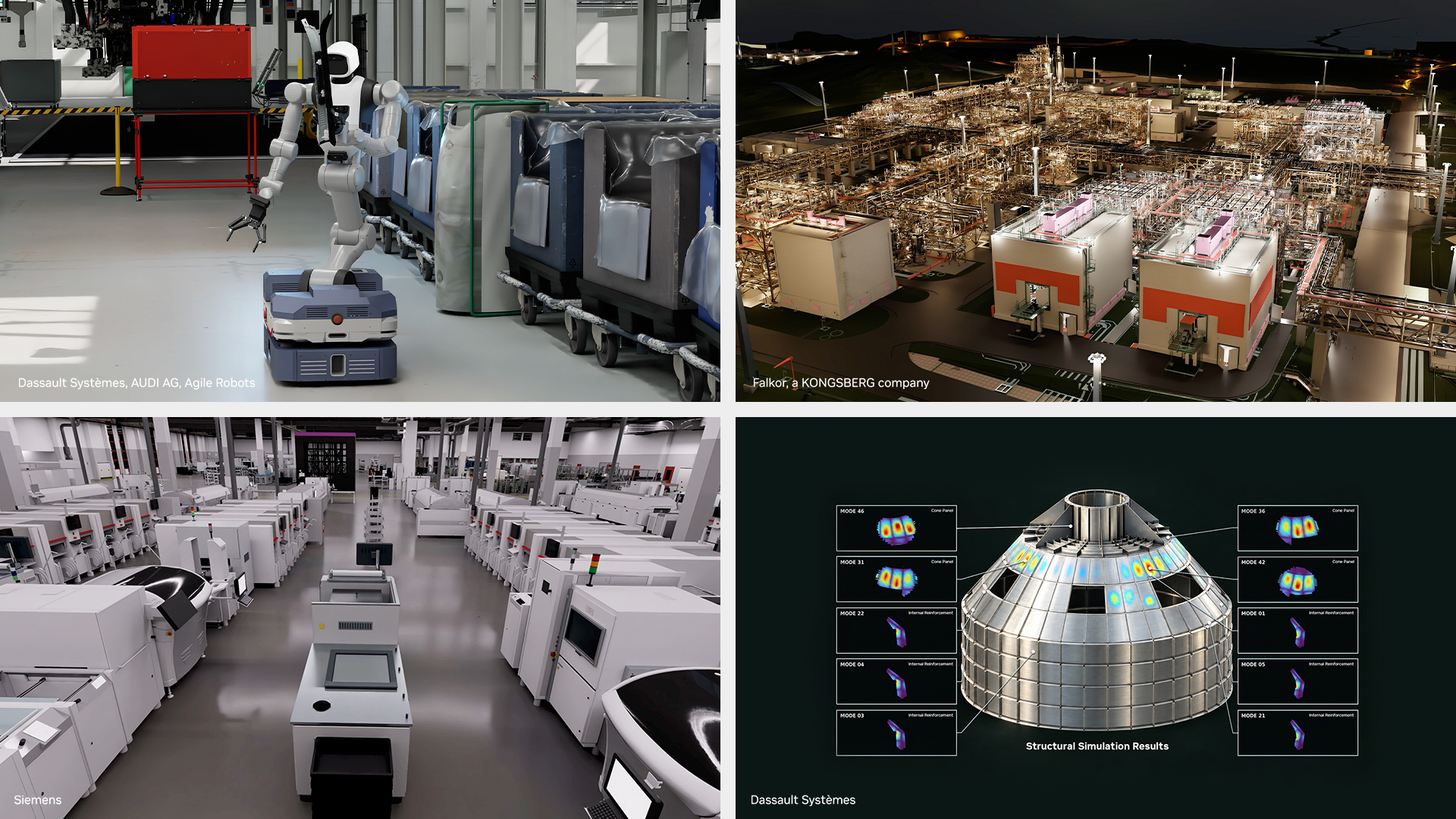
The expanded Agent Toolkit is a catalyst for broader AI adoption, especially in sectors where data sensitivity and regulatory compliance are paramount. For instance, the European Factories Go AI‑First with NVIDIA Stack article highlights how manufacturers are leveraging NVIDIA’s GPU‑accelerated stack to embed AI directly into production lines. The Agent Toolkit’s grounding capabilities enable factories to:
- Automate Quality Control – Agents can analyze sensor data in real time, flag defects, and recommend corrective actions.
- Optimize Supply Chains – By grounding agents in real‑time inventory and logistics data, companies can dynamically adjust procurement strategies.
- Ensure Compliance – Secure runtimes and governance hooks guarantee that AI decisions are auditable and traceable.
Moreover, the toolkit’s open‑source nature, combined with NVIDIA’s commitment to confidential computing, lowers the barrier to entry for smaller enterprises that previously found AI deployment prohibitively complex or risky.
Future Outlook: Scaling Grounded Agents
While the current release already offers a comprehensive set of tools, several trends suggest how the ecosystem will evolve:
- Deeper Integration with Cloud Providers – Partnerships with AWS, Azure, and GCP will likely surface native integrations, simplifying deployment for hybrid environments.
- Enhanced Auto‑ML for Knowledge Graphs – Future iterations may include automated schema evolution, allowing agents to adapt to changing data structures without manual intervention.
- Expanded Model Zoo – Adding domain‑specific models (e.g., medical imaging, legal document analysis) will broaden the toolkit’s applicability.
- Standardization of Agent Contracts – Industry bodies may adopt standards for agent behavior, ensuring interoperability across vendors.
These developments will reinforce the toolkit’s position as the de facto platform for building trustworthy, data‑centric AI agents.
Frequently Asked Questions
What distinguishes NVIDIA’s Agent Toolkit from other AI agent frameworks?
The toolkit uniquely combines GPU‑accelerated data processing, confidential computing, and enterprise‑grade governance. Unlike generic frameworks, it ensures that agents can access and reason over company data without moving it, and that all operations occur within a secure, auditable boundary.
How does the Knowledge Foundation handle data from multiple sources?
It employs an automated ontology generation process that maps entities across disparate datasets—structured, semi‑structured, and unstructured—into a unified graph. This graph is then queried by the Nemotron Retriever to provide contextually relevant answers.
Can existing AI models be integrated into the toolkit?
Yes. The CUDA‑X libraries and NeMo components are designed to be modular. Developers can plug in custom models, provided they adhere to the toolkit’s API contracts and run within the Open Shell’s secure environment.
Is the toolkit compatible with on‑prem GPU clusters?
Absolutely. The entire stack is built on NVIDIA’s GPU ecosystem, making it straightforward to deploy on on‑prem clusters or in private clouds that support CUDA.
What security guarantees does the toolkit provide?
Agents run inside the Open Shell, which enforces strict access controls. Coupled with NVIDIA’s confidential computing initiatives, data remains encrypted in memory, and only authorized code can decrypt it. Additionally, the Knowledge Foundation respects existing governance policies, ensuring compliance with regulations such as GDPR.
The expanded NVIDIA Agent Toolkit marks a significant milestone in enterprise AI, marrying data grounding, security, and performance into a single, cohesive platform. As organizations continue to seek trustworthy AI solutions that respect data sovereignty and governance, the toolkit’s capabilities will likely become a cornerstone of modern AI deployments.
Source: Original Article