



Why SR‑1 Freedom Matters
The announcement of Space Reactor‑1 Freedom (SR‑1) marks a watershed moment for interplanetary travel. For decades, deep‑space missions have been constrained by chemical rockets, which deliver high thrust but poor specific impulse, forcing long transit times and exposing crews to months of cosmic radiation. By placing a compact nuclear reactor at the heart of a spacecraft, NASA is turning the efficiency curve on its head.
- Reduced travel time – Nuclear electric propulsion (NEP) can sustain low‑thrust acceleration for months, potentially cutting the Earth‑to‑Mars window from 7‑9 months to under 5 months. Shorter trips mean less radiation dose for future crews and lower consumable requirements.
- Scalable power – The 20 kW reactor is modest compared to terrestrial plants, yet it provides continuous electricity far beyond what solar arrays can deliver at Mars’ distance from the Sun. This opens the door to high‑power payloads such as advanced scientific instruments, in‑situ resource utilization (ISRU) equipment, and even surface‑to‑orbit communication relays.
- Strategic independence – While the Soviet Union once launched dozens of nuclear reactors for reconnaissance, those were largely classified and short‑lived. SR‑1 is the first openly declared, purpose‑built nuclear spacecraft, signaling a new era of transparent, civilian‑led nuclear spaceflight.
Simon Middleburgh summed up the sentiment: “You wake up to that announcement, and it puts a big smile on your face.” The excitement is not just emotional; it reflects a tangible shift in how humanity can reach farther, faster, and safer.
Technical Breakdown of SR‑1 Freedom
1. The Reactor Core
- Power output: Minimum 20 kilowatts electric (kWe). By comparison, a typical commercial nuclear plant generates about 1 gigawatt, making the SR‑1’s reactor roughly 1/50,000th that size—yet sufficient for deep‑space propulsion.
- Fuel: Enriched uranium, likely in a solid‑core configuration to simplify thermal management and minimize moving parts.
- Location: Mounted at the spacecraft’s tip, the reactor is shielded during launch and only brought online two days after liftoff, ensuring a safe distance from Earth’s atmosphere.
2. Power‑and‑Propulsion System
- NEP Cycle: Fission neutrons heat a working fluid, which drives a turbine‑generator to produce electricity. The electricity powers ion thrusters that ionize xenon (or another noble gas) and accelerate the ions using magnetic fields.
- Thrust profile: Continuous low‑thrust (~0.1 N) over months, delivering a high specific impulse (~10,000 s). This is the opposite of a chemical rocket’s high‑thrust, short‑burn approach.
- Integration status: Program director Steve Sinacore notes, “Procurement of major components is underway, and integration work on the power and propulsion element is advancing steadily.”
3. Thermal Management – The “Fletches”
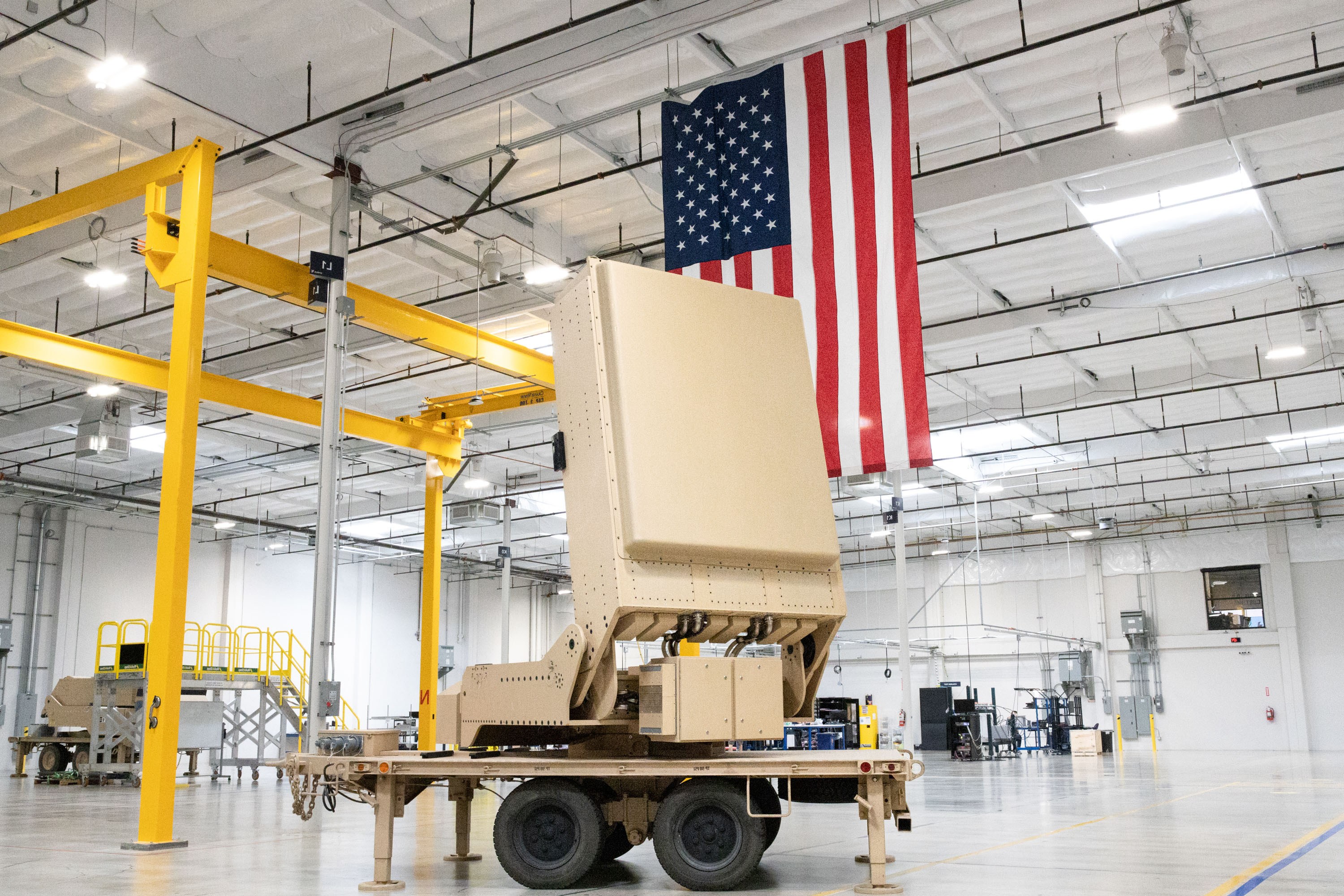
Large radiative fins, nicknamed fletches, extend from the reactor housing. In the vacuum of space, radiation is the only viable heat‑removal method. The fins are coated with high‑emissivity materials to dump excess heat while maintaining the reactor within safe operating temperatures.
4. Safety Architecture
- Launch safety: The reactor remains sub‑critical until the spacecraft is well beyond the atmosphere. Mechanical shock testing (“shaken, rattled, and rolled”) confirms survivability through launch loads.
- Fail‑safe design: Redundant control rods and passive cooling pathways ensure that, even in an anomaly, the reactor will not re‑ignite or overheat.
Industry Impact and Competitive Landscape
A New Business Model for Space Power
The $2 billion investment, led by NASA and monitored by Idaho National Laboratory, creates a supply chain for space‑qualified nuclear components. Companies like Analytical Mechanics Associates (represented by VP Lindsey Holmes) are already positioning themselves as prime contractors for thermal‑control hardware and radiation shielding. This could catalyze a market for space‑grade nuclear power that extends beyond exploration—think lunar bases, asteroid mining, and deep‑space habitats.
Geopolitical Ripple Effects
- China and Russia have announced plans for a lunar surface reactor in the mid‑2030s, targeting a joint lunar base. SR‑1’s success will likely accelerate those timelines as nations vie for the first sustained nuclear power source off‑Earth.
- The Artemis Program aims for a lunar south‑pole outpost by the 2030s. While Artemis relies on solar and fuel‑cell power, a proven NEP system could provide a backup or even replace current power architectures for surface operations.
Lessons from the Canceled DRACO Program
NASA’s previous DRACO (Defense‑Related Advanced Cislunar Operations) effort was scrapped in 2025 due to cost overruns and safety concerns. SR‑1 benefits from DRACO’s hard‑won lessons: tighter cost controls, early safety reviews, and a focus on technology integration rather than developing entirely new reactor concepts. Philip Metzger’s confidence—“I think it’s a very doable technology”—stems from this heritage.
Cross‑Industry Inspiration
The ambition behind SR‑1 mirrors stories covered in the MIT Tech Review Turns Impossible Into Inspiration article, where breakthroughs in seemingly impossible domains become catalysts for broader innovation. Likewise, the hardware challenges of integrating a nuclear reactor into a spacecraft echo the precision engineering discussed in the USB‑C on Your Phone piece, highlighting how miniaturization and thermal design are universal engineering concerns. Even the security protocols surrounding nuclear material in space draw parallels to the Zoom Zero‑Day Exploit discussion on safeguarding critical systems against malicious actors.
Future Outlook: From Uncrewed Probe to Crewed Missions
Near‑Term Milestones
| Milestone | Expected Date |
|---|---|
| Completion of reactor prototype testing | Q2 2027 |
| Full spacecraft integration at Idaho National Lab | Q4 2027 |
| Launch readiness review | Mid 2028 |
| Launch window (Mars transfer) | Late 2028 |
| Mars arrival (flyby or orbital insertion) | 2029 |
Path to Crewed NEP Missions
If SR‑1 demonstrates reliable thrust and power generation, the next logical step is a crew‑rated NEP vehicle. Such a craft could:
- Provide continuous power for life‑support, radiation shielding, and artificial gravity systems.
- Enable fast‑transit trajectories that keep crew exposure below current limits.
- Serve as a propulsion module for deep‑space habitats, reducing dependence on Earth‑based launch infrastructure.
Long‑Term Vision: A Nuclear‑Powered Solar System
Imagine a fleet of NEP‑enabled spacecraft ferrying cargo, habitats, and humans to the asteroid belt, Jupiter’s moons, and beyond. The modular nature of a 20 kW reactor means it can be scaled up (by clustering reactors) or down (for small probes). The technology could also be adapted for lunar surface power plants, providing continuous electricity during the two‑week lunar night—a problem that solar alone cannot solve.
Frequently Asked Questions
Q1: How safe is launching a nuclear reactor into space?
A: The reactor remains sub‑critical during launch and is only activated after the vehicle reaches a safe distance from Earth. Redundant safety systems, extensive vibration testing, and passive cooling ensure that even a launch failure would not result in a nuclear release.
Q2: Why choose 20 kW instead of a larger reactor?
A: The 20 kW figure balances mass, heat‑dissipation capability, and mission requirements. Larger reactors increase complexity, shielding mass, and thermal load, while smaller units would not provide sufficient power for NEP thrust.
Q3: Will SR‑1 carry scientific payloads?
A: Yes. The continuous power budget allows high‑resolution spectrometers, radar sounders, and even small‑scale ISRU experiments that would be impossible on a purely solar‑powered platform.
Q4: How does NEP compare to solar electric propulsion (SEP)?
A: SEP relies on sunlight, which diminishes with distance from the Sun. NEP provides a constant power source regardless of solar intensity, making it ideal for missions to the outer planets or shadowed lunar regions.
Q5: Could the technology be commercialized?
A: The development of space‑qualified nuclear components opens opportunities for private firms to offer power‑as‑a‑service for lunar bases, asteroid mining operations, and deep‑space tourism.
Conclusion
NASA’s SR‑1 Freedom is more than a single mission; it is a proof‑of‑concept that could redefine how humanity traverses the solar system. By marrying a modest yet robust nuclear reactor with electric propulsion, the program promises faster transit times, greater mission flexibility, and a new commercial market for space power. The collaboration between government labs, academia, and industry—exemplified by voices like Simon Middleburgh, Philip Metzger, and Lindsey Holmes—demonstrates a unified commitment to turning what once seemed impossible into a practical reality. As the launch window in late 2028 approaches, the world watches not just a spacecraft, but the dawn of a nuclear‑powered era in space exploration.
…exploration.
Looking Ahead: What to Watch For
- Launch Countdown Milestones – NASA will release a series of technical readiness reviews throughout 2027, culminating in a final “Launch Readiness Review” in mid‑2028. Each checkpoint will be streamed live, offering the public a front‑row seat to the final integration of the reactor and propulsion system.
- In‑Space Demonstrations – Before the Mars transfer, a short‑duration orbital test of the NEP system is planned for late 2027. This “SR‑1 Pathfinder” flight will validate thermal‑fins performance, ion‑thruster efficiency, and autonomous reactor start‑up procedures.
- International Policy Dialogue – The United Nations Office for Outer Space Affairs (UNOOSA) has scheduled a special session on “Nuclear Power in Space” for early 2028. NASA’s experience with SR‑1 will shape the emerging regulatory framework governing the launch, operation, and end‑of‑life disposal of nuclear spacecraft.
- Commercial Spin‑offs – Several startups, including LunaPower Systems and AstroThermal, have already announced intent to adapt the fletch‑cooling technology for lunar surface reactors. Keep an eye on partnership announcements that could turn SR‑1’s hardware into a product line for off‑world power generation.
Key Takeaways
- First civilian nuclear spacecraft – SR‑1 Freedom marks the debut of an openly declared, purpose‑built nuclear reactor for deep‑space exploration.
- 20 kW electric output – Sufficient to power continuous ion thrusters, delivering high‑specific‑impulse thrust that can shave months off Mars transit times.
- Safety‑first architecture – Reactor activation two days after launch, redundant control rods, and extensive vibration testing mitigate launch‑related risks.
- Strategic catalyst – The $2 billion program is seeding a nascent market for space‑grade nuclear power, with implications for lunar bases, asteroid mining, and future crewed missions.
- Geopolitical ripple – Success will pressure rival space powers to accelerate their own nuclear‑powered projects, potentially reshaping the balance of off‑world capabilities in the 2030s.
References & Further Reading
- NASA, Space Reactor‑1 Freedom Mission Overview, 2026.
- Idaho National Laboratory, SR‑1 Reactor Core Test Results, Technical Report, 2027.
- Middleburgh, S. “Nuclear Propulsion: A New Dawn for Interplanetary Travel,” Journal of Space Policy, March 2026.
- Metzger, P. “Electric Propulsion Systems for Deep‑Space Missions,” Florida Space Institute Whitepaper, 2025.
- United Nations Office for Outer Space Affairs, Guidelines for the Use of Nuclear Power Sources in Space, 2028 draft.
The SR‑1 Freedom mission stands at the crossroads of engineering ambition, scientific curiosity, and international policy. Whether it lands a probe in orbit around Mars or simply proves that a compact nuclear reactor can survive the rigors of launch and deep‑space operation, its legacy will echo through every future venture that seeks to push humanity farther into the cosmos.
Source: Original Article