






What Google Gemini Chat Brings to CarPlay
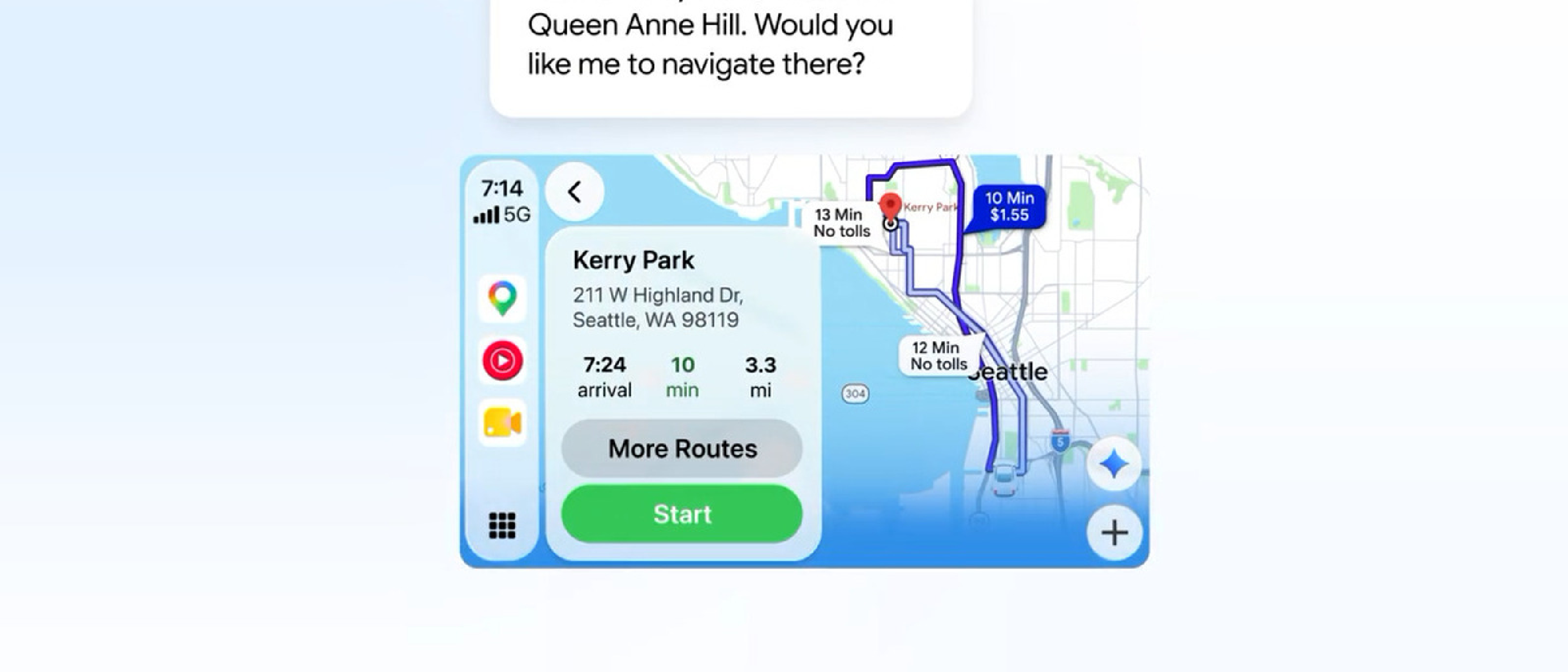
Google’s Gemini conversational AI has been a headline feature across Android devices, but the company is now extending its reach to Apple’s in‑car ecosystem. Starting today, iOS users who connect their iPhone to a CarPlay‑enabled head unit will see a new Gemini icon in the bottom‑right corner of Google Maps. Tapping the icon launches a full‑screen chatbot that can answer natural‑language queries while the vehicle is in motion.
Key capabilities include:
- On‑the‑fly stop discovery – “Find a coffee shop with outdoor seating near my route.”
- Real‑time traffic reporting – “Is there an accident on I‑95 northbound?”
- Place‑specific information – “What are the opening hours for the museum at this address?”
- Multi‑part reasoning – “What park is famous for gorgeous views overlooking the city?”
Google describes the experience as “a conversational way to find stops on‑the‑go, report traffic disruptions, get information about places, and more.” The rollout is global, but the icon may take a few days to appear on a device after the update.
Gemini Personal Intelligence: The Android Auto Precursor
A day before the CarPlay launch, Google introduced Gemini Personal Intelligence for Android Auto users. This variant of Gemini can pull contextual data from Google’s ecosystem—Calendar events, Gmail threads, Photos, and more—to tailor its responses. For example, a driver could ask, “Do I have any meetings near the restaurant I’m heading to?” and Gemini would cross‑reference the calendar and suggest a route that minimizes travel time.
The Personal Intelligence layer improves the model’s reasoning by providing real‑world context, turning generic answers into actionable, personalized guidance. While the CarPlay version currently focuses on navigation‑centric queries, the underlying architecture is identical, suggesting future convergence of features across both platforms.
Technical Breakdown: How the Integration Works
UI Placement and Activation
- Icon location: Bottom‑right corner of the Google Maps UI on CarPlay.
- Activation flow: Tap → Full‑screen chat window → Voice‑enabled input (hands‑free) or typed queries (when parked).
Voice Interaction Model
CarPlay enforces strict hands‑free policies. Gemini leverages Google’s on‑device speech‑to‑text engine, which runs locally on the iPhone to minimize latency and preserve privacy. The audio stream is sent to Google’s cloud inference endpoint only after the user explicitly triggers the query, aligning with Apple’s CarPlay guidelines.
Data Fusion for Personal Intelligence
When Personal Intelligence is enabled, the Gemini backend receives encrypted tokens that reference the user’s Google data. The model then performs a contextual embedding step, merging navigation intent with calendar, email, or photo metadata. This process occurs in a secure enclave on Google’s servers, and the result is a response that feels “aware” of the driver’s schedule.
Safety and Compliance
- No visual distraction: The chat window is designed to be read only when the vehicle is stationary. While driving, the UI collapses to a minimal voice‑only mode.
- Data privacy: Google states that conversational data is not used for ad targeting and is retained for a limited period, consistent with its broader AI privacy policies.
Why It Matters: From Convenience to Competitive Edge
Enhancing the In‑Car Experience
Drivers have long relied on voice assistants for simple commands—“Play music,” “Call home.” Gemini pushes the envelope by handling complex, multi‑step queries that previously required manual interaction with the map UI. This reduces driver distraction and improves route efficiency.
Bridging the Android‑Apple Divide
Google’s decision to bring Gemini to CarPlay signals a strategic shift. Historically, Google’s in‑car offering (Android Auto) has competed directly with Apple’s CarPlay. By delivering a premium AI feature on Apple’s platform, Google positions itself as a cross‑ecosystem service provider, potentially increasing user stickiness across both mobile operating systems.
Data‑Driven Personalization
The Personal Intelligence rollout demonstrates how AI can become a personal co‑pilot, not just a map. By integrating calendar and email data, Gemini can anticipate needs—suggesting departure times, recommending detours to avoid missed appointments, or even surfacing relevant photos of a destination. This level of personalization is a differentiator that could reshape expectations for navigation apps.
Industry Impact: Ripple Effects Across Tech and Automotive
Navigation App Competition
Map providers such as Apple Maps, Waze, and Here will need to respond. Apple already offers Siri suggestions, but those are limited to simple prompts. A Gemini‑style conversational layer could force competitors to invest in large‑language‑model (LLM) capabilities or partner with third‑party AI vendors.
Car Manufacturers and Infotainment Systems
OEMs that embed CarPlay as the default interface now have a ready‑made AI assistant without additional licensing. This may accelerate the adoption of over‑the‑air (OTA) updates that bring AI features to older vehicle models, extending the useful life of existing hardware.
Privacy and Regulation
The blending of personal data with real‑time navigation raises regulatory questions. GDPR‑compliant regions will scrutinize how consent is obtained for data fusion. Google’s approach—opt‑in Personal Intelligence and limited data retention—could become a benchmark for industry best practices.
Related Reading
- For a deeper look at how mobile hardware interfaces affect in‑car experiences, see our analysis of USB‑C on Your Phone: More Than Just Charging and Data .
- The AI‑driven security landscape is evolving; read about the Zoom Annotation Flaw Patched After AI‑Prompt Exploit for insights into how conversational models can be both powerful and vulnerable.
- A related security perspective is offered in Zoom Zero‑Day Exploit: Remote Takeover of iPhone & Mac , highlighting the importance of robust AI safeguards.
Future Outlook: What’s Next for Gemini in the Car?
Expansion to Full‑Vehicle AI
Google’s roadmap hints at deeper integration with vehicle sensors—climate control, seat adjustments, and even predictive maintenance. If Gemini can access CAN‑bus data (with driver permission), it could suggest optimal cabin temperature based on calendar events or recommend service appointments when diagnostics detect an issue.
Cross‑Platform Consistency
We expect the CarPlay experience to inherit Personal Intelligence features in the coming months. Unified AI across Android Auto and CarPlay would give users a consistent conversational experience regardless of device brand.
Third‑Party Skill Ecosystem
Google may open Gemini to third‑party “skills” similar to Alexa’s model, allowing developers to create custom conversational actions for navigation, hospitality, or retail. This could turn Google Maps into a platform for location‑based services, driving new revenue streams.
Potential Challenges
- Latency: Real‑time LLM inference requires fast network connections; rural areas with spotty LTE/5G could experience delays.
- Regulatory pressure: As AI becomes more embedded in driving contexts, regulators may mandate safety certifications for conversational assistants.
- User adoption: Drivers must trust the AI enough to rely on it for critical decisions; early missteps could erode confidence.
Frequently Asked Questions
Q1: Do I need a specific iPhone model to use Gemini on CarPlay?
A: The feature works on any iPhone running iOS 17 or later that supports CarPlay. The update is delivered through the App Store’s Google Maps update.
Q2: Is Gemini Personal Intelligence automatically enabled on CarPlay?
A: No. Personal Intelligence is currently limited to Android Auto. CarPlay users will receive the basic conversational experience first; a future update may add personalization.
Q3: Will my voice recordings be stored by Google?
A: Google states that voice data is processed for the duration of the request and is not used for ad targeting. Recordings are retained for a short period to improve service quality, subject to user privacy settings.
Q4: Can I use Gemini without an internet connection?
A: Basic map rendering works offline, but Gemini’s LLM requires an active internet connection to generate responses. In low‑connectivity scenarios, the chatbot will prompt the user to reconnect.
Q5: How does Gemini handle multi‑language queries?
A: Gemini supports over 30 languages. The model automatically detects the language of the spoken or typed query and responds accordingly, making it useful for international travelers.
Conclusion
Google’s rollout of Gemini chat within Google Maps on CarPlay marks a pivotal moment in the convergence of AI and automotive infotainment. By delivering a conversational interface that can handle nuanced, multi‑step queries—and by laying the groundwork for deeper personalization through Gemini Personal Intelligence—Google is redefining what drivers can expect from navigation software. The move also blurs the traditional competition lines between Android Auto and CarPlay, positioning Google as a cross‑platform AI service provider. As OEMs, regulators, and competitors react, the next few months will reveal whether conversational AI becomes a standard feature in every vehicle or remains a premium differentiator.
Source: Original Article