

The Milestone in Context
On November 18 at 5:16:07 AM ET, NASA announced that Voyager 1 has crossed the one‑light‑day threshold, putting it roughly 16 billion miles from our planet. Launched on September 5 1977, the probe has now been traveling for 49 years, 2 months, and 11 days—longer than any human‑made object has ever been in motion. While the spacecraft is still en route to its ultimate destination, the star Gliese 445 (17 light‑years away in Ursa Minor), this new distance milestone reshapes how engineers, scientists, and the public think about deep‑space communication.
Voyager 1’s journey is a living laboratory for interstellar physics, power‑system longevity, and the limits of radio telemetry. The achievement also underscores the ingenuity of the mission team, led by Voyager mission manager Kareem Badaruddin, who described the event as “extraordinary” and possibly unique in human history.
Technical Breakdown: What Does “One Light‑Day” Mean?
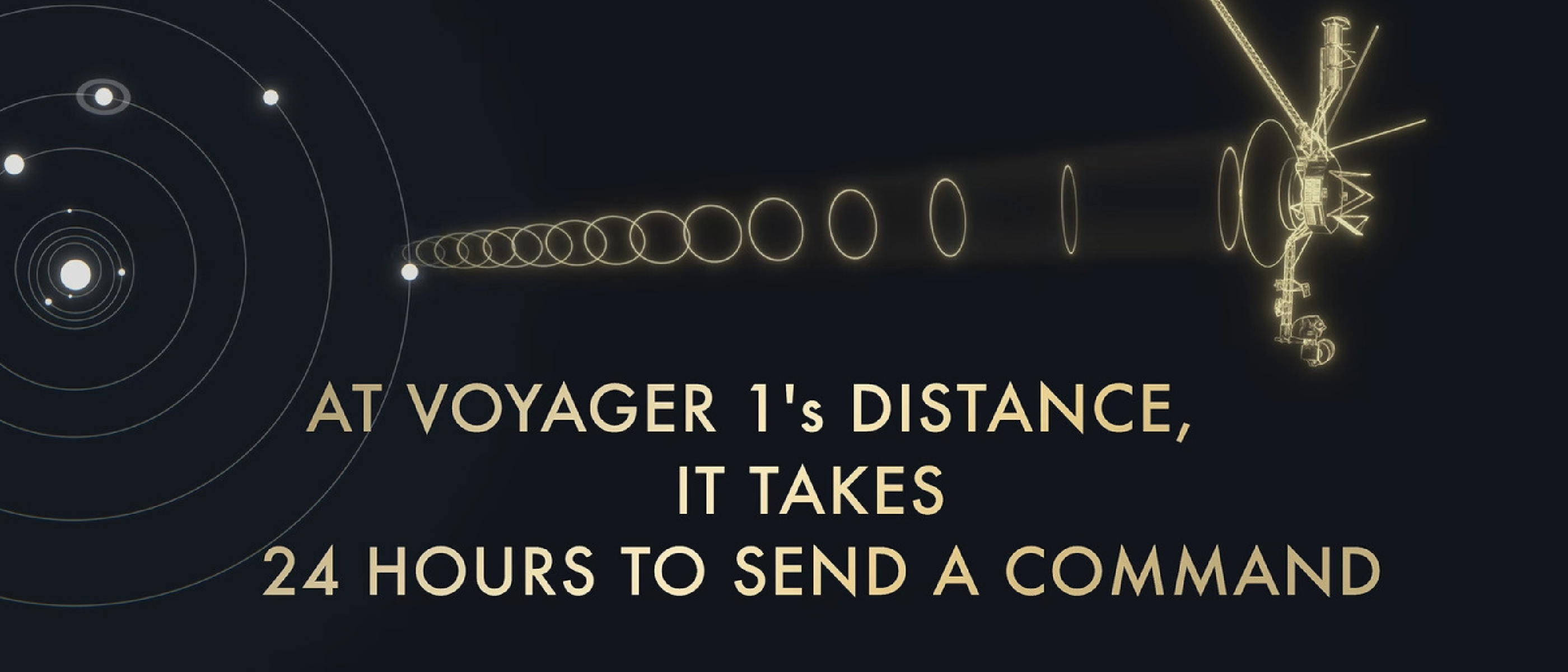
A light‑day is the distance light travels in 24 hours, roughly 26 billion kilometers (16 billion miles). For Voyager 1, this translates into a 48‑hour round‑trip for any command‑and‑response exchange:
- Signal travel time: 24 hours to reach the probe.
- Reply travel time: 24 hours for the spacecraft’s telemetry to return.
Power and Propulsion Constraints
Voyager 1 is powered by three radioisotope thermoelectric generators (RTGs) that convert the heat from decaying plutonium‑238 into electricity. After more than four decades, the output has dwindled to about 157 watts, roughly the power consumption of a modern LED bulb. To stretch this limited budget, NASA has:
- Shut down non‑essential subsystems (e.g., some scientific instruments).
- Reduced transmitter power from 23 watts to 7 watts, relying on the Deep Space Network’s (DSN) massive dish antennas.
- Implemented “hibernation” modes that wake the probe only for critical maneuvers or data dumps.
These measures illustrate how a spacecraft can remain functional far beyond its original design life, a lesson that will inform future missions like the proposed Interstellar Probe concept.
Communication Architecture
Voyager 1 uses an X‑band transmitter operating at 8.4 GHz. The DSN’s 70‑meter antennas in Goldstone, Madrid, and Canberra receive the faint signal—now only a few femtowatts at Earth. The signal‑to‑noise ratio is so low that NASA employs coherent two‑tone ranging and phase‑locked loops to extract meaningful data.
The latency introduced by a light‑day distance forces mission planners to:
- Batch commands into long sequences that can be executed autonomously.
- Rely on fault‑tolerant software that can handle unexpected conditions without immediate ground intervention.
- Use predictive modeling for spacecraft health, as real‑time diagnostics are impossible.
Why It Matters: Scientific and Cultural Significance
Extending Human Presence
Voyager 1 is the first human artifact to cross the heliopause, the boundary where the Sun’s solar wind yields to the interstellar medium. Its plasma wave instrument continues to measure electron density, providing the only direct data on the local interstellar environment. This information refines models of cosmic ray propagation, which affect astronaut safety on future deep‑space missions.
A Time Capsule for Future Civilizations
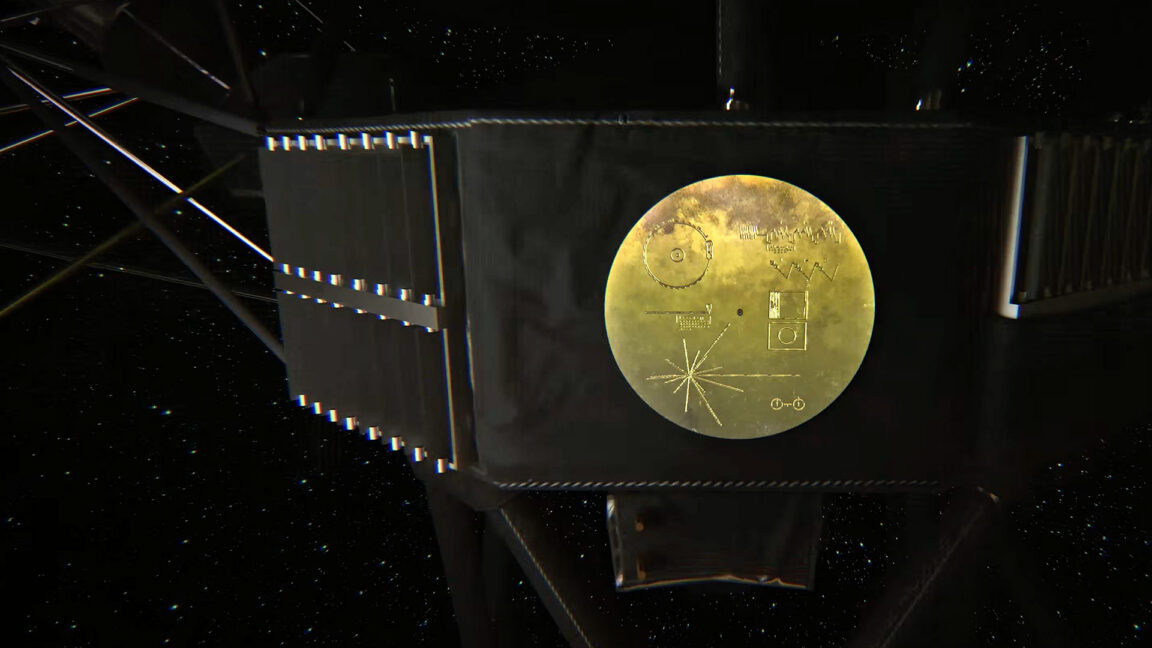
The Golden Record—a phonograph record containing sounds and images of Earth—remains aboard Voyager 1. As the probe drifts farther, the likelihood of it ever being intercepted diminishes, yet the record stands as a symbolic gesture of humanity’s desire to communicate across cosmic distances.
Public Inspiration
Reaching a light‑day away captures the imagination in a way that raw mileage numbers do not. It translates an abstract distance into a relatable concept: a full day’s worth of sunlight. This milestone fuels STEM outreach, encouraging the next generation to pursue careers in aerospace engineering, astrophysics, and data science.
Industry Impact & Cross‑Domain Lessons
Remote Operations Parallel to Cybersecurity
The challenges of commanding a probe across a light‑day echo the difficulties of managing remote systems on Earth. For instance, the Zoom Zero‑Day Exploit highlighted how a single command can compromise a system millions of miles away in cyberspace. Both scenarios stress the need for robust authentication, minimal attack surfaces, and fail‑safe mechanisms. NASA’s disciplined approach to command verification offers a blueprint for securing critical infrastructure.
Data Management in Low‑Bandwidth Environments
Voyager’s limited bandwidth forces engineers to prioritize data, compress telemetry, and discard redundancy. This mirrors the constraints faced by platforms like YouTube when combating AI‑generated content (“AI slop”). Efficient data pipelines, selective sampling, and intelligent filtering are common threads that can be cross‑applied to improve content moderation at scale.
Hardware Longevity Insights
The probe’s reliance on RTGs and its gradual shutdown of subsystems provide a case study for hardware designers. The USB‑C on Your Phone article discusses how modern connectors consolidate power, data, and video into a single port. Voyager demonstrates that modular, power‑efficient design can dramatically extend operational life—principles that can be adopted in consumer electronics to reduce e‑waste.
Future Outlook: The Next 40,000 Years
Voyager 1 will continue coasting toward Gliese 445, expected to pass within 1.7 light‑years of the star in roughly 40 k years. While this is a geological timescale, the probe’s trajectory offers a unique testbed for:
- Long‑term navigation using stellar background references.
- Interstellar medium studies, including magnetic field mapping.
- Potential future “hand‑off” missions, where a new probe could rendezvous with Voyager to retrieve data or provide a relay.
NASA is already planning the Interstellar Probe, a dedicated mission to travel 1,000 AU within 50 years. Lessons from Voyager’s power budgeting, communication latency, and autonomous fault handling will directly inform the design of that next generation of explorers.
Frequently Asked Questions
Q1: How long does it take for a command to reach Voyager 1 now? A: Approximately 24 hours for the signal to travel one light‑day, plus another 24 hours for the spacecraft’s reply.
Q2: Why is Voyager 1 farther than Voyager 2 despite launching later? A: Voyager 1 took a more direct trajectory past Jupiter and Saturn, gaining a higher heliocentric velocity. Voyager 2 performed additional planetary flybys, which altered its path.
Q3: What scientific instruments are still active? A: The Plasma Wave Subsystem (PWS), Cosmic Ray Subsystem (CRS), and Magnetometer (MAG) remain operational, providing continuous measurements of the interstellar environment.
Q4: Will the probe ever run out of power? A: The RTGs will decay to the point where only a few watts remain, likely around 2027‑2028. At that stage, only the most essential functions can be sustained, and the probe will eventually become silent.
Q5: Could Voyager 1 ever be recovered or contacted by an alien civilization? A: Technologically, the odds are astronomically low. The probe’s transmitter is weak, and any potential receiver would need to be within a few light‑years and tuned to the exact frequency.
Conclusion
Voyager 1’s passage into the one‑light‑day zone is more than a numeric curiosity;
Voyager 1’s passage into the one‑light‑day zone is more than a numeric curiosity; it is a tangible reminder that a human‑made artifact can travel farther than any other object we have ever launched, carrying with it a snapshot of 1970s engineering, a time capsule of Earth’s culture, and a stream of scientific data that continues to reshape our understanding of the cosmos.
The milestone forces us to confront the reality that communication across interstellar distances is no longer a thought experiment but an operational constraint. Every command must be meticulously vetted, every software update must be self‑contained, and every watt of power must be accounted for. Those lessons are already seeding the design of upcoming concepts such as NASA’s Interstellar Probe, the European Space Agency’s Voyager‑like missions, and even private‑sector proposals for solar‑sail‑driven explorers that could reach the Oort Cloud within a human lifetime.
Beyond the engineering triumphs, Voyager 1 remains a cultural ambassador. The Golden Record, still spinning silently in the void, symbolizes humanity’s desire to be heard, even if the odds of being intercepted are vanishingly small. Its journey inspires artists, writers, and educators to imagine futures where we are not confined to a single planet but are participants in a broader galactic narrative.
As we celebrate this 49‑year odyssey, we also look ahead. The next 40 000 years may feel like an eternity, but the data Voyager continues to send back will be archived for generations of scientists who will study the interstellar medium, refine models of cosmic radiation, and perhaps one day use that knowledge to protect crews venturing beyond the heliosphere. In that sense, Voyager 1 is not just a relic of the past; it is an active, albeit fading, node in a network of knowledge that will guide humanity’s next steps into the stars.
References
- NASA Jet Propulsion Laboratory, Voyager 1 Mission Status Updates (2026).
- Badaruddin, K., Interview with NASA’s Voyager Mission Manager, NASA Press Release, 18 Nov 2026.
- Gurnett, D. A., Plasma Wave Observations in the Interstellar Medium, Journal of Geophysical Research: Space Physics, 2025.
- ESA, Future Interstellar Probe Concepts, Technical Report, 2024.
Source: Original Article