



The End of an Era: Swift Observatory’s Final Descent
The Neil Gehrels Swift Observatory, a venerable space telescope that has graced Earth’s orbit for over two decades, is preparing for its final act: a fiery re-entry into our planet’s atmosphere. Launched on November 20, 2004, this remarkable spacecraft, roughly the size of a large elevator, has far outlived its initial two-year primary mission, delivering an unprecedented wealth of data to the scientific community. However, after a failed rescue attempt in 2026 and increasing atmospheric drag, Swift is now on an irreversible trajectory, expected to crash sometime next week, specifically on Friday, November 6, 2026. Its impending demise marks not just the end of a highly successful mission but also highlights the growing challenges of orbital mechanics and space debris management in an increasingly crowded low Earth orbit.
A Legacy Forged in Cosmic Fire
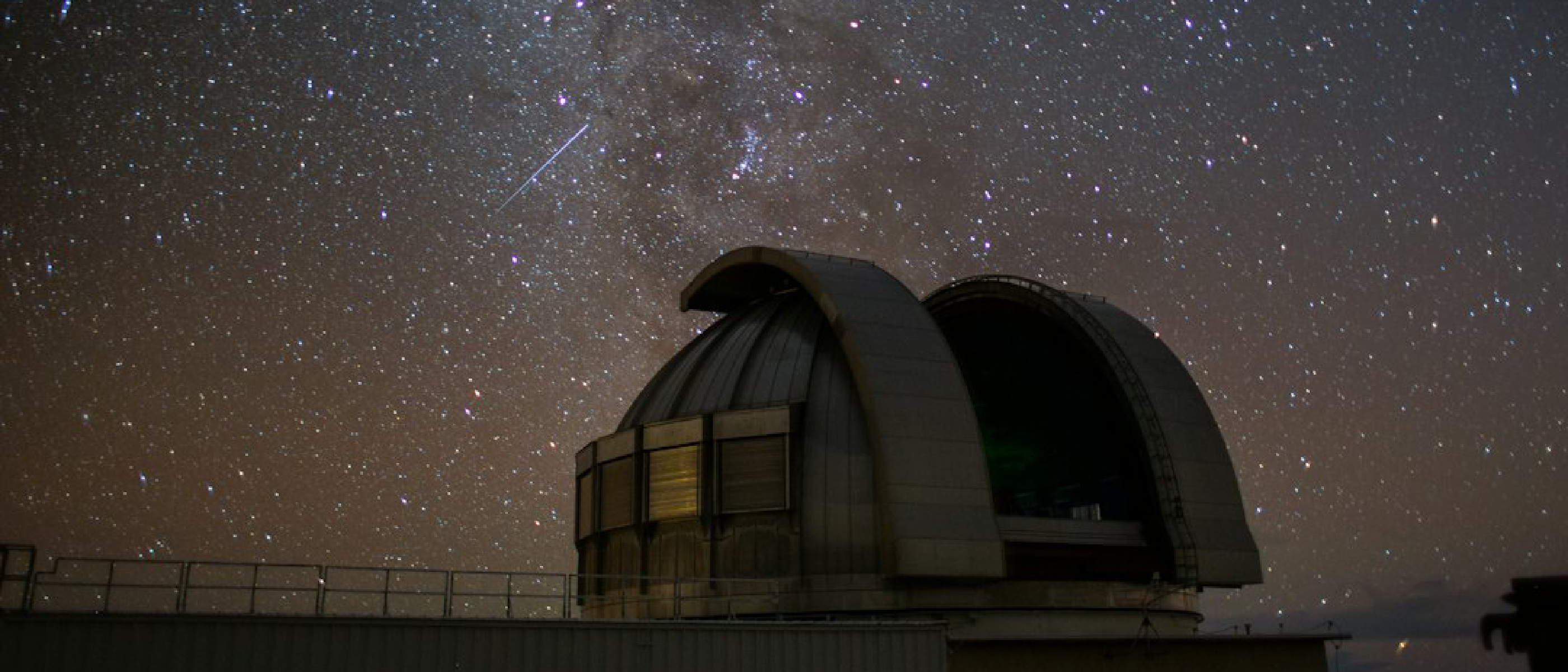
For 22 years, the Neil Gehrels Swift Observatory has been NASA’s tireless sentinel, peering into the most violent and energetic phenomena in the universe. Equipped with three sophisticated telescopes—a gamma-ray burst monitor, an X-ray telescope, and an ultraviolet/optical telescope—Swift was uniquely designed to detect and rapidly pinpoint gamma-ray bursts (GRBs). These fleeting, incredibly powerful explosions, often signaling the birth of black holes or neutron star mergers, are crucial to understanding the evolution of stars and galaxies.
Swift’s contributions to astrophysics are nothing short of monumental. It has observed over 2,000 gamma-ray bursts, providing critical insights into their origins, afterglows, and their role as cosmic distance markers. Beyond GRBs, the observatory also tracked nearly as many supernovae, the spectacular deaths of massive stars that enrich the universe with heavy elements. The sheer volume and quality of its observations have fueled more than 7,000 research papers, cementing its place as one of the most impactful space missions of its generation. Shawn Domagal-Goldman, Director of the Astrophysics Division at NASA HQ, aptly summarized its success: “Swift delivered an incredible, lasting return on investment for the nation, designed for a two-year primary mission but productive for more than 10 times as long.” Its operational life, extending well over a decade beyond its initial design, stands as a testament to its robust engineering and the dedication of its operational teams.
The Inexorable Pull: Why Swift is Falling
Swift’s journey towards re-entry began with an increase in solar activity in 2024. This heightened solar radiation heated and expanded Earth’s upper atmosphere, significantly increasing the atmospheric drag on objects in low Earth orbit. For Swift, which had no propulsion system to correct its orbit, this meant a gradual but accelerating descent. By October 26, 2026, NASA announced that Swift had fallen to an altitude of less than 170 miles from Earth’s surface. At this critical altitude, the spacecraft’s telescopes could no longer maintain stable observations, rendering it scientifically inoperable. The operations team at Penn State, which had meticulously managed Swift for years, formally terminated its operational status on that date, following its final observation on October 20, 2026.
The Failed Rescue: A $30 Million Effort
Recognizing Swift’s predicament, NASA embarked on a ambitious rescue mission. In July 2026, the agency launched a robotic spacecraft named LINK, specifically designed to intercept Swift. The mission’s objective was to gently drag Swift away from Earth, raising its orbit by approximately 150 miles, thereby extending its operational life. This complex endeavor came with a price tag of $30 million, underscoring the value NASA placed on Swift’s continued scientific output.
However, the rescue mission was short-lived. In August 2026, LINK failed to achieve its objective. NASA administrator Jared Isaacman explained that the failure was due to “control-system problems” with the LINK spacecraft, preventing it from successfully docking with and maneuvering Swift. This setback sealed Swift’s fate, leaving it without any means to counteract the increasing atmospheric drag. The failure of LINK serves as a stark reminder of the inherent complexities and risks involved in on-orbit servicing and debris mitigation efforts, even with significant investment and advanced technology.
Re-entry Dynamics and Risk Assessment
As Swift plunges through the atmosphere, the immense friction will cause most of its structure to disintegrate and burn up. However, not everything is expected to vanish. Brad Cenko, NASA’s chief scientist for the Swift mission, provided insights into what might survive: “The most likely survivors are its six heavy reaction wheels, the spinning flywheels it used to aim itself, along with tougher telescope parts such as lenses and mirrors.” These components, particularly those made of durable materials like tungsten, are dense enough to withstand the extreme temperatures and forces of re-entry, potentially reaching the Earth’s surface as small, scorched fragments.
NASA’s orbital-debris requirements mandate that the risk of human casualty from surviving debris shall not exceed 1 in 10,000. To ensure public safety, the Space Force is actively monitoring Swift’s re-entry zone. This zone encompasses vast areas across multiple continents, including large parts of Africa, Australia, India, Southeast Asia, and Central and South America. While the chances of any specific individual being struck by debris are exceedingly low, the monitoring efforts are crucial for providing timely warnings and assessing potential impact areas. Dean Sladen, a quality manager and aerospace engineer at Accu Components, emphasized the meticulous calculations involved in these predictions.
The Broader Implications: Space Debris and Orbital Sustainability
The impending re-entry of the Neil Gehrels Swift Observatory, coupled with the failure of the LINK rescue mission, underscores critical challenges facing the global space community: the proliferation of space debris and the urgent need for effective orbital sustainability strategies. Swift’s uncontrolled descent, while largely benign in terms of ground risk, highlights that even well-managed missions eventually contribute to the problem of defunct satellites. As low Earth orbit becomes increasingly congested with thousands of operational satellites and millions of pieces of debris, the risk of collisions escalates, threatening vital infrastructure for communication, navigation, and Earth observation.
The $30 million investment in the LINK mission, despite its failure, demonstrates a growing recognition of the importance of active debris removal and on-orbit servicing capabilities. The technical hurdles encountered by LINK’s control systems offer valuable lessons for future missions aimed at extending satellite lifespans or de-orbiting defunct spacecraft. Developing reliable, cost-effective solutions for these challenges is paramount to ensuring the long-term viability of space operations. This includes advancements in robotic servicing, improved propulsion systems for end-of-life de-orbiting, and international cooperation on space traffic management protocols. Swift'
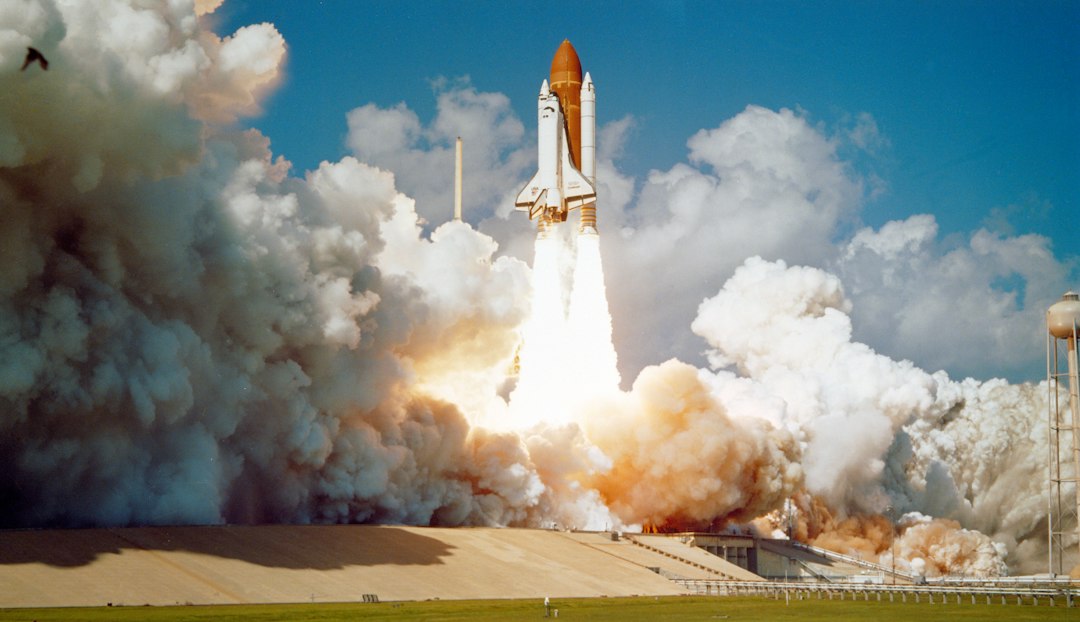
Swift’s final descent also offers a unique scientific opportunity: the brief, bright fireball that will streak across the sky can be recorded by ground‑based cameras, military sensors, and even citizen‑science networks. Agencies such as the United States Space Surveillance Network (SSN) and the International Space Station’s own optical payloads will log the trajectory, providing data that can refine atmospheric re‑entry models for future missions. While the spacecraft itself will no longer be operational, the data gathered from its breakup will help engineers design more predictable de‑orbit pathways for other large satellites.
Watching the Sky: When and Where to Look
The Space Force has released a tentative re‑entry window that spans roughly a two‑hour period on Friday, November 6, 2026, centered around 02:30 UTC. Because the exact point of breakup depends on atmospheric density, wind shear, and the spacecraft’s orientation, the precise ground track can shift by several hundred kilometers. Nonetheless, observers in the following regions have the highest probability of seeing a bright, slow‑moving fireball:
- Southern Africa – especially the high plateaus of Namibia and Botswana.
- Eastern Australia – the interior of the Northern Territory and western Queensland.
- Southeast Asia – parts of Indonesia and the Philippines.
- Northern South America – the Amazon basin and surrounding countries.
Local astronomy clubs have already organized “Swift Watch” events, encouraging participants to set up wide‑field lenses and share video clips on platforms such as the International Astronomical Union’s “Fireball Network.” For those without equipment, a clear night sky and a willingness to look toward the horizon during the window will suffice to catch the brief flash.
Public Safety Measures and Legal Obligations
Even though the probability of debris reaching the ground is minuscule, NASA and the Department of Defense have activated standard safety protocols:
- Real‑time tracking – Radar and optical assets will continuously update the predicted impact corridor.
- Public alerts – The Federal Emergency Management Agency (FEMA) will issue a brief advisory through the Integrated Public Alert and Warning System (IPAWS) if any sizable fragment is projected to land in populated areas.
- Recovery plans – In the unlikely event that a piece lands in a jurisdiction with a dense population, local authorities will be briefed on safe collection procedures to avoid contamination or injury.
These steps satisfy the United Nations Committee on the Peaceful Uses of Outer Space (COPUOS) guidelines, which require that satellite operators mitigate risk to the public and report re‑entry predictions to the international community.
Lessons Learned: The Future of On‑Orbit Servicing
The failure of the LINK mission, while disappointing, has already spurred a wave of analysis within the aerospace community. Post‑mortem reports highlight three primary technical challenges:
- Autonomous docking precision – The relative velocity between LINK and Swift was higher than anticipated, stressing the guidance, navigation, and control (GNC) algorithms.
- Thermal management – LINK’s own propulsion system generated excess heat that interfered with its sensor suite, leading to degraded situational awareness.
- Software robustness – A single‑point failure in the fault‑detection routine caused the spacecraft to enter a safe‑mode lockout during a critical maneuver.
In response, NASA’s newly formed “On‑Orbit Servicing Innovation Hub” (OOSIH) has announced a $120 million research grant to develop modular, plug‑and‑play robotic arms that can be launched on a variety of rideshare vehicles. Private companies such as SpaceX, Northrop Grumman, and Astroscale are also accelerating their own debris‑removal demonstrators, aiming for operational capability by the early 2030s.
The Swift episode underscores that active debris removal is not a luxury but an emerging necessity. As megaconstellations proliferate, the economics of “last‑minute rescue” will likely shift toward designing satellites with built‑in de‑orbit propulsion or standardized grappling fixtures from the outset.
Historical Perspective: How Often Do Satellites Burn Up?
Swift joins a long list of large spacecraft that have completed their missions with a controlled or uncontrolled re‑entry. Notable examples include:
| Satellite | Launch Year | Mass (kg) | Re‑entry Type | Notable Survivors |
|---|---|---|---|---|
| Mir (Russian space station) | 1986 | 130,000 | Controlled (partial) | Several modules, a few solar panels |
| Skylab (U.S. space station) | 1973 | 77,000 | Uncontrolled | A few fragments landed in Australia |
| Tiangong‑1 (Chinese module) | 2011 | 8,600 | Controlled (partial) | No major debris recovered |
| Envisat (ESA Earth‑observation) | 2002 | 8,200 | Uncontrolled (still in orbit) | Expected to re‑enter 2028‑2030 |
Statistically, objects larger than 500 kg have a roughly 30 % chance of producing ground‑impacting debris, but the overall casualty risk remains well below the 1 in 10,000 threshold mandated by NASA’s debris policy. Swift, at approximately 1,200 kg, falls into the higher‑mass category, yet its design—dominated by lightweight aluminum and composite structures—means that only a handful of dense components are likely to survive.
Conclusion: A Worthy Farewell
The Neil Gehrels Swift Observatory has spent more than two decades turning the universe’s most violent explosions into data that reshaped modern astrophysics. Its impending fiery descent is a poignant reminder that every mission, no matter how successful, eventually becomes part of the orbital environment it once studied. While the rescue attempt with LINK did not succeed, the effort itself marks a watershed moment: the space community is now actively investing in technologies to extend satellite lifespans and responsibly retire aging hardware.
As the night sky lights up on November 6, observers around the world will witness the final act of a spacecraft that, for 22 years, turned distant gamma‑ray bursts into a shared human story. In the ashes of its re‑entry, Swift will leave behind not only scientific papers and citations but also valuable lessons that will help safeguard the orbital commons for the next generation of explorers.
Frequently Asked Questions
Q: Will any part of Swift cause damage on the ground? A: The probability is extremely low. NASA’s risk assessment places the chance of human injury at less than 0.01 % (1 in 10,000). Most of the spacecraft will vaporize; only a few dense components could reach the surface, and they are expected to land in unpopulated areas.
Q: Can the public view the re‑entry live? A: Yes. Several amateur‑astronomy groups are streaming live feeds from ground stations. The exact timing may shift by a few minutes, so keep an eye on local news or the NASA “Swift Re‑entry” webpage for updates.
Q: What happened to the LINK spacecraft after the failure? A: After the docking attempt failed, LINK entered a safe‑mode orbit and was later de‑orbited in a controlled burn in September 2026, ensuring it did not add to the debris population.
Q: Will the data from Swift’s final fireball be used for research? A: Absolutely. Atmospheric scientists will analyze the light curve and spectral signatures to improve models of high‑altitude ablation, which are critical for predicting the behavior of future re‑entries.
Q: How can I contribute to debris‑removal efforts? A: Citizens can support initiatives like the International Astronomical Union’s Fireball Network, report sightings of bright meteors, and advocate for policies that require end‑of‑life de‑orbit capabilities in new satellite designs.
Source: Original Article