





Background: Voyager 2’s Journey Through the Solar System
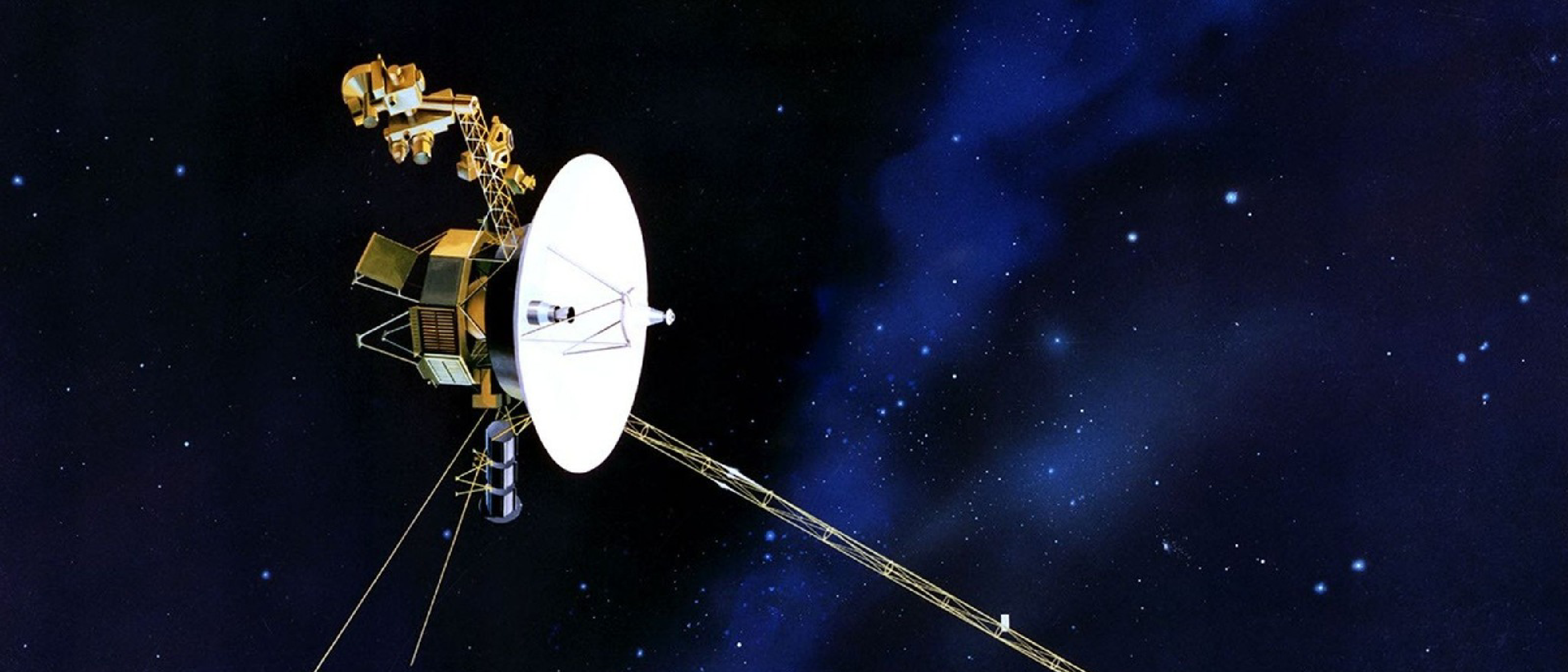
Launched on August 20, 1977, Voyager 2 embarked on a grand tour that would take it past every giant planet in the outer Solar System. Its encounters with Jupiter (1979), Saturn (1980), Uranus (1986), and Neptune (1989) yielded unprecedented data on planetary atmospheres, magnetospheres, and ring systems. After completing its primary mission, Voyager 2 entered interstellar space in 2018, becoming the second human‑made object to do so. Since then, it has been transmitting vital measurements of plasma density, magnetic fields, and cosmic ray fluxes from beyond the heliopause, providing a continuous record of the heliosphere’s boundary.
The probe’s longevity is powered by a Radioisotope Thermoelectric Generator (RTG), which converts heat from decaying plutonium‑238 into electricity. Each year, the RTG loses roughly 4 watts of power as the plutonium decays. This gradual depletion has forced NASA to retire most of Voyager 2’s scientific instruments, leaving only three operational payloads: the magnetometer, the plasma wave instrument, and the cosmic ray subsystem.
The “Big Bang” Software Update: A Strategic Power Shift
In early 2026, NASA’s Jet Propulsion Laboratory (JPL) at Caltech executed a software update dubbed the “Big Bang.” The operation was designed to conserve the remaining RTG output by turning off high‑power systems simultaneously and replacing them with lower‑power alternatives. The update was transmitted across a staggering 13 billion miles, arriving at Voyager 2 after a 12‑hour journey through the vacuum of space.
Key elements of the update included:
- Simultaneous shutdown of non‑essential subsystems to prevent power spikes that could destabilize the RTG’s thermal output.
- Deployment of low‑power alternatives for data handling, attitude control, and thermal regulation.
- Thermal management protocols that ensured the spacecraft’s critical components remained above operational temperature thresholds.
By reconfiguring the spacecraft’s power budget, NASA extended Voyager 2’s operational life by an additional year, allowing continued data collection until 2027.
Technical Breakdown: Power, Instruments, and Thermal Management
Power Budget Reallocation
The RTG’s 2.5 kW peak output has dwindled to roughly 1.5 kW. The “Big Bang” update reallocated this limited resource by:
- Reducing telemetry bandwidth from 8 kbits/s to 2 kbits/s, cutting transmission power by ~70 %.
- Switching to low‑power attitude control modes, which rely on reaction wheels with reduced torque settings.
- Enabling passive thermal control for non‑critical systems, eliminating the need for active heaters.
Instrument Status
At launch, Voyager 2 carried ten scientific instruments. Over the decades, seven have been deactivated to preserve power. The remaining three—magnetometer, plasma wave instrument, and cosmic ray detector—continue to operate under the new power regime. The update also introduced a software‑based data compression algorithm that reduces the volume of transmitted data without compromising scientific integrity.
Thermal Management
Maintaining a stable temperature is critical for the RTG’s efficiency. The update’s thermal management strategy involved:
- Re‑routing heat from high‑power electronics to passive radiators.
- Adjusting the spacecraft’s orientation to optimize solar shading of sensitive components.
- Implementing a predictive thermal model that anticipates temperature fluctuations during deep‑space maneuvers.
These measures ensured that the RTG’s thermoelectric conversion efficiency remained within acceptable limits.
Why It Matters: Extending a Legacy Mission
Voyager 2’s continued operation is more than a technical triumph; it is a scientific boon. The probe’s unique position beyond the heliopause allows it to sample the interstellar medium directly, offering insights into cosmic ray propagation, magnetic field structures, and plasma physics that cannot be replicated by Earth‑orbiting observatories. Each additional year of data enhances our understanding of the heliosphere’s interaction with the interstellar environment, informing models that predict space weather impacts on Earth.
Moreover, the “Big Bang” update demonstrates the feasibility of extending the life of long‑duration missions through software ingenuity. This approach can be applied to future deep‑space probes, reducing the need for costly hardware replacements and enabling more flexible mission architectures.
Industry Impact: Software Updates in Deep Space
The success of the “Big Bang” operation underscores the growing importance of software as a service in space exploration. Traditional mission design has focused on hardware robustness, but modern spacecraft increasingly rely on software to adapt to evolving conditions. This shift has several industry implications:
- Increased demand for high‑reliability software engineering that can operate autonomously over decades.
- Enhanced collaboration between space agencies and commercial software firms, fostering innovation in mission‑critical systems.
- New opportunities for remote software patching, reducing the need for physical interventions and extending mission lifespans.
The update also highlights the necessity of rigorous testing and validation protocols. NASA’s JPL employed extensive simulation environments to model the spacecraft’s response to the new power configuration before deployment, setting a benchmark for future remote updates.
Future Outlook: Lessons for Next‑Generation Missions
The “Big Bang” update provides a roadmap for extending the operational life of future interplanetary probes. Key takeaways include:
- Modular power management: Designing systems with interchangeable power modes allows for dynamic reconfiguration as power budgets shrink.
- Software‑driven instrument prioritization: Implementing intelligent scheduling algorithms can maximize scientific return while conserving energy.
- Predictive thermal modeling: Real‑time thermal analytics enable proactive adjustments to maintain component integrity.
Upcoming missions such as the Europa Clipper and the Dragonfly rotorcraft will benefit from these lessons, potentially incorporating on‑board software that can adapt to unforeseen power constraints or instrument failures.
FAQ
Q: How long will Voyager 2 remain operational after the update?
A: The update grants an additional year, extending operations until 2027, assuming no unforeseen hardware failures.
Q: Will the data quality be affected by the reduced telemetry bandwidth?
A: No. The new compression algorithm preserves scientific fidelity while reducing data volume.
Q: Can similar updates be applied to Voyager 1?
A: Voyager 1’s RTG output is slightly higher, but its instrument suite is more limited. A tailored update could be considered, though it would require separate validation.
Q: Does the update affect the probe’s trajectory?
A: No. The update only reconfigures power usage; no propulsion changes were made.
Q: How does this update compare to previous power‑saving measures?
A: Previous measures involved deactivating instruments; the “Big Bang” update goes further by reconfiguring active systems to lower‑power modes, enabling continued operation of existing instruments.
Related Articles
- YouTube Fights AI Slop with New Monetization Rules
- Zoom Annotation Flaw Patched After AI‑Prompt Exploit
- X Algorithm Update Prioritizes Replies
These articles illustrate how software updates and security patches are reshaping digital platforms, paralleling the strategic updates applied to Voyager 2.
Source: Original Article