



Unprecedented Volume of Lunar Science Data
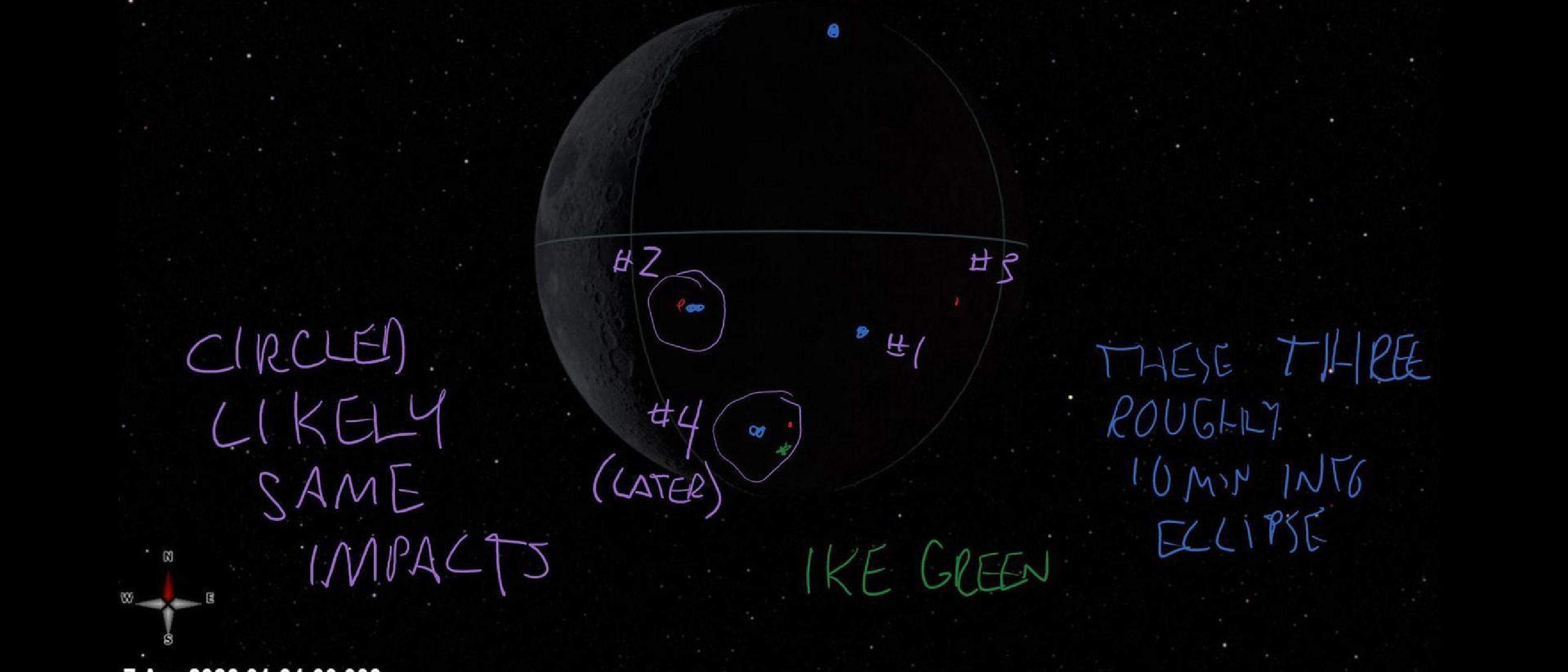
NASA’s recent release of an 800 GB archive from the Artemis II mission marks a watershed moment in public access to spaceflight data. The collection, hosted on the “Artemis II: Sights & Sounds of Science” website, contains more than 11,000 photos and videos, 8.5 hours of audio, and a wealth of crew‑annotated imagery. Among the most striking items is a photograph that pinpoints where the crew observed impact flashes on the Moon’s far side—a phenomenon that has long intrigued scientists and hobbyists alike.
The sheer scale of the archive is noteworthy. For context, the previous largest public release from a NASA lunar mission was the Apollo 17 data set, which totaled roughly 200 GB. Artemis II’s archive quadruples that figure, reflecting both the mission’s advanced instrumentation and NASA’s commitment to open science. The data set is not merely a collection of images; it is a comprehensive record of the mission’s scientific observations, crew interactions, and real‑time decision‑making processes.
Technical Breakdown of the Archive
Data Formats and Storage
The archive is organized into several directories, each dedicated to a specific data type:
- Visual Media: High‑resolution JPEG and RAW images, along with 4K video files captured by the crew’s onboard cameras. The images include annotated overlays that mark impact flash locations, providing a visual context for the audio reports.
- Audio Streams: 8.5 hours of uncompressed WAV files, recorded by the crew’s headsets during flight. These files capture everything from routine telemetry chatter to the moment the crew reported an impact flash to Houston.
- Metadata: JSON files containing timestamps, GPS coordinates, and instrument settings. The metadata is crucial for correlating visual and audio data with specific mission events.
The archive’s structure follows NASA’s standard data packaging guidelines, ensuring that researchers can ingest the files into existing analysis pipelines without extensive preprocessing. The use of open formats (JPEG, WAV, JSON) further lowers the barrier to entry for independent scientists and citizen‑science projects.
Annotation and Impact Flash Detection
One of the most compelling aspects of the archive is the crew‑annotated images. The astronauts used a lightweight annotation tool to overlay markers on the lunar surface, indicating the precise locations of observed impact flashes. These annotations are accompanied by timestamps that align with the audio reports, creating a multi‑modal dataset that can be cross‑referenced.
The impact flashes themselves were detected using a combination of onboard photometric sensors and visual confirmation. The crew’s real‑time reporting to Houston ground control demonstrates the effectiveness of human‑in‑the‑loop monitoring for transient lunar events—a practice that could inform future missions to the Moon and beyond.
Why This Data Matters to the Space Community
Advancing Lunar Science
The impact flash data provides a unique opportunity to study micrometeoroid flux on the lunar surface. By correlating the observed flashes with known meteor streams, scientists can refine models of lunar surface weathering and regolith dynamics. The high‑resolution imagery also offers new insights into the composition of the far‑side terrain, a region that remains less explored than the near side.
Enhancing Mission Operations
The audio logs reveal how crew members communicated complex scientific observations to ground control. By analyzing these logs, mission planners can identify best practices for crew‑ground interaction, especially in scenarios where rapid decision‑making is critical. The data also serves as a training resource for future astronauts, illustrating how to report transient events under mission constraints.
Cross‑Sector Opportunities
The archive’s open‑access nature invites collaboration across disciplines. For example, the audio files are a goldmine for researchers in speech recognition and voice‑AI. The NASA archive’s 8.5 hours of uncompressed audio could be used to train models that detect anomalies in real‑time communication—a capability that has applications in both spaceflight and terrestrial industries. For a deeper dive into voice‑AI challenges, see the recent discussion on how executives view the current state of voice AI: https://ltdeveloperblogs.github.io/posts/these-execs-think-voice-ai-hasnt-reached-its-chatgpt-moment-yet .
Similarly, the annotation process used by the crew mirrors the challenges faced by software developers when integrating user annotations into data pipelines. The Zoom Annotation Flaw article highlights how annotation tools can become security liabilities if not properly vetted: https://ltdeveloperblogs.github.io/posts/zoomsday-hack-uncovered-using-fewer-than-20-ai-prompts . The Artemis II archive demonstrates a robust, secure approach to annotation that could serve as a model for future projects.
Industry Impact and Cross‑Sector Opportunities
Data‑Driven Decision Making
The integration of visual, audio, and metadata streams exemplifies a data‑centric approach to mission analysis. Companies that specialize in data fusion and analytics can leverage the Artemis II archive to develop new tools for real‑time monitoring of space missions. The ability to correlate impact flashes with crew reports in near real‑time could inform the design of autonomous monitoring systems for future deep‑space probes.
Security Considerations
While the archive is publicly available, the process of securely transmitting and storing such large volumes of data remains a critical concern. The Zoom Zero‑Day Exploit article underscores the importance of robust security protocols when handling sensitive data: https://ltdeveloperblogs.github.io/posts/zoom-flaw-let-an-attacker-take-over-your-device-including-iphone-and-mac . NASA’s handling of the Artemis II data demonstrates best practices in data encryption, access control, and audit logging—principles that are equally applicable to corporate data centers and cloud services.
Educational Outreach
The sheer volume and richness of the archive make it an ideal resource for educational institutions. Teachers can use the annotated images to illustrate lunar geology, while students can analyze the audio logs to learn about spacecraft communication protocols. The open‑access nature of the data encourages citizen science initiatives, allowing amateur astronomers to contribute to impact flash catalogs.
Future Outlook: From Data to Discovery
The Artemis II archive is just the beginning. NASA’s long‑term strategy includes making future mission data sets available in near real‑time, enabling a global community of researchers to participate in discovery. The success of this release sets a precedent for subsequent missions, such as Artemis III and the planned lunar Gateway operations.
Moreover, the integration of AI and machine learning into data analysis pipelines will accelerate the extraction of scientific insights. For instance, automated flash detection algorithms could scan the visual data in real time, flagging potential micrometeoroid impacts for immediate crew review. The audio logs could be processed by speech‑to‑text engines to generate searchable transcripts, enhancing data discoverability.
In the broader context of space exploration, open data initiatives like this one foster international collaboration. By lowering the barrier to entry, NASA encourages participation from universities, research labs, and private companies worldwide, accelerating the pace of lunar science and technology development.
FAQ
Q: Where can I download the Artemis II data archive?
A: The archive is hosted on the “Artemis II: Sights & Sounds of Science” website, which can be accessed via NASA’s official portal.
Q: Are the audio files in a format that can be used for voice‑AI research?
A: Yes, the audio is provided in uncompressed WAV format, making it suitable for training and testing voice‑AI models.
Q: How can I contribute to the impact flash catalog?
A: Researchers can submit observations through NASA’s Lunar Impact Flash Database, which accepts data from both professional and amateur sources.
Q: Is the data set compliant with privacy regulations?
A: All personal identifiers have been removed, and the data is released under NASA’s open‑data policy, ensuring compliance with relevant privacy standards.
Q: Will future Artemis missions follow the same open‑data model?
A: NASA has indicated a commitment to open data for upcoming missions, though the exact scope and timing may vary.
Source: Original Article