

Overview – A Watch That Looks the Part, Fails the Platform
When Motorola announced the Moto Watch 2026, expectations were modest but hopeful. The device arrives with a 47 mm aluminum case, stainless‑steel crown, and a Gorilla Glass 3‑protected OLED display—features that would normally place it alongside premium Wear OS competitors. Yet the core of the experience is a stripped‑down Real‑Time Operating System (RTOS) that deliberately avoids Google’s Wear OS ecosystem. Reviewer Daniel Cooper of Engadget summed it up succinctly: “It has the heft of a quality watch, but it isn’t a quality watch.” The result is a smartwatch that feels like a high‑end fashion accessory but behaves like a limited fitness tracker.
In this article we dissect the hardware, the software decision, health‑tracking capabilities, pricing strategy, and the broader implications for the wearable market. We’ll also compare the Moto Watch to other fitness‑focused wearables, such as the Garmin Cirqa and Fitbit Air, and look at how other manufacturers are handling health‑centric wearables like Samsung’s hearing‑aid‑enabled earbuds.
Design, Build Quality, and Physical Appeal
Premium Materials, Everyday Durability
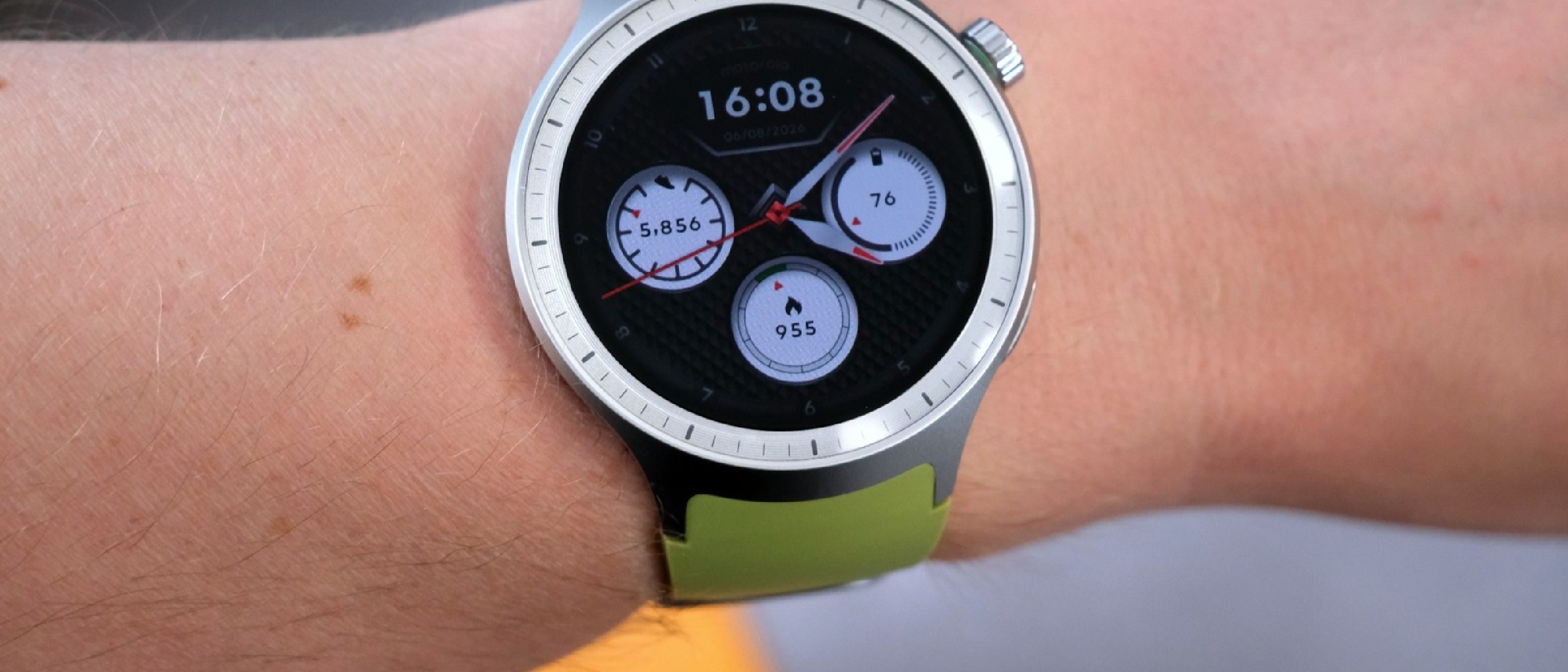
Motorola’s choice of a CNC‑machined aluminum case gives the watch a solid, weighty feel that rivals flagship Wear OS devices. The stainless‑steel crown, engraved with the Motorola logo, adds a tactile premium touch. Coupled with Corning Gorilla Glass 3, the 1.43‑inch round OLED panel resists scratches and minor impacts. The IP68 rating means the watch can survive submersion up to 1 meter for 30 minutes—adequate for most daily activities, though not a true dive watch.
Battery Life That Outlasts the Competition
Battery endurance is where the Moto Watch shines. Motorola advertises up to 13 days of use on a single charge, and in real‑world testing the watch delivered eight days with the always‑on display (AOD) enabled. For users who prioritize long intervals between charges, this is a compelling advantage over many Wear OS models that typically require daily charging.
Accessory Options
The package includes two interchangeable bands: a stainless‑steel link bracelet for formal settings and a green silicone sports strap (Pantone “Herbal Garden”) for workouts. The inclusion of a sport‑oriented band signals Motorola’s intent to market the device as a fitness companion, despite the software limitations we’ll discuss later.
Software Architecture – RTOS vs. Wear OS
Why Motorola Chose an RTOS
Motorola’s partnership with Canadian OEM CE Brands (operating under the Vitalist label) resulted in a hardware platform that runs a lightweight RTOS rather than Google’s Wear OS. The primary motivations appear to be cost reduction and tighter control over the software stack. An RTOS consumes less power, which helps explain the impressive battery life, and it sidesteps the licensing fees associated with Wear OS.
However, the trade-offs are severe. RTOS lacks the app ecosystem, voice assistant integration, and seamless smartphone synchronization that define modern smartwatches. The Moto Watch 2026 is effectively a closed system, incapable of running third-party apps or receiving over-the-air updates that could expand its functionality. This decision locks users into a static experience, one that feels increasingly outdated as competitors iterate on software features.
The Moto Watch Companion App: A Necessary Evil
To interact with the watch beyond basic settings, users must install the Moto Watch app, which requires a Motorola account to function without freezing. The app itself is functional but unpolished, offering little more than a dashboard for health metrics, notification management, and firmware updates. The absence of Google Play Services means no Google Fit integration, no Wear OS tiles, and no ability to respond to messages with voice dictation or canned replies. Even simple tasks like adjusting watch faces require navigating a clunky menu system, a far cry from the fluid experience of Wear OS or watchOS.
Communication and Media: Half-Baked Features
The Moto Watch 2026 includes a built-in speaker and microphone, enabling wrist-based calling when tethered to a smartphone. While this feature works in a pinch, call quality is mediocre, and the lack of noise cancellation makes conversations difficult in noisy environments. The watch also supports local media playback, but with only 4GB of storage, users are limited to a handful of songs or podcasts. There’s no support for streaming services like Spotify or Apple Music, nor is there a way to control playback on a paired phone—further emphasizing the watch’s isolation from the broader smart ecosystem.
Health and Fitness: Polar’s Involvement Doesn’t Save the Day
A Robust Set of Metrics, But Manual Tracking Only
Motorola partnered with Polar to power the Moto Watch’s health and fitness features, a move that initially suggested a focus on accuracy and depth. The watch tracks heart rate, steps, calories burned, sleep stages, recovery, and physical stress levels, presenting the data in a three-ring visual format reminiscent of Apple Watch’s Activity rings. However, the absence of automatic activity detection is a glaring omission. Users must manually start and stop workout modes, which defeats the purpose of a “smart” fitness tracker. For comparison, even budget wearables like the Xiaomi Mi Band 8 can auto-detect activities like running or cycling.
Exercise Modes: Quantity Over Quality
The watch offers an impressive array of 50+ exercise modes, including niche activities like kite flying, tug of war, and darts. While this breadth is amusing, it’s largely superficial. The lack of GPS accuracy (a noted issue in testing) undermines outdoor activities like running or cycling, and the absence of real-time coaching or adaptive training plans limits the watch’s utility for serious athletes. Polar’s algorithms are capable of more, but the RTOS platform restricts their full potential.
Sleep and Stress Tracking: Useful but Incomplete
Sleep tracking is one area where the Moto Watch performs adequately. It monitors sleep stages (light, deep, REM) and provides a recovery score based on heart rate variability (HRV). Stress tracking, powered by HRV data, offers insights into physical strain, but without actionable recommendations or integration with mindfulness apps, the feature feels half-baked. Competitors like Garmin and Fitbit provide guided breathing exercises and stress management tools, which the Moto Watch lacks entirely.
Pricing and Market Positioning: A Misstep?
The $150 Question
At $150, the Moto Watch 2026 is priced competitively against budget fitness trackers like the Fitbit Charge 6 ($160) and mid-range smartwatches like the Amazfit GTR 4 ($200). However, its limitations make it a tough sell. For the same price, the Fitbit Charge 6 offers automatic activity tracking, Google apps, and a more refined companion app. Meanwhile, the Amazfit GTR 4 runs Zepp OS, which, while not as robust as Wear OS, still supports third-party apps and has a more polished interface.
Motorola’s decision to position the Moto Watch as a premium-looking device with budget-level functionality is confusing. The aluminum case and stainless-steel crown suggest a higher price point, but the RTOS software drags the experience down to the level of a $50 fitness band. This disconnect between hardware and software could alienate both fashion-conscious buyers and tech-savvy users.
Who Is This Watch For?
The Moto Watch 2026 might appeal to a narrow audience:
- Fashion-first buyers who prioritize aesthetics over functionality and are content with basic fitness tracking.
- Battery life enthusiasts who value long intervals between charges and can overlook the lack of apps.
- Motorola loyalists who want a branded wearable but don’t need advanced smart features.
However, for most consumers, the watch’s limitations will be dealbreakers. Fitness enthusiasts will find the manual tracking cumbersome, while smartwatch users will miss the app ecosystem and seamless integration with their smartphones.
Comparisons to the Competition
Garmin Cirqa: A True Fitness-First Alternative
Garmin’s Cirqa, priced at $180, is a direct competitor in the fitness-focused wearable space. Unlike the Moto Watch, the Cirqa runs Garmin’s proprietary OS, which offers automatic activity detection, advanced sleep tracking, and a robust app ecosystem. It also includes features like Body Battery energy monitoring and incident detection, which the Moto Watch lacks. While the Cirqa’s design is more utilitarian, its software makes it a far more capable fitness companion.
Fitbit Air: Simplicity with Smarts
Fitbit’s Air, also priced at $150, strikes a better balance between fitness tracking and smart features. It runs Fitbit OS, which supports third-party apps, automatic activity detection, and Google services like Maps and Assistant. The Air’s battery life is shorter (5-7 days), but its software experience is far more polished and user-friendly than the Moto Watch’s RTOS.
Samsung’s Hearing-Aid-Enabled Earbuds: A Different Approach
While not a direct competitor, Samsung’s recent foray into hearing-aid-enabled earbuds highlights an alternative direction for health-focused wearables. These devices combine audio and health monitoring, offering features like heart rate tracking and fall detection. Samsung’s approach underscores the growing trend of integrating health tech into everyday accessories, a space where the Moto Watch’s limitations are even more apparent.
The Broader Implications for the Wearable Market
The RTOS Experiment: A Dead End?
Motorola’s decision to use RTOS instead of Wear OS raises questions about the future of lightweight operating systems in wearables. While RTOS offers power efficiency and cost savings, its lack of flexibility and app support makes it a poor fit for modern smartwatches. The Moto Watch 2026’s struggles suggest that consumers are no longer willing to sacrifice core smart features for battery life or cost savings. Manufacturers may need to rethink their approach to RTOS or risk alienating users.
The Rise of Health-Centric Wearables
The wearable market is increasingly shifting toward health and wellness, with devices like the Apple Watch Series 10 and Samsung Galaxy Watch 7 incorporating advanced sensors for blood pressure, ECG, and blood oxygen monitoring. The Moto Watch’s reliance on Polar’s algorithms is a step in the right direction, but its closed ecosystem limits its potential. Future wearables will need to balance health tracking with smart features to remain competitive.
The Role of White-Label Manufacturers
The Moto Watch 2026 is a product of CE Brands/Vitalist, a white-label manufacturer that licenses the Motorola brand. This model allows companies to enter the wearable market without developing their own hardware or software, but it also risks producing devices that feel generic or outdated. As consumers demand more from their wearables, white-label manufacturers will need to innovate or risk being left behind.
Conclusion: Looks Can Be Deceiving
The Motorola Moto Watch 2026 is a study in contradictions. Its premium hardware and impressive battery life are undermined by a software experience that feels like a relic of the early 2010s. The decision to use RTOS instead of Wear OS is a cost-cutting measure that ultimately backfires, leaving users with a device that looks like a smartwatch but behaves like a glorified fitness band.
For $150, there are better options available. The Fitbit Air offers a more polished software experience, while the Garmin Cirqa provides superior fitness tracking. Even budget wearables like the Xiaomi Mi Band 8 deliver automatic activity detection, a feature conspicuously absent from the Moto Watch.
Motorola’s attempt to blend fashion and function falls short, resulting in a device that satisfies neither camp. The Moto Watch 2026 is a reminder that in the wearable market, software is just as important as hardware. Without it, even the most premium-looking watch is little more than a hollow shell.
FAQ
Q: Does the Moto Watch 2026 support Google Assistant or Siri?
A: No. The watch runs RTOS, which does not support voice assistants like Google Assistant or Siri. It also lacks any form of voice control.
Q: Can I install third-party apps on the Moto Watch 2026?
A: No. The RTOS platform does not support third-party apps, and there is no app store or sideloading capability.
Q: Does the watch support mobile payments (e.g., Google Pay, Apple Pay)?
A: No. The lack of Wear OS or any payment platform integration means the Moto Watch cannot be used for mobile payments.
Q: How accurate is the GPS on the Moto Watch 2026?
A: The watch features dual-band GPS, but reviewer Daniel Cooper noted inconsistent signal performance, particularly in urban areas or under heavy tree cover.
Q: Can I respond to messages or notifications on the watch?
A: No. While the watch can display notifications from a paired smartphone, it does not support canned replies, voice dictation, or any form of interactive response.
Q: Does the Moto Watch 2026 support automatic activity tracking?
A: No. Users must manually start and stop workout modes. The watch cannot auto-detect activities like running, cycling, or walking.
Q: Is the Moto Watch 2026 compatible with iPhones?
A: Yes, but with limited functionality. The watch can pair with iPhones via Bluetooth for notifications and basic features, but it lacks deep integration with iOS (e.g., no Apple Health sync).
Q: How does the Moto Watch 2026 compare to the Apple Watch SE?
A: The Apple Watch SE offers a far superior software experience, including third-party apps, automatic activity tracking, and seamless integration with iOS. However, it requires daily charging and is priced higher ($250+). The Moto Watch’s advantage lies in its battery life and premium design, but its software limitations make it a poor alternative for most users.
Q: Will Motorola release a Wear OS version of the Moto Watch?
A: There is no official confirmation from Motorola or CE Brands about a future Wear OS model. Given the Moto Watch 2026’s RTOS platform, it seems unlikely that a Wear OS version is in development.
Q: Can I use the Moto Watch 2026 without a smartphone?
A: The watch can function independently for basic tasks like timekeeping, fitness tracking, and media playback (if files are stored locally). However, features like notifications, GPS, and wrist-based calling require a paired smartphone.
Source: Original Article