



What the New Facebook Verified Badge Is
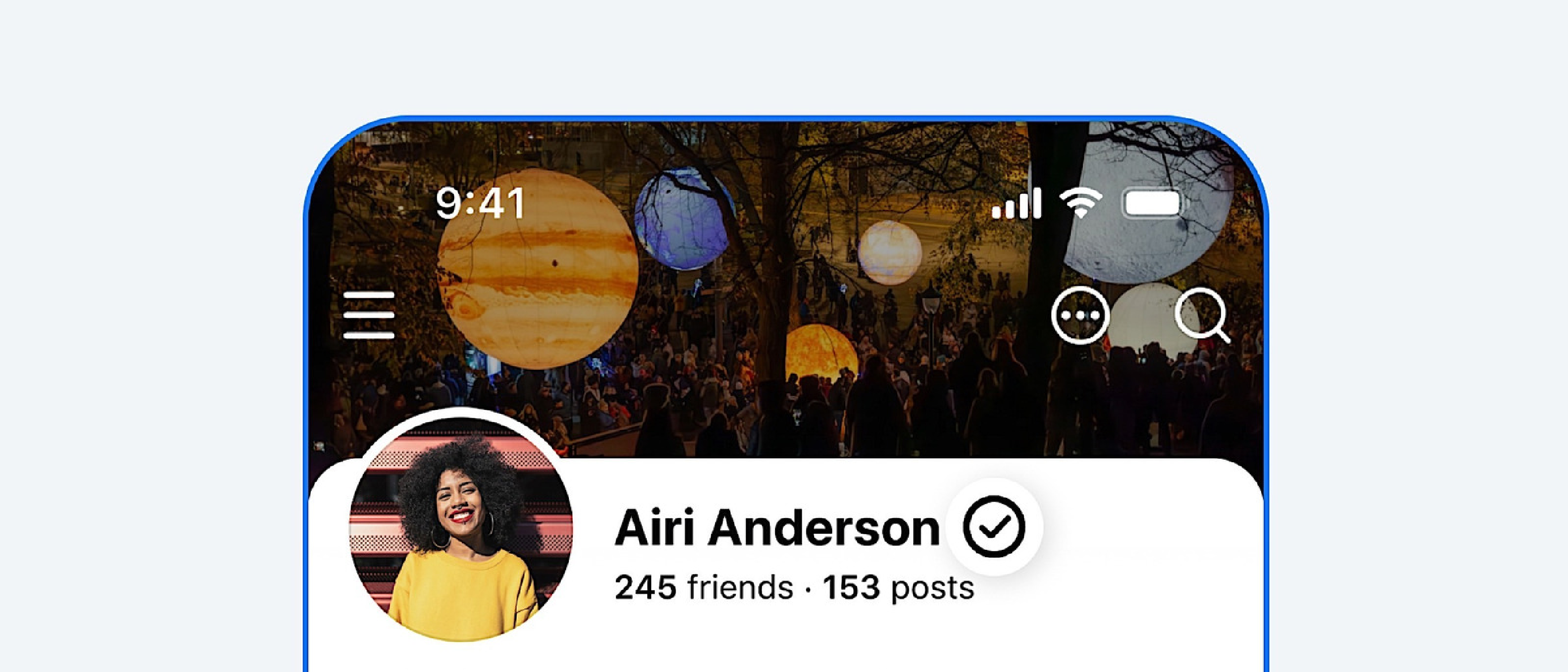
Meta announced a free verification program that places a blue badge next to a user’s name when the platform can confirm the account belongs to a real human. Unlike the legacy “blue check” that implied editorial endorsement, this badge is strictly an identity‑confirmation signal.
Key attributes:
- Eligibility – Users must be 18 + and in good standing with Facebook’s community standards.
- Verification method – A short selfie is captured, then run through facial‑recognition algorithms that compare the image to existing profile photos. Meta claims the whole process takes “a few minutes.”
- Visibility – The badge appears in Marketplace, Dating, and other Facebook services where identity is critical.
- Cost – Completely free, differentiating it from the paid Meta Verified subscription.
The rollout began on Monday in a handful of markets, with a phased global expansion planned over the coming weeks.
How the Facial‑Recognition Workflow Works
The technical backbone of the badge relies on a pipeline that has been refined for years across Meta’s family of apps. Below is a high‑level breakdown:
- Selfie Capture – The user opens the verification flow, aligns their face within an on‑screen frame, and takes a short video or series of photos.
- Liveness Detection – To prevent spoofing with static images, the system checks for micro‑movements (blink, slight head turn) and depth cues.
- Feature Extraction – A convolutional neural network (CNN) extracts facial embeddings—compact vectors that uniquely describe facial geometry.
- Cross‑Reference Matching – The embeddings are compared against the user’s existing profile pictures, cover photos, and any other publicly available images on the account. A similarity threshold determines a match.
- Risk Scoring – Parallel to the biometric check, Meta runs a risk model that evaluates recent activity, account age, and any prior policy violations.
- Badge Issuance – If the biometric match and risk score pass the thresholds, the badge is applied instantly; otherwise, the user receives a prompt to retry or submit additional documentation.
Because the process runs on Meta’s own GPU‑accelerated inference infrastructure, latency stays low, which aligns with the “few minutes” promise. The approach also respects privacy: facial data is stored in an encrypted, purpose‑limited vault and is not used for ad targeting.
Why It Matters: Tackling AI‑Generated Scams and Fake Profiles
The internet is witnessing a surge in AI‑generated personas—deep‑fake avatars, synthetic text‑based bots, and even fully automated scam networks. Facebook, with its billions of monthly active users, is a prime target. The new badge addresses three core threats:
- Impersonation – Bad actors can clone a public figure’s likeness using generative AI and then use that persona to solicit money or spread misinformation. A verified human badge makes it easier for users to spot authentic accounts.
- Marketplace Fraud – Fake sellers often create disposable accounts to post fraudulent listings. By requiring a human‑verified badge for Marketplace interactions, Meta raises the cost of operating such scams. See the related discussion on how verification can improve trust in Marketplace in our post about the Meta’s Seller App Turns Marketplace into Pro Hub .
- Automated Spam – Botnets that generate massive numbers of low‑quality accounts can be throttled when a human badge becomes a prerequisite for certain features (e.g., posting in groups, sending friend requests).
In essence, the badge is a signal layer that augments existing community‑standards enforcement. It does not guarantee trustworthiness—Meta is explicit that the badge is only identity confirmation—but it gives users a concrete cue to assess credibility.
Differentiating the Free Badge from Meta Verified and Legacy Checks
| Feature | Legacy Facebook Badge (pre‑2024) | Meta Verified (paid) | New Free Facebook Verified Badge |
|---|---|---|---|
| Cost | Free (limited rollout) | Subscription (monthly) | Free |
| Purpose | Endorsement & identity | Identity + priority support + blue check | Pure identity confirmation |
| Eligibility | Public figure, brand, notable person | Must meet income/ID criteria | 18+ & good standing |
| Badge Appearance | Blue check next to name | Blue check + “Meta Verified” label | New badge (design varies) |
| Guarantee | Implicit trust signal | Explicit trust & support | No trust guarantee, only identity |
The free badge’s no‑endorsement stance is crucial. Meta wants to avoid the “verified equals trustworthy” misconception that plagued earlier verification programs. By positioning the badge as a technical proof of personhood, the company sidesteps legal liability while still delivering a useful anti‑fraud tool.
Industry Impact and Future Outlook
Competitive Landscape
- TikTok & Shorts – Platforms are doubling down on short‑form video, but they have not yet introduced a comparable human‑verification badge. Meta’s move could pressure rivals to adopt similar identity signals, especially as advertisers demand higher brand‑safe environments.
- YouTube’s AI Policy – Google recently tightened rules around AI‑generated content, as detailed in YouTube Fights AI Slop with New Monetization Rules . Meta’s badge complements that trend by focusing on the source of content rather than the content itself.
- X (formerly Twitter) – The platform’s algorithm update that now prioritizes replies from people you already follow, covered in X Algorithm Update Prioritizes Replies , shows a broader industry shift toward surfacing authentic interactions. A verified human badge fits neatly into that narrative.
Potential Extensions
While we cannot speculate on unreleased features, the current architecture suggests several logical next steps:
- Badge Integration with Ads – Allow verified humans to run ads with a “human‑verified” label, increasing consumer confidence.
- Cross‑Platform Verification – Extend the badge to Instagram and WhatsApp, creating a unified Meta identity ecosystem.
- API Access for Third‑Party Apps – Provide a secure endpoint that partners can query to confirm a user’s badge status, enabling fraud‑prevention services.
Risks and Challenges
- Privacy Concerns – Even with encrypted storage, users may balk at facial‑recognition scans. Transparent data‑handling policies will be essential.
- False Positives/Negatives – Edge cases (e.g., people with facial coverings, lighting issues) could lead to legitimate users being denied the badge, potentially eroding trust.
- Scalability – As the
badge scales globally, Meta must ensure its inference infrastructure can handle billions of daily verifications without latency spikes.
Ethical Considerations and User Trust
Meta’s decision to implement facial recognition—even in a limited, opt-in capacity—raises important ethical questions. While the company emphasizes that facial data is encrypted and not used for ad targeting, concerns persist about:
- Consent and Transparency: Users must fully understand how their biometric data is stored, processed, and protected. Meta’s privacy policy updates must clearly articulate retention periods and deletion protocols.
- Bias in AI Models: Facial recognition algorithms have historically exhibited racial and gender biases. Meta must continuously audit its models to ensure equitable performance across diverse populations.
- Surveillance Creep: Critics argue that even “voluntary” facial recognition normalizes biometric surveillance. Meta must balance fraud prevention with user autonomy, ensuring the badge remains a choice rather than a requirement for platform access.
To mitigate these concerns, Meta could:
- Offer alternative verification methods (e.g., government ID uploads) for users uncomfortable with facial recognition.
- Publish regular transparency reports detailing verification volumes, error rates, and demographic breakdowns.
- Implement a clear appeals process for users denied the badge due to false negatives.
The Immersive Video Feature: A TikTok Challenger
Parallel to the verification badge, Meta is testing an “Immersive Video” experience designed to compete with TikTok’s full-screen, algorithm-driven feed. Key details include:
- User Experience: Upon opening the Facebook app, users are greeted with a vertical, full-screen video feed—similar to TikTok or Instagram Reels. The traditional feed is accessible via an opt-out toggle.
- Content Prioritization: The algorithm surfaces videos based on engagement signals (watch time, likes, shares) and user preferences, rather than chronological order.
- Creator Incentives: While not explicitly stated, the feature likely aims to attract short-form video creators by offering greater visibility and potential monetization opportunities.
- Limitations: Currently unavailable for Pages and Pro Mode accounts, suggesting Meta is initially targeting individual creators and casual users.
Why This Matters
The immersive video push reflects Meta’s broader strategy to reclaim dominance in short-form video, a space where TikTok has outpaced Facebook and Instagram. By integrating full-screen video into the core Facebook experience, Meta hopes to:
- Increase user engagement and time spent on the platform.
- Provide creators with a new avenue for growth, reducing reliance on TikTok.
- Align with shifting user preferences toward video-first content consumption.
However, the feature’s success hinges on:
- Algorithm Quality: Can Meta’s recommendation engine match TikTok’s ability to surface hyper-relevant content?
- Creator Adoption: Will influencers and brands prioritize Facebook over TikTok or YouTube Shorts?
- User Reception: Will long-time Facebook users embrace the change, or will they opt out in favor of the traditional feed?
Conclusion: A Step Forward, But Questions Remain
Meta’s free Facebook Verified badge and Immersive Video feature represent two distinct but complementary efforts to modernize the platform. The verification badge addresses a critical need for identity confirmation in an era of AI-generated fraud, while the immersive video experience aims to revitalize Facebook’s content ecosystem.
Yet, both initiatives face challenges:
- Verification: Balancing fraud prevention with user privacy and ethical concerns will require ongoing transparency and accountability.
- Immersive Video: Competing with TikTok’s entrenched dominance demands not just technical parity but a superior user experience.
For users, the badge offers a tangible way to assess account authenticity, while the immersive video feature provides a fresh, engaging way to consume content. For Meta, these updates are a calculated bet on the future of social media—one where trust and video reign supreme.
As the rollouts progress, the industry will closely watch adoption rates, user feedback, and any unintended consequences. One thing is clear: Meta is not resting on its laurels, and the battle for the next era of social media is well underway.
FAQ
1. How do I get the new Facebook Verified badge?
To obtain the badge, navigate to your Facebook settings and look for the “Verification” option. You’ll be prompted to take a facial recognition selfie, which Meta will cross-check against your existing profile pictures. The process takes a few minutes and is free.
2. Does the badge mean Facebook endorses my account?
No. The badge only confirms your identity as a real human. It does not imply trustworthiness, credibility, or any form of endorsement from Facebook.
3. What if I don’t want to use facial recognition?
Currently, facial recognition is the primary verification method. Meta has not announced alternative options (e.g., government ID uploads), but users uncomfortable with the process can choose not to participate.
4. Where will the badge appear?
The badge will be visible in Marketplace, Dating, and other areas of Facebook where identity confirmation is critical. It may expand to additional features over time.
5. How is this different from Meta Verified?
- Facebook Verified Badge (Free): Confirms identity only; no additional perks.
- Meta Verified (Paid): Offers identity confirmation plus priority support, a blue checkmark, and other premium features.
6. Will the badge protect me from scams?
The badge helps others verify your identity, but it does not guarantee protection from scams. Always exercise caution when interacting with unknown accounts, even if they have a badge.
7. What happens if my verification fails?
If the facial recognition system cannot confirm your identity, you’ll receive a prompt to retry or submit additional documentation. Meta has not detailed the appeals process for denied verifications.
8. Is the Immersive Video feature available to everyone?
No. The feature is currently in a gradual rollout and is not available for Pages or Pro Mode accounts. Users can opt out and return to the traditional feed at any time.
9. Will the badge be available on Instagram or WhatsApp?
Meta has not announced plans to extend the badge to other platforms, but cross-platform verification is a logical future step.
10. How does this affect advertisers?
While not directly tied to advertising, the badge could enhance trust in Marketplace transactions and organic interactions, potentially benefiting advertisers by reducing fraud and improving user confidence.
Source: Original Article