






The Announcement That Set the Industry on Edge
In a joint briefing that drew the attention of investors, analysts, and tech enthusiasts worldwide, Micron Technology and Samsung Electronics confirmed that the global memory shortage will linger for “at least the next couple of years.” The remarks came from Micron’s chief executive, Sanjay Mehrotra, who told investors that demand for the company’s memory products is projected to outstrip supply throughout this period.
The statement was not a mere market update; it was a clear signal that the balance of power in the semiconductor ecosystem is shifting. While memory has always been a commodity with cyclical supply‑demand dynamics, the current imbalance is being driven by a confluence of factors that extend far beyond traditional PC and smartphone markets.
Technical Breakdown: What Types of Memory Are In Short Supply?
High‑Bandwidth Memory (HBM) for AI Workloads
HBM is a stacked‑die memory architecture that delivers massive bandwidth while consuming far less power than conventional DRAM. Its design makes it ideal for training and inference in large‑scale artificial‑intelligence models. Companies such as Nvidia, AMD, and Google’s TPU division rely on HBM to feed their AI accelerators. Micron and Samsung have both ramped up HBM production, but the process is capital‑intensive and limited by wafer‑fab capacity.
Server‑Class DRAM
Server DRAM, typically DDR5 today, powers the memory‑intensive workloads of data centers, cloud providers, and enterprise servers. The shift to cloud‑native applications, real‑time analytics, and AI‑as‑a‑service has caused a surge in demand for high‑capacity, low‑latency DRAM modules. Micron’s B2B sales focus on these modules, and the company has prioritized capacity allocation to meet the needs of hyperscale operators.
Consumer RAM: The Vanishing Segment
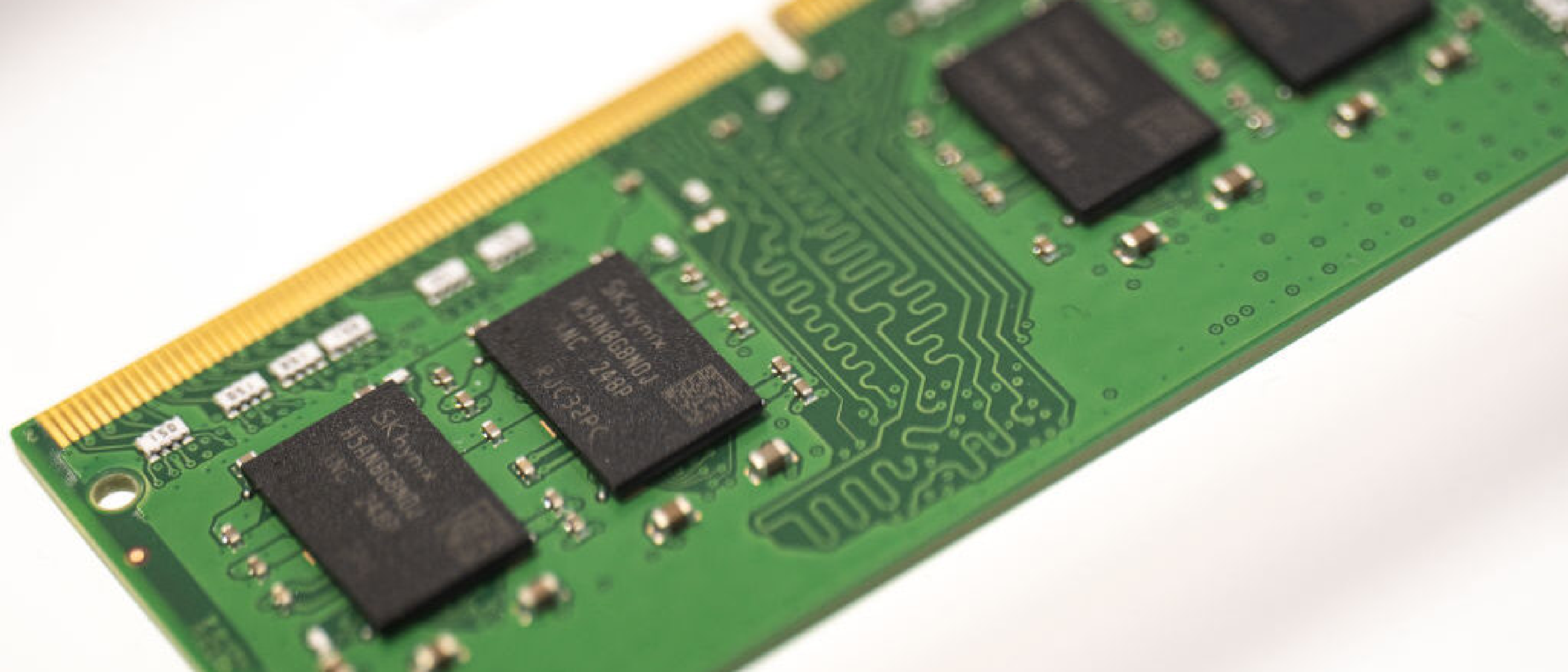
Historically, Micron supplied DDR4/DDR5 modules for desktops, laptops, and gaming rigs. However, the company announced that it has ceased sales of consumer RAM, effectively limiting its availability in the retail market. The decision reflects a strategic reallocation of fab time toward higher‑margin, higher‑growth segments (HBM and server DRAM). As a result, OEMs are forced to source consumer memory from a shrinking pool of suppliers, driving up prices and lead times.
Why AI and Server Demand Are Dominating the Landscape
AI’s Exponential Memory Appetite
Training state‑of‑the‑art language models now requires petabytes of memory bandwidth. Each iteration of a transformer model can consume multiple terabytes of HBM, and the trend is only upward as model sizes double roughly every 12‑18 months. This demand is not limited to hyperscale AI labs; enterprises are integrating AI inference directly into their products, creating a secondary wave of HBM consumption.
Cloud Providers Scaling Out
The cloud market is in the midst of a “memory‑first” expansion. Providers such as AWS, Azure, and Google Cloud are launching instances with ever‑larger memory footprints to support in‑memory databases, real‑time analytics, and AI services. The economics favor allocating the most advanced memory technologies to these high‑value workloads, leaving consumer‑grade memory as a lower priority.
The “Memory‑Centric” Design Paradigm
Modern silicon design increasingly treats memory as a first‑class citizen. Chiplets, interposers, and 2.5‑D packaging rely on high‑bandwidth, low‑latency memory interfaces. This architectural shift means that even traditionally “compute‑only” products now require substantial memory bandwidth, further stretching the supply chain.
Ripple Effects on Consumer Devices
The reallocation of fab capacity has immediate consequences for the consumer market:
- Higher Prices: With fewer manufacturers producing consumer DRAM, OEMs face higher component costs, which translate into pricier laptops, desktops, and gaming consoles.
- Longer Lead Times: Stock shortages mean that retailers may experience backorders, and end‑users could see delayed product launches.
- Reduced Performance Margins: Some device makers may opt for lower‑capacity memory configurations to stay within budget, potentially throttling performance in memory‑intensive applications like gaming and video editing.
The situation mirrors the earlier “GPU shortage” that affected gamers and crypto miners alike, but this time the bottleneck is deeper in the supply chain, affecting the very substrate on which all modern electronics run.
Industry Response: What Are the Players Doing?
Capacity Expansion Plans
Both Micron and Samsung have publicly disclosed multi‑year capital expenditure plans aimed at expanding DRAM and HBM capacity. However, building new fabs or upgrading existing lines can take 18‑24 months, meaning the relief will be gradual.
Diversification of Supply
OEMs are exploring alternative sources, including partnerships with smaller memory vendors and even looking at emerging technologies such as MRAM and ReRAM for niche applications. While these alternatives are not yet ready to replace DRAM at scale, they represent a strategic hedge against future shortages.
Software Optimizations
On the software side, developers are increasingly employing memory‑efficient algorithms and compression techniques. For example, the recent Zoom Annotation Flaw Patched After AI‑Prompt Exploit article highlighted how AI‑driven features can be optimized to reduce memory footprints without sacrificing functionality. Such optimizations can alleviate pressure on
optimizing memory usage at the application layer, but the fundamental supply‑side constraints remain unchanged.
Strategic Moves by Competitors
- SK Hynix has announced a $30 billion investment to double its HBM output by 2029, aiming to capture a larger slice of the AI‑driven market.
- NVIDIA is exploring in‑house memory packaging solutions, such as its “NVLink‑2” interposer, to reduce reliance on external DRAM suppliers for its next‑generation GPUs.
- Intel is accelerating its “Memory‑First” roadmap, which includes the rollout of its own 3D‑stacked memory (EMIB‑based) to mitigate external bottlenecks.
These initiatives suggest a broader industry recognition that memory scarcity could become a limiting factor for future compute growth.
Looking Ahead: When Might the Shortage Ease?
Analysts from Gartner and IDC converge on a timeline that places meaningful relief around mid‑2028, assuming:
- Successful fab expansions – Both Micron and Samsung must complete at least two new DRAM fabs and one HBM fab upgrade by Q3 2027.
- Stabilized AI demand – While AI workloads will continue to grow, a plateau in model size (due to algorithmic efficiency gains) could temper the steepest bandwidth spikes.
- Emergence of alternative memory – Early‑stage commercial adoption of MRAM and Ferroelectric RAM (FeRAM) for specific workloads could off‑load some pressure from traditional DRAM.
Until those milestones are reached, the market is likely to remain “tight” with periodic price spikes, especially during new product launches that demand high‑capacity memory (e.g., next‑gen gaming consoles, AR/VR headsets, and high‑end workstations).
What Can Consumers and OEMs Do Right Now?
- Plan purchases ahead – If you’re eyeing a new laptop or desktop, consider ordering now rather than waiting for the next product cycle.
- Prioritize upgrade paths – Choose devices with user‑replaceable RAM or modular designs that allow future memory expansion without a full system replacement.
- Leverage cloud alternatives – For compute‑heavy tasks (video rendering, AI inference), using cloud‑based VMs with ample memory can sidestep local hardware constraints.
- Stay informed on firmware updates – Manufacturers often release BIOS/UEFI tweaks that improve memory utilization, squeezing extra performance from existing modules.
Conclusion
The joint announcement from Micron and Samsung underscores a pivotal shift: memory is no longer a background commodity but a strategic asset that dictates the pace of AI, cloud, and high‑performance computing. While the industry is pouring billions into capacity expansion and exploring next‑generation memory technologies, the short‑to‑medium‑term outlook remains constrained. Consumers should expect higher prices, longer lead times, and potentially reduced specifications in mainstream devices until the supply chain catches up—likely not until 2028.
Stakeholders across the ecosystem—chipmakers, OEMs, cloud providers, and end‑users—must adapt to this new reality by optimizing software, diversifying supply sources, and planning purchases strategically. The memory shortage is a reminder that in the era of AI‑first computing, the humble DRAM chip has become the new “gold” of the semiconductor world.
FAQ
Q: Will the memory shortage affect SSD or storage devices?
A: Not directly. The shortage is specific to volatile memory (DRAM/HBM). However, some SSDs that use DRAM caches may see indirect price pressure.
Q: Are there any short‑term fixes for the shortage?
A: Manufacturers are reallocating existing inventory, and some are offering “bin‑sorted” lower‑speed modules at reduced cost. These can be a stop‑gap for budget‑oriented devices.
Q: How does this shortage compare to the 2020‑2021 GPU shortage?
A: The GPU shortage was driven primarily by demand spikes and limited fab capacity for graphics chips. The current memory shortage is deeper because memory is a foundational component for virtually every semiconductor product, making the ripple effects broader.
Q: Should I wait for the next generation of memory (e.g., DDR6) to buy a new PC?
A: DDR6 is still several years away from mass production. Waiting may not guarantee better pricing, as the shortage could persist through its launch window. If you need a new system now, consider a configuration with slightly lower RAM capacity that can be upgraded later.
Q: Will the shortage impact the price of smartphones?
A: Smartphone manufacturers have largely shifted to LPDDR5X and are already securing multi‑year supply contracts. While there may be a modest impact, it is expected to be less pronounced than in the PC and server markets.
Q: Are there any signs that the shortage is already easing?
A: Early Q4 2026 reports show a slight dip in spot prices for DDR5, but the trend is volatile and driven by regional inventory imbalances rather than a true supply increase.
Source: Original Article