
The Mod That Puts You Inside the Kart
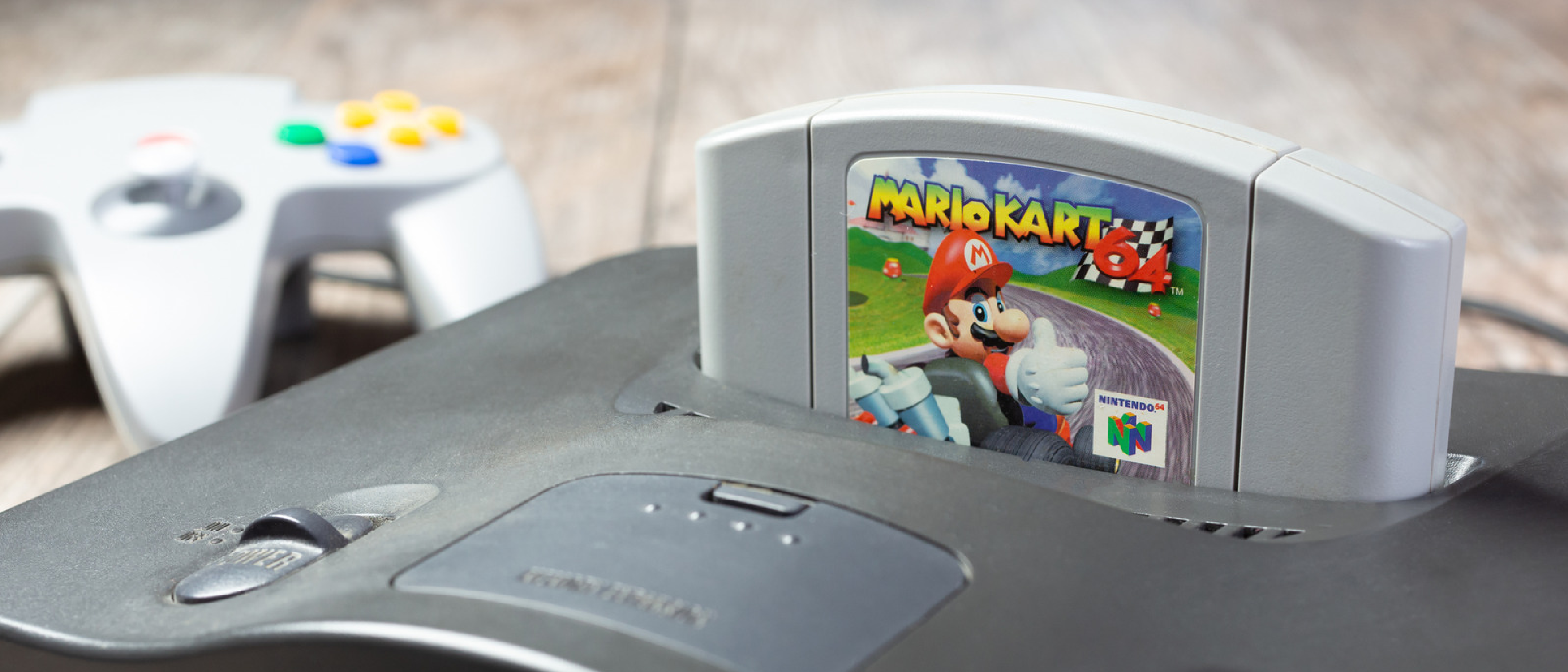
When Beardo Benjo posted a short clip on August 5, 2026, the gaming community got a glimpse of something that feels both nostalgic and futuristic: a first‑person, head‑tracked VR experience of Mario Kart 64. The clip shows the Koopa Troopa Beach track from a cockpit perspective, complete with the infamous tunnel shortcut. The tweet reads, “I can now hit my favourite shortcut in Mario Kart 64 in glorious first person VR 😂” – a sentiment echoed by countless fans who have long imagined what the classic kart racer would feel like from the driver’s seat.
Behind the scenes, the mod was crafted by Ra YRo D TV, a developer already known for VR adaptations of Banjo‑Kazooie and Star Fox 64. By building on the existing PC port Spaghetti Kart, Ra YRo D TV added a full VR pipeline, head‑tracking, and a configurable options menu. The result is a free download on GitHub that transforms a 1997 N64 title into a modern immersive experience – provided you own a legal copy of the ROM and a compatible VR headset.
Technical Breakdown: From Spaghetti Kart to Full‑Body Immersion
1. Base Engine – Spaghetti Kart
Spaghetti Kart is an open‑source PC port that re‑creates the N64’s graphics pipeline using modern OpenGL. It already handles texture decoding, audio emulation, and input mapping, making it an ideal foundation for further modification. The VR mod does not rewrite the core emulation; instead, it injects a rendering layer that redirects the camera to a first‑person viewpoint.
2. Head‑Tracking Integration
The mod reads the headset’s pose data via OpenVR (or the newer OpenXR) APIs. This data drives the in‑game camera, allowing the player’s head movements to translate directly into kart steering cues:
- Yaw adjusts the kart’s direction, mirroring the original analog stick.
- Pitch tilts the view up or down, useful for spotting obstacles on jumps.
- Roll is ignored to avoid disorienting the player during high‑speed turns.
Because the original game was designed for a fixed third‑person camera, the developers had to re‑calculate the field of view (FOV) and depth perception to avoid motion sickness. The result is a comfortable 110° horizontal FOV that feels natural on most consumer headsets.
3. VR Options Menu
A dedicated menu, accessible from the pause screen, lets users fine‑tune the experience:
- Stereo Depth – Controls the separation between the left and right eye images, affecting perceived distance.
- Eye Height – Adjusts the virtual seat height to match the player’s real‑world posture.
- HUD Placement – Moves the lap counter, speedometer, and item icons to a comfortable location within the headset’s view.
These settings are saved to a local JSON file, making it easy to share configurations across machines.
4. Performance Considerations
Running a 30‑year‑old game at 90 fps in VR is non‑trivial. The mod leverages the GPU for texture upscaling and uses a lightweight post‑process shader to smooth jagged edges without altering the original art style. On a mid‑range PC (e.g., RTX 3060) paired with a Quest 2, the game consistently hits 90 fps, meeting the minimum threshold for comfortable VR.
5. Distribution and Legal Notes
The mod is hosted on GitHub under an MIT‑style license. Users must supply their own Mario Kart 64 ROM – either a digital copy they own or a dump from a physical cartridge. This requirement respects Nintendo’s intellectual property while keeping the community project open and free.
Why It Matters: Nostalgia Meets Modern Immersion
A New Way to Play a Classic
For decades, Mario Kart 64 has been a staple of multiplayer gaming, but its third‑person perspective limited the sense of speed. By placing the player inside the kart, the mod amplifies the adrenaline rush of tight corners and power‑slide drifts. The head‑tracking also adds a layer of skill: looking around the track to anticipate incoming shells becomes a tactical decision rather than a static HUD readout.
Bridging Generations of Hardware
Nintendo’s official VR efforts have been modest – the Virtual Boy’s crude stereoscopy and the Labo VR Kit’s cardboard headset. This community‑driven project demonstrates that modern VR hardware can retro‑fit classic titles without official support. It also showcases the flexibility of open‑source emulation projects, encouraging other developers to experiment with VR adaptations of beloved retro games.
Community‑Driven Innovation
The mod’s rapid emergence after the tweet highlights how social media can accelerate discovery. A single clip sparked a wave of interest, leading to GitHub stars, forks, and a growing Discord where users share custom track settings. This organic momentum is a reminder that passionate fans can extend a console’s lifespan far beyond its commercial cycle.
Industry Impact: What This Means for Gaming and VR
Reinforcing the Value of Modding
Modding has long been a catalyst for platform longevity. Titles like Skyrim and Minecraft owe much of their continued relevance to community content. The Mario Kart 64 VR mod adds a new dimension (literally) to that narrative, proving that even closed‑platform classics can find fresh life through open tools.
Influencing Future Console Strategies
Nintendo has been cautious with VR, but the enthusiasm surrounding this mod could inform future decisions. If a sizable portion of the fanbase demonstrates demand for immersive experiences, Nintendo may consider more robust VR support in upcoming hardware – perhaps a lightweight headset that integrates directly with the Switch’s Joy‑Con tracking.
Cross‑Platform Synergies
The mod’s reliance on a PC port underscores the growing convergence between console emulation and PC gaming ecosystems. As more titles become playable on PC with high‑fidelity peripherals, developers of VR hardware and software can target a broader library, increasing the value proposition for consumers.
For a broader look at how console‑free gaming is reshaping the market, see our coverage of the Xbox App on Hisense & VIDAA TVs: https://ltdeveloperblogs.github.io/posts/you-can-now-play-xbox-games-on-hisense-tvs-without-a-console
Future Outlook: Where VR Modding Could Go Next
Expanding the Modding Toolkit
Ra YRo D TV’s work could inspire a standardized VR‑modding framework for N64 titles. By abstracting the head‑tracking layer into a reusable library, other developers could quickly port Super Mario 64, The Legend of Zelda: Ocarina of Time, or even GoldenEye 007 into VR.
Integration with Cloud Gaming
Imagine streaming a VR‑enabled classic from the cloud to a headset, eliminating the need for a powerful PC. Services like Xbox Cloud Gaming already experiment with low‑latency streaming; adding VR support could open a new market segment for retro‑VR experiences.
Potential for Multiplayer VR
The current mod is single‑player, but the underlying engine supports network play. Adding synchronized head‑tracking for multiple players could recreate the chaotic fun of local split‑screen kart racing, but each participant would be inside their own kart, seeing opponents from a first‑person perspective.
Hardware Considerations
As VR headsets become lighter and more affordable, the barrier to entry drops. The mod works well with the Meta Quest 2, but future devices with higher resolution and wider FOV (e.g., the upcoming Quest 3) will further reduce the “screen‑door” effect, making the pixelated textures of a 1997 game feel less jarring.
For readers interested in the hardware side of VR headsets, especially USB‑C connectivity, check out our guide: https://ltdeveloperblogs.github.io/posts/your-phones-usb-c-port-does-a-lot-more-than-just-charge-heres-what-else-it-can-do
FAQ
Q: Do I need a Nintendo 64 console to use the mod?
A: No. The mod runs on a PC using the Spaghetti Kart port. You only need a legal ROM dump and a compatible VR headset.
Q: Is the mod legal?
A: The mod itself is open‑source and free. Legal use requires that you own the original Mario Kart 64 game, either as a cartridge or a purchased digital copy.
Q: Which headsets are supported?
A: The mod works with any headset that supports OpenVR/OpenXR, including Meta Quest 2, Valve Index, and HTC Vive. Performance may vary based on GPU capability.
Q: Can I play multiplayer in VR?
A: The current release is single‑player only. Multiplayer support would require additional networking code and synchronization of head‑tracking data.
Q: Where can I download the mod?
A: The latest version is available on GitHub at the repository linked in the original tweet. Look for the “Mario‑Kart‑64‑VR” release page.
Q: Does the mod affect the original game’s graphics?
A: No. It preserves the original textures and models. The only visual changes are the VR‑specific rendering adjustments (stereo depth, FOV, and optional smoothing shaders).
Conclusion
The Mario Kart 64 VR mod is more than a novelty; it’s a proof‑of‑concept that classic games can
be reimagined for modern immersive experiences without losing their charm. By leveraging open-source tools and community-driven innovation, developers like Ra YRo D TV are not just preserving gaming history—they’re expanding its possibilities. This mod serves as a testament to how far retro gaming can evolve when creativity meets technical ingenuity.
The Motion Sickness Paradox
One of the most surprising aspects of the Mario Kart 64 VR mod is how it navigates the perennial challenge of VR: motion sickness. The original game was designed for a static, third-person camera, where the kart’s movement is framed by a stable horizon. In first-person VR, however, the player’s brain receives conflicting signals—visual motion without corresponding physical movement—which can trigger discomfort.
To mitigate this, the mod employs several clever techniques:
- Dynamic FOV Scaling: The field of view subtly narrows during sharp turns or rapid acceleration, reducing peripheral motion blur that can disorient players.
- Comfort Vignette: A soft black border appears during high-speed sections, providing a visual anchor to reduce sensory overload.
- Snap Turning: While head-tracking handles subtle steering, players can opt for “snap” (instant) turns instead of smooth rotation, which is less likely to induce nausea.
These adjustments make the mod accessible even to VR newcomers, though the article’s original warning—“do not eat before playing”—remains sound advice for those particularly sensitive to motion.
The Role of Nostalgia in VR Adoption
Nostalgia has always been a powerful driver in gaming, but VR adds a new layer to its appeal. The Mario Kart 64 VR mod doesn’t just let players see the game differently; it lets them feel it in a way that was impossible in 1997. The sensation of leaning into a turn on Rainbow Road or ducking to avoid a flying shell creates a visceral connection to the game that transcends mere memory.
This phenomenon isn’t unique to Mario Kart. VR mods for other retro titles, like Half-Life or Doom, have similarly tapped into nostalgia to introduce older games to new audiences. However, Mario Kart 64 stands out because of its universal appeal—it’s a game that nearly every gamer has played, making the VR experience instantly relatable.
Ethical and Legal Gray Areas
While the mod itself is legal, its reliance on ROMs places it in a legal gray area. Nintendo has historically been protective of its intellectual property, and while the company has tolerated emulation for preservation purposes, it has also taken legal action against commercial ROM distribution. The mod’s GitHub page includes a disclaimer emphasizing that users must own a legal copy of the game, but enforcement remains a challenge.
This tension highlights a broader debate in the gaming community: How can fans preserve and innovate on classic games without infringing on copyright? Projects like Spaghetti Kart and this VR mod offer a potential middle ground—open-source tools that require users to supply their own legally obtained assets. It’s a model that could become more common as retro gaming continues to thrive in the emulation era.
The Future of Retro VR
The success of the Mario Kart 64 VR mod raises an intriguing question: Which classic game will get the VR treatment next? Several candidates come to mind:
- Super Mario 64: A first-person VR adaptation could transform platforming into a full-body experience, with players physically ducking under obstacles or leaning to navigate tight spaces.
- The Legend of Zelda: Ocarina of Time: VR could make dungeon crawling even more immersive, with players reaching out to pull levers or solve puzzles in 3D space.
- GoldenEye 007: A VR version of the iconic N64 shooter could revolutionize retro FPS gameplay, though the lack of analog sticks on most VR controllers might pose a challenge.
For developers interested in tackling these projects, the Mario Kart 64 VR mod provides a blueprint. Its use of an existing PC port, head-tracking integration, and user-configurable settings could serve as a template for future retro VR adaptations.
Community Feedback and Iteration
Since its release, the mod has sparked lively discussion in online forums and Discord servers. Players have shared their experiences, from the thrill of finally “being” in the kart to the hilarity of motion sickness-induced mishaps. Some have even begun experimenting with custom settings, such as:
- Heightened Stereo Depth: For a more exaggerated 3D effect, though this can make the game harder to play for extended periods.
- HUD-Free Mode: Removing the on-screen elements entirely for a more “pure” first-person experience.
- Track-Specific Tweaks: Adjusting FOV or head-tracking sensitivity for particularly tricky courses like Yoshi Valley.
This feedback loop is crucial for the mod’s evolution. Ra YRo D TV has already released several updates based on user suggestions, including performance optimizations for lower-end PCs and additional comfort options. The mod’s open-source nature means that other developers can fork the project and contribute their own improvements, ensuring that it continues to evolve.
The Broader Implications for Game Preservation
The Mario Kart 64 VR mod also underscores the importance of game preservation. As physical media degrades and digital storefronts shut down, mods and emulation projects become vital tools for keeping classic games alive. VR adds another dimension to this effort, offering new ways to experience old games that their original creators never imagined.
However, preservation isn’t just about keeping games playable—it’s about ensuring they remain relevant. VR mods like this one introduce classic titles to younger audiences who might otherwise dismiss them as “outdated.” By making Mario Kart 64 feel fresh and exciting, the mod helps bridge the gap between generations of gamers.
Final Thoughts: A Weekend of Chaos Awaits
If you own a VR headset and a copy of Mario Kart 64, this mod is a must-try. It’s a rare opportunity to revisit a beloved game in a way that feels both familiar and entirely new. The first-person perspective amplifies the game’s chaotic energy, turning even a simple race into a heart-pounding, white-knuckle experience. Just remember: if you’re prone to motion sickness, start with the comfort settings enabled and take breaks as needed.
For those who don’t own a VR headset, the mod might be the perfect excuse to dive into the world of virtual reality. The barrier to entry has never been lower, with affordable headsets like the Meta Quest 2 offering a compelling introduction to the medium. And who knows? After experiencing Mario Kart 64 in VR, you might find yourself eager to explore other retro VR mods—or even create your own.
FAQ (Continued)
Q: Can I use a gamepad instead of a VR controller?
A: Yes. The mod supports traditional gamepad input for steering, while head-tracking handles the camera. This hybrid approach allows players to use the control scheme they’re most comfortable with.
Q: Are there any plans to add motion controls?
A: The developer has experimented with motion controls for items (e.g., physically throwing a shell by mimicking the throwing motion), but this feature is not yet stable. It may be included in a future update.
Q: How does the mod handle the original game’s multiplayer?
A: Currently, the mod does not support the original split-screen multiplayer. However, the Spaghetti Kart port does include online multiplayer, and the developer has expressed interest in adding VR support for this mode in the future.
Q: What are the system requirements?
A: Minimum requirements:
- OS: Windows 10 or later
- CPU: Intel i5-4590 / AMD Ryzen 5 1500X or better
- GPU: NVIDIA GTX 1060 / AMD RX 480 or better
- RAM: 8GB
- VR Headset: OpenVR/OpenXR compatible (e.g., Meta Quest 2, Valve Index)
- Storage: 500MB for the mod + ROM size
Recommended requirements for smoother performance:
- GPU: NVIDIA RTX 2060 / AMD RX 5700 or better
- RAM: 16GB
Q: Can I use this mod with other Mario Kart 64 mods?
A: The VR mod is designed to work with the base Spaghetti Kart port. While it may be compatible with some graphical or gameplay mods, others could cause conflicts. It’s best to test compatibility on a case-by-case basis.
Q: Is there a way to record or stream the VR gameplay?
A: Yes. Most VR headsets and software (e.g., Oculus, SteamVR) include built-in recording tools. For higher-quality recordings, you can use third-party software like OBS with VR capture plugins. Keep in mind that recording may impact performance.
Conclusion
The Mario Kart 64 VR mod is a remarkable achievement—a fusion of retro gaming and cutting-edge technology that feels both nostalgic and revolutionary. It’s a testament to the creativity of the modding community and a glimpse into the future of game preservation and innovation. Whether you’re a longtime fan of the original game or a VR enthusiast looking for a new challenge, this mod offers a unique way to experience one of Nintendo’s most beloved classics.
So, strap on your headset, grab your favorite kart, and prepare for a weekend of high-speed, first-person chaos. Just don’t say we didn’t warn you about the motion sickness.
Source: Original Article