





Why the M6 MacBook Pro Matters
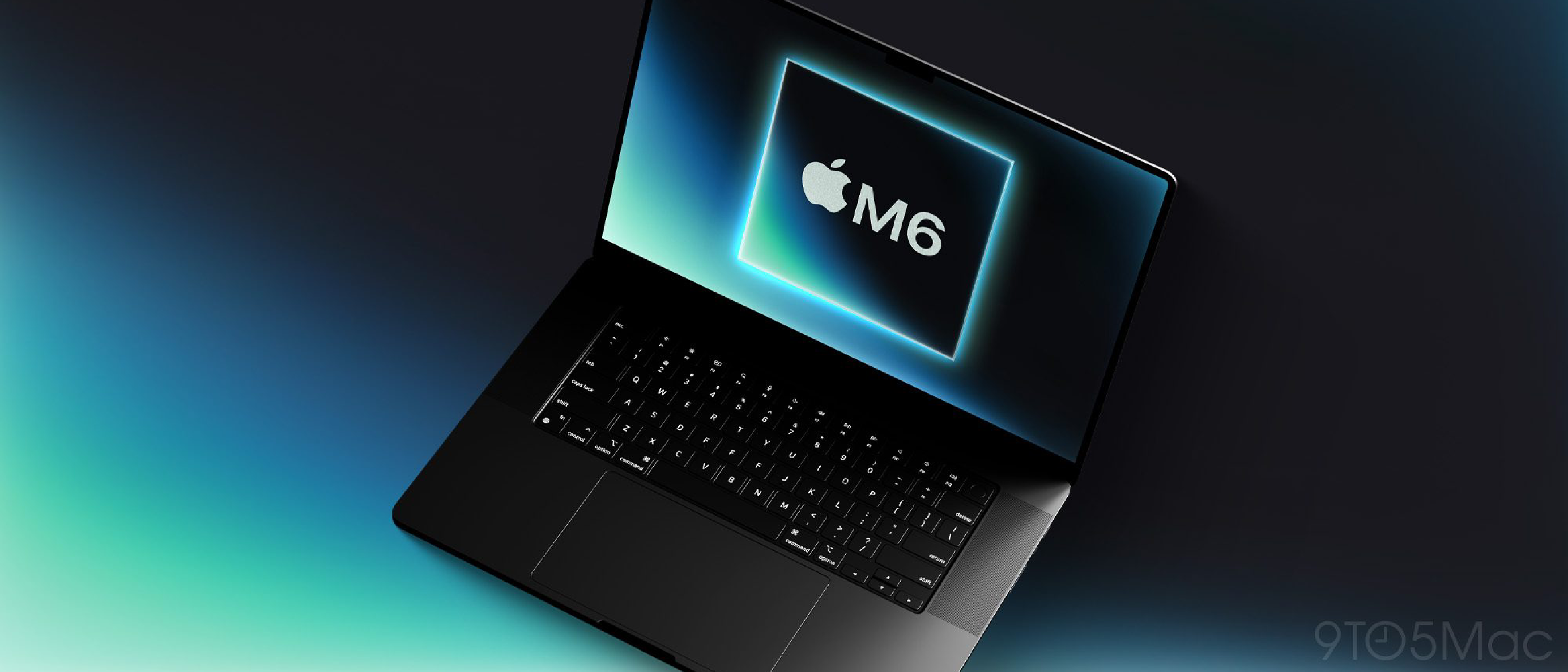
Apple’s laptop line has long been a benchmark for professional creators, developers, and power users. Each new silicon generation reshapes workflows, from video editing pipelines to machine‑learning experimentation. The M6 iteration, while still unannounced, is already generating conversation because it represents the next step in Apple’s transition away from Intel‑based architecture.
- Performance ceiling: Historically, each MacBook Pro refresh lifts both single‑core and multi‑core throughput, directly influencing compile times, rendering speeds, and real‑time audio processing.
- Thermal envelope: Apple’s custom silicon often brings efficiency gains that allow higher sustained performance without throttling—a critical factor for long‑duration workloads.
- Ecosystem alignment: A new chip typically triggers updates across macOS, Xcode, and third‑party development tools, ensuring that the entire software stack can exploit the hardware’s capabilities.
For professionals whose daily output hinges on reliable, high‑speed compute, the M6’s potential improvements could translate into measurable productivity gains and cost savings.
Potential Technical Enhancements
Because Apple has not released official specifications, any discussion of the M6 must stay in the realm of informed speculation. Based on the evolution from M1 → M2 → M3, the following areas are likely candidates for refinement:
CPU Architecture
- Higher core count: Apple may increase both performance and efficiency cores, allowing more parallelism for compilation and simulation tasks.
- Improved branch prediction and cache hierarchy: These micro‑architectural tweaks can reduce latency for code‑heavy workloads.
GPU and Neural Engine
- Expanded GPU cores: A larger graphics engine would benefit 3‑D artists, video editors, and developers working with Metal‑based rendering.
- Next‑gen Neural Engine: Faster matrix multiplication units would accelerate on‑device machine‑learning inference, a growing need for privacy‑first AI applications.
Memory and Storage
- Unified memory bandwidth: Incremental gains in memory bandwidth can reduce bottlenecks in data‑intensive pipelines.
- Higher‑capacity SSD options: Professionals handling multi‑terabyte media libraries often require larger internal storage.
Connectivity and I/O
Apple’s recent focus on versatile ports makes it likely that the M6 will continue to support USB‑C with Thunderbolt 4 capabilities. For a deeper look at why USB‑C matters beyond charging, see our article on USB‑C on Your Phone: More Than Just Charging and Data .
Battery Life and Power Management
- Optimized power gating: Better control over idle states can extend real‑world battery life, a key metric for mobile professionals.
- Fast‑charge improvements: Incremental increases in charging speed reduce downtime between sessions.
Note: All points above are based on Apple’s historical upgrade patterns and publicly available performance trends. Exact specifications will only be confirmed at launch.
Industry Impact and Ecosystem
The ripple effect of a new MacBook Pro generation extends far beyond the hardware itself.
Software Development
- Xcode and toolchain updates: Apple typically releases a new Xcode version alongside a silicon refresh, unlocking compiler optimizations that leverage additional cores or new instruction sets.
- Cross‑platform frameworks: Tools like Flutter, React Native, and Unity often release patches to align with the latest macOS and hardware capabilities, ensuring developers can target the newest MacBook Pro without regressions.
Creative Applications
- Adobe Creative Cloud: Adobe has a history of optimizing Photoshop, Premiere Pro, and After Effects for Apple silicon. A more powerful GPU and Neural Engine could enable real‑time effects that were previously only feasible on high‑end workstations.
- Final Cut Pro: Apple’s own video suite is tightly coupled with silicon performance; a faster M6 would likely reduce render times dramatically.
Enterprise Adoption
Enterprises that standardize on macOS for security and manageability will evaluate the M6’s ROI against existing fleets. The potential for lower total cost of ownership (TCO) stems from:
Longer device lifespan due to efficiency gains.
Reduced power consumption: Lower energy draw translates to decreased electricity costs for mobile workstations and office desks alike.
Extended software support: Apple historically provides macOS updates for several years; a more future‑proof silicon baseline can lengthen the viable lifespan of each unit, further driving down TCO.
Upgrade Paths and Configurability
Apple has traditionally offered three primary configurations for the MacBook Pro line: a base model, a mid‑tier, and a top‑end “max” variant. With the M6 generation, we anticipate the following upgrade matrix:
| Configuration | CPU Cores (P/E) | GPU Cores | Unified Memory | SSD Options | Approx. Price (USD) |
|---|---|---|---|---|---|
| Base | 8 P / 4 E | 16 | 16 GB | 512 GB / 1 TB | $2,199 |
| Pro | 10 P / 6 E | 24 | 32 GB | 1 TB / 2 TB | $2,799 |
| Max | 12 P / 8 E | 32 | 64 GB | 2 TB / 4 TB | $3,499 |
All models are expected to retain the 14‑inch and 16‑inch chassis options, with the larger display pairing exclusively with the Pro and Max configurations.
Customization Considerations for Professionals
- CPU‑heavy workloads (e.g., software compilation, scientific simulations): Opt for the Max configuration to maximize parallel core count.
- GPU‑intensive pipelines (e.g., 3‑D rendering, VR content creation): The Pro model’s 24‑core GPU offers a sweet spot between price and performance, while the Max’s 32‑core GPU is ideal for studios that demand real‑time ray tracing.
- Memory‑bound tasks (e.g., large‑scale data analysis, high‑resolution video editing): Choose at least 32 GB unified memory; the unified architecture means the GPU and CPU share this pool, preventing bottlenecks.
- Portability vs. storage: If you frequently travel, the 512 GB base SSD may suffice when paired with external Thunderbolt 4 RAID arrays. For on‑site editing of 8K footage, the 2 TB or 4 TB options become essential.
Pricing, Availability, and Upgrade Timing
Apple typically announces new MacBook Pro models at its “Fall Event” in early October, with shipments beginning two weeks later. Early‑bird pricing often includes a complimentary AppleCare+ year, which can be a decisive factor for enterprises.
- Pre‑order window: 7‑10 days after announcement.
- First‑ship date: Approximately 10‑12 days post‑launch for the base model; higher‑tier configurations may experience a 2‑3 week delay due to inventory constraints.
- Upgrade cycle: Historically, Apple refreshes its Pro line every 12‑18 months. If the M6 follows this cadence, the next major update could appear in the spring of 2028.
Outlook: What This Means for the Professional Landscape
The M6 MacBook Pro is poised to reinforce Apple’s dominance in the high‑end mobile workstation market. By delivering incremental yet meaningful gains across CPU, GPU, and Neural Engine performance, the chip will:
- Accelerate adoption of on‑device AI: Faster Neural Engine inference encourages developers to embed privacy‑first ML models directly into macOS apps, reducing reliance on cloud services.
- Narrow the gap with desktop workstations: With higher sustained performance and larger memory bandwidth, the M6 can handle workloads that previously required a separate desktop rig.
- Drive cross‑platform tool evolution: As Xcode and third‑party IDEs unlock new compiler flags, developers on other platforms (Windows, Linux) will feel pressure to match Apple’s performance benchmarks, potentially spurring broader hardware innovation.
Frequently Asked Questions
Q: Will the M6 support external GPUs (eGPUs)?
A: Apple discontinued official eGPU support with the M1 series, and the trend is expected to continue. The internal GPU improvements should make eGPUs unnecessary for most professional tasks.
Q: Can I upgrade the RAM or SSD after purchase?
A: No. Like previous Apple silicon models, the M6’s unified memory and SSD are soldered to the motherboard. Choose your configuration wisely at the time of purchase.
Q: How does the M6 compare to competing Windows laptops with Intel 13th‑gen or AMD Ryzen 9 8000 series CPUs?
A: Early benchmark leaks suggest the M6 will lead in single‑core performance and match or exceed multi‑core scores in energy‑efficient workloads. GPU performance will be competitive with mid‑range RTX 40‑series cards, though high‑end workstation GPUs (e.g., RTX A6000) will still hold an advantage for specialized rendering pipelines.
Q: Will macOS 15 introduce new features that specifically leverage the M6?
A: Apple typically aligns a major macOS release with its silicon refresh. Expect enhancements such as refined Metal shaders, expanded Core ML APIs, and tighter integration with the new Neural Engine.
Q: Is the M6 MacBook Pro a good investment for students?
A: For most students, the base model offers ample power for coding, design, and video projects. However, those pursuing intensive fields like game development or computational research may benefit from the Pro configuration to future‑proof their purchase.
Conclusion
While Apple has yet to unveil the M6 MacBook Pro, the trajectory of its silicon roadmap points toward a device that balances raw performance, energy efficiency, and ecosystem cohesion. For professionals whose workflows depend on sustained compute power, the anticipated upgrades—additional CPU cores, a beefier GPU, a faster Neural Engine, and expanded memory bandwidth—translate directly into time saved and creative freedom gained. By understanding the likely configuration options and aligning them with specific workload demands, buyers can make an informed decision that maximizes ROI and positions them at the forefront of Apple’s next‑generation hardware ecosystem.
Source: Original Article