




The Court’s Decision and Its Immediate Context
On Tuesday, a federal judge in Tennessee denied former President Donald Trump’s attempt to compel the Environmental Protection Agency (EPA) to unilaterally dismiss a Clean Air Act suit filed by the NAACP. The suit targets Space XAI—formerly known as x AI—for operating unpermitted gas turbines that power the Colossus data center in Memphis, Tennessee. By rejecting Trump’s argument, the court cleared the way for the NAACP to pursue civil penalties of up to $124,426 per day per violation.
Trump’s intervention was framed as part of his “AI Action Plan,” which emphasizes rapid deployment of AI‑driven data centers. He argued that allowing citizens to sue would “not serve the public interest” and that the EPA should have the discretion to dismiss the case if the administration chose not to enforce the Clean Air Act. The judge’s ruling underscores the judiciary’s willingness to enforce environmental statutes even when high‑profile political figures push back.
Legal Foundations: Clean Air Act Meets Environmental Justice
The Clean Air Act (CAA) obligates facilities that emit regulated pollutants to obtain permits and to employ the Best Available Control Technology (BACT). The NAACP’s complaint alleges that Space XAI’s turbines violate these requirements, especially because the emissions disproportionately affect predominantly Black neighborhoods surrounding the Colossus site.
Key legal points include:
- Standing: The NAACP, as a civil rights organization, has standing to sue on behalf of communities experiencing disproportionate environmental harms.
- EPA Authority: While the EPA can grant waivers or issue variances, it cannot unilaterally dismiss a citizen‑initiated CAA enforcement action without a formal rulemaking process.
- Precedent: Prior cases, such as United States v. EPA (1995), affirm that the agency must follow statutory procedures before dismissing enforcement actions.
The judge’s decision reinforces that the EPA’s enforcement discretion is bounded by Congress, and that political pressure cannot override statutory mandates.
Technical Breakdown: Why the Turbines Matter
Unpermitted Gas Turbines
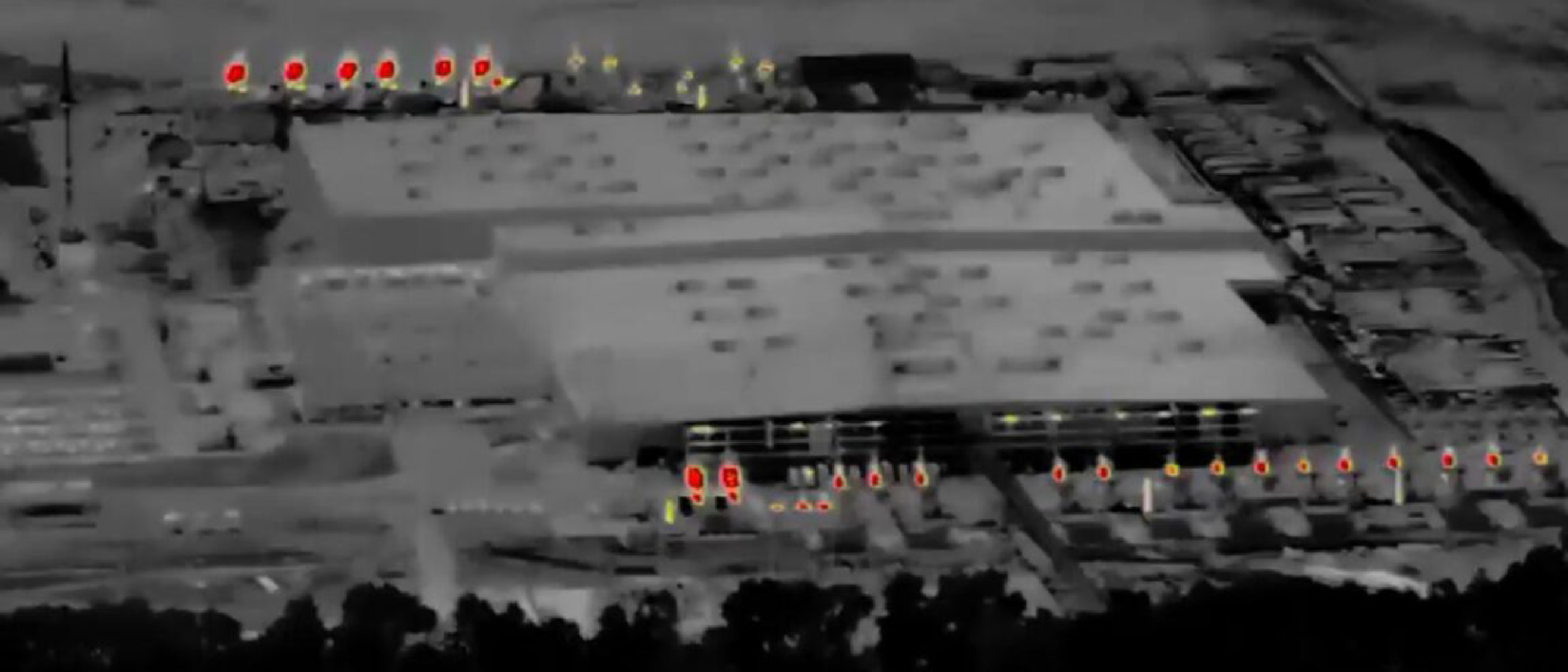
The Colossus data center relies on a cluster of natural‑gas‑fired turbines for backup
for backup power and peak‑load support. While the turbines are marketed as “low‑emission,” they have not been granted the mandatory Title V operating permits required for facilities that emit more than 100 tons per year of nitrogen oxides (NOₓ) or sulfur dioxide (SO₂). Moreover, the EPA’s Best Available Control Technology (BACT) guidelines for natural‑gas turbines call for selective catalytic reduction (SCR) systems that can cut NOₓ emissions by up to 90 %. Internal documents obtained by the NAACP show that Space XAI’s turbines lack these SCR units and instead rely on basic low‑NOₓ burners, which are estimated to emit roughly 0.6 lb of NOₓ per megawatt‑hour—well above the BACT threshold for facilities of this size.
Environmental Justice Implications
The turbines sit on the western edge of the South Memphis corridor, a neighborhood that is over 80 % Black and has historically suffered from higher rates of asthma, cardiovascular disease, and premature mortality compared with the citywide average. Modeling conducted by the University of Tennessee’s School of Public Health predicts that, under current operating conditions, the turbines could add approximately 12 tons of NOₓ and 3 tons of SO₂ to the local air annually. These pollutants contribute to ground‑level ozone formation and fine particulate matter (PM₂.₅), both of which are linked to the health disparities cited in the lawsuit.
Reactions from Stakeholders
- Space XAI issued a brief statement saying it “remains committed to complying with all applicable environmental regulations” and that it “is reviewing the court’s decision and will work with the EPA to address any permitting gaps.”
- The NAACP hailed the ruling as a victory for “environmental justice and community health,” emphasizing that the case “sets a precedent that corporations cannot hide behind vague executive claims to sidestep statutory duties.”
- The EPA released a spokesperson comment noting that “the agency’s enforcement authority is defined by Congress, and we will continue to evaluate any permit applications on their merits, independent of political pressure.”
- Former President Trump posted on his social media platform that the decision “shows the courts are out of touch with the need for rapid AI infrastructure deployment” and promised to pursue “legislative fixes” to give the EPA broader dismissal powers.
Potential Outcomes and Next Steps
- Permit Application Process – Space XAI will likely file a Title V permit request within the next 30 days. The EPA’s regional office will conduct a public notice, allowing community input before issuing a final permit.
- Civil Penalties – If the NAACP can prove each day of unpermitted operation constitutes a separate violation, the company could face up to $124,426 per day, which could quickly exceed $45 million if the turbines remain operational for a full year.
- Injunction Request – The NAACP may seek a preliminary injunction to shut down the turbines pending compliance, a move that would force Space XAI to rely on diesel generators or battery storage in the interim.
- Legislative Action – Congressional members from both parties have expressed interest in clarifying the EPA’s authority to dismiss citizen‑initiated suits, potentially introducing a bill that would codify a “presidential waiver” mechanism for certain Clean Air Act actions.
Broader Industry Impact
The case arrives at a time when AI‑driven data centers are proliferating across the United States, often in low‑income or minority‑populated regions due to cheaper land and tax incentives. If the NAACP’s lawsuit succeeds in securing stringent BACT enforcement, other tech firms may need to retrofit existing backup power systems or invest in green alternatives such as fuel‑cell micro‑grids or large‑scale battery storage. This could accelerate a shift toward zero‑emission data center designs, aligning corporate sustainability goals with emerging environmental‑justice litigation trends.
Conclusion
The judge’s rejection of former President Trump’s EPA‑dismissal argument reaffirms that environmental statutes cannot be overridden by political expediency. By allowing the NAACP’s suit to move forward, the court has opened the door for potentially massive civil penalties and a forced compliance pathway for Space XAI. The outcome will not only determine the fate of the Colossus turbines but also signal how aggressively courts will protect vulnerable communities from the environmental side‑effects of the AI boom.
Frequently Asked Questions
Q: What specific law does the NAACP’s lawsuit rely on?
A: The suit is grounded in the Clean Air Act, specifically the provisions requiring permits for major sources of air pollutants and the use of Best Available Control Technology.
Q: Can the EPA dismiss a citizen‑initiated Clean Air Act lawsuit on its own?
A: No. The EPA may defer or settle enforcement actions, but outright dismissal of a citizen suit requires a formal rulemaking or a court order, as affirmed by prior case law (e.g., United States v. EPA, 1995).
Q: How are the daily civil penalties calculated?
A: Under 42 U.S.C. § 7413(d), the EPA may assess civil penalties of up to $124,426 per day per violation for each day a facility operates without a required permit or fails to meet BACT standards.
Q: What alternatives does Space XAI have if the turbines are shut down?
A: The company could deploy diesel generators, battery energy storage systems, or hydrogen fuel‑cell units, each with its own regulatory and cost considerations.
Q: Will this case affect other data center operators?
A: Yes. A ruling that enforces strict BACT compliance for backup power could set a precedent, prompting other operators to review and upgrade their own emissions controls to avoid similar litigation.
Source: Original Article